How to Fix a Drip Coffee Maker That’s Gurgling During Brew Cycle
Your coffee maker gurgles because of mineral buildup, incorrect water levels, or clogs. Descale it every 1–3 months with a 1:1 vinegar-water mix to clear internal blockages. Use the right water amount-too little causes overheating, too much disrupts pressure. Check for kinks in tubing or cracks in the reservoir. Clean the spray head with vinegar and a soft brush. Replace worn gaskets if leaks appear. Keep these checks routine, and you’ll silence the noise while improving brew consistency.
Notable Insights
- Check for kinks or blockages in the water tubing and reposition it to ensure smooth water flow.
- Descale the machine using a 1:1 vinegar-water solution to remove mineral buildup that restricts water flow.
- Use the correct water amount according to the reservoir’s markings to maintain stable brewing pressure.
- Clean the spray head and internal tubes by soaking in vinegar and brushing away debris to clear clogs.
- Inspect the water reservoir and gasket for cracks or wear, replacing them if leaks are present.
Stop Coffee Maker Gurgling With These Fixes
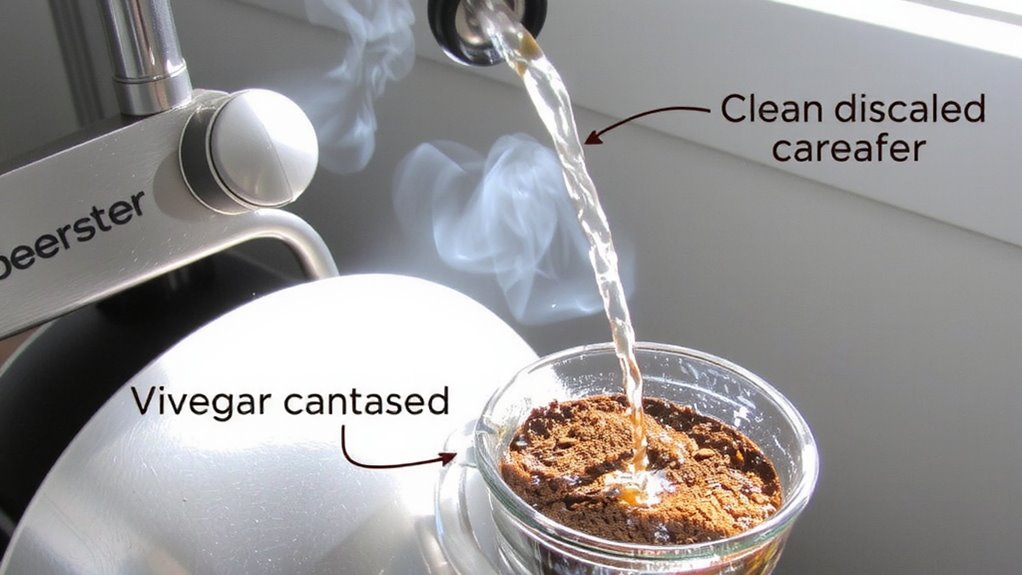
Why does your coffee maker gurgle like a bubbling swamp? It’s usually due to disrupted water pressure or minor electrical issues. If water flows too slowly or unevenly, trapped air can create gurgling sounds-common in older models like the Mr. Coffee 12-Cup. Check the water tubing for kinks or blockages; a simple realignment might restore steady flow. Loose electrical connections can also interrupt heating consistency, leading to irregular brewing noises. Guarantee the power cord is fully seated and test the outlet with another appliance. If the unit intermittently cuts out, it’s likely an internal electrical fault needing professional repair. Don’t ignore persistent sounds-continued use under these conditions risks overheating. For newer machines like Cuisinart DCC-3200, consult the manual for troubleshooting steps specific to your model. Address water pressure first, then rule out electrical problems before moving to internal maintenance. For reliable performance without gurgling issues, consider upgrading to one of the best drip coffee makers under $200.
Descaling With Vinegar to Eliminate Noisy Brewing
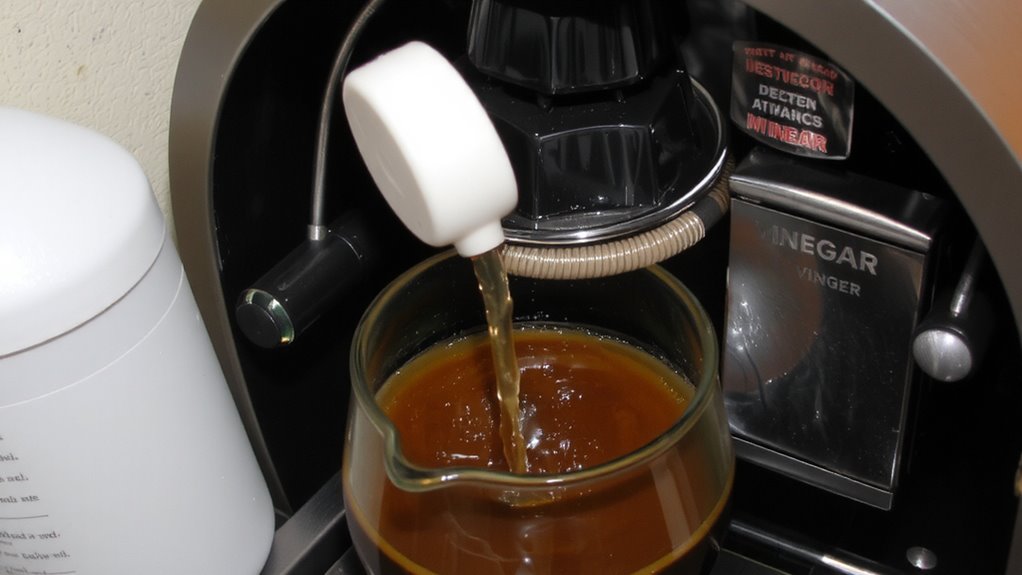
If the gurgling in your drip coffee maker persists after checking for kinks and electrical issues, mineral buildup could be the real culprit-especially if you have hard water. Over time, limescale clogs internal tubes, restricting water flow and affecting brewing temperature, which can intensify gurgling. Descaling with vinegar dissolves this buildup effectively. Use a 1:1 vinegar concentration (white vinegar to water) for best results. Run a full brew cycle, then follow with two rinse cycles using fresh water to remove residual taste. For those using pod-based machines like Nespresso, using the proper Nespresso-approved descaler can also prevent long-term damage from mineral deposits.
| Appliance Age | Vinegar Frequency | Notes |
|---|---|---|
| <1 year | Every 3 months | Preventative care |
| 1–3 years | Every 2 months | Moderate buildup |
| 3+ years | Monthly | Heavy scaling likely |
| After each use | Never | Damages components |
Stick to recommended vinegar concentration to protect seals and plastics.
Use the Correct Water Amount and Level
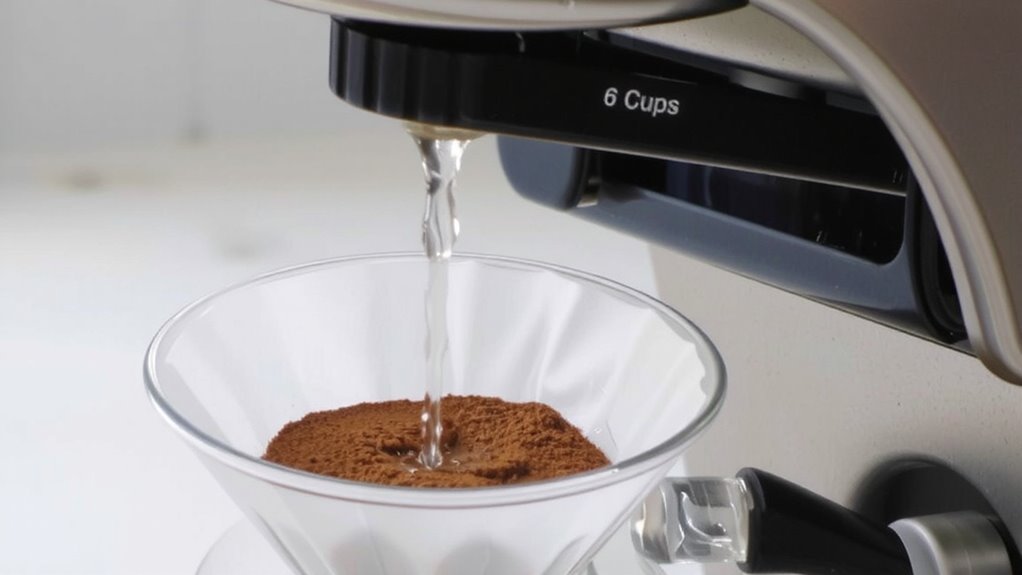
Using the right amount of water matters more than most people think-it directly affects brewing pressure, flow rate, and noise. If you add too little water, the machine may overheat, and the water temperature can drop too fast, disrupting the ideal extraction. Too much, and the system can’t maintain consistent brew pressure, causing gurgling or overflow. Always follow your coffee maker’s markings-brands like Mr. Coffee and Cuisinart calibrate their reservoirs to match the internal pump’s capacity. Staying within those lines guarantees smoother water flow and stable heat transfer. Never guess; use the measurements on the carafe or tank. Proper water level helps the machine cycle efficiently, keeping water temperature steady and brew pressure optimized. Skipping this step risks uneven brewing and stress on the machine. Stick to the recommended amounts, and you’ll avoid noise while getting better coffee. It’s a small step that makes a real difference. For reliable performance under $200, consider models from top picks in the best drip coffee makers under $200, such as the Cuisinart DCC-3200.
Clear Clogs in the Spray Head and Tubes
Ever wonder why your coffee maker gurgles more than it brews? The issue might be clogs in the spray head or tubing. Over time, mineral deposits and coffee oils build up, restricting water flow and causing uneven brewing. To fix this, you’ll need to clean the spray head and unclog tubes. Start by removing the spray head-many models let you unscrew it easily. Soak it in equal parts water and white vinegar for 30 minutes, then use a soft brush or toothpick to dislodge debris. For the tubes, run a vinegar-water solution through a brew cycle, followed by two to three rinses with clean water. This helps dissolve blockages and restore proper pressure. Regular maintenance every few months keeps flow steady and prevents future gurgling. Don’t skip this step-it’s key to reliable performance.
Fix Leaks From Cracked or Worn Parts
A gurgling sound often points to clogs, but when you start seeing puddles under your machine, the problem’s likely more than a blocked tube-it’s probably a leak from cracked or worn parts. Check the water reservoir first; over time, plastic can develop a cracked reservoir, especially near seams or joints, leading to steady drips. If you spot visible splits or cloudiness in the plastic, it’s time to replace it. Next, inspect the gasket between the reservoir and the machine-this small rubber ring seals the connection and can degrade with heat and use. A worn gasket won’t seal properly, letting water escape. Replacement gaskets are usually cheap and model-specific, so check your maker’s manual. Swapping these parts takes minutes but stops leaks fast and keeps your brew cycle running smoothly.
Keep It Quiet: Maintain Your Machine Weekly
You’ll usually hear it before you see anything wrong-a faint gurgle here, a sputter there-signs your drip coffee maker’s due for a quick weekly checkup. Wipe down the exterior, clear the drip tray, and rinse the carafe and filter basket to prevent buildup that can worsen noise. Check that the machine sits flat on a stable surface; even slight tilting can increase vibration and gurgling. For better noise dampening, place a rubber mat underneath-it helps with vibration isolation and reduces countertop resonance. Avoid running the brewer with low water or an empty reservoir, as that strains the pump and increases sound. Descaling monthly matters, but a weekly rinse keeps things smooth. Some models, like the Technivorm Moccamaster, include built-in noise dampening, but most budget machines don’t. Taking these steps weekly cuts noise, extends lifespan, and keeps your mornings quieter-without special tools or effort.
On a final note
Fixing a gurgling coffee maker often comes down to simple maintenance. Descale regularly with vinegar to clear mineral buildup, especially if you use hard water. Make sure you’re using the right amount of water-too much or too little can cause issues. Check the spray head and tubes for clogs, and replace cracked or worn parts. Weekly cleaning keeps your machine running quietly and extends its life. A well-maintained brewer makes better coffee, reliably.