1:16 Pour Over Ratio: 20g Coffee, 320g Water Guide
Use 20 grams of freshly ground coffee and 320 grams of water for a 1:16 ratio, brewing with water between 195°F and 205°F. Bloom the grounds with twice their weight in water, wait 30–45 seconds, then pour in slow circles to finish within 2.5 to 3.5 minutes. A gooseneck kettle and burr grinder help, and single-origin beans from Ethiopia or Colombia work well. Adjust one variable at a time if the taste is off-then fine-tune your next brew.
Notable Insights
- Use a 1:16 coffee-to-water ratio, such as 20g coffee to 320g water, for balanced extraction.
- Measure by weight with a calibrated digital scale to ensure accuracy and consistency.
- Maintain water temperature between 195°F and 205°F to avoid under- or over-extraction.
- Grind fresh medium or medium-light roast beans to a medium-fine, table salt-like consistency.
- Control pour technique with a gooseneck kettle, blooming first and finishing brew in 2.5–3.5 minutes.
Use the 1:16 Ratio for Balanced Pour Over
One part coffee to sixteen parts water is the sweet spot for a balanced pour over, and it’s where most beginners should start. This ratio consistently delivers clean, nuanced flavors without over-extracting bitter notes or under-extracting sour ones. For best results, aim for a brew time of 2.5 to 3.5 minutes-too fast and your coffee tastes weak; too slow and it risks becoming overly bitter. Keep your water temperature between 195°F and 205°F; boiling water can scald grounds, while cooler water leads to under-extraction. A gooseneck kettle helps control the pour, enabling even saturation. Pair this ratio with a medium-fine grind, similar to sea salt. Whether you’re using a Hario V60 or Chemex, the 1:16 ratio offers repeatability and balance. Adjust slightly only after mastering these baseline conditions. For optimal control and consistency, consider using one of the best gooseneck kettles designed specifically for precision pouring.
Measure Coffee and Water for 1:16 Accuracy
Start with 20 grams of coffee and 320 grams of water to hit the 1:16 ratio exactly-this gives you about 10 ounces of brewed coffee, ideal for a single serving. Use a digital scale for accuracy, and check your scale calibration monthly with a calibration weight to avoid small errors that add up. Even 2–3 grams off can alter taste and strength. Always measure both coffee and water by weight, not volume-grams are far more precise. Your water temperature should be between 195°F and 205°F; boiling water (212°F) can scorch coffee, while water below 195°F under-extracts. Gooseneck kettles with temperature control make this easier, but a reliable thermometer works too. Consistent measurements mean repeatable results. Skip the guesswork-precision in weight and temperature sets the foundation for a balanced, flavorful cup every time. For the most reliable results, choose a scale with high precision and a fast response time, such as those featured in the best coffee scales roundup.
Brew Step by Step: Perfect the Pour Over
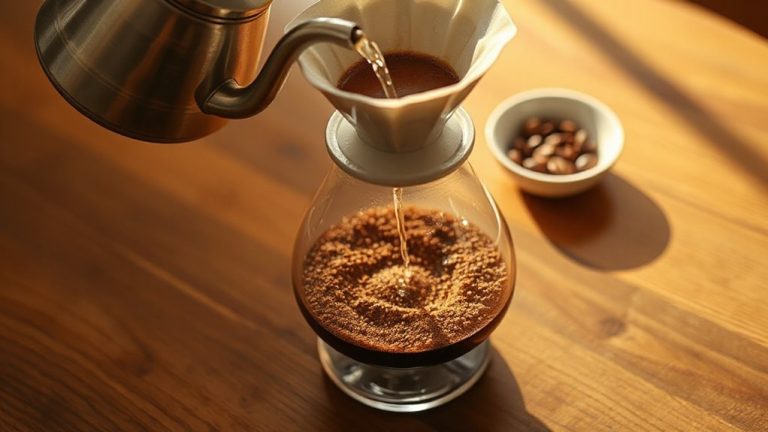
Now that your coffee and water are measured precisely and your kettle is heated to the right temperature, it’s time to get pouring. Start by pouring just enough hot water to saturate the grounds-about twice their weight-for the bloom. This release of trapped CO2 improves extraction. Let it rest for 30 to 45 seconds; that’s your bloom duration. Use a gooseneck kettle for better control and maintain a water temperature between 195°F and 205°F to avoid under- or over-extraction. After blooming, pour in slow, concentric circles from center to edge and back, keeping the water level consistent. Avoid disturbing the filter or rushing the flow. Total brew time should be 2.5 to 3.5 minutes. Consistency in pour speed and pattern matters more than perfect form. Over-pouring cools the water temperature too fast; under-pouring leads to over-extraction. Adjust next time if needed. For optimal results, use a medium-fine grind that resembles granulated sugar to ensure balanced extraction and clarity of flavor.
Pick Beans and Grind for 1:16 Success
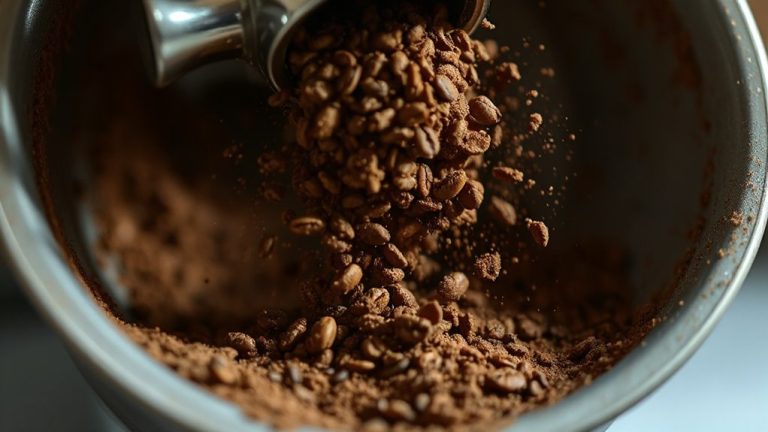
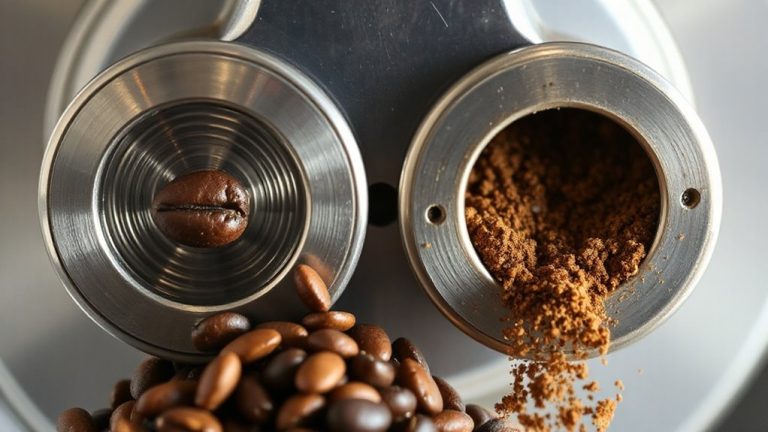
The foundation of a great 1:16 pour over starts with your beans and how you grind them-skip this, and even the best technique won’t save your cup. Choose beans with a clear bean origin; single-origin coffees from Ethiopia or Colombia often offer balanced flavors that shine at this ratio. Avoid overly dark roasts, as they can taste bitter when brewed too concentrated. Aim for a medium or medium-light roast level to preserve clarity and acidity. Freshness matters-use beans within 2–4 weeks of roast date. Grind just before brewing with a burr grinder for even particle size. A medium-fine grind, like table salt, works best. Blade grinders create uneven particles, leading to under- and over-extraction. With consistent grind size, the 1:16 ratio delivers clean, balanced coffee every time.
Fix Common 1:16 Ratio Problems
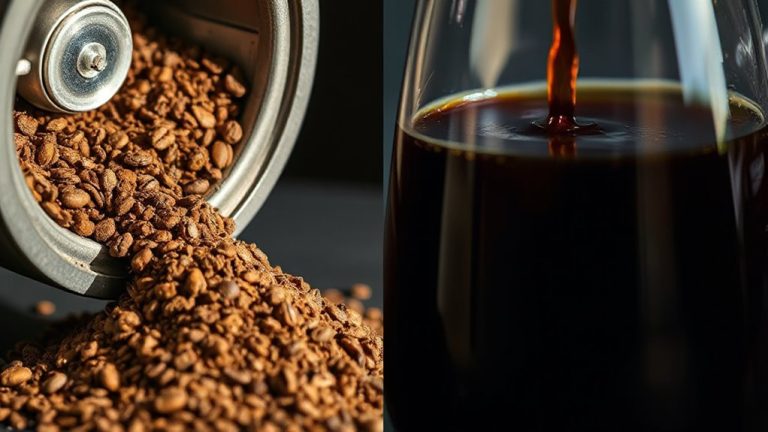
Why does your 1:16 pour over sometimes taste weak or bitter, even when you follow the same steps? Small inconsistencies in grind size, water temperature, or pour time can lead to overextraction issues or underdeveloped flavors. If your coffee tastes bitter or astringent, the grind is likely too fine, extracting too much over time. Try a slightly coarser setting on your grinder. If the brew is sour or flat, it’s underdeveloped-your grind might be too coarse or your water too cool. Aim for 195–205°F. Also, check your pouring speed; too fast leads to uneven extraction. A gooseneck kettle helps control flow. Even with the right 1:16 ratio, timing matters-total brew time should be 2:30 to 3:30 minutes. Adjust one variable at a time for best results.
On a final note
You’ve got everything you need to brew consistent pour over coffee using the 1:16 ratio. Just measure precisely, use freshly ground beans, and control your pour. If it’s too strong or weak, tweak the grind-finer or coarser-and keep notes. Over time, this method beats guesswork. With practice, your coffee will taste balanced and repeatable every time.