Espresso Machine Pre-Infusion: How It Helps Avoid Channeling and Improve Balance
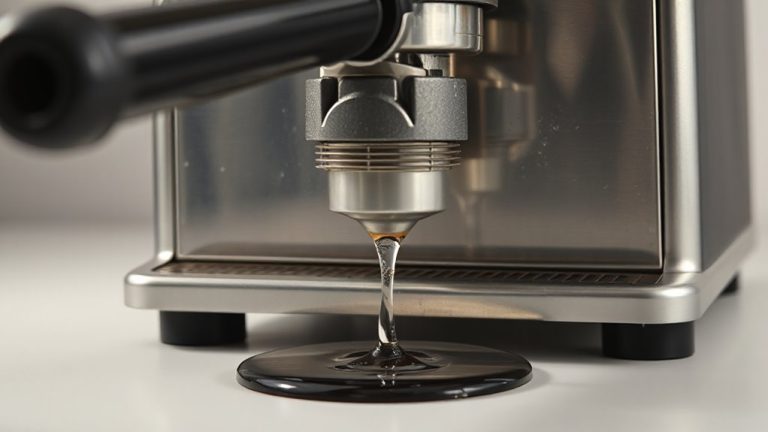
Pre-infusion helps you avoid channeling by wetting the coffee puck gently at low pressure-usually 1–3 bars-so the grounds expand evenly before full pressure hits. This prevents water from forcing through weak spots caused by poor tamping or uneven grinds. It also promotes balanced extraction, boosting sweetness and clarity, especially in light and medium roasts. Machines like the Synca DA3 or Rocket R55 let you adjust this phase; if you’re using one, you’ll want to get it right.
Notable Insights
- Pre-infusion prevents channeling by gently saturating the coffee puck at low pressure before full pressure builds.
- Uneven tamping or grind size creates weak spots that pre-infusion helps mitigate through even puck expansion.
- Low-pressure water allows grounds to bloom and seal uniformly, reducing dry spots and improving extraction.
- Controlled pre-infusion enhances flavor balance by promoting even extraction of acids, sugars, and aromatics.
- Adjustable pre-infusion duration and ramp-up time optimize results for different roast levels and dose sizes.
Why Does Espresso Channel: and How Pre-Infusion Fixes It?
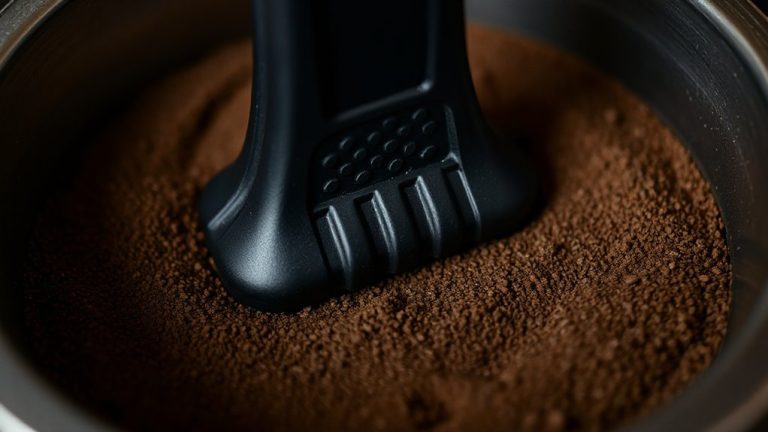
Why does your espresso shot sometimes run too fast on one side, leaving you with a sour, uneven mess? Chances are, you’re dealing with channeling-where water forces through weak spots in the puck. Poor tamping technique is a common culprit; if you tamp unevenly or use a tilted motion, density varies across the bed, creating paths of least resistance. Grind consistency matters just as much. Blades or low-quality grinders produce fines and boulders, disrupting water flow. Even with perfect tamp pressure, inconsistent particles cause uneven extraction. Channeling leads to bitterness in some areas, sourness in others. You’ll see it in the stream-wobbly, splitting, or rushing early. Pre-infusion helps by wetting the puck gently at low pressure, letting it expand evenly before full pressure hits. It doesn’t fix bad tamping or poor grind, but gives a margin for error, improving shot stability when your prep is decent.
What Is Pre-Infusion and Why It Matters for Even Extraction
Think of pre-infusion as the calm before the extraction storm. You’re letting water gently saturate the coffee puck at low pressure before full power kicks in. This early water saturation helps even out dry spots and prevents channels from forming. Without it, high-pressure water can rip through weak areas, leading to uneven extraction. Pre-infusion works by starting with minimal pressure-often just gravity or a small pump feed-then using pressure ramping to gradually build up to 9 bars. That slow increase gives the grounds time to expand and seal properly. Machines like the Synca DA3 or TIM60 offer adjustable pre-infusion, so you can fine-tune timing and flow. It’s not magic-it’s smarter hydration. Done right, it sets the stage for consistency shot after shot, especially with finicky beans or inconsistent grinds. A well-designed espresso machine can make this advanced feature accessible even on a budget.
How Pre-Infusion Enhances Sweetness and Reduces Bitterness
A smoother, more balanced shot starts with how evenly your coffee expands during pre-infusion. By gently wetting the puck before full pressure hits, you encourage even saturation, which supports better flavor development and reduces the chance of harsh, bitter compounds rushing through. This step is key for taste modulation-letting sweetness emerge while muting unwanted edges. With pre-infusion, acids and sugars extract more uniformly, leading to a rounder, more articulate cup.
| Factor | Effect |
|---|---|
| Even wetting | Fewer dry spots, less channeling |
| Lower initial pressure | Smoother extraction, improved sweetness |
| Controlled start | Enhanced flavor development, reduced bitterness |
You’ll notice the difference most with medium or light roasts, where nuance matters. Don’t skip this phase if balance is your goal-it’s not just prep, it’s part of the extraction. For those on the go, maintaining this balance can be preserved by using a high-quality best coffee travel mug that retains temperature and protects the integrity of your shot.
Manual vs. Automatic Pre-Infusion: Which Should You Use?
How much control do you really need over your pre-infusion? If you’re using a high-end machine with stable water temperature and consistent pump pressure, automatic pre-infusion offers convenience and repeatability. Machines like the Profitec Pro 300 or Rocket R55 handle it seamlessly, making them great for busy mornings. But if you’re tweaking variables like grind consistency or testing different beans, manual pre-infusion gives you the power to adjust duration and pressure precisely. This hands-on approach works well on machines like the Slayer or older levers, where you control the start and stop. Manual takes practice but helps you spot issues early-like channeling from uneven grind consistency. Automatic is foolproof for daily use; manual shines when you want full control. Your choice depends on your skill level, machine, and how much you enjoy dialing in each shot. For those on a budget, several best espresso machines under $1000 deliver reliable pre-infusion performance without breaking the bank.
How to Optimize Pre-Infusion Time and Pressure
You’ve got the choice between manual and automatic pre-infusion down-now it’s time to fine-tune the details that actually shape your shot. Flow control and pressure profiling let you adjust pre-infusion duration and ramp-up rate, giving you more control over extraction balance. Start with 5–8 seconds of pre-infusion at 1–3 bars, then adjust based on taste. Too sour? Extend pre-infusion or increase flow rate slightly. Bitter? Shorten it or slow the ramp. Machines like the Rocket R58 or Decent EP5 offer real-time pressure profiling for precise tuning.
| Pre-Infusion Time | Pressure Ramp | Best For |
|---|---|---|
| 4–6 sec | Fast | Light roasts, low dose |
| 6–8 sec | Medium | Balanced, versatile |
| 8–10 sec | Slow | Dense, dark roasts |
| Manual control | Custom | Flow control, pressure profiling experts |
On a final note
You’ll get more even extractions by using pre-infusion to wet the puck before full pressure hits. It helps prevent channeling, especially with uneven or finely ground coffee. Most modern machines offer automatic pre-infusion; some let you adjust time and pressure. For best results, start with 5–10 seconds at 2–4 bars. If your machine allows manual control, experiment carefully. Machines like the Decent EP5 or Linea Mini give you that flexibility.