Harnessing Solar Charging for Off-Grid Mobile Coffee Cart Grinder Operations
You can power your coffee cart grinder with solar using a 200–300W panel setup paired with a lithium battery like the EcoFlow River 2 Pro or Bluetti AC50S. Brushless motor grinders such as the MK Conical or Niche Zero run efficiently on DC power, reducing noise and heat. Size your system to store at least 1,000 watt-hours to handle daily grinding and cloudy days. Use MPPT controllers and reposition panels for maximum sun. There’s more to optimizing your setup where efficiency meets reliability.
Notable Insights
- Solar panels paired with lithium batteries and charge controllers enable reliable off-grid power for coffee cart grinders.
- Use 200–300W solar systems with 1,000Wh battery storage to ensure consistent grinder operation during low sunlight.
- Choose low-wattage, brushless motor grinders like MK Conical or Niche Zero for optimal solar efficiency.
- Position panels at optimal angles and inspect connections regularly to maximize solar charging efficiency.
- Portable kits from Renogy or Jackery with MPPT controllers balance ease of use and scalable power for mobile carts.
How Solar Power Works on Coffee Carts
While solar power might seem better suited for rooftops than coffee carts, it’s a practical option for mobile setups that need reliable, off-grid energy. You mount panels on your cart’s roof, linking them to a charge controller and lithium battery bank. When sunlight hits the panels, they convert it into usable electricity-thanks to improved solar efficiency in modern photovoltaic cells. You can run small grinders, lights, or even a low-wattage milk frother. Brands like Renogy and EcoFlow offer portable kits that balance output and space. Since coffee carts move, consistent sun exposure varies; you’ll need to park strategically. Energy independence means no generator noise or fuel costs, but cloudy days reduce output. A 200–300W system typically suffices for light use. Pair it with a pure sine wave inverter to protect sensitive electronics. It’s not perfect, but it’s dependable with planning.
Why Your Grinder Works Best on a Solar Setup
Your grinder runs smoother on solar power than you might expect, especially when you pair it with the right system. Solar setups deliver consistent DC power, which many modern grinders handle more efficiently than unstable grid or generator power. This improves energy efficiency, letting you grind more beans per charge. You’ll also notice better noise reduction-solar systems lack the loud hum of generators, creating a quieter workspace. That quiet matters during early mornings or in noise-sensitive zones. Brushless motor grinders, like the MK Conical or Niche Zero, pair especially well with solar because they draw less power and generate less heat. While battery-backed solar systems need proper maintenance, their reliability in off-grid spots beats relying on fuel or shore power. You’re not just cutting emissions-you’re building a system that’s simpler, cleaner, and easier to maintain over time. Solar just makes practical sense for consistent, quiet grinding.
Size Your Solar System for All-Day Grinding
If you’re planning to run your grinder all day on solar, you’ll need to match your system’s output to your grinding demands. Start by calculating your grinder’s wattage and daily runtime-most commercial grinders use 150–300 watts. For a 3-hour grind day, you’re looking at 450–900 watt-hours. Solar efficiency varies, so assume your panels only convert about 70–80% of sunlight under real conditions. A 200-watt solar array in full sun gives roughly 800 watt-hours daily, which might just cover light use. But you’ll need more if you’re grinding continuously. That’s where battery capacity comes in. Store extra energy in a lithium battery-aim for at least 1,000 watt-hours-to handle cloudy spells and peak loads. Undersizing risks downtime; oversizing adds cost and weight. Balance both to keep your coffee flowing without waste.
Top Solar Kits for Coffee Carts
Now that you’ve sized your solar system to match grinding demands, it’s time to look at complete kits that combine the right panels, charge controllers, and battery storage in one package. For coffee carts, portable panels like the Jackery SolarSaga 100W or Renogy’s 100W Eclipse offer easy setup and reliable output. Pair them with a high-battery-efficiency power station such as the EcoFlow River 2 Pro or Bluetti AC50S. These kits balance compactness and performance, recharging quickly during midday sun. Jackery’s system integrates smoothly but has limited expandability, while Renogy allows stacking panels for more power. Always check the kit’s max input to guarantee compatibility with your grinder’s draw. Most include MPPT controllers, boosting portable panels’ effectiveness and battery efficiency. Choose based on your cart’s space, daily grind volume, and sun exposure. A well-matched kit runs your grinder reliably without bulky hardware or constant adjustments.
Fix Solar Charging Issues on the Go
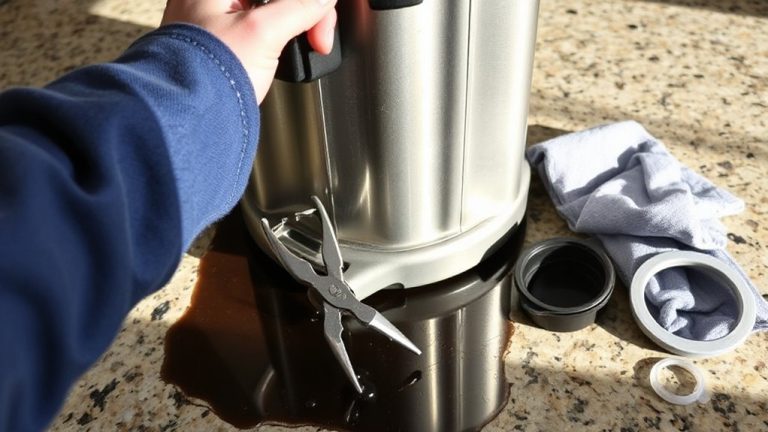
What do you do when your solar setup isn’t keeping up mid-service? First, check connections-loose wires or corroded terminals are common culprits. Tighten them with a multi-tool you keep on hand for portable repairs. If the panel isn’t angled to the sun, reposition it quickly; even 20 degrees off can cut efficiency by 30%. Carry spare fuses and a voltage meter to diagnose drops fast. Cloud cover or shading might require emergency fixes like switching to a backup battery or using a foldable booster panel, such as the Renogy 100W, to regain charge. Don’t rely on full output in bad weather-plan for 50% capacity. Keep zip ties, electrical tape, and a surge protector nearby. These small steps help maintain grinder operation without shutting down. Prevention beats crisis, but when issues hit, simple, fast actions keep you running.
Power Other Equipment With Solar
How much could running your entire cart on solar reduce fuel costs and noise? A lot-especially when you power more than just your grinder. With proper energy efficiency and equipment compatibility, solar can run your fridge, lights, and even an electric kettle. Here’s what’s possible:
| Equipment | Power (Watts) | Solar Feasibility |
|---|---|---|
| Grinder | 150 | High |
| Mini Fridge | 50 | High |
| LED Lighting | 20 | Very High |
| Electric Kettle | 1200 | Low (needs grid) |
Critical to success is matching your gear to your system’s output. Low-wattage appliances work best. High draw devices like kettles often exceed portable solar limits. But for continuous, quiet operation with less fuel, solar adds real value-just check specs and plan loads smartly.
On a final note
You can run your coffee cart grinder reliably on solar with the right setup. Size the system to handle peak grinder demand-usually 1,000 watts-and include battery storage for cloudy periods. Kits like the Jackery Explorer 1000 or EcoFlow Delta 2 power grinders and small brewers. Solar cuts fuel costs and noise, but you’ll need sun exposure. Use efficient gear and always have a backup plan-like an extra battery-for long days.