Why Water Temperature Must Be Higher for Coarse Grind Immersion Brews
You need hotter water-around 205°F-for coarse grind immersion brews because larger particles extract slower. High heat speeds up flavor diffusion, pulling out the full range of compounds without under-extracting. If the water’s too cool, your coffee tastes sour and thin, no matter how long it steeps. Use a gooseneck kettle like the Fellow Stagg EKG to nail the right temp. Preheat your French press and check with a digital thermometer for accuracy-small steps make a real difference in the cup.
Notable Insights
- Coarse grinds have less surface area, requiring hotter water to extract flavors efficiently.
- Higher temperatures increase solubility, compensating for slower extraction in coarse coffee particles.
- Water between 195°F and 205°F ensures full compound transfer without scalding the grounds.
- Immersion brewing relies on heat to maintain extraction balance over extended steep times.
- Cool water leads to under extraction, producing sour, weak, and flat-tasting coffee.
Best Water Temperature for French Press
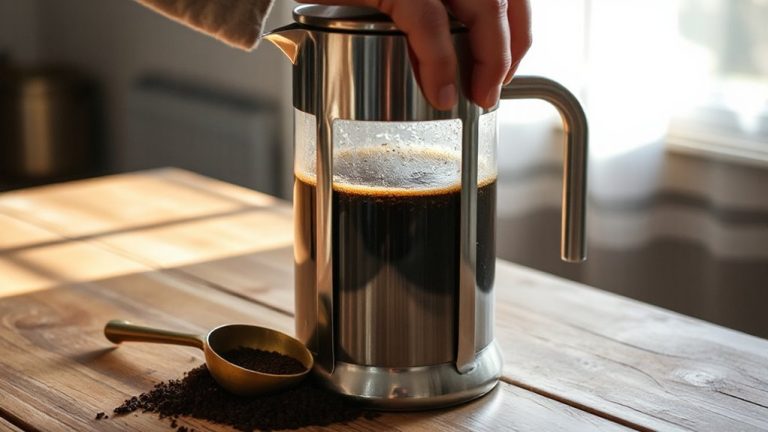
You’ll want to use water between 195°F and 205°F for French press brewing-that’s hot, but not quite boiling. This range optimizes French press saturation, ensuring even extraction without scalding the grounds. Too cool, and the coffee tastes weak; too hot, and it becomes bitter. The metal filter impact here is subtle but important-it allows oils and fine particles to pass through, enhancing body compared to paper filters. That full contact boosts flavor complexity, but only if the water’s hot enough to extract efficiently. A gooseneck kettle helps control pour speed, improving consistency. Unlike espresso or pour-over, immersion methods like French press rely on time and heat stability. Aim for 4-minute brew times with fresh, properly ground beans. This combo-right heat, full saturation, and metal filter impact-delivers balanced, rich coffee. Preheat the carafe to maintain temperature. Use a thermometer if your kettle lacks temp control. For even better results, consider using one of the best French press picks for consistent heat retention and durability.
Why Coarse Grinds Need Hot Water
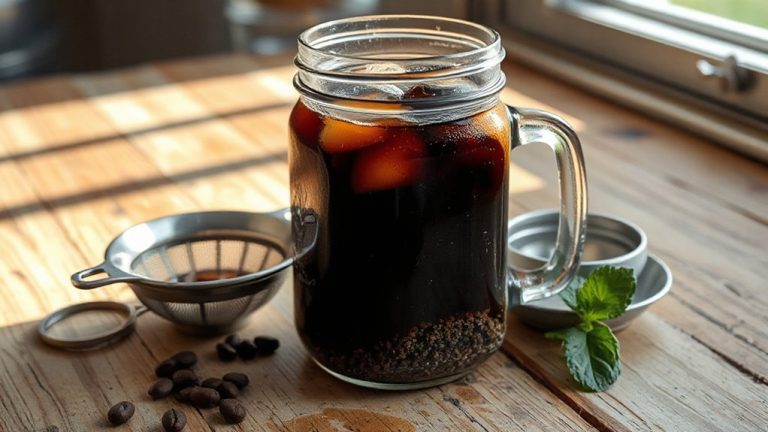
Water in the 195°F to 205°F range isn’t just ideal for French press-it’s a smart starting point for any coarse grind brew. You need that heat because a larger grind size means less surface area exposed to water, slowing down extraction. Without enough heat, your coffee’s extraction efficiency drops, leading to weak, underdeveloped flavor. Hot water helps compensate by boosting solubility and speeding up how quickly compounds move from grounds into your cup. For immersion methods like French press or cold brew (when using room temp water, steeping time must increase dramatically), maintaining proper temperature guarantees consistent results. While finer grinds risk over-extraction even at lower temps, coarse grinds rely on heat to achieve balance. So if you’re using a coarse setting, don’t turn down the heat-your brew’s strength and clarity depend on it. The ideal coarse grind size ensures even extraction and optimal flavor in French press brewing.
How Heat Changes Extraction in Immersion Brews
Since immersion brewing relies on soaking coarsely ground coffee in water for an extended period, temperature plays a critical role in how evenly and completely flavors extract. When you use hotter water, heat transfer into the coffee particles happens faster, helping dissolve desirable compounds more efficiently. This increased heat also boosts the diffusion rate-how quickly solubles move from the coffee into the water-ensuring a more consistent extraction despite the larger particle size. With coarse grinds, like those in a French press or cold brew (even when hot), this is essential to avoid weak or underdeveloped flavor. If the water’s too cool, extraction slows too much, leaving behind sweetness and complexity. But if you maintain a higher temperature-around 195°F to 205°F-you get balanced results, pulling out the right compounds without over-extracting bitter notes. This is why precise kettle control matters.
What Happens When Water Is Too Cool?
Ever wonder why your French press brew tastes flat or lacks depth? If your water’s too cool, you’re likely facing under extraction risks. Lower temps can’t break down coarse grounds efficiently, leaving desirable compounds behind. This leads to flavor imbalance-sour, weak notes dominate while sweetness and body fade. You’ll miss the full profile your beans offer.
| Issue | Result |
|---|---|
| Low temperature | Incomplete extraction |
| Under extraction risks | Sour, thin taste |
| Flavor imbalance | Lacks sweetness and depth |
| Coarse grind + cool water | Stale, hollow cup |
You need heat to push water through dense grinds. Without it, even a long steep won’t fix what’s missing. Aim higher-just under boiling-to guarantee even, thorough extraction.
How to Get the Temperature Right Every Time
Hitting the right water temperature isn’t guesswork if you’ve got the right tools. A gooseneck kettle with temperature control, like the Fellow Stagg EKG or Bonavita BV3825, lets you dial in precision-aim for 205°F to 210°F for coarse immersion brews. This range compensates for slower extraction caused by larger grinds, ensuring you get full flavor without extending brew time too much. Don’t overlook water chemistry; balanced minerals (like 100–150 ppm total hardness) help stabilize temperature effects and improve extraction efficiency. Use a digital thermometer if your kettle lacks a readout, and preheat your brewer to minimize heat loss. Too cool, and you’ll under-extract even with longer steeping. Too hot, and bitterness creeps in. Adjust in 2–3°F increments based on taste, roast, and grind. Consistent temp means consistent results. For precise pour-over control, consider kettles with a gooseneck spout designed for optimal flow rate and accuracy.
On a final note
You should use hotter water for coarse grind immersion brewing because it helps extract flavor from the larger coffee particles. Water just off the boil-around 200°F-ensures even extraction without overdoing bitterness. If the water’s too cool, your coffee tastes weak and sour. For French press or similar methods, always preheat your gear, use a gooseneck kettle for control, and stir well after pouring.