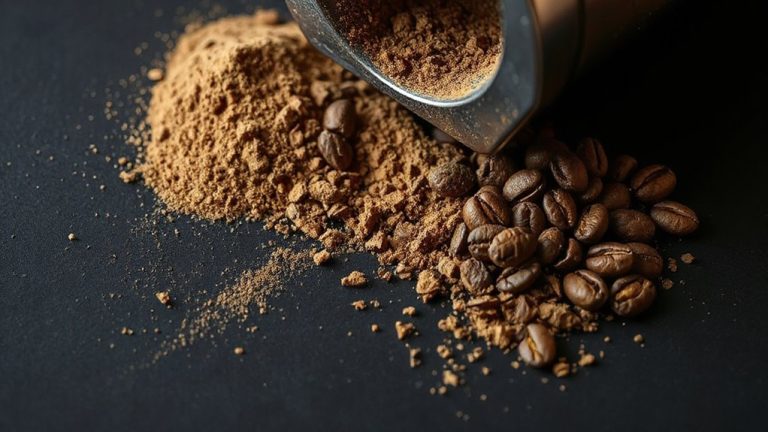
Espresso Shot Pulling With Manual Machines: Controlling Pressure by Hand
You control pressure entirely by hand on a manual lever machine, aiming for 9 bars during the pull. Start slow-ramp pressure over 10–15 seconds to avoid channel provocating splurts. Sustain steady force until around 25–30 seconds, then ease off smoothly for a clean finish. Fine grinds need more pressure; coarse ones less. Watch the stream: a honey-like flow means you’re on track. Direct levers like the La Pavoni demand skill, while spring models like the Vibiemme Domobar Junior offer more forgiveness. Mastery comes with repetition-each pull sharpens your feel.
Notable Insights
- Manually generate 9 bars of pressure using steady hand force to ensure proper extraction in manual espresso machines.
- Ramp up pressure over 10–15 seconds to prevent channeling and promote even water distribution through the puck.
- Maintain consistent pressure until 25–30 seconds, then release gradually to avoid over-extraction and bitter flavors.
- Adjust grind size to control flow rate-finer grinds increase resistance, requiring higher hand-applied pressure.
- Observe flow consistency; a smooth, honey-like stream indicates correct pressure, while sputtering suggests channeling or uneven preparation.
Why Pressure Control Defines Manual Espresso
Precision matters most when pulling shots on a manual espresso machine, and pressure control is where that precision begins. You’re responsible for generating the 9 bars needed, not a machine, so your hand controls extraction quality. Unlike lever machines with pre-infusion assistance, manual models rely entirely on your input, making tactile feedback critical-you feel resistance changes as water meets puck. This direct connection helps you adjust in real time, but it also brings muscle fatigue, especially during back-to-back pulls. Spring piston levers like the Leva or Synesso Mammoth reduce effort, but true manual portafilters demand consistent strength. Over time, fatigue can compromise shot quality if you can’t maintain steady pressure. That’s why many baristas train for endurance and technique. Tactile feedback gives control; muscle fatigue threatens consistency. Mastering both is foundational. It’s not just about strength-it’s about sensitivity and stamina working together to shape flavor.
Timing Pressure Application and Release During the Pull
You already know your hands shape the shot from the first pump, but what really steers extraction is when you apply and release pressure. Proper pressure timing starts with a ramp-up over the first 10–15 seconds, letting espresso form without channeling. Apply steady force until around 25–30 seconds, then ease off. That gradual flow release helps avoid sourness and over-extraction. Too early a release and the shot runs fast and weak; too late and it turns bitter. With lever machines like the Leva or manual portafilters like the Naked Zeus, feel matters-watch the stream thicken and slow. You’re aiming for a smooth, honey-like flow that stops naturally. Mastering pressure timing means less guesswork and more control. Flow release isn’t just ending the pull-it’s finishing extraction cleanly, preserving balance. Practice makes consistent. For those looking to perfect their technique, investing in the right best latte-making gear can significantly enhance overall shot quality and consistency.
How Grind Size Impacts Pressure and Flow
A slightly finer grind can make a big difference when pulling shots on manual machines, since it directly affects how much resistance the water meets as it moves through the puck. Your grind uniformity and particle distribution play key roles-uneven particles cause channeling, while consistent ones promote even extraction. Too fine risks stalling; too coarse leads to fast, weak shots.
| Grind Size | Flow Rate | Pressure Needed |
|---|---|---|
| Coarse | Fast | Low |
| Medium | Balanced | Moderate |
| Fine | Slow | High |
Adjusting grind size lets you tune flow and needed hand pressure. With better grind uniformity from quality burrs like those in an EK43 or DF64, your particle distribution improves, giving you more control and consistency shot after shot. For manual espresso grinding, choosing the right best manual espresso grinder can significantly enhance grind consistency and overall shot quality.
Reading the Flow: Spotting Pressure Issues in Real Time
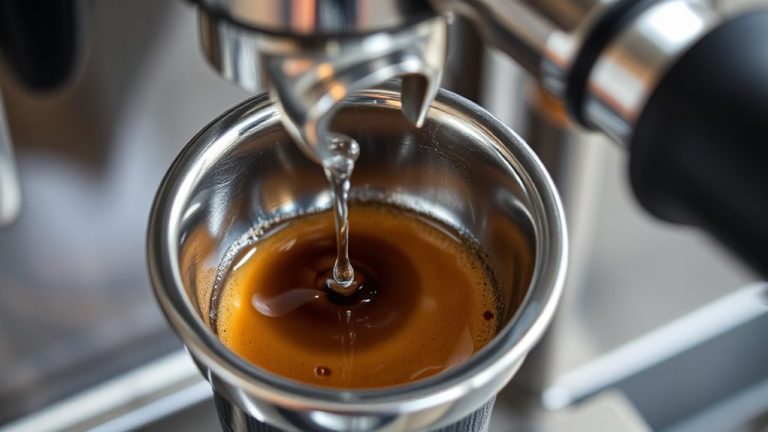
While the machine handles water delivery, it’s up to you to watch the shot unfold and spot trouble before it ruins the espresso. A smooth, steady stream means even extraction, but if you see a turbulent flow-sputtering, uneven sprays, or one thick jet-the puck’s likely compromised. That erratic movement often points to channeling signs, like water forcing paths through weak spots in poorly distributed grounds. You’ll notice it fast: the shot speeds up, looks foamy, or drips inconsistently from one spout. Tamping too lightly or unevenly increases these risks, especially with finer grinds. A consistent, honey-like flow suggests stable pressure and good prep. If turbulence appears regularly, check your grind, dose, or distribution. Catching these cues early helps you adjust on the fly and pull balanced shots without relying on guesswork. For more precision in your setup, consider upgrading to one of the best espresso grinders to ensure a uniform espresso grinder performance.
How Lever Types Shape Your Pressure Curve
Because not all levers work the same, the type of lever system in your machine plays a direct role in shaping the pressure curve during extraction. With a direct lever, you control pressure entirely by hand, pulling the lever down steadily to build pressure fast-this gives you maximum control but demands skill and consistency. Machines like the La Pavoni Europiccola fall in this category. In contrast, a spring piston design, like in the Vibiemme Domobar Junior, uses a coiled spring to buffer your input. This smooths out the pressure curve, making it easier to hit 6–9 bars without overpressuring. Spring piston systems are more forgiving and better for beginners. Direct levers offer a steeper learning curve but reward precision. Your choice depends on how much control you want and how consistent you can be with timing and force. Each system shapes extraction differently-pick based on your technique and goals.
Build Consistent Pulls With Targeted Practice
You’ve got the lever type sorted-now it’s about making those pulls consistent. Build pull consistency by focusing on your pressure rhythm during each shot. With manual machines, you control the speed and force, so small variations in your hand movement can change extraction. Practice the same downstroke timing and resistance every time-aim for smooth, predictable input. Pull five shots in a row using the same grind and dose, adjusting only your hand pressure to refine rhythm. Machines like the La Pavoni Europiccola or Bezzera Strega respond well to this kind of targeted repetition. Track the outcome: consistent 25–30 second shots with even flow mean you’re dialing in right. Over time, muscle memory improves precision. It’s not about strength-it’s control. Targeted practice builds reliability, turning manual operation from guesswork into a repeatable craft.
On a final note
You control pressure directly with manual machines, making timing and grind essential. Pulls need consistent practice-adjust grind size to fine-tune flow, watch the stream for signs of over- or under-extraction. Lever types, like spring piston or direct, shape your pressure curve differently. Use a pressure gauge if possible. With practice, you’ll pull balanced shots, but it takes repetition. Automation offers ease; manual gives control-if you’re willing to learn.