Why Pre-Wetting Coffee Grounds Enhances CO2 Release and Even Saturation
You pre-wet coffee grounds to release trapped CO₂, which builds up after roasting and slows water absorption. Without this step, carbon dioxide blocks even saturation, leading to uneven extraction and sour flavors. Pouring twice the weight of water over the grounds lets gas escape while fully wetting the bed. Use a gooseneck kettle for control, and wait 30–45 seconds before continuing. Light roasts especially need this, as they degas slower. Letting the bloom finish guarantees better flavor, clarity, and consistency across brews like V60 or Kalita-especially if you want to optimize every pour.
Notable Insights
- Pre-wetting saturates coffee grounds, initiating the release of trapped CO₂ from the roasting process.
- CO₂ buildup creates barriers to water; blooming displaces this gas for more uniform extraction.
- A 30–45 second pre-wet allows full degassing, especially critical for fresh, CO₂-rich light roast beans.
- Even saturation during blooming prevents dry pockets and minimizes channeling in the coffee bed.
- Using a gooseneck kettle and gentle agitation ensures consistent water distribution and optimal bloom.
What Is Coffee Blooming and Why It Matters
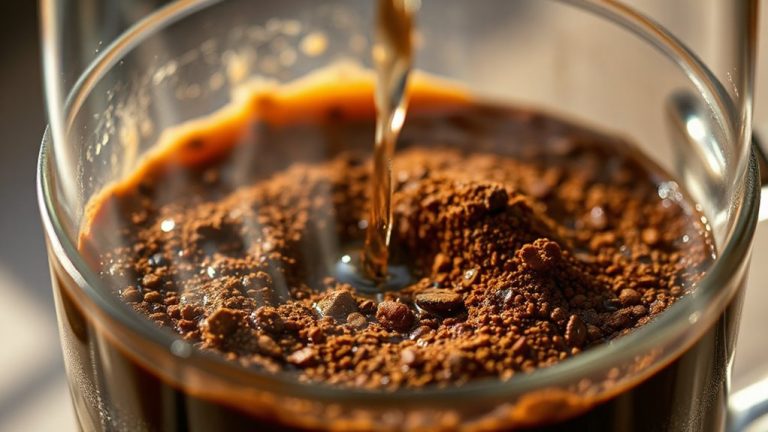
Why does your coffee sometimes seem flat or underwhelming? It might be skipping bloom-a vital step in brewing. When you pour hot water over fresh grounds, you’ll see them bubble and puff up. That’s CO₂ escaping, a natural byproduct of roasting. This initial release matters because trapped gas interferes with even extraction. By pre-wetting the bed and waiting 30–45 seconds, you let CO₂ dissipate, promoting uniform saturation. This simple pause supports better coffee chemistry, allowing water to fully interact with soluble compounds. You’ll also notice improved aroma development-more floral, fruity, or spicy notes become apparent. Skipping bloom, especially with light roasts or paper-filter methods like pour-over or Chemex, can mute flavor. For immersion brews like French press, stirring immediately achieves a similar effect. Regardless of brewer, blooming is low-effort, high-reward-a small step with noticeable impact on clarity and balance.
Why Fresh Coffee Releases So Much CO2?
Freshly roasted coffee releases a lot of CO₂ because the roasting process chemically transforms the beans, creating gases as a natural byproduct. You’ll notice this most in the first few days after roasting, when CO₂ escapes rapidly due to strong internal pressure. This outgassing is driven by gas diffusion, where CO₂ moves from high concentration inside the bean to lower concentration in the air. The rate slows over time as coffee aging progresses, reducing freshness and aroma. Light roasts tend to retain gas longer than dark roasts due to denser structure, affecting how you should time your brew. If you’re using beans within a week of roasting, expect vigorous blooming. Stale beans, after two or more weeks, release less gas, leading to flat extraction. For best results, use fresh coffee but allow a 24–72 hour rest post-roast to balance gas diffusion and flavor clarity.
What Happens When Water Hits Coffee Grounds
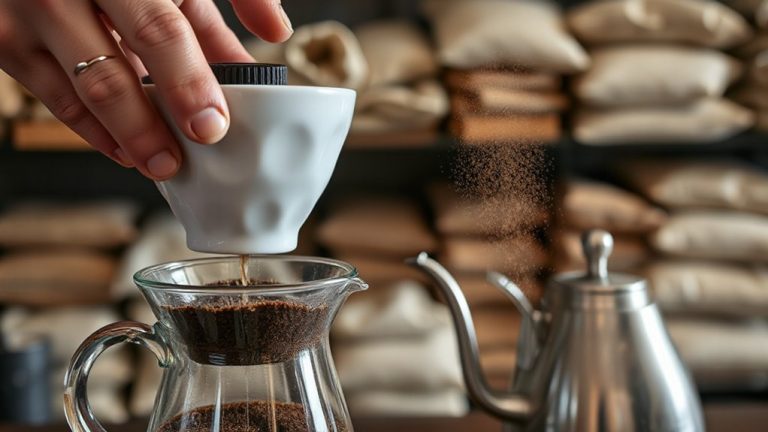
When water first makes contact with coffee grounds, it starts extracting soluble compounds that give your brew its flavor, aroma, and body. You’ll notice initial resistance as the dry bed repels water briefly-this is especially true with fresh beans, which trap CO₂. That resistance slows even saturation, leading to uneven extraction if ignored. Proper water contact is key: too fast, and channels form; too slow, and you risk over-extraction in spots. A gooseneck kettle helps control flow, ensuring water reaches all grounds uniformly. The precision of a gooseneck kettle is especially beneficial during the pre-wet phase, allowing gentle and even pouring that minimizes channeling. Medium grind sizes, like those for pour-over, balance surface area and flow rate. Fine grinds increase resistance, while coarse ones reduce extraction. The goal is consistent, full saturation without disturbing the bed too much. Temperature matters too-just off-boil (195–205°F) optimizes extraction without scalding.
How to Bloom Coffee Step by Step
A proper bloom starts by pouring just enough hot water-about twice the weight of the coffee grounds-to wet them evenly. This pre wet timing lets trapped CO₂ escape, which improves extraction. Stir gently to guarantee even saturation control, then wait 30–45 seconds before continuing your pour. Use water just off the boil (195–205°F) for best results, especially with light roasts that degas more slowly.
| Stage | Time (sec) | Purpose |
|---|---|---|
| Wetting | 0–5 | Initiate pre wet timing |
| Resting | 30–45 | Allow CO₂ release |
| Stirring | 5–10 | Boost saturation control |
| Pouring | 45+ | Begin extraction |
| Monitoring | Ongoing | Adjust for even brew |
Keep the process consistent-this simple step sets the foundation for a balanced, flavorful cup, whether you’re using a V60, Kalita, or AeroPress.
Common Blooming Mistakes and How to Fix Them
Skipping the bloom or doing it too fast is one of the most frequent missteps, and it shows in the cup-uneven extraction, dull flavors, or sour notes, especially with light roasts. You’re likely rushing if your coffee tastes off. Uneven pouring leads to dry pockets, so you miss full saturation. Use a gooseneck kettle for control-it helps you wet all grounds evenly. Aim for a steady, spiral motion from center to edge. Missed agitation during bloom means trapped CO2 stays put, blocking water flow. Stir gently with a spoon or swirl the brewer to guarantee contact. Let the bloom last 30–45 seconds; under- or over-blooming hurts consistency. Fresh beans need full time. With darker roasts, you can shorten it slightly. Watch for expansion and bubbling-when it settles, you’re ready to continue. These fixes are simple but effective.
How Blooming Boosts Flavor
Though it might seem like a small step, letting your coffee bloom actually makes a real difference in how evenly it extracts, and that shows up loud and clear in the flavor. When you pour just enough water to saturate the grounds and pause for 30–45 seconds, you’re allowing trapped CO2 to escape. That gas buildup can block water flow, leading to uneven extraction. By releasing it early, water penetrates more uniformly, improving flavor development. You’ll notice sweeter, more balanced notes instead of bitterness or sourness. Proper blooming also boosts aroma extraction-essential oils and volatile compounds carry scent and taste, so releasing them early enhances the sensory experience. This matters most with fresh beans, especially within a week of roasting, when CO2 levels are highest. Use a gooseneck kettle for precision, and keep the slurry wet without over-saturating. Skip this step, and you risk dull, flat results.
On a final note
You bloom coffee to release trapped CO₂, which improves extraction and flavor. Skipping it risks uneven saturation and sour notes. Use hot water-just off boil-and wet all grounds evenly. Let it fizz for 30–45 seconds before continuing. A gooseneck kettle gives better control. Fresh beans need blooming; older beans release less gas. It’s a small step with real impact, especially in pour-over. For French press, stir after blooming to maximize contact.