Top-Rated Built In Coffee Machines for a Gourmet Kitchen
You’ll get pro-level results with models like the Bosch 24” BCM8450UC or Fisher & Paykel EB24DSX1, both offering one-touch lattes and built-in grinders. The Thermador TCM24PS connects to your water line and delivers 28 drinks with quiet, easy-clean operation. For space-saving setups, consider the compact Bosch 300 Series. Hardwired systems like the Brew Express BE-110 BS fit flush in walls but need professional installation. Each model balances automation, maintenance, and kitchen integration-your priorities shape the best pick. There’s more to weigh based on your setup and habits.
We are supported by our audience. When you purchase through links on our site, we may earn an affiliate commission, at no extra cost for you. Learn more. Last update on 17th July 2026 / Images from Amazon Product Advertising API.
Notable Insights
- Thermador TCM24PS offers 28 beverage options with a built-in milk system and quiet, fully automatic operation.
- Fisher & Paykel EB24DSX1 provides 13 programmed drinks and a conical burr grinder for consistent, gourmet results.
- Bosch 300 Series delivers one-touch espresso and milk-based drinks with a ceramic grinder and Milk Express frother.
- Built-in models like Thermador and Bosch support personalized presets and remote brewing via smart connectivity.
- Professional installation is required for plumbed units to ensure proper water line, power, and cabinet integration.
Bosch 24″ Built-In Coffee Maker (BCM8450UC)
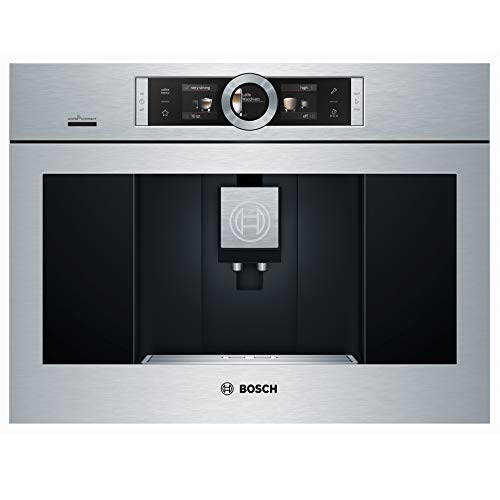
If you want a built-in coffee machine that lets you control brewing from your phone, the Bosch 24″ Built-In Coffee Maker (BCM8450UC) makes sense, especially if you value smart features in your kitchen setup. It uses Home Connect, so I can start espresso from my phone-handy when prepping breakfast. This fully automatic model fits 24-inch cabinets, runs on ground coffee, and weighs 43 pounds, so it’s stable but needs secure installation. It’s stainless steel, modern, and fits one unit. While it’s ranked low overall, it’s #1,283 in coffee machines, with a 3.7-star average from 19 reviews-decent, but not stellar. I’d check newer models if reliability’s a top concern.
Best For: Homeowners seeking a built-in, app-controlled coffee maker with smart home integration for a modern kitchen setup.
Pros:
- Features Home Connect for smartphone-controlled brewing, offering convenience and automation
- Fully automatic operation with ground coffee input, designed to fit standard 24-inch cabinetry
- Sleek stainless steel design with a solid build quality at 43 pounds for stable performance
Cons:
- Relatively low customer rating of 3.7 stars from only 19 reviews, indicating mixed user satisfaction
- Ranked #1,954,977 in Home & Kitchen, suggesting limited market presence or popularity
- Potential reliability concerns based on sparse feedback and outdated release date (2018)
Fisher & Paykel 24″ Series 9 Contemporary Built-in Coffee Maker EB24DSX1
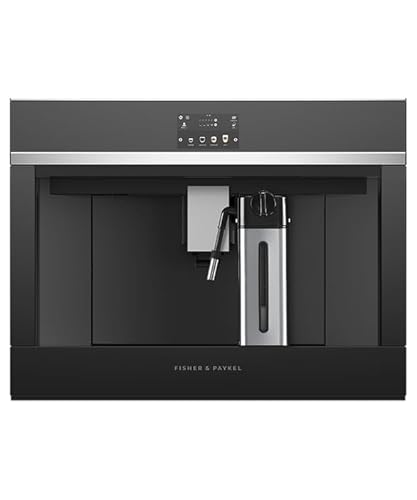
The Fisher & Paykel 24″ Series 9 Contemporary Built-in Coffee Maker EB24DSX1 is ideal for homeowners who want a sleek, fully integrated coffee solution without sacrificing drink variety or ease of use. I appreciate its 13 programmed drinks, like Flat White and Latte, plus the conical burr grinder for consistent results. The touch display guides me through cleaning and refills, while the self-cleaning function and removable drip tray simplify upkeep. It fits tight spaces at 24 inches and installs at custom heights. Though it uses filter coffee, not espresso, it’s practical for families who want quality coffee fast. I find it blends well with modern kitchens, especially matching other Series 9 appliances.
Best For: Homeowners seeking a sleek, built-in coffee maker with diverse drink options and low maintenance for modern, compact kitchens.
Pros:
- Offers 13 programmed drink options, including Flat White and Latte, for versatile coffee experiences
- Features a conical burr grinder and intuitive touch display for consistent quality and ease of use
- Self-cleaning function and removable components simplify maintenance and upkeep
Cons:
- Uses filter coffee instead of espresso, limiting authenticity for espresso-based drinks
- High integration design may complicate installation and future relocation
- Released April 2025, so long-term reliability and service availability are unproven
Built-in Coffee Machine Stainless Steel, Plumbed

I rely on my Thermador TCM24PS built-in coffee machine when I want café-quality drinks without the morning hassle, and its stainless steel, fully plumbed design fits seamlessly into my modern kitchen. It pulls shots and steams milk automatically, delivering 28 drinks-from espressos to lattes-thanks to its built-in milk system and frother. I save my eight favorite presets and brew remotely, which cuts waiting time. The plumbed water line means I skip refilling tanks, and the filter keeps water clean. It’s quiet, cleans easily, and works in homes or offices. At nearly $3,000, it’s steep, but durability and performance justify the cost for serious users.
Best For: Home baristas and busy professionals seeking a premium, fully integrated coffee experience with café-quality results and minimal daily maintenance.
Pros:
- Delivers 28 beverage options with built-in milk system and frother for espresso, cappuccino, and latte lovers
- Fully automatic and remotely controllable with personalized drink presets for convenience
- Plumbed water connection and quiet operation make it ideal for seamless kitchen integration
Cons:
- High upfront cost at nearly $3,000, limiting accessibility for casual users
- Requires professional installation due to built-in and plumbed design
- Limited availability of warranty and support details without accessing external links
10 CUP BUILT-IN-THE-WALL – SELF FILLING COFFEE SYSTEM

You’re upgrading your gourmet kitchen with built-in appliances, and a wall-mounted coffee system makes sense when space matters and convenience is non-negotiable. I’ve used the 10-cup Brew Express BE-110 BS, and it’s a hardwired, self-filling system that taps into your home’s water line, so I never refill a reservoir. It fits in a recessed wall with a satin chrome finish and needs a mounting plate (DL 310547). Touch controls with a blue nightlight let me set brew times precisely, and the infrared sensor stops flow when I lift the carafe. It brews faster than standard machines, but it’s not dishwasher safe. I use the multi-cup basket for full pots, and it retrofits where a BE-112 once sat-ideal if I’m upgrading.
Best For: Homeowners upgrading their kitchen with space-saving, built-in appliances who want the convenience of a self-filling, fully automatic coffee system.
Pros:
- Hardwired and self-filling design eliminates the need for manual water refills by connecting directly to the home’s water line
- Fits flush in a recessed wall with a sleek satin chrome finish, ideal for modern, space-efficient kitchens
- Fully programmable with fast brewing, touch controls, and an infrared pause-n-brew sensor to prevent spills
Cons:
- Not dishwasher safe, requiring hand cleaning for maintenance
- Requires professional installation with hardwired 120-volt power and water line connection
- Limited to right-handed base design, which may not suit all cabinet configurations
Bosch 300 Series Espresso Machine
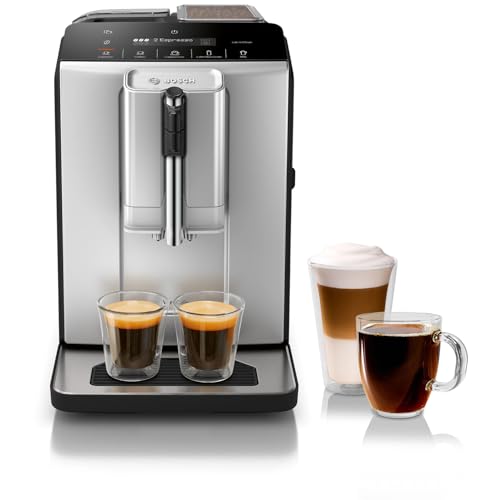
Built for precision and simplicity, the Bosch 300 Series Espresso Machine suits home baristas who want restaurant-quality espresso without the learning curve. I use its one-touch brewing and ceramic grinder daily-it delivers consistent, aromatic shots. The Aroma Max System adjusts grind flow, temperature, and dosage, while the Milk Express frother gives me creamy lattes with minimal cleanup. I appreciate the compact size and front-access brew unit, which makes rinsing easy. It includes a water filter and cleaning tablets, and the Calcn Clean function guides descaling. At under 15 pounds and with a sleek silver finish, it fits neatly in my kitchen.
Best For: Home baristas seeking a compact, fully automatic espresso machine that delivers consistent, high-quality coffee with minimal effort and easy maintenance.
Pros:
- One-touch brewing with a durable ceramic grinder ensures precise, aromatic espresso shots with no overheating
- Milk Express frother creates barista-quality milk foam directly in the cup for lattes and cappuccinos with minimal cleanup
- Compact design, front-access brew unit, and Calcn Clean system make it user-friendly and easy to maintain
Cons:
- Limited to single-unit capacity with no built-in bean hopper for multiple bean types
- Milk frothing requires manual filling and cleaning of the milk container
- Higher price point compared to entry-level automatic machines
Factors to Consider When Choosing a Built-in Coffee Machine
You’ll want to think about what kinds of coffee you actually make before picking a built-in machine-some models, like the Miele CM 6350, offer everything from espresso to flat whites, while others are more limited. Make sure the unit fits your cabinet space and existing plumbing, since installation can get tricky if you overlook power or water line needs. Don’t skip over how easy it is to clean or program, either-features like automatic rinsing and customizable settings save time and hassle in the long run.
Coffee Type Options
A built-in coffee machine’s beverage options play a key role in matching the machine to your daily routine and taste preferences. You’ll find models offering up to 28 drinks, from espresso to latte, so you can switch between strong shots and creamy cappuccinos effortlessly. If you love milk-based drinks, pick a unit with an integrated milk system and automatic frother-just press a button for macchiatos or flat whites. For the best flavor, choose a machine with a conical burr grinder; it delivers a consistent grind from whole beans, improving every brew. Need convenience? Programmable presets let you save up to eight custom drinks, so your morning coffee tastes the same every time. If your household likes traditional drip coffee, go for a fully automatic model that brews single cups or full carafes. This flexibility guarantees everyone gets their preferred style without extra effort.
Installation Requirements
When planning for a built-in coffee machine, start by checking your kitchen’s layout and utility access, since these units often need dedicated electrical wiring and a direct water line. You’ll likely need a hardwired connection-no standard plug-ins-and a permanent water feed for automatic refill. Confirm your cabinet cutout matches the model’s exact width, height, and depth; brands like Miele and Gaggenau have specific sizing. Install a mounting plate or rough-in box to secure the unit flush and aligned. If you want built-in grinders or milk systems, make sure there’s enough overhead clearance for internal components. Ventilation matters too-heat and steam need to escape. Also, position near a drain for waste water in fully integrated setups. Skip this, and you’ll face leaks or damage. Retrofitting older kitchens can be tough, so plan early.
Ease Of Maintenance
After confirming your kitchen has the right space, water line, and electrical setup for a built-in coffee machine, the next step is thinking about how easy it will be to keep it running well. You’ll want models with self-cleaning cycles and removable drip trays or waste containers to cut down on daily cleanup. Machines like those from Miele or Jura with front-access brew units let you rinse parts quickly and get back to brewing faster. Built-in water filters reduce limescale, so you’ll descale less often and extend the machine’s life. Look for dishwasher-safe pieces-like frothers and brew baskets-to skip tedious hand washing. Some units even alert you when it’s time to descale or replace parts, so you’re not guessing. These features save time and keep performance steady with little effort on your end.
Programmable Features
What if your coffee machine could start brewing before you even step into the kitchen? With programmable timers, it can-just set the time and wake up to fresh coffee. You can also customize brew strength, saving your preferred intensity so every cup tastes just right. Some models let you store up to eight drink profiles, so one touch brews your usual order without adjustments. Touchscreens or clear LED displays guide you through setup, cleaning, and maintenance, making operation straightforward. Automated shut-off boosts safety and saves energy by turning the machine off after a set period. These features work best if your routine is consistent, but they’re less useful if your schedule changes often. Look for models like the Miele CM 6350 or Siemens EQ.9 for reliable programming that fits real-life habits.
Size And Fit
While some built-in coffee machines blend seamlessly into modern kitchens, getting the right fit starts with checking your cabinet dimensions before you buy. Most models need a 24-inch width to match standard cabinetry, but compact versions fit in as little as 12 inches-ideal for small spaces. Depth matters too: units range from 16 to 24 inches, so you’ll need enough rear clearance for water lines and plumbing access. Don’t forget height-many exceed 17 inches and might not fit under standard upper cabinets without adjustments. Full-integration models require exact cutout sizes to mount flush and allow proper ventilation. Measure twice, especially if you’re retrofitting. Units like the Miele CM 6350 demand precision, while Bosch’s built-ins offer more flexibility. Choosing the right size means balancing kitchen space with functionality-skip the guesswork, and you’ll avoid costly changes later.
Frequently Asked Questions
How Much Electricity Does a Built-In Coffee Machine Use?
You use about 1,000 to 1,500 watts when brewing, similar to a microwave. It only runs at full power during brewing and steaming, which lasts minutes. Once heated, it uses less to maintain temperature. You’ll pay roughly $1–$3 monthly in electricity, depending on use. Models like Miele CVA680 or Gaggenau EY501 are efficient, but all built-in machines use comparable power. Turn it off when not in use to save energy.
Can I Use Ground Coffee in These Machines?
You can’t use ground coffee in most built-in espresso machines-they’re designed for whole beans and have integrated grinders like the Miele CM 6350 or Siemens EQ.9. Adding pre-ground coffee usually voids warranties and affects performance. Some models, like certain Gaggia高端 units, offer a bypass doser for ground coffee, but it’s an exception. For best results and machine safety, stick to whole beans unless your model explicitly supports pre-ground.
Are Built-In Coffee Machines Louder Than Regular Ones?
Yes, built-in coffee machines are usually louder than regular drip models because they include grinders, pumps, and steam systems that generate more noise. You’ll hear grinding beans, pressure buildup, and milk frothing-especially in models like Miele or Gaggenau. If noise matters, look for units with sound insulation or use them when it won’t disturb others. Standalone drip machines are quieter since they lack these high-pressure components.
Do I Need a Water Line for All Models?
No, you don’t need a water line for all models-some built-in coffee machines use a reservoir instead. You’ll find that fully plumbed systems, like the Miele CVA680, offer convenience and suit high-volume use. But if you lack plumbing access or want flexibility, go for a model like the Siemens EQ series, which lets you fill the internal tank manually every few days.
Can I Make Tea With a Built-In Coffee Machine?
You can’t make tea directly in most built-in coffee machines since they’re designed for brewing coffee, not steeping tea leaves or bags. Some high-end models, like certain Miele or Gaggenau units, include hot water dispensers that let you draw hot water for tea. Otherwise, you’ll need a kettle or separate appliance. While convenient for coffee, these machines aren’t multifunctional, so plan accordingly if tea is a daily need.