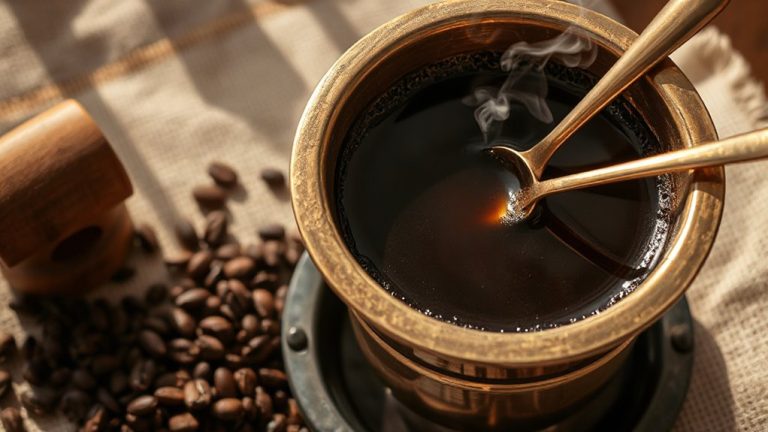
Maximizing Flavor Potential Through Proper Use of Glass or Ceramic Containers in Turkish Coffee Preparation
Use glass or ceramic containers to maximize flavor in your Turkish coffee. Glass keeps tastes pure by not absorbing oils or odors, while ceramic holds heat longer for deeper extraction. Both are non-reactive, so no metallic aftertaste forms. Preheat your vessel to stabilize temperature, and choose a tapered shape to boost foam. Clean gently-harsh scrubbing damages surfaces. Pick ceramic for richness, glass for clarity; each enhances your brew in a specific way. There’s more to get right with timing and heat control.
Notable Insights
- Use ceramic jezves for superior heat retention, ensuring gradual and even extraction for richer flavor development.
- Choose glass containers to preserve aroma purity, as their inert surface prevents odor absorption and flavor contamination.
- Pre-warm glass vessels to maintain optimal serving temperature without compromising the coffee’s aromatic profile.
- Opt for tapered ceramic or glass designs that promote foam formation by trapping steam and lifting fine coffee grounds.
- Avoid reactive materials; glass and ceramic prevent metallic aftertastes, especially important for acidic Turkish coffee brews.
Why Your Turkish Coffee Pot’s Material Matters
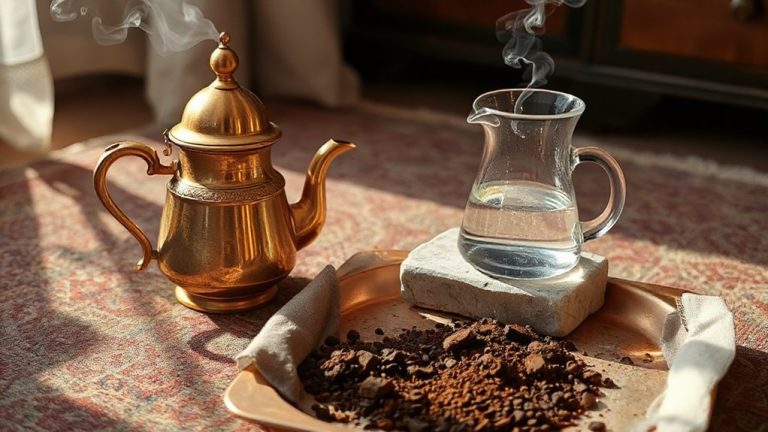
Your Turkish coffee pot’s material plays a key role in heat control, extraction, and consistency. Copper ibriks heat quickly and respond well to temperature changes, giving you precise control-ideal for avoiding boiling over. Stainless steel versions are durable and resist corrosion, though they don’t retain heat as evenly. Traditional brass or silver pots offer strong historical significance, often handcrafted with intricate designs reflecting regional identity. These materials carry cultural symbolism, passed down through generations during weddings or rituals. Ceramic-lined or clay pots insulate heat longer, helping maintain steady brew temps but are more fragile. While not used for brewing directly, serving in glass preserves aroma, which isn’t the focus here. Your choice affects flavor clarity and brewing ease. For daily use, copper or stainless steel offers reliability and better performance. Pick based on stove type, frequency, and care routine-practicality should guide more than tradition, even if tradition adds weight.
How Glass Preserves Aroma and True Flavor
While heat control matters during brewing, what happens after pouring can be just as important-especially when serving in glass. When you pour Turkish coffee into a glass cup, you’re maximizing aroma retention because glass doesn’t absorb odors or residues like porous materials. This inert quality guarantees flavor purity with every sip. Unlike ceramics, which can leach old flavors if not cleaned thoroughly, glass gives a clean slate each time. Thin-walled glass also lets you feel the temperature without trapping heat too long, helping prevent over-extraction on the palate. While it cools faster than ceramic, that’s a fair trade if you prioritize smelling and tasting the coffee’s true profile immediately. For best results, pre-warm the glass slightly to extend serving temperature without dulling the aroma. If you want to experience the full complexity of well-brewed Turkish coffee-floral, spicy, or nutty notes-glass is your best bet for accurate flavor purity and strong aroma retention. A high-quality glass grinder ensures the precise particle size needed to optimize flavor extraction before brewing.
Ceramic Jezves Hold Heat for Richer Brews
Ceramic jezves offer a distinct advantage when brewing Turkish coffee because they retain heat longer than metal or glass counterparts. Their superior thermal retention keeps the brew at a perfect temperature longer, allowing for a gradual extraction that enhances flavor depth. This slow, steady process brings out richer notes and a fuller body in your cup. Unlike metal, which can overheat quickly, or glass, which cools fast, ceramic sustains the ideal range with minimal fluctuations. For those seeking convenience without sacrificing tradition, an electric Turkish coffee maker can provide consistent heating similar to ceramic jezves. Choose ceramic when depth and warmth matter most. Just be cautious with stovetop use-some ceramic jezves aren’t induction-safe. Always check manufacturer guidelines for compatibility and care.
Choose the Right Shape for Perfect Foam
Foam is the hallmark of well-made Turkish coffee, and the shape of your brewing vessel plays a key role in achieving that delicate, velvety layer. You’ll want a container with a wide base and narrow neck-like a traditional cezve-to promote even heat distribution and controlled expansion. This design supports brew symmetry, ensuring water and grounds circulate evenly for uniform extraction. Without it, you risk weak spots or sudden boil-overs. The narrowing top also traps steam, helping lift fine grounds to form a stable foam. For best foam consistency, aim for a 3:1 height-to-width ratio-too tall and the foam collapses; too wide and it won’t concentrate. Glass and ceramic both work well, but go for gently tapered walls over straight-sided jars. Shape isn’t everything, but it makes a noticeable difference in texture and stability.
Avoid Metallic Taste With Non-Reactive Pots
A metal pot might seem like a sturdy choice for brewing Turkish coffee, but it can leave behind an unwanted metallic aftertaste that dulls the rich, concentrated flavor you’re aiming for. This happens due to material reactivity-metals like aluminum or low-grade stainless steel interact with the coffee’s natural acids, leading to flavor contamination. You’ll notice it most in the finish, where subtle aromatic notes should shine. Glass or ceramic pots, however, are non-reactive, so they preserve the coffee’s authentic taste. Brands like cezve-i or traditional ibrik models made from porcelain avoid this issue entirely. While metal might heat faster, the trade-off in flavor clarity isn’t worth it. If you’re using fine, freshly ground beans, you want every sip to reflect their quality-not the pot’s chemistry. Choosing non-reactive materials guarantees what you taste is pure coffee, not a reaction byproduct. Stick with glass or ceramic, and you’ll eliminate one of the most common sources of off-flavors.
Preheat Your Jezve for Steady Extraction
If you want consistent extraction from your Turkish coffee, warming the jezve before adding the grounds and water makes a noticeable difference. Preheating supports better temperature control, helping the brew reach the ideal heat gradually and evenly. That means fewer sudden spikes that can burn the fine grounds or create bitter notes. You’ll get extraction stability, preserving the coffee’s rich, nuanced flavors. Just place your empty glass or ceramic jezve on low heat for 15–20 seconds-no need to go too long. This step is especially useful with thicker ceramic models, which respond slower to heat. Skipping preheating might lead to uneven bloom and weak flavor development. You’re not just warming a pot; you’re setting the stage for a smoother, more predictable brew. It’s a small move with real impact on how your coffee tastes, and once it becomes routine, you’ll notice the difference.
Clean Your Jezve Right: So Coffee Tastes Better
Because residue from old coffee oils and fine grounds can taint your next brew, cleaning your glass or ceramic jezve right after use keeps flavors fresh and consistent. Daily maintenance prevents residue buildup, which dulls taste over time and makes cleaning harder later. Right after pouring your coffee, rinse the jezve with warm water-don’t wait. Letting grounds dry inside leads to stubborn sticking and off-flavors. Use a soft sponge and mild dish soap, but avoid harsh abrasives that can scratch ceramic or weaken glass. For tougher residue, soak briefly in warm, soapy water. Don’t put it in the dishwasher unless the manufacturer says it’s safe-thermal shock can crack ceramic, and detergents may leave a film. A clean jezve means pure flavor every time. Stick to this simple routine, and you’ll avoid long-term damage and inconsistent brews. It’s a small step that makes a real difference. For long-term freshness, consider storing your beans in a best coffee storage container before grinding for brewing.
On a final note
You get better Turkish coffee when you pick the right pot. Glass lets you watch the brew and avoids off-flavors, but it doesn’t hold heat well. Ceramic jezves retain heat longer, giving a richer, more even extraction. Both materials are non-reactive, so they won’t add metallic taste like some metals can. Preheat your pot, use the correct shape for foam, and clean it properly-these steps make a real difference in flavor.