How to Use a Refractometer to Measure Espresso TDS on Different Machines
To measure espresso TDS on different machines, start with a calibrated refractometer like the VST LAB-0015 or Atago PAL-EX. Pull a shot, let it cool to 40–50°C, then stir and filter out grinds. Place a few drops on the prism, close the lid, and take the reading. Compare TDS: under 1.15% means it’s sour or weak, over 1.45% likely tastes bitter. Adjust grind first, then dose or time. Machine type matters-dual boilers offer more stability than heat exchangers, affecting repeatability. Water hardness also shifts extraction, so test your water. Clean the prism with distilled water after each use to keep results reliable. Consistent TDS helps you hit that sweet spot between 1.2% and 1.4%, balancing flavor intensity and clarity. Fine-tuning per machine reveals how temperature and pressure swings impact your shots. You’ll learn which changes actually move the needle on taste.
Notable Insights
- Choose a refractometer accurate for espresso TDS (1.0–1.5%), like VST LAB-0015 or Atago PAL-EX, with laser calibration and temperature compensation.
- Calibrate the refractometer before each use using distilled water or calibration fluid at 20°C for reliable, repeatable results.
- Prepare the espresso sample by cooling it to 40–50°C, stirring to homogenize, and filtering out fines to prevent clogging or inaccuracies.
- Measure TDS after ensuring machine stability, as dual boilers and heat exchangers affect temperature consistency and extraction uniformity.
- Adjust grind size first to correct TDS imbalances-lower if above 1.45% (bitter), higher if below 1.15% (sour)-then fine-tune dose or time.
Why Espresso TDS Controls Your Shot’s Flavor
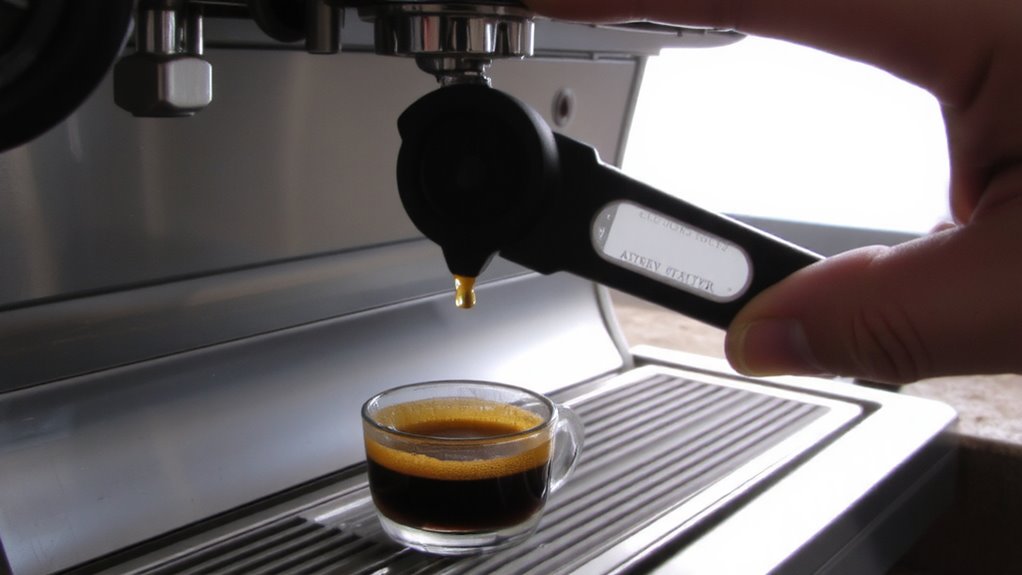
While you might think flavor comes down to just roast or grind size, the truth is total dissolved solids (TDS) in your espresso directly shape how strong and balanced your shot tastes. TDS measures the coffee compounds extracted into your shot, and it’s key to refining your flavor profile. Too low, and your espresso tastes weak or sour; too high, and it turns bitter or astringent. You need the right solubility balance-achieving maximum extraction without pulling unwanted elements. This balance depends on your grind, dose, water temperature, and machine stability. For example, a Lelit Bianca allows precise temp control, helping maintain consistency. Hitting 1.2–1.4% TDS usually delivers ideal intensity and clarity. By measuring TDS, you move beyond guesswork. You’re adjusting based on real data, ensuring each shot meets a repeatable standard. That’s how you dial in for quality-every time.
Pick the Best Refractometer for Espresso Testing
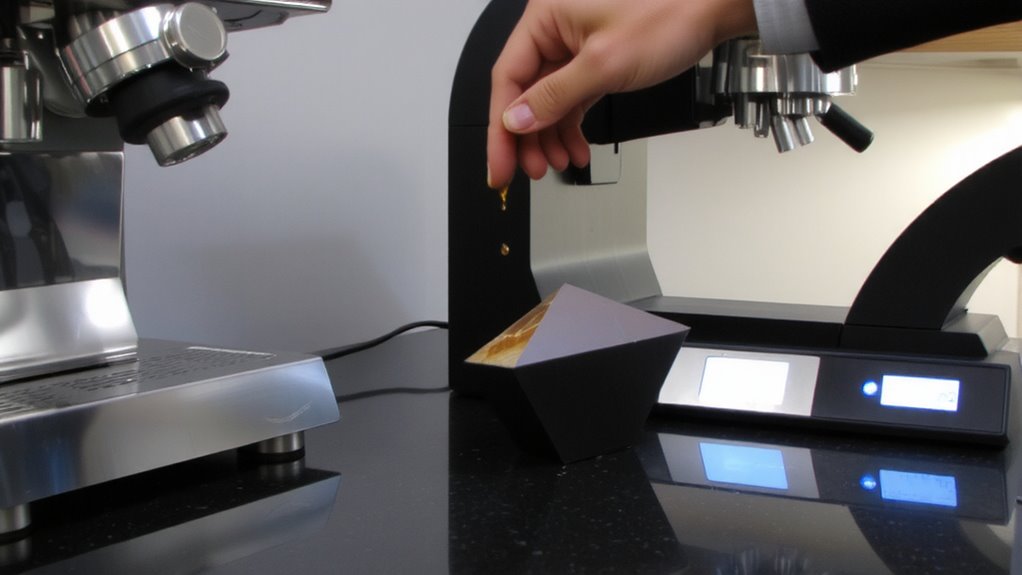
You’ll want a refractometer that’s accurate, easy to use, and built for espresso’s high TDS range-typically between 1.0% and 1.5%. Standard coffee refractometers like the VST LAB-0015 or Atago PAL-EX use laser calibration for precise readings, reducing errors from lighting or user interpretation. Laser calibration guarantees consistency across tests, which matters when comparing shots between machines. Look for a device with a sampling well designed for espresso’s fluid dynamics-thicker, slower-moving liquid can trap bubbles if the shape isn’t right. Models with recessed wells and proper drainage prevent air pockets, leading to more reliable results. Avoid basic Brix-only refractometers; they aren’t temperature-compensated for espresso and lack TDS-specific scales. Digital models cost more but save time and improve accuracy. Choose one that’s calibrated for coffee solids, not just sugar, so your TDS measurements actually reflect extraction.
Calibrate Your Refractometer in 2 Minutes
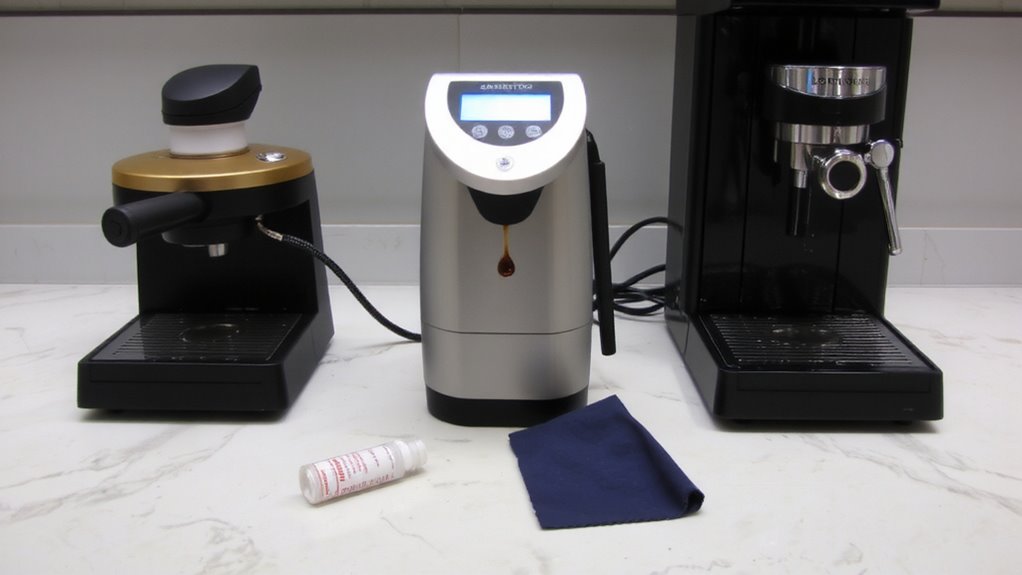
Before you test your espresso’s TDS, you’ve got to make sure your refractometer reads accurately-calibrating it takes just under two minutes and keeps your data trustworthy. Start by cleaning the prism with distilled water and a soft cloth to prevent sample contamination. Place 2–3 drops on the surface, close the cover, and wait 30 seconds for temperature control to stabilize-most models work best at 20°C (68°F). Use calibration fluid or distilled water; for the latter, set the reading to 0.00 Brix. If it’s off, adjust with the screw or calibration tool until it’s spot on. Skipping this step risks skewed results, especially when comparing shots across machines. Always calibrate before each use, not just daily, since environmental shifts and residue can alter readings. It’s a tiny time investment that guarantees consistency, repeatability, and accurate extraction analysis-no guesswork.
Prepare Espresso for TDS Measurement
Now that your refractometer is calibrated and ready, it’s time to get your espresso sample in the right state for testing. Let your shot cool slightly-espresso cooling to around 40–50°C prevents damage to the refractometer and guarantees accurate readings. Use a clean glass or ceramic spoon to transfer the sample; metal can retain residue and cause sample contamination. Always discard the first few drops, as they’re inconsistent. Stir gently to homogenize the brew before sampling.
| Step | Action | Reason |
|---|---|---|
| 1 | Cool espresso to 40–50°C | Prevents refractometer damage |
| 2 | Use non-metal utensil | Reduces sample contamination risk |
| 3 | Discard first drops | Guarantees sample consistency |
| 4 | Stir before sampling | Promotes even TDS distribution |
Measure TDS Based on Your Machine Type
Why do some baristas get different TDS readings from the same shot? It often comes down to machine variables and water composition. If you’re using a dual boiler versus a heat exchanger, temperature stability can shift your extraction slightly, affecting TDS. Machines like the Slayer or La Marzocco have precise shot profiling, letting you control pressure and time-this consistency helps when comparing TDS across tests. On the other hand, entry-level machines may lack this precision, causing more variation. Water composition plays a big role too: hard water extracts more solids, increasing TDS, while soft water may under-extract. Even if you use the same coffee and grind, differences in filtration or mineral content-like using reverse osmosis versus tap water-alter results. Always test your water and calibrate your machine regularly to keep readings reliable.
Use TDS to Fix Under- or Over-Extraction
You’ve measured your espresso’s TDS, and the number tells a story-maybe it’s too low, signaling under-extraction, or surprisingly high, pointing to over-extraction. TDS gives you a clear path to adjust. Low TDS often means sour, hollow shots; high TDS can mean bitter, ashy flavors. Your goal is solubility balance-pulling just the right compounds. Adjust grind size first: finer for higher extraction, coarser if over-extracted. Tweak dose or time as needed. TDS has a strong flavor correlation, so small changes matter.
| TDS Range | Likely Flavor Problem |
|---|---|
| <1.15% | Sour, weak (under-extracted) |
| 1.15–1.35% | Balanced, ideal solubility balance |
| >1.45% | Bitter, harsh (over-extracted) |
| >1.5% | Ashy, drying mouthfeel |
Fix Common Home TDS Measurement Mistakes
Ever wonder why your espresso’s TDS readings seem off despite careful brewing? Chances are, it’s due to common measurement mistakes at home. Improper cleaning is a top culprit-leftover coffee oils on your refractometer or sample well skew results. Always wipe the prism and tools with a lint-free cloth and approved cleaner after each use. Sample contamination also throws off accuracy. Using a dirty syringe or letting grinds mix into your sample can alter readings considerably. Let the shot cool slightly before testing, since temperature affects refraction. Avoid touching the sample with fingers. Use fresh, distilled water for calibration daily. And don’t rush-let the refractometer stabilize before taking measurements. These small steps prevent errors and guarantee trustworthy data. Consistent technique matters as much as the gear you use.
On a final note
You now know how to measure espresso TDS accurately, no matter your machine. A refractometer gives hard data to fix under- or over-extraction fast. Just calibrate it properly, take clean samples, and match readings to taste. Machines like the Lelit or Breville behave differently, but TDS stays reliable. Skip guesswork-use the numbers. Small tweaks in grind or dose, guided by real measurements, make shots better and more consistent every time.