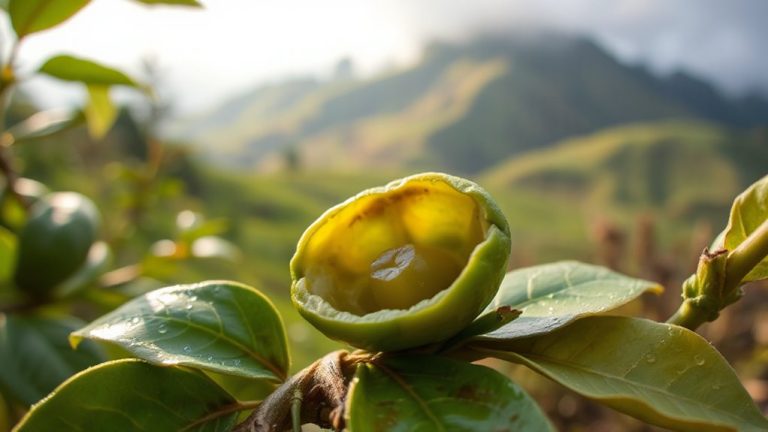
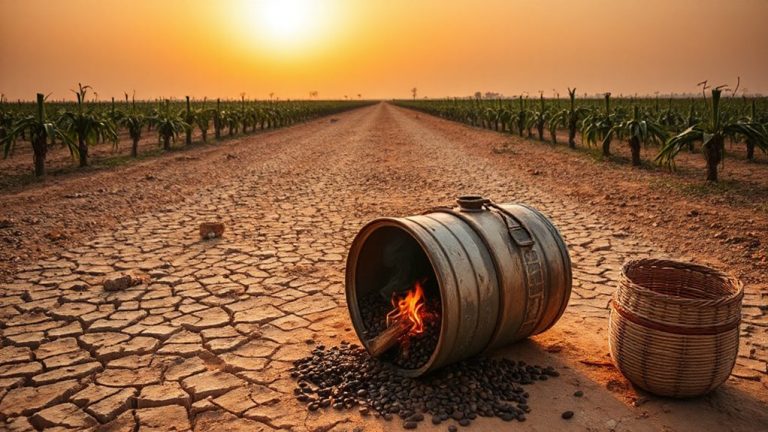
How Climate Variability Threatens Long-Term Tanzanian Coffee Viability
You’re already seeing how rising temperatures shorten dormancy and disrupt flowering, cutting yields. Erratic rains wash away nutrients and weaken roots, while drier spells kill young plants. Warmer conditions boost pests like coffee berry borers, which thrive and damage beans faster. Beans ripen too quickly, losing density and flavor, leading to lower grades and prices. Your coffee’s future depends on how well farms adapt-there’s more to how this plays out.
Notable Insights
- Rising temperatures disrupt coffee flowering cycles, reducing yields and destabilizing harvest timelines in Tanzania.
- Erratic rainfall patterns cause soil erosion, water scarcity, and increased mortality of young coffee plants.
- Warmer climates accelerate pest reproduction, increasing infestations and damage to coffee crops.
- Accelerated bean development under heat reduces bean density and flavor quality, lowering market value.
- Soil degradation and nutrient loss from climate stress reduce long-term farm productivity and sustainability.
How Rising Temperatures Threaten Tanzanian Coffee
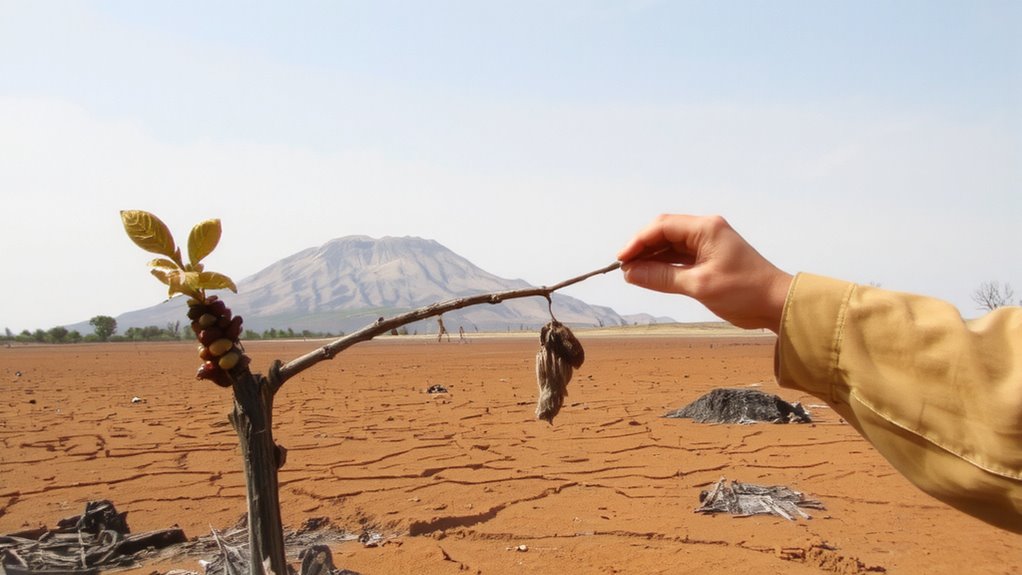
While you might not think of temperature as a direct factor in your morning brew, it’s actually one of the biggest threats to the quality and supply of Tanzanian coffee. Rising temps disrupt flower dormancy, delaying or reducing bloom cycles and ultimately cutting yields. When flowers don’t sync with ideal growing windows, fewer beans develop, which affects both volume and consistency. Higher heat also accelerates soil degradation by drying organic matter and reducing nutrient retention, making it harder for coffee plants to thrive without increased fertilizer use. This weakens plant resilience and raises production costs. You’ll notice these effects not in your kettle or grinder, but in long-term availability and price stability of Tanzanian beans. Cooler highland zones, once ideal for Arabica, are becoming less reliable. There’s no gear fix for this-just growing urgency to support farms adopting shade trees and erosion controls to slow damage. Temperature isn’t just background noise; it’s reshaping what lands in your portafilter.
How Unpredictable Rains Disrupt Tanzanian Coffee Harvests
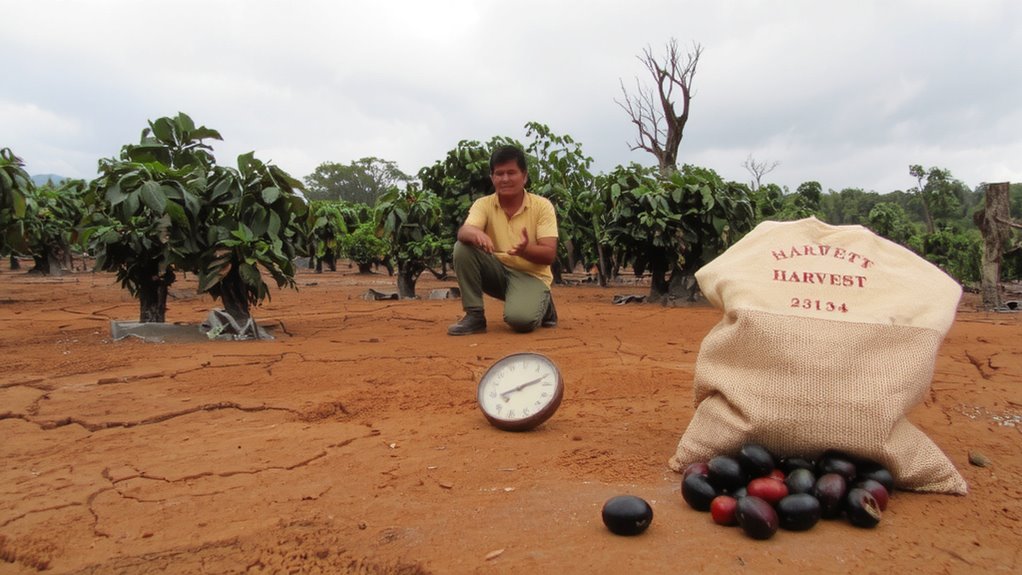
How do erratic downpours affect the coffee you brew? When rains come too early or late, they disrupt flowering and delay bean development, weakening harvests you rely on for consistent flavor. Unpredictable downpours also trigger severe soil erosion, washing away key nutrients and destabilizing coffee plant roots. This means plants grow less efficiently, reducing the quality and quantity of beans reaching your grinder. Conversely, when rains fail, water scarcity hits-farmers can’t irrigate properly, and young plants often die. You’ll notice the impact as thinner, less vibrant brews with uneven body. Unlike stable climates where farmers plan cycles around predictable seasons, Tanzania’s shifting rainfall makes such planning risky. Simple tools like moisture meters help, but they’re rarely affordable at small farms. The result? Supply drops, prices rise, and your morning cup becomes less certain. Adaptation is no longer optional-it’s essential for the coffee you drink.
Why Warmer Climates Fuel Pests in Tanzanian Coffee
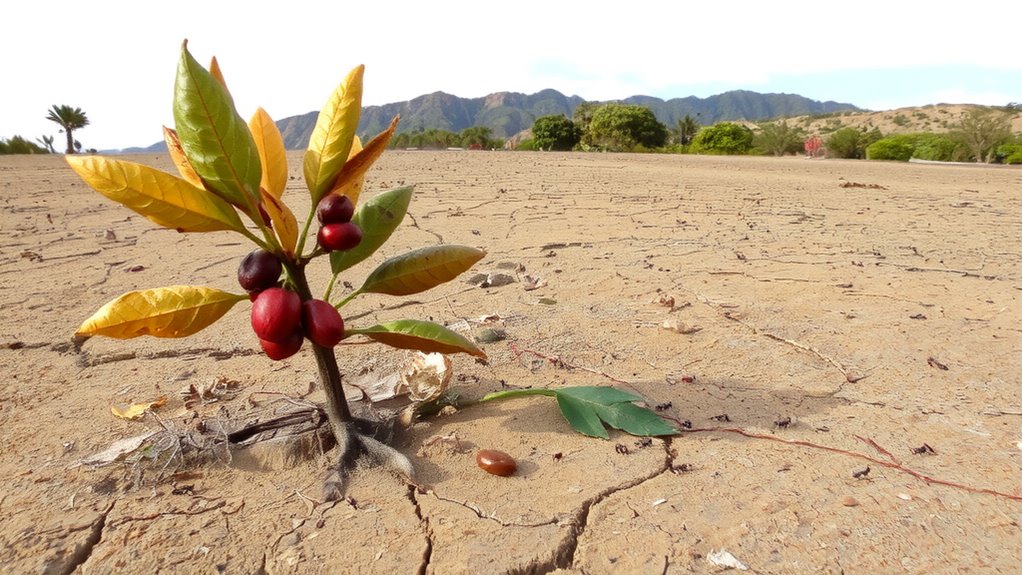
When temperatures climb in Tanzania’s coffee regions, you’re not just dealing with heat stress on plants-those warmer conditions give pests like coffee berry borers and nematodes a better chance to thrive. Warmer weather speeds up pest life cycles, leading to increased infestations that hit crops harder and more often. At the same time, heat-stressed plants have reduced resistance, making it easier for insects and pathogens to invade. You’ll see more damage per outbreak, with fewer natural die-offs during milder dry seasons. This isn’t just about quantity-these pests directly undermine bean development. You can’t spray your way out of this long-term, since chemicals add cost and risk harming beneficial insects. Monitoring and early intervention help, but success depends on timing and access to tools. For you, that means scouting fields regularly and using shade management or resistant varieties where possible. The bottom line? Warmer climates create faster, tougher pest threats-and you need to adapt fast to keep them in check.
How Climate Change Lowers Coffee Quality and Prices
Rising temperatures and shifting rainfall patterns aren’t just threatening yields-they’re altering the very chemistry of Tanzanian coffee beans, and that hits quality and price straight in the pocket. When beans develop too quickly in hotter weather, they lack the dense structure that gives specialty coffee its rich flavor, leading buyers to downgrade your harvest. Combine this with soil degradation, which reduces nutrient uptake and further dulls taste, and you’re facing beans that don’t roast evenly or brew consistently. Lower scores at grading mean discounted prices, leaving you vulnerable to market volatility. Even if you invest in better processing gear, inconsistent bean density and moisture content limit what machines can do. Buyers prefer stable, high-quality lots-when climate change undermines that, your bargaining power shrinks fast. There’s no quick fix in the roaster or brewer when the raw material itself is compromised.
How Tanzanian Farmers Are Adapting to Climate Stress
While the climate keeps shifting, you’re not standing still-Tanzanian coffee farmers are already putting practical strategies to work to protect their crops and livelihoods. You’re planting shade trees to reduce soil erosion and maintain moisture in the ground, which helps roots stay strong during dry spells. To fight water scarcity, many farmers are collecting rainwater and using drip irrigation, cutting waste and improving efficiency. Some are switching to drought-resistant coffee varieties that handle heat better and produce more reliable yields. Others are terracing hillsides to slow runoff and protect topsoil. Mulching is common too-it keeps the soil cool and cuts evaporation. These aren’t perfect fixes, but they’re low-cost and easy to adopt with limited training. While larger systems may come later, these on-the-ground changes give you immediate tools to manage tougher seasons and keep coffee growing despite rising climate stress.
What Tanzania Needs to Save Its Coffee Future
How do you secure a future for Tanzanian coffee when the ground beneath it is shifting? You start by tackling soil degradation with cover cropping, composting, and intercropping with legumes-simple, low-cost steps that restore nutrients and structure. You adopt conservation tillage to keep erosion in check and water in the soil. Then, you push for market diversification: don’t rely only on Arabica exports. Explore Robusta, niche organic labels, or direct-trade partnerships that pay premiums for quality and sustainability. Invest in localized processing to add value before export. Support cooperatives with training and access to climate-resilient seedlings. Encourage shade-grown systems that buffer temperature swings and protect biodiversity. You won’t fix everything overnight, but combining soil health with smarter market strategies gives farmers more stability. The goal isn’t just survival-it’s building a coffee system that adapts, lasts, and pays.
On a final note
You’ll need to adapt fast-Tanzania’s coffee future hinges on it. Rising heat and erratic rains hurt yields and quality, while pests spread faster. Farmers now mix shade trees with crops and switch to hardier beans like Catimor. If you’re sourcing beans, expect shifts in flavor and price. For reliable coffee, support farms using climate-smart practices. Simple changes, like better drying beds or early pest checks, make a real difference on the ground.