The Complete Guide to Manual Brewing Equipment: Pros and Cons
You control the grind, water, and timing with manual brewing, giving you precision and better flavor tuning. Pour-overs like the Hario V60 offer clean, bright coffee but need focus and a gooseneck kettle. French presses deliver rich, full-bodied cups but leave some sediment. AeroPress brews fast and travels well, while moka pots give strong, espresso-like coffee on the stove. Cold brew is smooth and low-acid, ideal for iced coffee. Each method fits different needs, so your preferences shape the best choice-options and details follow.
Notable Insights
- Manual brewing offers full control over variables like grind and temperature, rewarding skill but requiring time and practice.
- Pour-over methods produce clean, bright flavors with paper filters, but demand precision and a gooseneck kettle for consistency.
- French press delivers rich, full-bodied coffee through immersion brewing, though it may leave sediment and requires a coarse grind.
- AeroPress combines speed and versatility, making strong, smooth coffee quickly with minimal cleanup and excellent portability.
- Moka Pot creates espresso-style coffee on the stove, while cold brew offers low-acid concentrate, each with distinct equipment and prep needs.
What Is Manual Brewing and Why Try It?
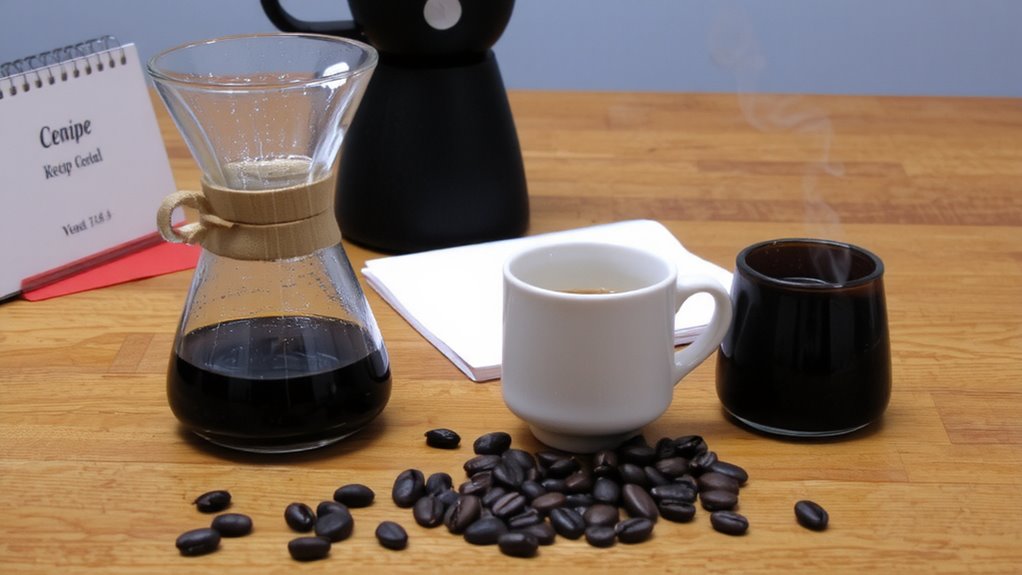
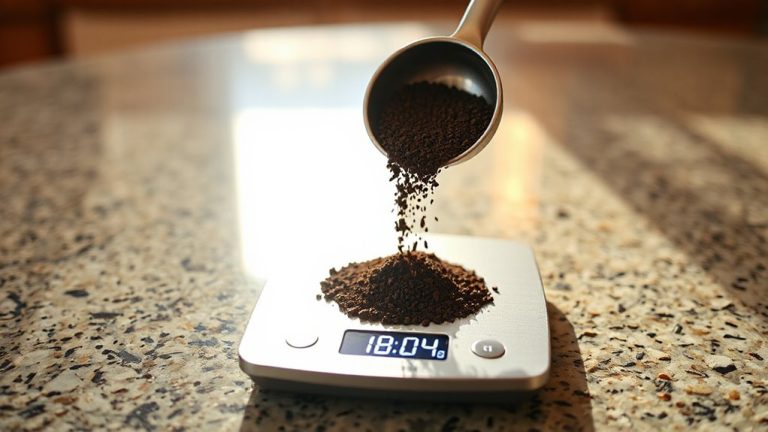
While automatic machines handle brewing with the push of a button, manual brewing puts you in full control, letting you adjust every variable from grind size to water temperature. You engage directly with the process, not just the result. This hands-on method emphasizes artisan craftsmanship-each step, from measuring beans to pouring water, is intentional and precise. Tools like French presses, AeroPresses, and pour-over cones are affordable, portable, and durable. You’re not locked into preset programs or proprietary pods. Instead, you adapt techniques to your taste. Sensory immersion happens naturally: you hear the bloom, smell the aromas, see the saturation. It’s not about ritual for its own sake-it’s about influence over flavor. While it demands more time and practice than automatic brewing, the payoff is consistency shaped by skill, not luck. Manual brewing rewards attention with better coffee, one informed choice at a time.
Manual Pour-Over: Precision and Clarity
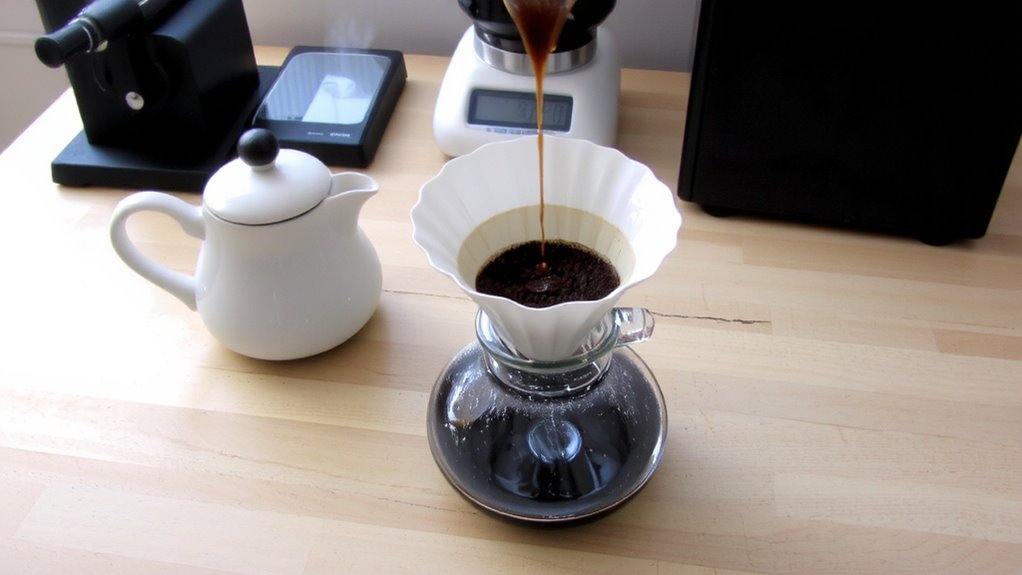
Since you’re after a clean, nuanced cup, pour-over brewing gives you direct control over extraction through steady, hand-guided pouring. This method enhances brew quality by letting you adjust water flow, temperature, and contact time. Your flavor profile turns bright and distinct, with sediment-free clarity that highlights subtle notes-think citrus, floral, or tea-like tones in light roasts. Devices like the Hario V60 or Kalita Wave offer consistent results when used with a gooseneck kettle and timer. The paper filter removes oils and fine particles, boosting cleanliness but slightly softening mouthfeel. You’ll need focus and practice; uneven pouring leads to under-extraction or bitterness. While the gear is affordable and compact, the process isn’t quick. For those who value precision over speed and want repeatable, high brew quality with a sharp flavor profile, pour-over is a practical, rewarding choice. A gooseneck kettle provides the best gooseneck kettles for achieving a controlled, spiral pour that ensures even saturation.
French Press: Rich, Full-Bodied Results
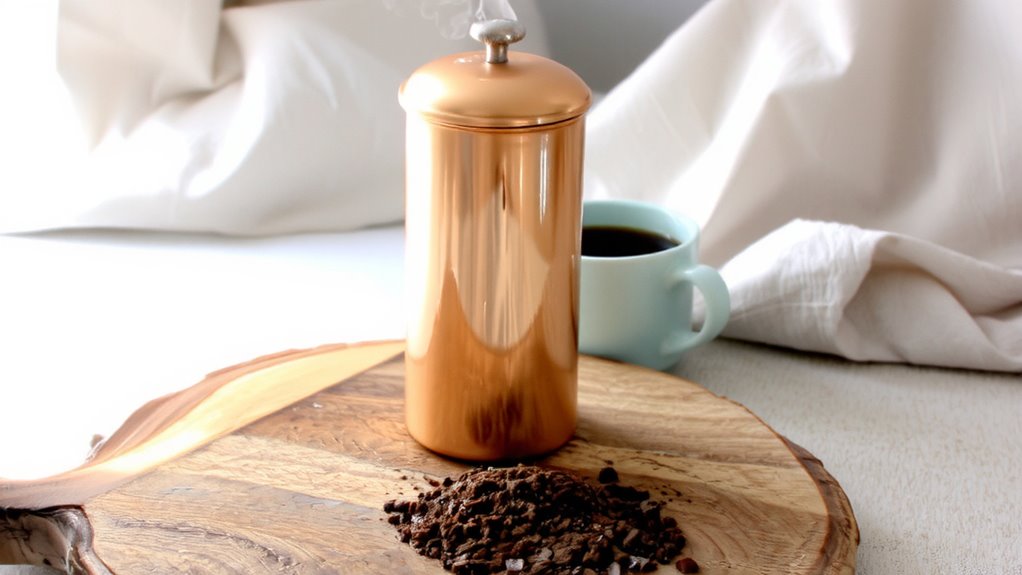
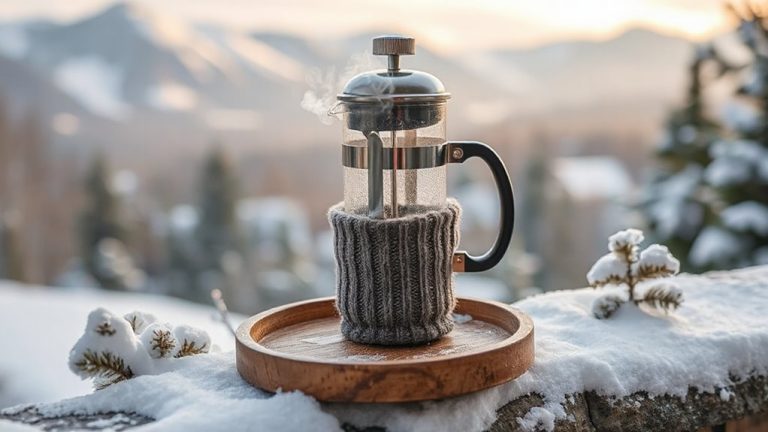
Brewing with a French press gives you a cup that’s bold and rich, full of body and depth. The immersion method, known as French press steeping, soaks grounds completely, typically for four minutes, extracting more oils than paper-filtered methods. You control time, temperature, and grind size, making it simple but sensitive to mistakes like over-extraction if steeped too long. A major factor is the metal filter options-typically one or two layers-which let fine particles and natural oils pass through, adding texture. Unlike paper, they’re reusable and eco-friendly but can allow sediment. Coarse grind and fresh beans work best. Cleaning is easy, though the glass carafe can break. Popular models like the Bodum Chambord use a press system that’s reliable but requires consistent pressing. It’s best for those who enjoy a heavier mouthfeel and don’t mind minor sediment in their cup. For 2024, the best French press picks include models with improved durability and filtration.
AeroPress: Fast, Flexible Brewing
If you’re after a quick, customizable cup without the fuss, the AeroPress might be your best bet. It delivers a reliable brew in under a minute-its short brew time makes it ideal for mornings when you’re in a rush. You’ve got solid flavor control too, thanks to adjustable variables like grind size, water temperature, and stir time. Whether you like bold espresso-like shots or smoother, filter-style coffee, it can handle both. The device is compact, lightweight, and durable, perfect for travel or small kitchens. Cleanup is fast, and the included filter reduces sediment. On the downside, its small capacity usually means one cup at a time. It also requires paper filters unless you buy a reusable metal one. Still, for speed, versatility, and consistent results, the AeroPress offers strong value across skill levels.
Moka Pot: Stovetop Espresso at Home
The Moka Pot brings stovetop espresso-style coffee into your kitchen with a simple, time-tested design. You fill the base with water, add grounds to the filter basket, and heat it on the stove-pressure builds and pushes coffee into the top chamber. It’s affordable and durable, with most models made of aluminum or stainless steel. If you use the aluminum version, you might notice a slight aluminum taste, especially if it’s not cleaned well or used frequently. To reduce this, hand-wash it gently and avoid harsh detergents. Watch stovetop safety: never leave it unattended, and use medium heat to prevent scalding or pressure issues. While it doesn’t make true espresso, it delivers a strong, rich brew. The Moka Pot works best for those who want bold coffee without machines but are mindful of heat control and material choices. For added convenience, consider an electric moka pot that automates the brewing process with consistent heat control.
Cold Brew: Smooth, Low-Acid Iced Coffee
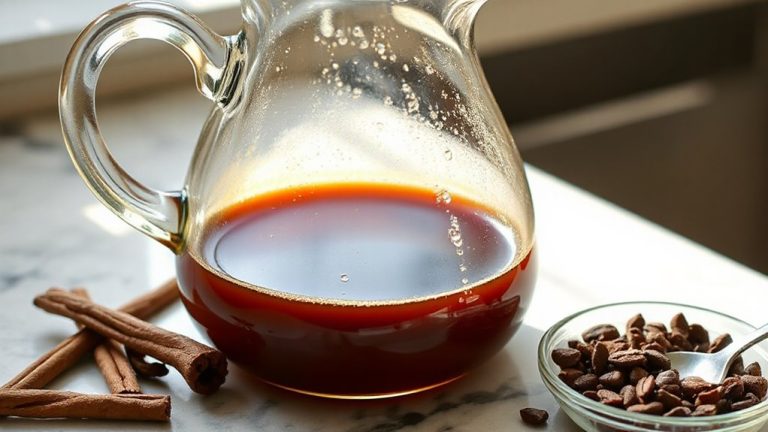
While it won’t give you espresso or a hot morning pour-over, cold brew stands out for its smooth, mellow flavor and lower acidity, making it a solid choice if you’re sensitive to bitter notes or prefer iced coffee. You’ll need coarsely ground beans and cold or room-temperature water. Use a standard cold brew ratio-usually 1:4 coffee to water-for a concentrate that you can dilute later. Steeping time typically ranges from 12 to 24 hours in the fridge or at room temperature; longer steeping increases strength but not bitterness. Use a jar, French press, or dedicated cold brew maker. French presses simplify cleanup, while jars save space. Avoid fine grounds to prevent sediment. Cold brew lasts up to two weeks refrigerated, so it’s great for batch prep. It’s low effort, scalable, and ideal for hot days, though it demands planning due to long steeping time.
How to Pick the Right Brewer for You
What kind of coffee drinker are you, really? If you like control, a pour-over like the Hario V60 gives you precision over brewing variables-grind size, water temperature, and pour speed-helping highlight bright, clean flavor profiles. It’s ideal if you enjoy tweaking your method for subtle changes. Prefer something simpler? A French press requires less effort and delivers a fuller, richer cup, though it offers fewer brewing variables to adjust. It’s great for low-acid, bold profiles. Immersion brewers like the Aeropress are versatile and fast, good for travel or quick mornings, letting you experiment with both flavor profiles and methods. Think about how much time you want to spend and what taste you enjoy. Match your habits and preferences to the brewer’s design. There’s no best choice-only what works best for you.
On a final note
You’ve got options, and each brewer fits different needs. Prefer clean, bright coffee? Try pour-over. Want bold and rich? French press delivers. Need speed and versatility? AeroPress is reliable. Crave strong, espresso-like cups? Go for the Moka pot. Like smooth, iced coffee? Cold brew’s low acid helps. Match your method to your taste, routine, and cleanup tolerance. There’s no best-just what works best for you.