The Impact of Grind Size on Crema Texture and Persistence in Espresso
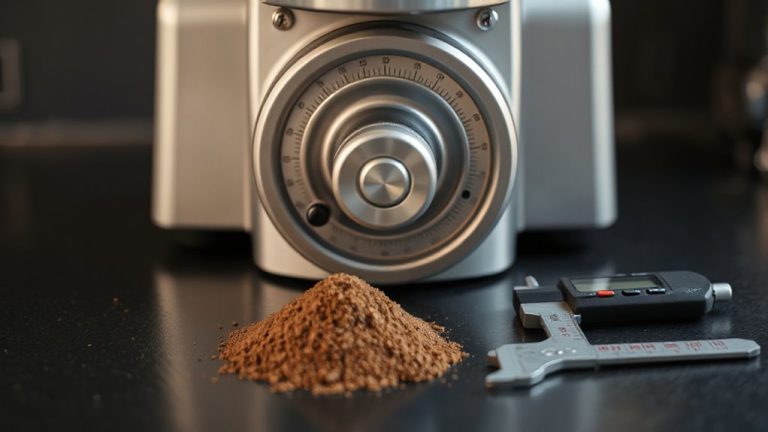
Your grind size directly shapes crema texture and how long it lasts. Too coarse, and water rushes through, giving you pale, bubbly crema that vanishes fast-common with old beans or light tamping. Too fine, and you get thin, bitter crema from clogged, uneven extraction. Aim for a grind like powdered sugar using a burr grinder, like a Baratza Sette or Eureka Mignon, to hit a 25–30 second shot. That’s when crema turns rich, golden, and stable. The right grind for your roast makes all the difference-and the details matter more than you think.
Notable Insights
- Grind size directly affects crema texture: too coarse yields pale, bubbly crema; too fine produces thin, flat crema.
- A consistent, fine grind resembling powdered sugar promotes even extraction and stable, golden crema.
- Coarse grinds cause rapid water flow, under-extraction, and short-lived crema with poor emulsion.
- Overly fine grinds risk clogging, channeling, and bitter over-extraction, weakening crema thickness and persistence.
- Ideal grind size achieves a 25–30 second shot time, balancing extraction for rich, lasting crema.
Why Grind Size Makes or Breaks Espresso Crema
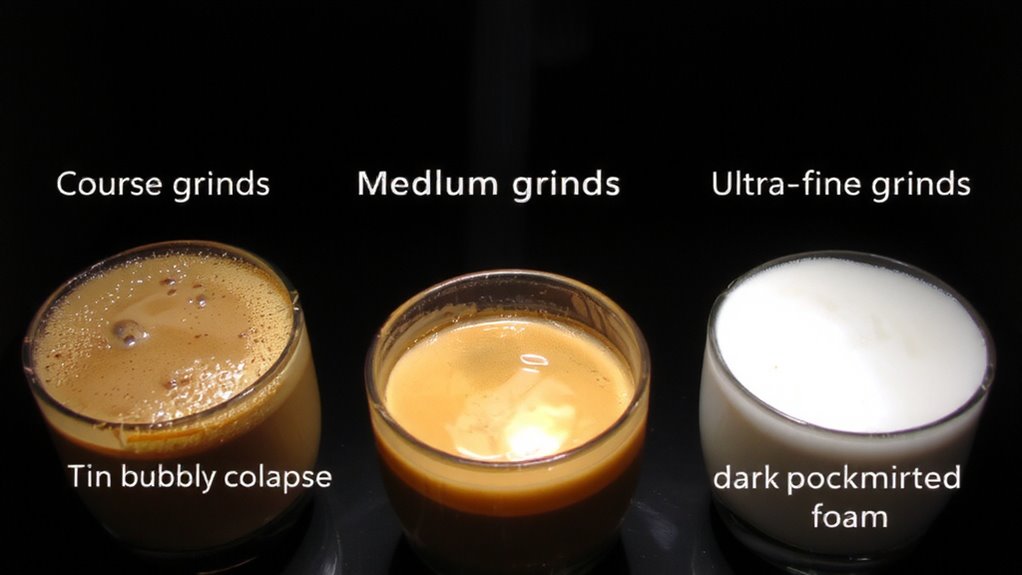
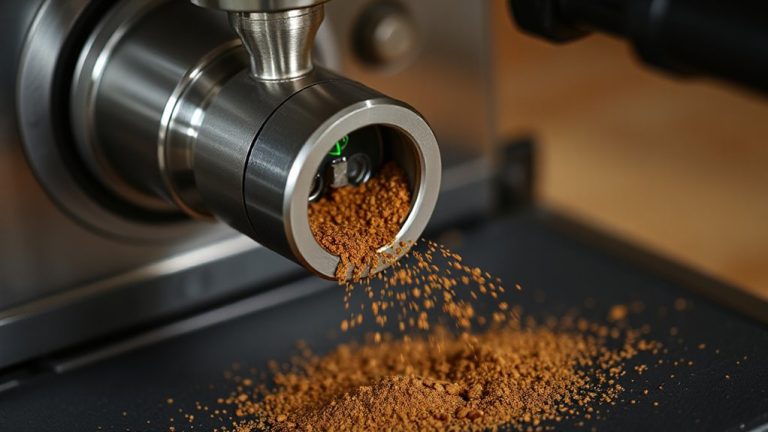
One wrong grind size can ruin your espresso crema, and it’s usually the first thing to check when your shot’s not right. Too coarse, and water zips through too fast-your crema chemistry fails, leaving flat, pale foam. Too fine, and you risk clogging, but that’s for later. Here, balance matters. The grind controls extraction dynamics: even particles let water spread evenly, pulling oils and gases that form stable crema. A good burr grinder, like a Baratza Sette or an Eureka Mignon, gives you the precision needed. Inconsistent grinds create weak spots, breaking crema structure. You want a fine, uniform powder-think powdered sugar, not sand. Dial in your dose and tamp evenly, then watch the shot. Ideally, 25–30 seconds for 1:2 output. Get this right, and crema sits golden, thick, and lasting-proof your grind supports proper extraction dynamics and crema chemistry. For those seeking optimal results, investing in one of the best espresso grinders can make a significant difference in grind consistency and shot quality.
Too Fine? Why Your Crema Is Thin and Bitter
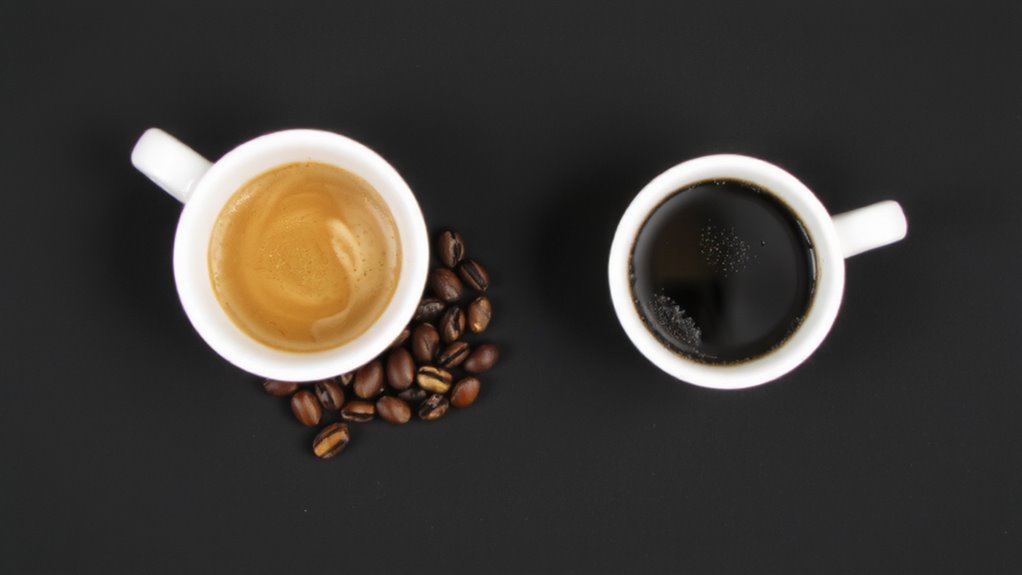
Why does your espresso crema come out thin, dull, and overly bitter-sometimes even under-extracted despite a long shot time? When your grind is too fine, water can’t move through evenly, causing clogging and uneven extraction. Even with a long extraction time, some parts of the puck over-extract while others stall, pulling out harsh bitter compounds from stressed grounds. The crema suffers-thin and flat-because trapped gases escape poorly and emulsified oils destabilize fast. A finer grind isn’t always better; it demands precise dose, tamping, and machine stability. If your shots taste sharp or astringent despite slow flow, back off the grind. Step up to a coarser setting gradually and monitor how crema builds and holds. Adjusting grind size improves balance, reduces bitterness, and yields a richer, longer-lasting crema. Your machine’s pump and basket design matter, but control starts with the grinder. Choosing the right coffee and espresso grinder can significantly improve grind consistency and shot repeatability.
Too Coarse? Why Your Crema Is Pale and Bubbly
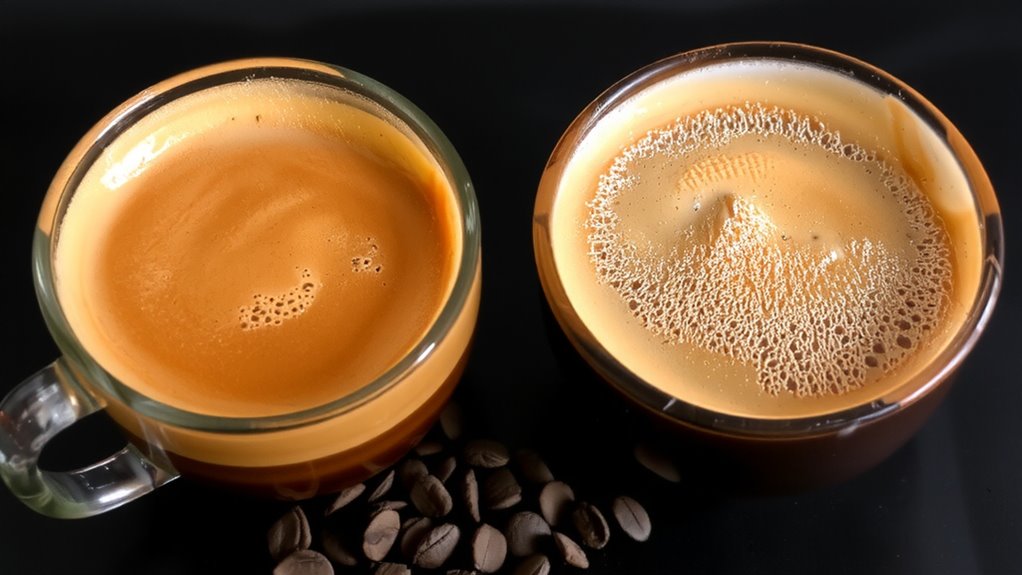
What if your espresso crema comes out pale, foamy, and full of big, short-lived bubbles-like soap suds instead of velvety gold? That’s a classic sign your grind is too coarse. When grounds are too loose, water pressure zips through too fast, skipping proper extraction. You get weak, underdeveloped shots and bubbly crema that vanishes fast. Fresh beans help, but even great bean age can’t fix a bad grind size. Older beans lose gas, making crema worse, but coarse grinding makes it far more obvious. You’ll notice lighter color and flimsy texture fast. Adjust your grinder finer in small steps-especially with dose and tamping consistent. Machines with stable water pressure still fail here if grounds don’t slow flow enough. Aim for a 25–30 second shot time. Fix the grind, and you’ll see richer color, tighter bubbles, and crema that lasts past the first sip. For pour-over methods, achieving the right extraction also depends heavily on using a consistent grind size.
Hitting the Ideal Grind for Lasting Crema
A 25 to 30-second shot window is your best clue to hitting the right grind for dense, long-lasting crema. If your shot pulls faster, your grind’s likely too fine or your tamping pressure too light. Go slower? It’s probably too coarse. Aim for a grind size that balances flow and resistance-think table salt for most machines. Consistent tamping pressure matters; 30 pounds is standard, but stay steady to avoid uneven extraction. Your machine’s water temperature plays a role too-between 195°F and 205°F works best. Too hot, and crema breaks early; too cool, it’s thin. Pair the right grind with stable water temperature and firm, even tamping, and you’ll get a rich, honey-colored crema that lasts past the first sip. Test, adjust, repeat-it’s the only way to dial in right.
How Roast Level Changes Your Crema’s Grind
Different roast levels demand different grind sizes to produce the best crema, and you’ll notice this shift most when switching between light and dark roasts. Light roasts are denser and require a finer grind to extract fully and build stable crema. Their roast profile locks in more gases, which boosts crema if ground fine enough. Dark roasts are more porous and release gases faster, so you’ll need a slightly coarser grind to avoid over-extraction and weak, spotty crema. Bean age also matters-older beans lose CO₂, thinning crema over time, so fresher beans work better, especially with light roasts. You’ll get the best results matching your grind to both roast profile and bean age. A burr grinder helps you adjust precisely, while blade grinders often lack the consistency needed for this level of control.
Fix Crema Problems With These Grind Tweaks
If your espresso crema looks flat, patchy, or fades too fast, the fix often starts with your grind size. Going too coarse leads to weak extraction and thin crema-try a finer grind to increase surface area and improve emulsion. If the shot pulls too slow, it’s over-extracted and may taste bitter, so adjust coarser. Consistent grind size is key, especially with blade grinders; burr grinders give better results. Don’t overlook tamping pressure-uneven or too light tamping causes channeling, ruining crema. Use even, firm pressure around 30 pounds. Water temperature matters too; if it’s below 195°F, extraction suffers. Most machines run at 200–205°F, which works well. Combine proper grind, steady tamping pressure, and correct water temperature for creamy, golden crema that lasts. Small tweaks make big differences.
On a final note
You’ll get the best crema by adjusting your grind size to match your espresso setup and roast. Too fine, and crema turns thin and bitter; too coarse, it’s pale and bubbly. Aim for a medium-fine grind-like table salt-for balanced extraction and lasting crema. Dark roasts usually need a coarser setting than light ones. Try small changes on a quality burr grinder, like the Baratza Sette 270, and test shots to dial in fast.