Extracting Espresso’s Full Potential With Laser-Precise Fine Grind Calibration
You get better espresso when your grinder’s set with laser precision-small adjustments change extraction dramatically. Models like the Compak E12 or Fiorenzato F64 offer micron-level control, ensuring even grinds and fewer fines. This means balanced shots, stable flow, and less waste. Laser calibration beats guesswork, compensating for bean density and temperature shifts. Without it, even fresh beans fall short. Consistency isn’t luck-it’s alignment, measurement, and repeatable settings. There’s more to how this transforms daily brewing.
Notable Insights
- Laser-precise grind calibration ensures micron-level accuracy, essential for balanced espresso extraction.
- Consistent burr alignment prevents channeling by eliminating fines and boulders in the grind.
- Real-time sensor feedback detects wear or drift, maintaining shot-to-shot repeatability.
- Micron adjustments compensate for roast, origin, and temperature variations, optimizing extraction.
- Precision grinders with laser calibration reduce waste and dial-in time for peak performance.
Why Grind Calibration Makes or Breaks Your Espresso
While it might seem like a minor adjustment, getting your grind size right can make the difference between a great espresso and a disappointing one. If your grind is too coarse, water passes through too quickly, under-extracting the shot-especially with dense beans that need more resistance. Too fine, and you’ll see dripping, over-extraction, or even clogs. Bean density varies by origin and roast; Ethiopian beans, for example, are often less dense than Sumatrans, requiring coarser settings. Water temperature also interacts with grind-higher temps extract faster, so you’ll need a slightly coarser grind to balance it. Most home machines run between 90–96°C, but even a 2-degree shift matters. Adjusting your grind compensates for these variables. A good burr grinder with consistent output, like the Baratza Encore or DF64, gives you control. Without proper calibration, even fresh beans and ideal water temperature won’t save your shot. For those aiming to optimize their setup, considering one of the top coffee grinders can significantly enhance grind consistency and shot quality.
How Laser-Guided Calibration Beats Manual Adjustments
How do you guarantee your grind setting is spot-on every time? With laser-guided calibration, you don’t have to guess. Unlike manual adjustments, which rely on feel and trial-and-error, laser systems use beam alignment to verify the exact distance between burrs. This guarantees every tweak is accurate to a fraction of a millimeter. Sensor accuracy plays a key role-real-time feedback detects even minute discrepancies, adjusting before inconsistencies affect your shot. Manual methods can drift due to wear or misalignment, but lasers catch those issues instantly. Machines like the Eureka Prefetto or Fiorenzato F64 use this tech to deliver repeatable settings, shot after shot. You save time, reduce waste, and maintain consistency, especially during busy cycles. While laser calibration units cost more upfront, the long-term precision beats constant re-dialing. If consistency matters-and it does for espresso-laser guidance isn’t just helpful. It’s a measurable upgrade you can trust. For those seeking high performance without exceeding budget limits, the best espresso grinders under $500 offer advanced features that approach lab-grade calibration.
How Micron Precision Affects Espresso Extraction
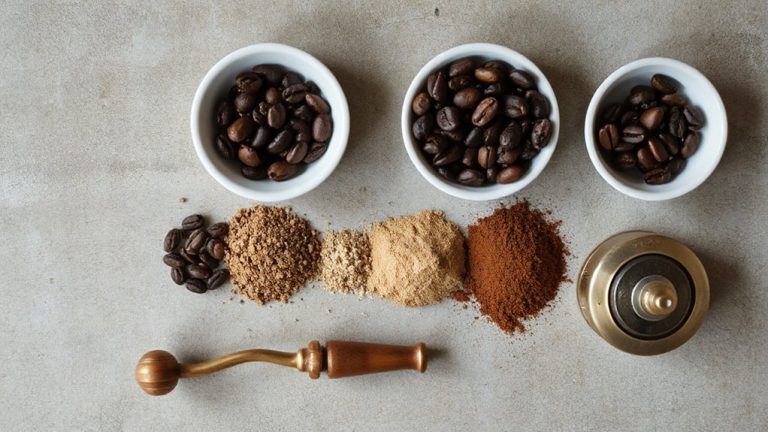
Even a tenth of a millimeter matters when you’re chasing the perfect espresso shot. Micron-level grind accuracy directly shapes particle distribution-tighter cuts mean more uniform grounds, which leads to even extraction. When particles are too varied, some over-extract while others under-extract, muddying flavor. With precision grinding, you reduce this inconsistency, letting water meet consistent flow resistance as it moves through the puck. That balanced resistance helps maintain stable pressure, especially critical in high-performance machines like the Mythos Pro or Lelit Bianca. Too coarse, and flow resistance drops, causing weak, fast runs; too fine, and it spikes, stalling the shot. You need that sweet spot where particle distribution supports smooth, even water channeling. Adjusting in microns isn’t obsessive-it’s practical. It gives you real control over how the shot develops, second by second, drop by drop. Investing in one of the best espresso grinders can make achieving this precision both repeatable and effortless.
Selecting a Grinder With Laser-Precise Tuning
A grinder with laser-precise tuning gives you the control needed to hit consistent grind sizes, which is non-negotiable for balanced espresso extraction. You’ll want flat burrs made from high-quality steel-they handle fine adjustments better and resist heat buildup. Look for models like the Compak E12 or K3 Touch, which offer micro-adjustments down to single microns. These grinders combine strong motor efficiency with minimal retention, so your shots pull evenly without wasting beans. Grinder durability matters just as much; commercial-grade build quality guarantees years of reliable use, even under daily heavy demand. Stainless steel internals and sealed bearings help maintain performance over time. Avoid budget grinders with plastic gears or weak motors-they can’t sustain precision. A stable platform with low vibration keeps alignment intact, which preserves calibration. Choose a grinder that supports repeatable settings so you’re not readjusting constantly.
Dialing in Espresso With Laser Calibration
Once you’ve got a grinder capable of micron-level adjustments, dialing in your espresso becomes less about guesswork and more about precision. With laser calibration, you can verify each grind size change using actual measurements instead of taste alone. The system uses beam alignment to guarantee the laser passes accurately through the grind particles, detecting inconsistencies down to a few microns. Misalignment skews results, so you’ll need to check this regularly. Laser interference from ambient light or dust can distort readings, so shield the sensor area during use. Models like the Mazzers with built-in systems automate this, while third-party tools work with most grinders but require careful setup. You get repeatable settings, so switching beans isn’t a full restart. It’s not foolproof-environment and wear still matter-but it gives you a stable baseline. You’ll save time, reduce waste, and maintain consistency far better than by taste alone.
Fixing Under/Over-Extraction With Precision Data
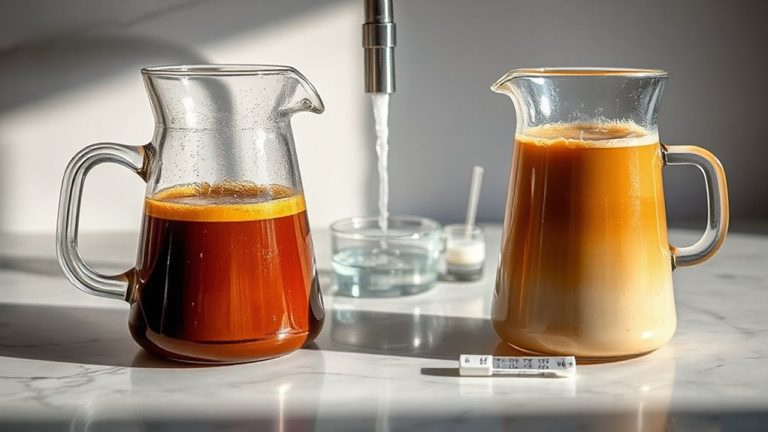
When you’re chasing the right extraction, relying solely on taste means you’re always a shot behind-instead, use precision data to catch under- or over-extraction before it hits the cup. Track brew time, flow rate, and yield with tools like a smart scale or pressure profiler to spot issues early. If shots pull too fast and taste sour, check bean freshness-stale beans under-extract no matter the grind. If shots run slow and taste bitter, your water hardness might be too high, causing channeling or clogging. Hard water reduces extraction clarity and stresses equipment. Use filtered water matched to your machine’s needs. Adjusting grind based on data-not just flavor-lets you correct trends before they ruin the shot. You’ll need consistency in dose, temp, and tamping, but precise logging helps isolate variables. Over time, you’ll see how bean age and water interact, letting you fine-tune proactively, not reactively.
Consistent Grinds, Better Flavor: What to Know
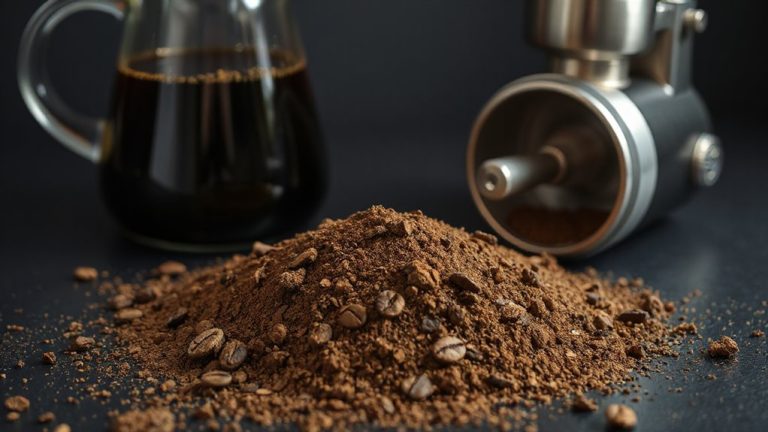
Every few degrees off on your grinder’s setting can mean the difference between a balanced shot and one that’s sharply under- or over-extracted. That’s why grind uniformity matters so much-consistent particles let water flow evenly, pulling out flavor uniformly. If your particle distribution is wide, you’ll get fines mixed with boulders, leading to sour and bitter notes in the same shot. A high-quality burr grinder, like the Niche Zero or Eureka Preciso, reduces variation by slicing beans cleanly instead of crushing them. You’ll notice better shot control, shorter brew times, and sweeter, more complex espresso. Even small adjustments matter; dialing in daily helps account for humidity and bean age. Clean your grinder often-stuck particles skew distribution. Ultimately, precise grind settings aren’t just for experts; they’re essential for anyone who wants reliable flavor. Poor grind quality hides even the best beans.
On a final note
You get better espresso when your grinder delivers consistent, micron-precise particles. Laser-guided calibration beats manual guesswork by aligning grind settings exactly, reducing waste and improving shot repeatability. Models like the Compak K3 or Mythos One with this tech offer real-time adjustments, helping fix under- or over-extraction fast. For serious home or café use, that precision means sweeter, more balanced shots daily-no fluke, just reliable results from accurate, measurable grind control.