Espresso Group Head Cleaning: Daily & Weekly Routine Guide
Wipe the group head with a damp microfiber cloth each morning to remove oils and prevent buildup. Use a stiff brush to clear grinds from the rim and gasket-avoid wire brushes to protect the surface. Insert a blind basket and backflush with detergent weekly; rinse well. Clean the portafilter and gasket separately. Finish with a 5–10 second water flush at brewing temperature. Sticking to this routine keeps your Rocket R55 or Lelit Mara X performing at peak efficiency. You’ll notice how small steps make a lasting difference over time.
Notable Insights
- Wipe the group head with a damp microfiber cloth immediately after your last shot to remove coffee oils and prevent buildup.
- Use a stiff-bristled brush to clean residual grinds from the group head rim and gasket area daily.
- Backflush weekly with a blind basket and espresso detergent to clear internal debris and maintain pressure consistency.
- Rinse the group head with fresh water at brewing temperature to flush out detergent and loose particles.
- Finish with a dry microfiber cloth to prevent water spots and ensure a clean seal for the next pull.
Clean Your Group Head Daily
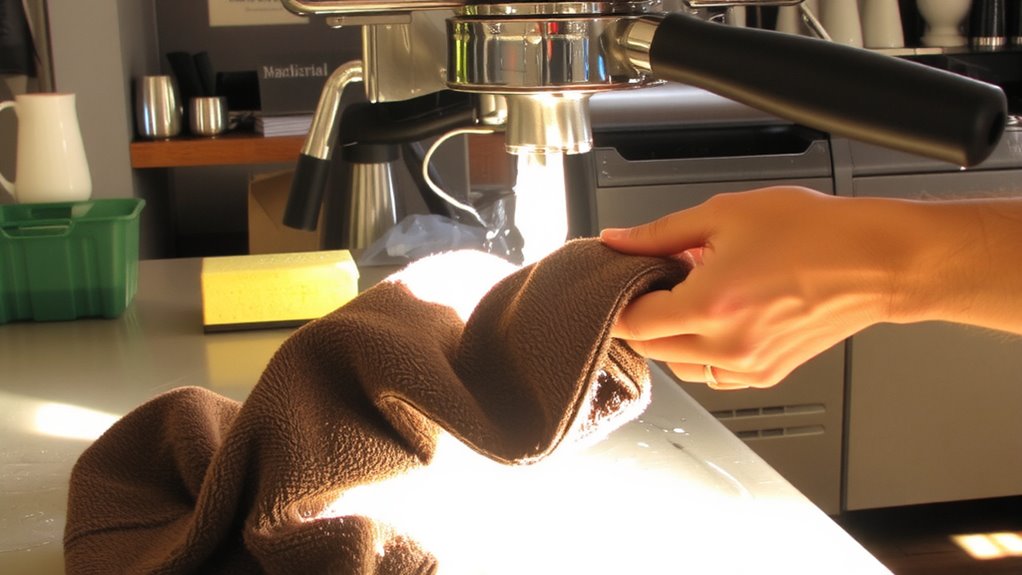
You should clean your group head daily to maintain consistent shot quality and prevent buildup that can affect flavor. Oils from coffee grounds accumulate quickly, disrupting proper extraction and skewing coffee chemistry. Residual particles can also insulate the group head, leading to inconsistent water temperature during brewing-this undermines espresso stability, especially in high-volume settings. A quick wipe with a damp cloth removes most grime, while backflushing weekly adds deeper maintenance. Machines like the Rocket R55 or Lelit Mara X respond well to this routine, preserving performance. Skipping daily cleaning risks channeling, off-tastes, and longer downtime later. It’s a small step with measurable impact: clean metal contacts heat evenly, water temperature stays precise, and puck saturation improves. You’re not just removing mess-you’re protecting extraction integrity. Make it a habit right after your last shot.
Gather Your Cleaning Tools
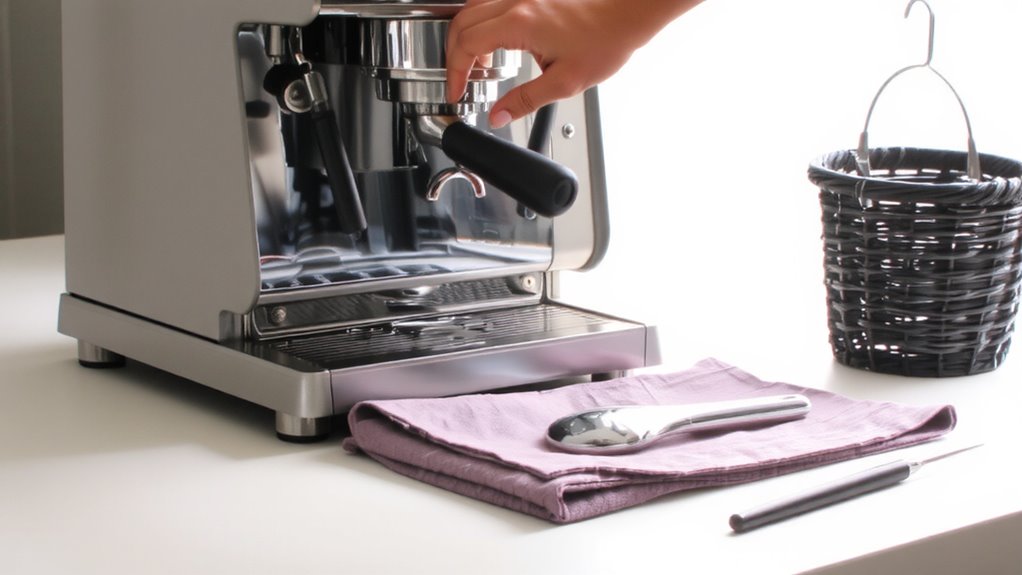
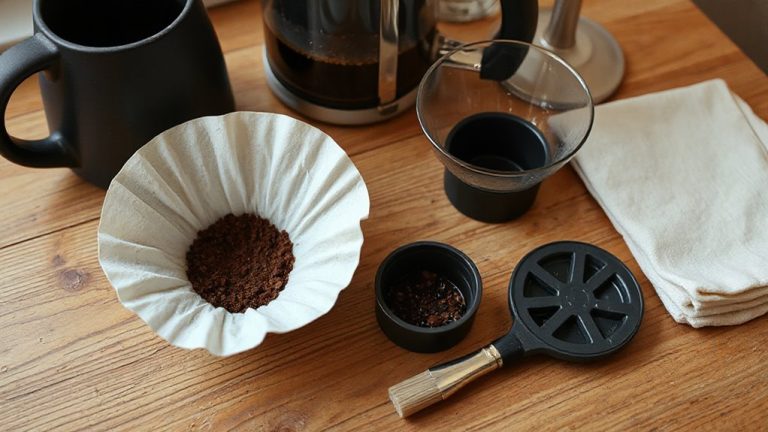
After wiping down the group head each day, the next step is having the right tools on hand to do it properly. You’ll need a clean, damp microfiber cloth for wiping residue and a dry one for finishing. A small brush isn’t needed here-save that for later. Instead, keep group head gaskets and shower screens in mind when selecting tools, since improper cleaning can hurt machine longevity. Use only non-abrasive, espresso-safe cleaners to protect internal components. Hard water areas may require descaling solution weekly, which also supports consistent coffee quality. A dedicated cleaning kit from brands like Urnex or Expobar includes safe, tested products. Having everything ready each morning makes the process quick and effective. Skipping proper tools might seem harmless, but over time it leads to buildup, off-flavors, and costly repairs. Stick to what works-your machine and your espresso will thank you. For those also using single-serve systems, consider the recommended models from experts at Wirecutter, such as the best Keurig coffee makers.
Clear Grind Buildup With a Brush
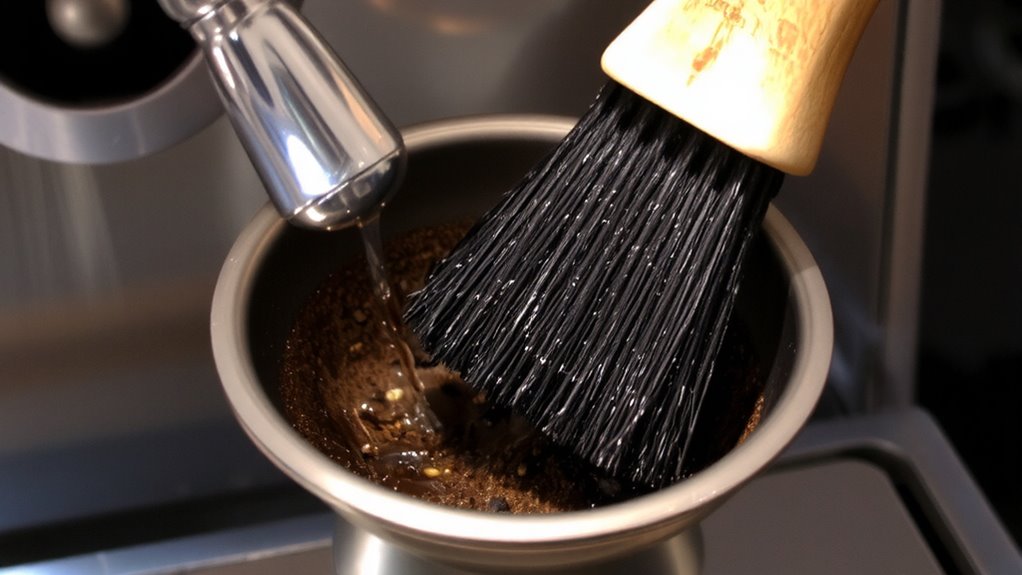
Grind retention is the unseen culprit behind inconsistent shots and bitter flavors. Leftover grind residue in your group head can taint fresh is where your brush comes in. Use a stiff-bristled group head brush designed for espresso machines-avoid wire brushes; they can damage the portafilter or shower screen. Focus on the rim, gasket area, and basket lip, where grinds cling most. Apply a firm, circular brush technique to dislodge stuck particles. Angle the brush to reach tight spots, but don’t gouge the metal. Brush after knocking out the puck and before wiping with a damp cloth. Do this daily, especially if you use a high retention grinder. A clean brush matters too-rinse it weekly to prevent oil buildup. Quick, consistent brushing keeps your machine running cleanly and your shots tasting fresh. For best results, choose a brush with durable bristles designed specifically for espresso equipment, such as those included in top-rated coffee grinder cleaning brushes.
Backflush Your Group Head
While daily brushing handles surface grinds, it won’t reach the oils and fine coffee fines packed deep in the group head’s nooks-so backflushing is where real cleaning happens. You’ll need a blind basket and the right detergent type to do it right. Pop the blind basket into your portafilter-it’s solid, so water builds pressure instead of flowing through. Add about a teaspoon of espresso-specific cleaning detergent. Lock the portafilter in, then run the group head for 10 seconds. You’ll see suds and sludge-signs it’s working. Pause for 30 seconds to let the detergent break down residue, then pulse three more times. This routine clears buildup regular rinsing misses. For daily use machines, do this weekly. Machines under heavy use may need it more often. Always rinse thoroughly after using chemical detergent.
Clean the Group Gasket and Portafilter
A worn or dirty group gasket can lead to leaks, poor pressure during extraction, and inconsistent espresso-and it’s one you can fix with simple, regular maintenance. Remove the portafilter and inspect the gasket for cracks, swelling, or deep staining; these are signs it’s time for gasket replacement. Most machines use standard-sized gaskets (like 51mm or 58mm), so check your model before buying spares. While you’re at it, do a quick portafilter inspection: look for cracks, warping, or built-up coffee residue around the rim. A warped or damaged portafilter won’t seal properly, ruining extraction. Clean the gasket groove with a soft brush or damp cloth-never sharp tools. Replace gaskets every 6–12 months, depending on usage. Regular portafilter inspection and timely gasket replacement keep your machine running like it should-no surprises, just solid shots. Consider upgrading to a best coffee brewing stand for improved ergonomics and workflow efficiency.
Rinse With Fresh Water
Why does your espresso taste off sometimes? Old coffee oils and residue linger in the group head if you don’t rinse properly. After wiping the gasket and portafilter, flip the portafilter into the group head and run a fresh water flush. This clears leftover grounds and prevents bitter, off-flavors. Use water at normal brewing temperature-around 195°F to 205°F-so it effectively dissolves residue without damaging components. A rinse duration of 5 to 10 seconds is enough for most machines; longer isn’t always better and wastes water. Check your machine’s manual-some dual boilers may need slightly different handling. This step keeps flavor consistent and protects machine longevity. You’re not just cleaning-you’re calibrating your tool for the day’s first real shot. Do it right, and your espresso will taste cleaner, brighter, and more true to the bean.
Turn Cleaning Into a Morning Habit
| Step | Tool Needed | Time Required |
|---|---|---|
| Flush group head | Fresh water | 10 seconds |
| Wipe with cloth | Microfiber/tea towel | 15 seconds |
| Backflush (daily) | Blind basket | 20 seconds |
| Check portafilter | Brush | 10 seconds |
| Final wipe | Damp cloth | 5 seconds |
Total daily effort is under a minute. Skipping steps risks residue buildup and inconsistent pressure. Do it the same way each day-like brewing itself, precision matters. Turn cleaning into a habit, not a chore, and your machine will deliver clean, bold shots every time.
On a final note
You should wipe down your group head every morning to remove coffee residue and guarantee consistent shots. Use a dry brush for dry grounds, then backflush with water-or a cleaning solution weekly. Check the gasket and portafilter for buildup. Rinse thoroughly. This routine takes under five minutes and prevents clogs and off-flavors. Make it part of your startup to keep your machine running cleanly and reliably.