The Role of Acidity in Coffee Tasting Notes: Understanding How This Component Can Enhance or Degrade Your Overall Drinking Experience
Acidity gives your coffee brightness and liveliness, showing up as citrus, apple, or grape notes you can taste in African or Central American beans. It balances sweetness and body, especially in light roasts from high-altitude farms. Pour-over and Aeropress highlight it with precise control, while French press and cold brew mute it. Too much sourness means under-extraction, so aim for 195–205°F and a proper grind. Lighter roasts and mineral-rich soils boost complexity, and knowing how origin, roast, and method interact helps you fine-tune every cup. Choosing the right gear and technique shapes how those vibrant notes come through, and understanding these factors means you’ll get better results every time.
Notable Insights
- Acidity in coffee adds brightness and vibrancy, often tasted as citrus, green apple, or red cherry notes.
- Proper extraction balances acidity, enhancing flavor; under-extraction leads to sour, unpleasant tastes.
- Light roasts preserve natural acidity, revealing floral and fruity notes typical of high-altitude origins.
- Brewing methods like pour-over highlight acidity, while French press and cold brew mute it.
- Origin factors like altitude and volcanic soil increase acid complexity, improving overall cup quality.
What Coffee Acidity Actually Tastes Like (And Why It’s Good)

Brightness-think citrus zest, green apple, or a splash of lemon in your tea-is often the first clue you’re tasting coffee acidity. It’s not sourness or defect; it’s a clean lift that makes the flavor pop. You’ll notice it right away as vibrant fruit notes-like red cherry, passionfruit, or grape-coming through in light to medium roasts. That tangy aftertaste? That’s acidity at work, lingering pleasantly instead of flattening out. It balances body and sweetness, giving structure, much like wine. Without it, coffee tastes dull. High-acid coffees shine in pour-over or Aeropress, where clarity matters. If you grind too coarse or brew too cool, you lose the nuance. Go slightly finer or raise temp 5–10°F to highlight it. Don’t confuse acidity with bitterness-underextraction brings the latter. With the right brew, acidity enhances complexity, turning a simple cup into something layered and alive.
Why Coffee Origin Affects Acidity
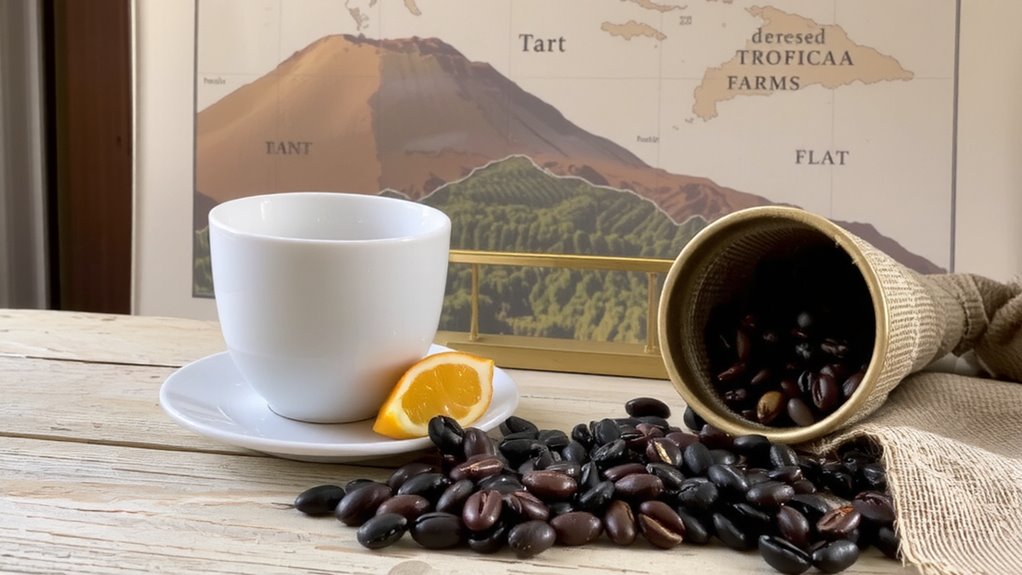
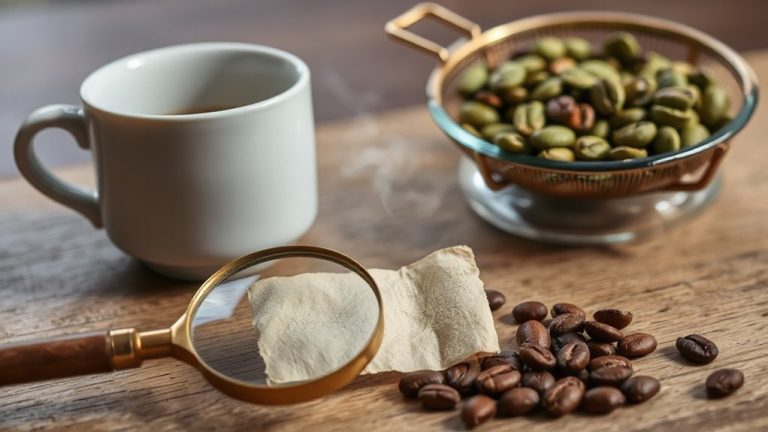
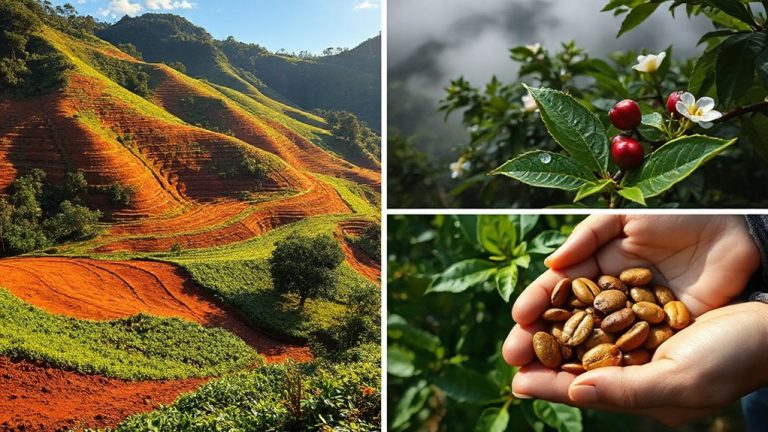
You’ve tasted that zesty lift in your morning pour-over-now consider where it came from. Coffee origin shapes acidity through soil composition and climate influence. High-altitude farms, like those in Ethiopia or Colombia, often yield brighter, more vibrant acidity due to cooler temperatures and mineral-rich volcanic soil. The soil composition affects nutrient uptake, altering acid development in the bean. Meanwhile, climate influence-consistent rainfall, altitude, and temperature swings-slows cherry ripening, allowing more complex acids to form. Regions near the equator with steady warmth and well-drained soils tend to produce cleaner, more pronounced acidity. In contrast, lowland farms with dense, clay-heavy soil may develop flatter, milder profiles. Knowing this helps you choose beans based on desired brightness. If you prefer lively, citrusy notes, seek African or Central American beans grown above 1,500 meters. Origin isn’t everything, but it’s a key starting point. For those looking to explore these nuanced profiles, consider starting with the best specialty green coffee beans for roasting at home.
How Roast Level Affects Acidity

While acidity in coffee starts with the bean’s origin, the roast level you choose can either preserve or diminish those delicate flavors. Light roasts maintain higher acidity because shorter roast duration and lower bean temperature don’t break down as many organic acids. As you go darker, increased heat and longer roast duration degrade those bright notes, trading acidity for bitterness and body. Managing bean temperature carefully guarantees you don’t lose desirable acidity too soon. A well-chosen blonde roast coffee can highlight the nuanced acidity and floral notes preferred by many light roast enthusiasts. Below is how roast level affects key traits:
| Roast Level | Acidity Level | Roast Duration & Bean Temperature |
|---|---|---|
| Light | High | Short duration, ~356–401°F |
| Medium | Moderate | Medium, ~410–428°F |
| Medium-Dark | Low | Longer, ~437–446°F |
| Dark | Very Low | Longest, above 446°F |
Choose your roast based on whether you value brightness or depth.
Which Brews Bring Out (or Mute) Acidity?
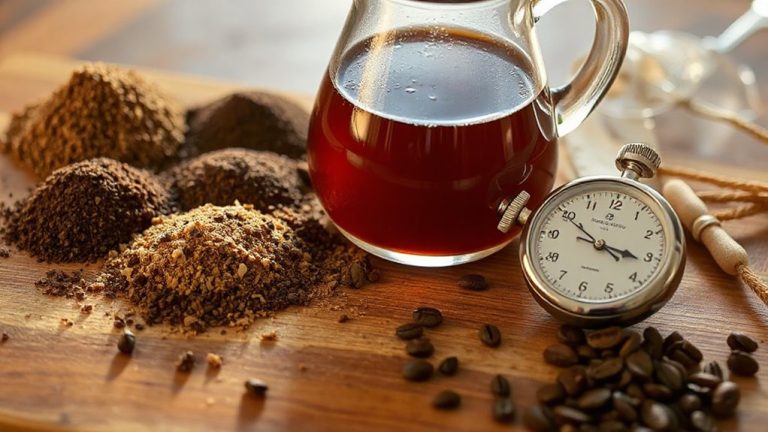
Roast level sets the foundation for acidity, but your brewing method determines how those acids actually taste in the cup. If you use a high brew temperature-above 200°F-you’ll extract more acids, especially in light roasts, making brightness pop. But go too hot, and you risk sharp, unpleasant notes. A finer grind size increases surface area, boosting extraction, including acids, which works well for pour-over methods like the Hario V60. That setup highlights clarity and tangy notes. On the flip side, a coarser grind and lower brew temperature, like in cold brew, mute acidity dramatically. You’ll get smoother, mellow results with almost no brightness. The French press, with its metal filter and longer steep, also dampens acid intensity. Your gear and settings aren’t just about strength-they directly shape how much zing you taste. Tweak brew temperature and grind size to control what you pull out.
How to Balance Brightness and Sourness in Coffee
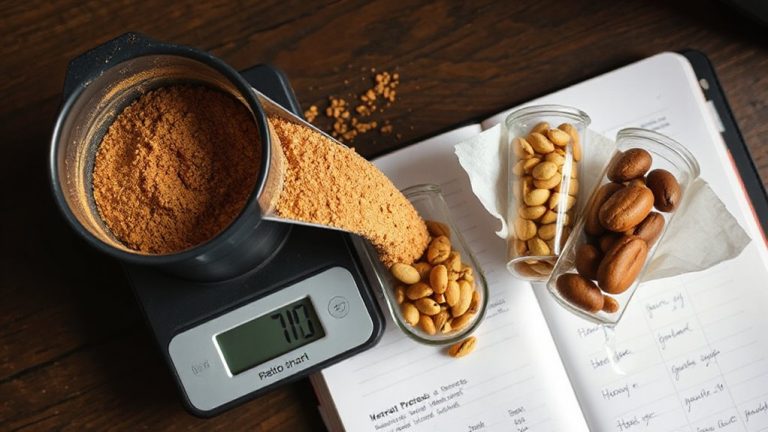
What makes a coffee lively on the palate without tipping into unpleasant sourness? It’s about controlling extraction and respecting flavor harmony. If your brew tastes sharp or vinegary, you’re likely under-extracting-common with too-fine a grind or water that’s too cool. Brightness turns sour when acids dominate without balance. To fix this, adjust your grind slightly coarser or increase water temperature to 195–205°F. Beans matter, too: a naturally processed Ethiopian might dazzle with citrus notes when brewed in a pour-over, but taste harsh in a French press due to heavier body muddling taste perception. For better balance, use a gooseneck kettle for precision and stick to light to medium roasts-they preserve sweetness that offsets acidity. A gooseneck kettle helps maintain control during slow pours, especially with best gooseneck kettles offering variable temperature settings and ergonomic designs. Aim for flavor harmony, not just intensity, and remember: brightness enhances clarity, but only when it complements the full profile.
On a final note
You now know acidity shapes your coffee’s taste, from bright and clean to sour if unbalanced. Light roasts from high-altitude regions like Ethiopian or Kenyan beans often highlight pleasant acidity. Brewing with a pour-over or Chemex brings it out; espresso or dark roasts reduce it. Adjust grind, water temperature, or brew time to fine-tune. Match method to bean for the best results.