The Impact of Dose Weight on Grind Retention in Single-Dose Grinders
Lower doses mean more retained grounds relative to what you’re grinding, especially in single-dose grinders like the DF64 or KG-70. Since retention stays around 0.3–0.8g regardless of dose, using 6g wastes a much higher percentage than 18g. Light doses also struggle with static and clumping, hurting consistency. For cleaner shots and less waste, stick to 18–20g. You’ll get more predictable results-and there’s more to getting it right than just dose.
Notable Insights
- Lower dose weights increase the proportional impact of retained grounds, reducing effective dose accuracy.
- Fixed doses above 15g minimize retention percentage, improving shot consistency and flavor reliability.
- At small doses, static friction and electrostatic forces cause higher particle adhesion in grinder paths.
- Absolute retention (0.3–0.8g) remains relatively constant, making low doses inefficient and less repeatable.
- Using doses of 18–20g optimizes grind flow and reduces the relative impact of retention in single-dose grinders.
Why Grind Retention Hurts Your Espresso
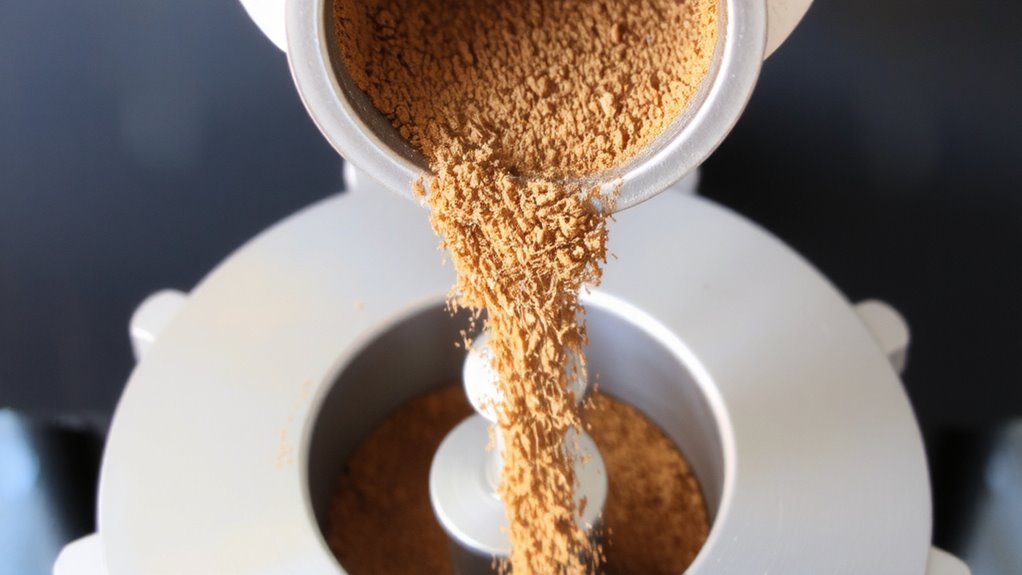
A grinder that holds onto even a few grams of coffee can mess with your espresso more than you might think. Old grounds trapped in burrs or bean paths mix with your fresh dose, skewing the flavor. That leads to flavor inconsistency-you’ll notice some shots tasting stale or off, even if nothing changed in your routine. It also creates shot unpredictability, making it hard to dial in the same taste twice. This is common in grinders with large grounds traps or complex internal paths, like some older EK models. Single-dose grinders help, but only if they actually minimize retention. Low-retention models like the DF64 or KG-70 reduce carryover, giving you cleaner flavor and better shot repeatability. You don’t just want precision in dose weight-you need clean grinding, every time. Otherwise, retention undermines your control, no matter how carefully you dose. Some of the best grinders for minimizing retention are highlighted in expert reviews of best mill grinders.
How Dose Weight Changes Grind Retention
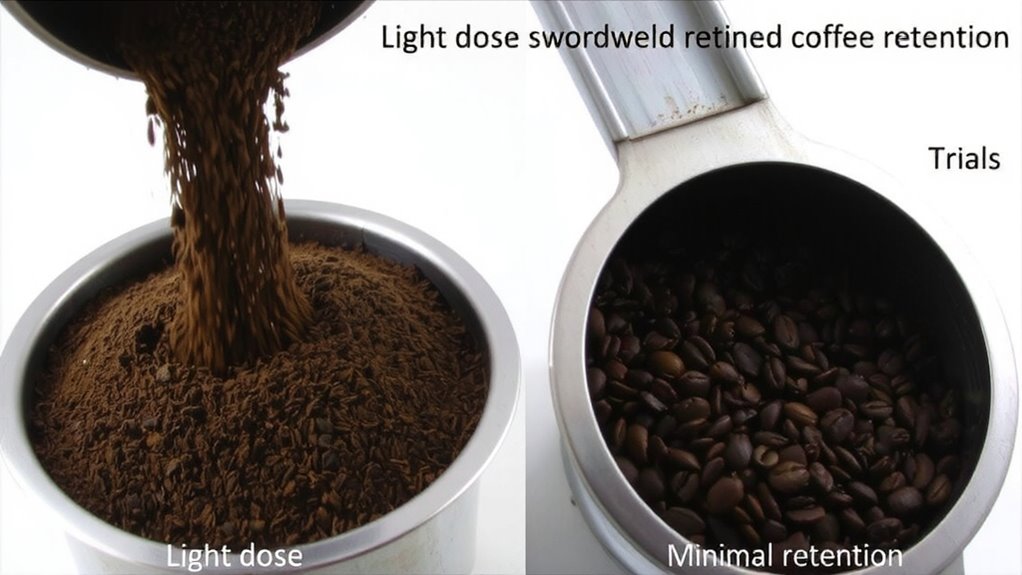
Even a small change in dose weight can affect how much coffee gets trapped in your grinder, especially in models prone to retention. When you use lower doses, the percentage of retained grounds relative to what you grind increases, hurting dose consistency. This means your shots start varying more, even if your settings stay the same. Higher doses tend to flow more consistently through the burrs and exit path, improving overall grind uniformity. Machines like the DF64 or Mazzinghi Titan show this clearly-consistent dosing minimizes leftover coffee. If your grinder struggles with retention, sticking to a fixed dose helps stabilize both output and flavor. You’ll get more predictable shots and better control over extraction. Adjusting doses too often makes it harder to maintain that stability. For best results, pick a dose and stick with it unless necessary. This supports both dose consistency and grind uniformity, key for repeatable espresso.
Why Small Doses Lose More Coffee
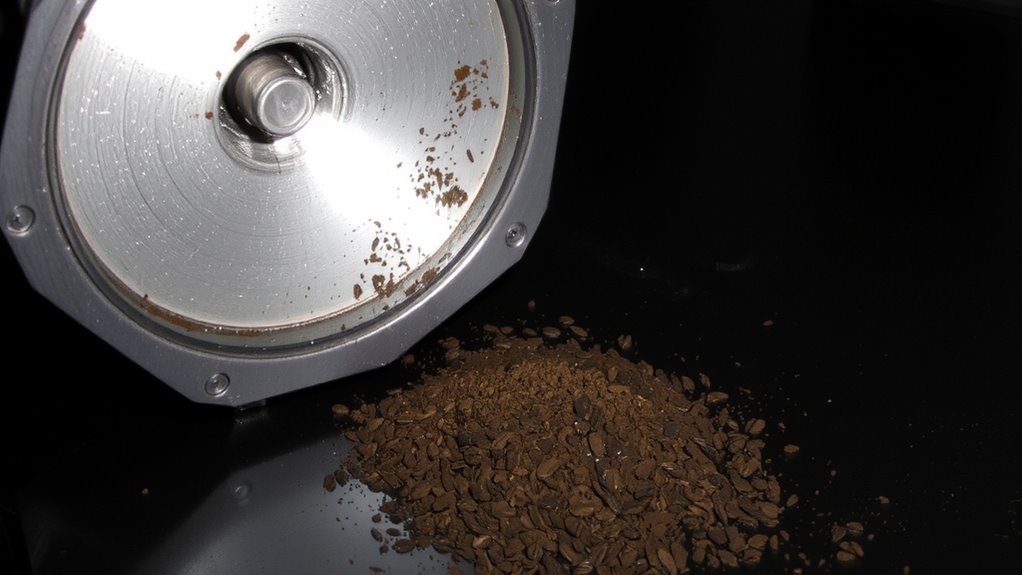
You’ve seen how adjusting dose weight impacts retention, but now let’s look at why smaller doses actually lose a greater share of coffee inside the grinder. When you use a light dose, there’s less mass to overcome static friction between beans and grinder components, so more particles stick to surfaces instead of exiting the grind path. Smaller volumes also increase particle clustering-tiny coffee fragments clump together or cling to burrs and chamber walls due to electrostatic forces. Since the absolute retention doesn’t drop proportionally with dose, that retained amount becomes a larger percentage of your total dose. For example, if your grinder holds 0.5g and you dose 15g, you lose over 3%-but at 6g, it’s nearly 8%. This effect is especially noticeable in single-dose grinders with tight tolerances and textured surfaces. You can’t eliminate it, but understanding static friction and particle clustering helps explain why efficiency drops at low doses.
How to Pick a Dose That Minimizes Waste
Most grinders retain a fixed amount of coffee-typically between 0.3g and 0.8g-regardless of dose, so using too little coffee means a larger portion gets lost inside the machine. To minimize waste, aim for a dose where retention is a small percentage-usually 15g or more. If you’re pulling single shots or using tiny doses, you’ll lose a higher proportion, especially with dense beans. Bean density matters because harder, denser beans like Ethiopians may leave more grounds behind depending on grind size. A finer grind tends to increase retention slightly due to static and friction, while a coarser setting might reduce it. For most single-dose grinders like the DF64 or Miniro, sticking to 18–20g keeps waste low and consistency high. Adjust based on your bean and setup, but don’t go below 12g if avoiding waste is your goal. Choosing the right grinder can significantly impact dose control and retention, which is why reviewing the top models in our best coffee grinders guide can help optimize your setup.
5 Ways to Reduce Retention in Single-Dose Grinders
Why does some coffee always seem to get left behind in your grinder? Retention happens due to burr design and static electricity. Flat and conical burrs each retain differently-some designs leave less coffee trapped in the grinding chamber. Look for low-retention models like the NNP DG-60 or 1Zpresso J-Max, which minimize gaps and dead zones. Static electricity builds up in dry beans, especially in low humidity, making grounds stick to the burrs and chute. To reduce this, adjust your grind just before dosing or use a light tap to dislodge clinging particles. Some grinders include anti-static tech or coating to help. You’ll also find that grinding slightly coarser can reduce retention versus ultra-fine espresso settings. While no grinder eliminates all waste, choosing one with smart burr design and managing static electricity improves dose accuracy and flavor consistency. For baristas, selecting the right tool matters-consider models highlighted in expert roundups of the best coffee grinders for baristas.
On a final note
You’ll lose a higher percentage of your dose with lighter weights because retention stays constant. That means 14g wastes more per shot than 18g. If you’re pulling low-dose espressos, expect lower efficiency-especially with grinders like the DF64 or Minotaur, which hold 0.5–1g. Boost dose slightly or adjust grind finer to compensate. Cleaning or anti-static mods can help, but dose weight matters most for consistency.