How to Calibrate Grind Size for a Balanced French Press With Full Body
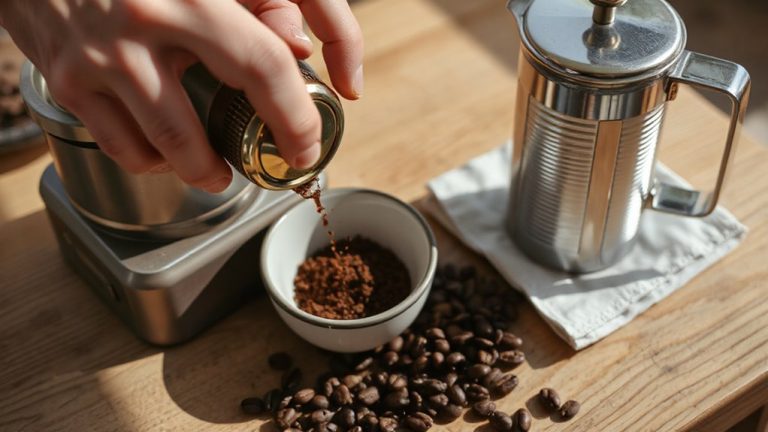
Use a burr grinder to set a coarse grind, like sea salt, for balanced French press coffee. If it’s too fine, you’ll get bitterness and clogging; too coarse, and the brew will be weak. Aim for 60g of coffee per liter and water at 200°F. Steep for 4 minutes, then press smoothly. A consistent grinder like the Baratza Encore makes all the difference. You’ll soon see how small tweaks improve body and flavor with every pot.
Notable Insights
- Use a coarse grind, similar to sea salt, to prevent over-extraction and ensure a smooth, full-bodied brew.
- Adjust grind size slightly finer for light roasts and coarser for dark roasts to balance extraction and flavor.
- Employ a burr grinder for uniform particles, avoiding the inconsistency of blade grinders.
- Steep for 4 minutes with water at 200°F (93°C) for optimal extraction and rich mouthfeel.
- If coffee tastes weak or bitter, refine the grind size in small increments and adjust steep time as needed.
Why Grind Size Makes or Breaks French Press Coffee
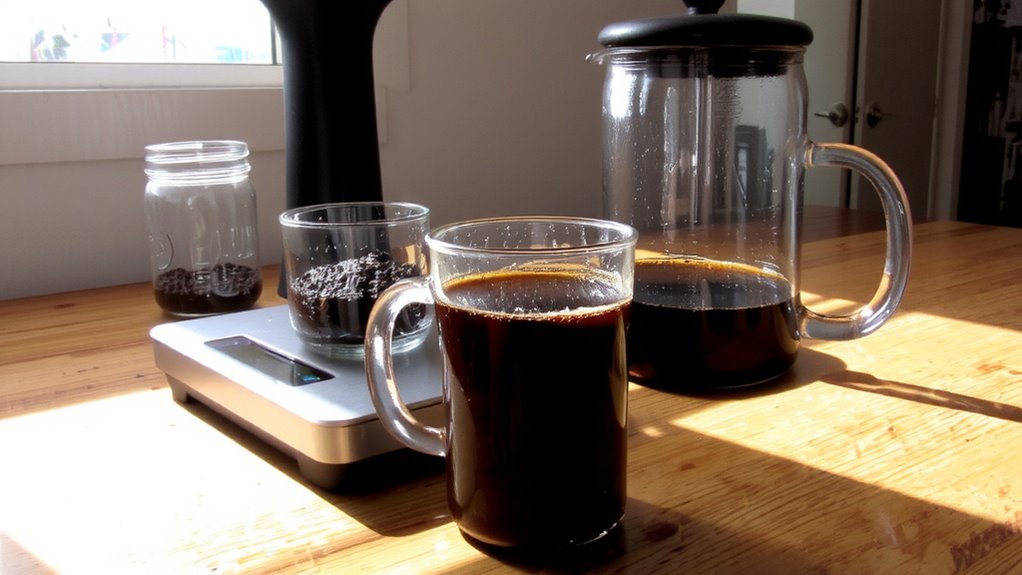
While it might seem like a small detail, getting the grind size right has a direct impact on how your French Press coffee turns out-too fine, and you’ll end up with a muddy, over-extracted brew full of sludge; too coarse, and the result is weak, underdeveloped, and flat. Your coffee origin affects ideal extraction time, meaning beans from Ethiopia may need slightly different handling than those from Brazil. Lighter roast levels tend to be more dense, requiring a marginally finer grind than darker, oilier roasts, which extract faster and can turn bitter if ground too fine. You’re not just grinding beans-you’re setting the stage for proper extraction. A consistent, coarse grind similar to breadcrumbs works best for most setups. Adjust based on taste: if it’s harsh, go coarser; if it’s sour, try a touch finer. Your grind size bridges the gap between bean potential and final cup quality. For French press brewing, using the correct perfect French press grind ensures optimal extraction and a well-balanced cup.
What the Ideal French Press Grind Size Actually Is
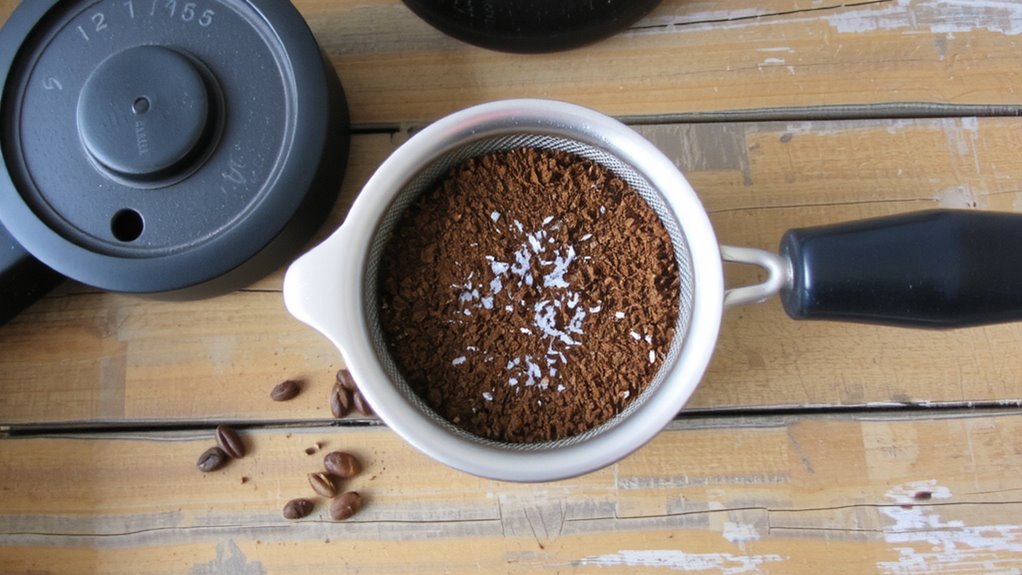
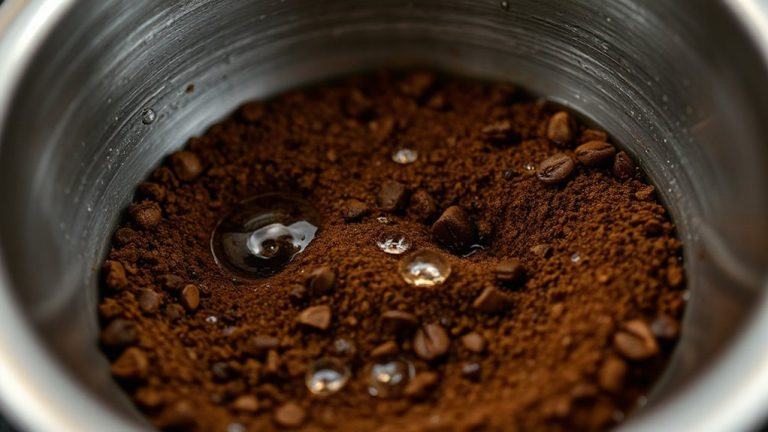
Coarse is the name of the game when it comes to French Press grind size. You want particles about the size of rough sand or sea salt-large enough to settle quickly and avoid over-extraction. The right grind keeps sediment manageable while letting flavors develop fully during the four-minute brew. Aim for consistent grind uniformity; uneven particle distribution leads to some bits extracting too much while others under-extract, muddying your cup. Blade grinders often fail here, creating a scattered particle distribution with fines that cloud the brew and coarse chunks that add little. A quality burr grinder delivers more uniformity, improving clarity and balance. Avoid anything resembling drip or espresso grind-too fine creates bitterness and sludge. Stick to coarse, keep it even, and you’ll get clean body with full flavor in every press. For optimal results, consider how grind size impacts extraction in other manual methods, such as best coffee grinds for pour-over.
How to Tell If Your Grind Is Too Coarse or Too Fine
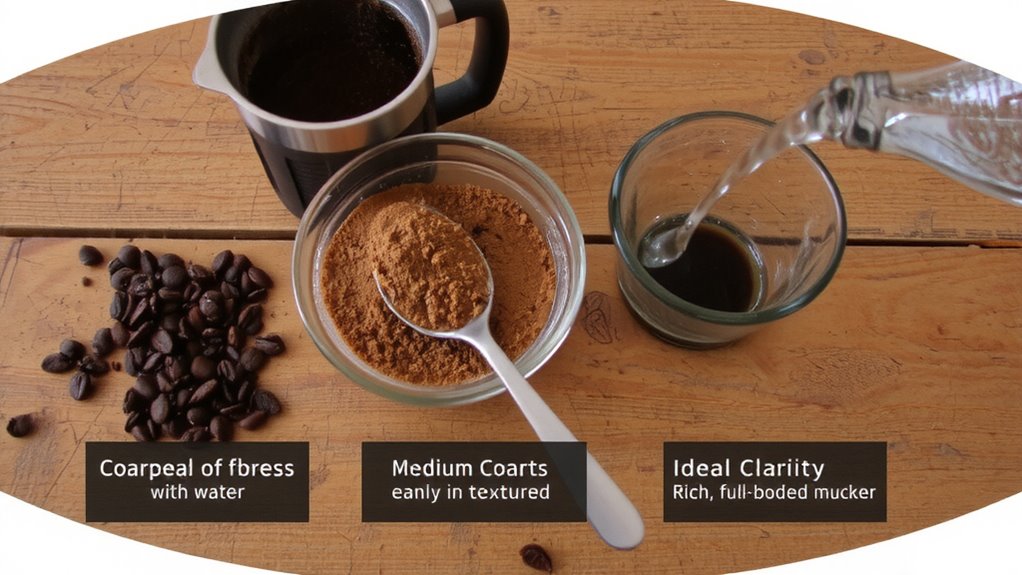
If your French press brew tastes weak or lacks depth, there’s a good chance your grind is too coarse. A coarse grind texture slows extraction speed, meaning water pulls fewer flavors from the coffee, leaving your cup flat or underdeveloped. You might also notice lots of dry grounds after plunging, a sign the water didn’t penetrate well. On the flip side, if your coffee tastes harsh, muddy, or overly bitter, your grind is likely too fine. Fine particles increase extraction speed, releasing unwanted compounds and clogging the mesh filter, which can make pressing difficult. The ideal grind texture resembles coarse sea salt-uniform and gritty. Avoid powdered or sandy feels. Check your grinder’s settings; blade grinders often produce uneven results, while burr grinders give better control. If flavor’s off, adjust grind first-it’s the quickest fix. For consistent results, consider using one of the best French press picks for 2024 that combine durable construction with effective filtration.
Water and Time: Adjusting for Better Extraction
Ever wonder why your French press brew still falls flat even after dialing in the right grind? The issue might be your water temperature or steep duration. For ideal extraction, use water just off the boil-around 200°F (93°C). Water that’s too cool under-extracts, leaving your coffee sour; too hot and it scalds the grounds, creating bitterness. Let the coffee steep for exactly four minutes. This steep duration balances flavor development without pulling out excessive harsh compounds. Don’t leave it longer unless you’re adjusting for coarser grinds, and even then, stay under five minutes. Stirring the crust after pouring helps, but timing and heat are your real levers. If flavor feels thin, check your kettle’s accuracy. A thermometer or temperature-controlled kettle makes a difference. Small tweaks here sharpen body and clarity more than most realize.
Use a Consistent Grinder for Even French Press Results
While grind consistency might seem like a minor detail, it’s one of the most critical factors in brewing balanced French press coffee. Using a burr grinder guarantees burr consistency, which means each coffee particle is nearly the same size. This evenness allows for uniform extraction, preventing some grounds from over-extracting while others under-extract. Blade grinders, in contrast, create uneven particles, leading to muddy, bitter, or weak flavors. For dose uniformity-using the same amount of coffee each time-you need consistent grind size to maintain predictable results. A quality burr grinder like the Baratza Encore or 1ZPress hand grinder gives you control and repeatability. Without it, even perfect water and timing won’t save your brew. You’ll struggle with inconsistent body and flavor. Investing in a consistent grinder isn’t optional if you want reliable, full-bodied French press coffee. It’s the foundation of every good cup.
Fix These 5 French Press Grind Mistakes
A great French press brew starts with the right grind, yet even seasoned coffee drinkers often make mistakes that undermine their results. Using too fine a grind causes mud at the bottom and leads to bitter flavor loss, while too coarse a grind leaves weak, under-extracted coffee. Inconsistent particles from blade grinders create uneven extraction and unnecessary grind waste. Pre-ground coffee loses freshness fast, sacrificing aroma and complexity. And skipping calibration for your specific beans and water means missing the sweet spot. Fix these by using a burr grinder-like the Baratza Encore or 1ZPress Mini-for uniform coarse grounds. Adjust incrementally: if it’s bitter, go coarser; if it’s thin, refine slightly. Weigh doses (try 60g per liter) to reduce waste and improve repeatability. Small tweaks prevent flavor loss and maximize value from every bean.
Brew the Perfect Cup: French Press Timing and Technique
Getting the grind right sets the foundation, but timing and technique are what bring out the full potential of your French press brew. For best results, aim for a steeping duration of exactly 4 minutes-any shorter and your coffee tastes weak; longer and it turns bitter. After pouring hot water (just off the boil), stir the crust, then place the lid on top without pressing down. Wait. At 4 minutes, press slowly with steady plunger pressure to avoid agitation and over-extraction.
| Step | Action |
|---|---|
| 1 | Pour water, stir grounds, start timer |
| 2 | Steep 4 minutes with lid on |
| 3 | Depress plunger slowly and evenly |
| 4 | Pour completely to halt steeping duration |
On a final note
You’ve got the tools and the steps-now dial in that grind. Use a burr grinder for consistency, aim for coarse like sea salt, and stick to a 4-minute brew time. If it’s bitter, go coarser; if weak, tweak finer. Always use fresh beans and filtered water. Small changes make a real difference. This method gives full body and balance, cup after cup.