Complete Guide to Descaling a Gaggia Classic Pro Espresso Machine
You should descale your Gaggia Classic Pro every 1–2 months if you use hard water, or every 3–4 months with soft or filtered water. Mix 200ml of a dedicated descaler like Durgol with 800ml water, run it through the group head using a blind basket in cycles, then flush thoroughly with fresh water. Let the machine cool slightly before restarting to reset the system. Proper maintenance keeps brew temps steady and extends machine life-there’s more to get right with timing and water quality.
Notable Insights
- Descaling removes mineral buildup from hard water that impairs brewing performance and causes long-term damage.
- Perform descaling every 1–2 months with hard water, or every 3–4 months if using filtered water.
- Use a dedicated espresso machine descaler like Durgol or Urnex, mixed with water in a 1:4 ratio.
- Run descaling solution in intervals-10 seconds on, 15 seconds off-using a blind filter basket to circulate effectively.
- After descaling, flush thoroughly with fresh water until odor-free, then reset machine by powering off and restarting.
Why Your Gaggia Classic Pro Needs Descaling
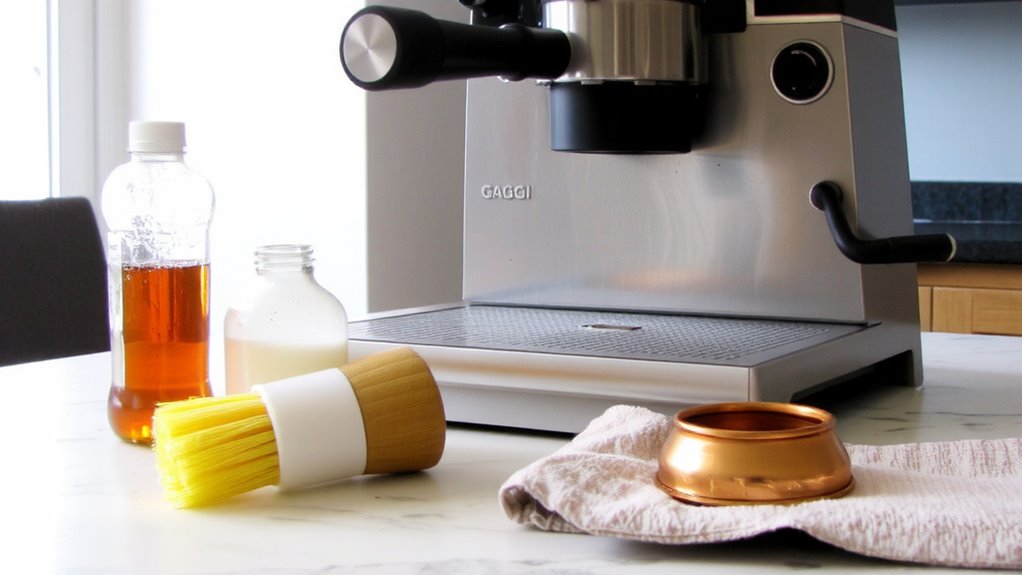
Every few months, mineral buildup starts affecting your Gaggia Classic Pro’s performance-especially if you use hard tap water. Hard water contains high levels of dissolved minerals, mainly calcium and magnesium, which cause water hardness. As you brew and steam milk, heat causes mineral accumulation inside the boiler, group head, and internal tubing. Over time, this scale restricts water flow, reduces heating efficiency, and can lead to machine failure. You might notice slower heat-up times, inconsistent brew temperatures, or weak steam pressure-all signs of scaling. Ignoring it risks costly repairs or shortening your machine’s lifespan. Using filtered water helps reduce, but doesn’t eliminate, scale. Regular descaling removes existing deposits and keeps components functioning properly. It’s not optional maintenance-it’s essential for reliable espresso. Descaling preserves performance and protects your investment. For best results, use a Breville-approved descaler that effectively dissolves mineral buildup without damaging internal components.
How Often Should You Descale Your Gaggia Classic Pro?
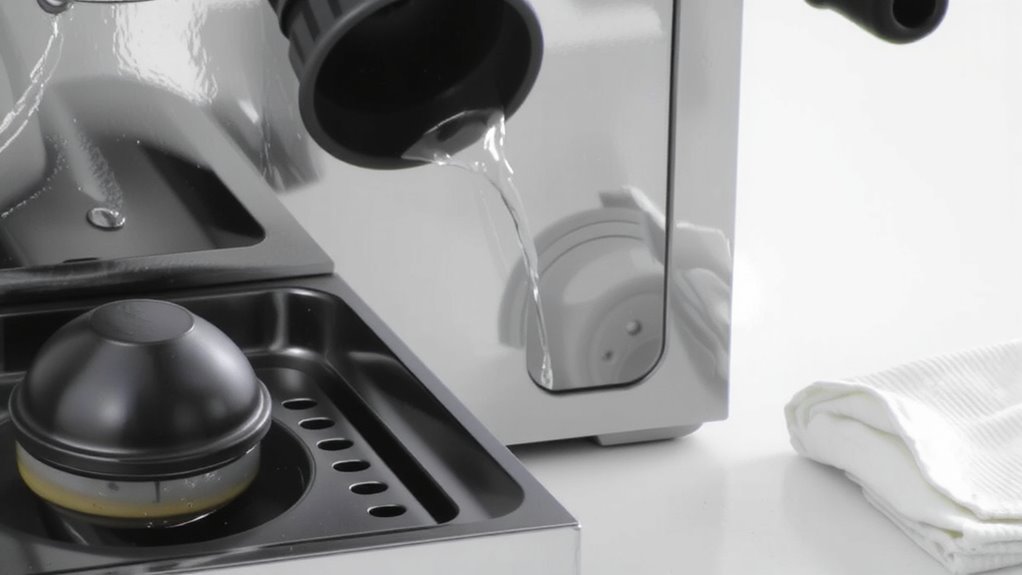
You’re already aware that mineral buildup from hard water can slow down your Gaggia Classic Pro and hurt its performance over time. How often you should descale depends mainly on two factors: water hardness and machine age. If you use hard water, scale builds up faster-descaling every 1–2 months is smart. With soft or filtered water, every 3–4 months may be enough. Newer machines can go longer between cleanings, but as your machine ages, mineral deposits accumulate more aggressively, requiring more frequent maintenance. A three-year-old machine, for example, might need monthly descaling even with softened water. Skipping this step leads to clogs, longer heat-up times, and poor extraction. Watch for slow water flow or erratic pressure-those are signs. Staying on schedule keeps your espresso tasting clean and your machine running efficiently.
What You’ll Need to Descale Your Gaggia Classic Pro
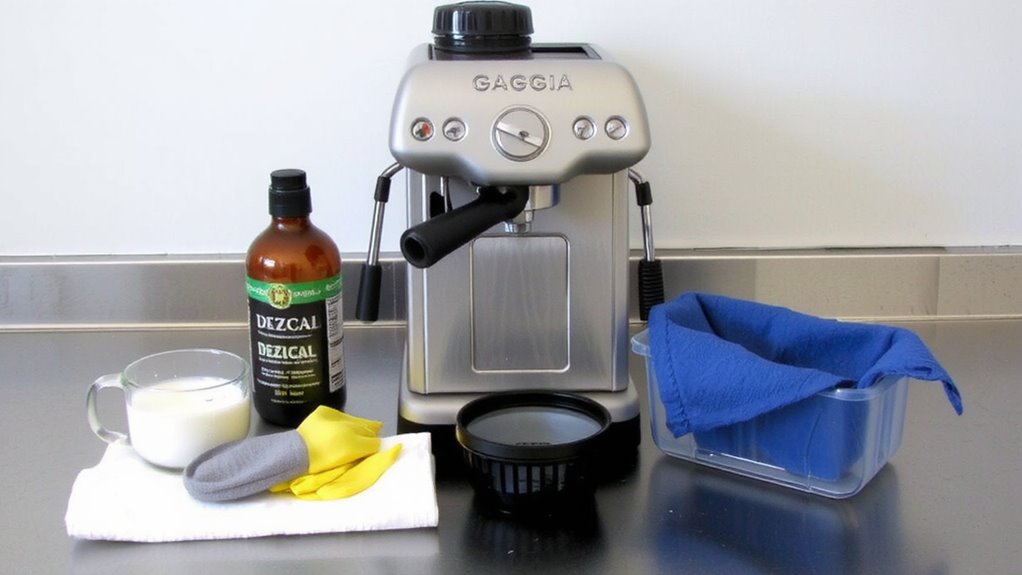
A solid descaling routine starts with the right tools. You’ll need a descaling solution specifically made for espresso machines, like Durgol or Urnex, which are formulated to dissolve mineral buildup safely and effectively. If you prefer a natural option, distilled vinegar works too-just know it may leave behind a lingering smell and requires extra rinsing. Either way, use 500ml of solution mixed with 500ml of fresh water. Grab a small container or jug to mix the solution, and have a blind (or closed) filter basket ready to place in the portafilter. You’ll also need a larger container or sink to catch wastewater from the group head and steam wand. Keep a teaspoon nearby for stirring and a clean cloth for wiping. Using the proper tools guarantees your descaling process is efficient, safe for your machine, and effective at extending its life. For optimal results, consider using a best Nespresso descaler as these are engineered to balance potency with machine safety.
Descaling Step by Step
While your Gaggia Classic Pro is built to handle regular use, mineral buildup from water can impair performance over time, so starting the descaling process properly matters. Begin with preparation checks: empty the water tank, remove coffee grounds, and confirm you’ve mixed the descaling solution correctly-typically 200ml of solution with 800ml of water. Fill the tank with this mix, place a container under the group head, and insert the blind basket. Power on the machine, wait for it to heat, then start solution circulation by activating the brew button. Let it run for 10 seconds, pause for 15, and repeat until the tank is nearly empty. This cycle guarantees thorough solution circulation through the boiler and group, breaking down limescale effectively. Don’t skip intervals-they boost descaling efficiency.
Flush and Reset After Descaling
Once the descaling solution has cycled through the machine and the tank is nearly empty, it’s time to flush out any leftover residue. Fill the reservoir with fresh water and run multiple brew cycles until the tank is used up. This flush guarantees clean water flow and proper machine calibration. Repeat if you notice cloudiness or odor. Flushing also clears descaling solution from internal components, which is essential for taste and performance.
| Step | Action |
|---|---|
| 1 | Refill reservoir with fresh water |
| 2 | Run brew cycles until tank is empty |
| 3 | Repeat until water runs clear and odor-free |
Let the machine cool slightly, then power it off and restart to reset internal systems. This reset helps maintain accurate machine calibration over time and prepares the system for regular use.
Fix Common Gaggia Classic Pro Descaling Problems
Why isn’t your Gaggia Classic Pro recognizing the descaling cycle even after following every step? It might be due to incorrect water hardness settings. The machine uses this setting to determine descaling frequency, so if it’s off, the indicator won’t trigger properly. Check your water hardness level using test strips and adjust the setting in the machine’s menu. Another common issue is a pump malfunction- if the pump isn’t drawing the solution properly, the cycle can’t start or complete. Listen for unusual noises or weak flow, signs of a failing pump. Also, make certain you’re using the correct descaling solution; some alternatives can interfere with sensors. Rinse thoroughly after troubleshooting. If problems persist, reset the machine by unplugging for one minute. Regular maintenance helps avoid these issues, but when they happen, acting quickly prevents further damage.
Prevent Limescale Buildup: Daily Habits That Help
You’ve just worked through common descaling problems on your Gaggia Classic Pro, and now it’s time to stop those issues before they start. Preventing limescale begins with understanding your water hardness-hard water causes faster buildup, so test it or check local reports. If your water is hard, use filtered or bottled water regularly to reduce mineral deposits. Machines used daily need more attention, so match your brewing frequency with maintenance: daily use means monthly checks, even with soft water. After each use, run a backflush with water to clear residual minerals from the group head. Leave the portafilter out and run a 5–10 second brew cycle to flush steam wand and boiler lines. These small habits extend time between full descales and protect internal components. Consistent care based on water hardness and usage keeps your machine running efficiently longer.
On a final note
You’ve descaled your Gaggia Classic Pro, and now it’s ready to perform. Regular maintenance like this keeps water flowing properly and extends the machine’s life. Don’t skip rinsing-residual solution affects taste and function. Going forward, use filtered water and backflush weekly to slow scale buildup. Doing so reduces how often you’ll need to descale, saving time and avoiding issues. Stay on top of care, and your machine delivers better espresso, reliably.