Why Grind Size Must Be Finer in Low-Humidity Environments to Compensate for Dry Beans
In dry air, your beans lose moisture and turn brittle, so they shatter when ground-especially in grinders like the Niche Zero or Fellow Ode. That creates more fines, which can choke the shot and block water flow. But oddly, you often need to grind finer because the overall grind mass drops and particle inconsistency speeds up extraction. Adjust in small steps, say 1–2 clicks, on machines like Lelit Anna. Watch your shot time-it’ll tell you if humidity’s messing with your grind. You’re not done yet-there’s a better way to stabilize your setup.
Notable Insights
- Dry air reduces coffee bean moisture, making them brittle and prone to shattering during grinding.
- Brittle beans produce more fines, which compact tightly and restrict water flow in the puck.
- Increased fines accelerate channeling and uneven extraction despite correct brew time settings.
- A finer grind setting compensates by increasing overall resistance to balance faster flow.
- Adjusting finer in small increments helps maintain extraction stability in low-humidity environments.
Why Dry Air Makes Coffee Beans Shatter
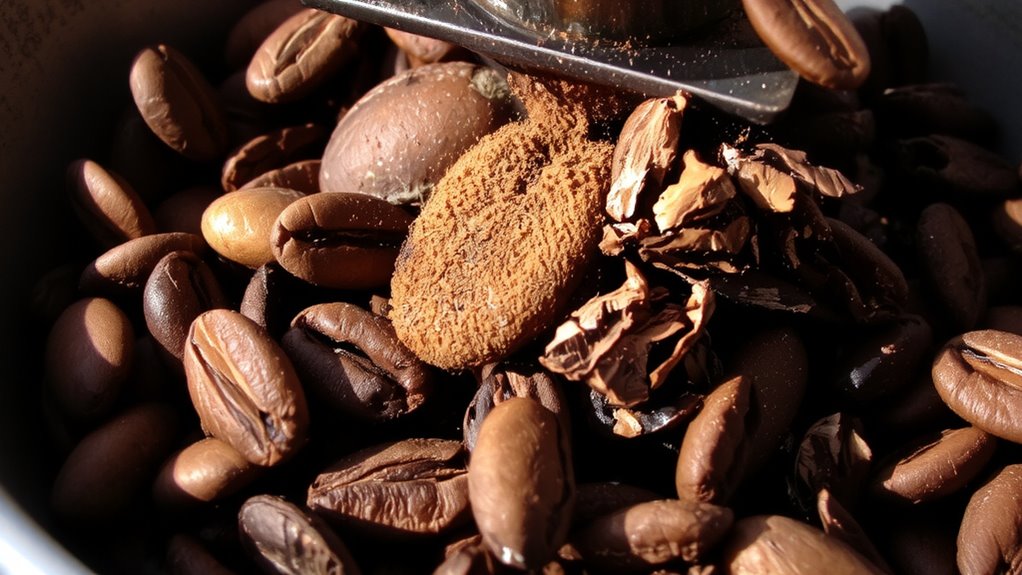
Grinding in dry air, you’re likely to notice more fines and uneven particles than usual. That’s because low humidity pulls moisture from the beans, leading to significant moisture loss. When beans dry out, their internal bean structure becomes brittle and less resilient. Instead of slicing cleanly, the grinder fractures the compromised structure, creating inconsistent results. This shattering effect worsens with prolonged exposure-storing beans in a dry environment for just a few hours can make a measurable difference. Burr grinders, especially flat ones, struggle more with this inconsistency compared to conical designs, which handle brittleness slightly better. You’ll want to adjust your grind setting finer to compensate, but first, consider reducing exposure. Use an airtight container with a one-way valve, like those from Fellow or Titan. It won’t stop moisture loss completely, but it slows it, giving you more predictable grinds.
How Brittle Beans Increase Fines During Grinding
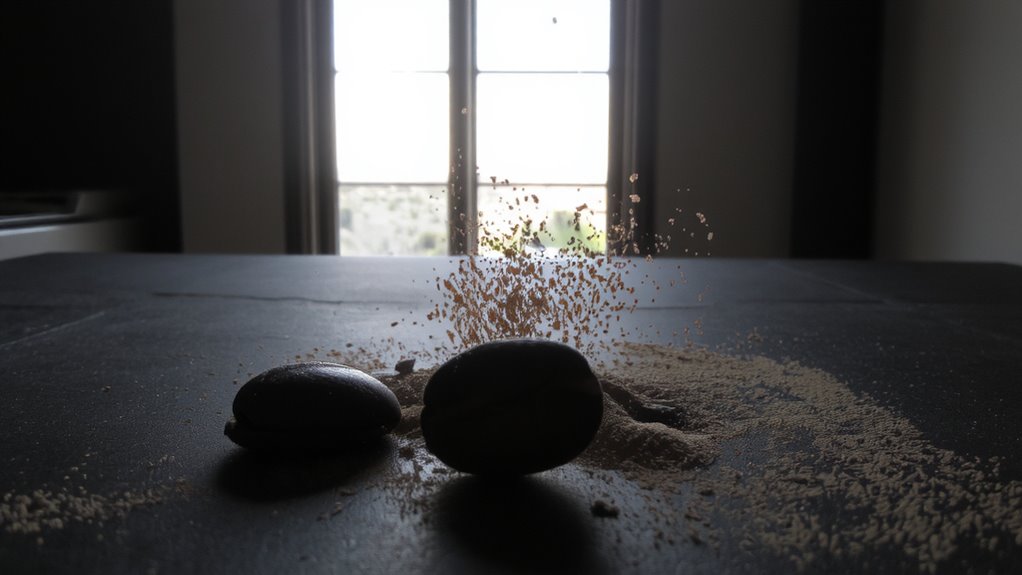
When coffee beans lose moisture in low-humidity environments, they become brittle and more prone to shattering during grinding, which directly increases the amount of fines. This bean brittleness leads to excessive particle fragmentation, meaning more tiny particles are produced even at the same grind setting. You’ll notice this when using a burr grinder-dry beans just explode into dust more easily than pliable ones. To help visualize the effect:
| Humidity Level | Bean Condition | Fines Production |
|---|---|---|
| High (60%+) | Supple, resilient | Low |
| Medium (40–60%) | Balanced | Moderate |
| Low (<40%) | Brittle, dry | High |
| Very Low (<30%) | Extremely brittle | Very High |
You can’t avoid particle fragmentation entirely, but knowing how dryness affects grinding helps you adjust settings appropriately.
Why Fines Cause Uneven Espresso Extraction
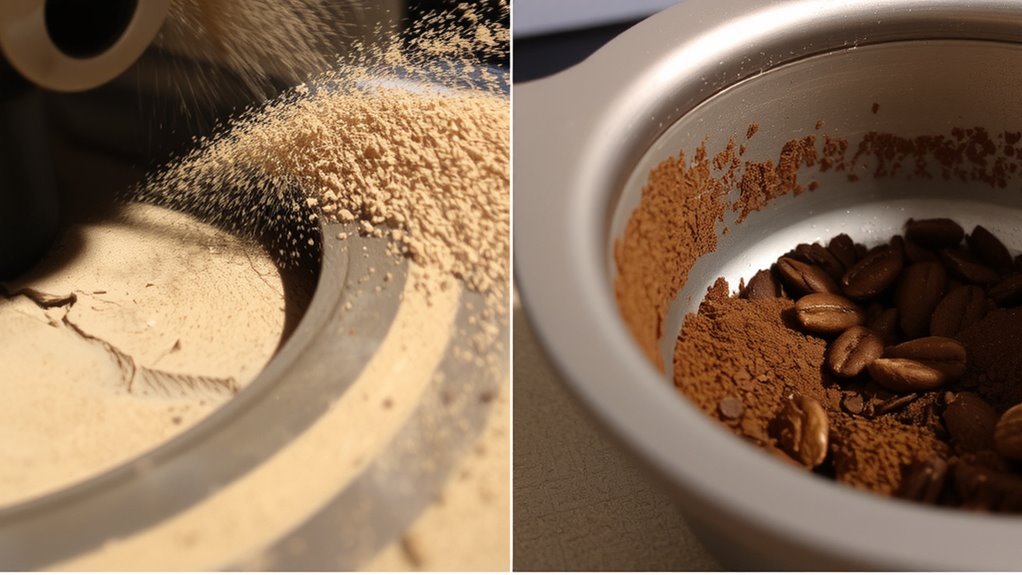
A lot of fines in your coffee grounds can seriously disrupt espresso extraction by clogging pathways and creating uneven flow. When fines clump together, they block water from moving smoothly through the puck, forcing it to find weaker spots. This leads to channel formation, where water rushes through paths of least resistance, over-extracting some areas and under-extracting others. Instead of a steady, even saturation, you get turbulent flow that harms flavor balance. Too many fines also make the puck too dense, increasing pressure unpredictably, especially in machines without flow control. You’ll notice sour, harsh, or astringent shots even with perfect brew time. While some fines are necessary for proper resistance, excess ones-common when grinding brittle, dry beans-worsen inconsistency. Using a high-quality grinder with stable particle distribution, like a Lelit Bianca or Decent EP-5, helps limit unwanted fines and supports more uniform extraction. Watch your yield and taste-adjust grind or dose if shots go off balance. Investing in one of the best mill grinders can significantly improve grind consistency and reduce fin production, especially in low-humidity conditions.
Grind Finer to Balance Flow in Dry Conditions
Even if you’re dialing in espresso on the same grinder and coffee, dry air can throw off your shots because low humidity makes beans more brittle, leading to more fines and faster flow through the puck. You’ll need to grind finer to balance this accelerated flow. With less moisture, static friction increases, causing uneven particle adhesion and clumping, which disrupts distribution. A finer grind slows water passage by increasing resistance in the puck. Though more fines are already present, the tighter particle size helps maintain even extraction despite dry conditions. Just don’t over-tighten the grind-too fine risks choking the shot. Monitor flow rate and adjust incrementally. Machines like the Lelit Anna or Rocket Appartamento respond well to small tweaks. Grind finer, but stay within the sweet spot where pressure and taste align. This keeps shots balanced, not rushed. For consistent results, consider using one of the best coffee grinders recommended for precise particle distribution.
How to Adjust Your Grinder for Low Humidity
If you’re pulling shots in a dry environment, you’ll likely need to adjust your grinder finer than usual to compensate for increased fines production and faster flow. Low humidity makes beans more brittle, so they shatter easily, creating extra fines even at the same grind setting. That’s due to reduced bean density and more static charge, which causes grounds to clump and disrupt dosing. To fix this, turn your grinder down in small increments-try 1 to 2 clicks finer on a flat burr grinder like a Niche Zero or 0.5 marks on a timed grinder like the EK43. Clean the burrs and portafilter regularly, since static charge attracts stray particles. Pre-ground and dose quickly to minimize static. Keep changes gradual: too fine too fast can choke the shot. With dry beans, consistency comes from small, deliberate tweaks and attention to how the grind behaves, not just how it looks. A reliable coffee and espresso grinder ensures greater control over particle size distribution in varying environmental conditions.
Use Shot Time to Diagnose Humidity Issues
Why’s your espresso flowing faster than usual, even after dialing in your grinder? Low humidity might be the culprit. In dry environments, beans lose moisture, increasing beam brittleness-meaning they shatter more easily during grinding. This creates finer particles than expected, packing the puck tighter and speeding up flow if unadjusted. You might also notice more static interference, causing grounds to scatter and dose unevenly, which affects extraction consistency. If your shot pulls too fast despite a fine grind, check the room’s humidity. A sudden drop often correlates with shorter shot times. Monitoring this helps identify when environmental changes affect your setup. While a scale and timer won’t fix the issue alone, they highlight patterns tied to dry air. Overlooking shot time shifts might lead you to misdiagnose grinder faults. Instead, treat rapid flow under fine settings as a clue: humidity’s likely low, and your beans are drier than they appear.
How to Maintain Grind Consistency in Dry Climates
Since dry air makes coffee beans more brittle and prone to shattering during grinding, you’ll need to adjust your setup to maintain consistent particle size. Start by stabilizing bean temperature-store beans in a sealed container at room temperature to avoid thermal shocks that worsen brittleness. Cold beans from the fridge or freezer shatter more, increasing fines. Use a grinder with strong static control, like the Niche Zero or Fellow Ode with anti-static mods, to reduce clogging and clumping. Grind in short bursts to minimize heat buildup, which can exaggerate static. If your grinder frequently clogs or throws fines, adjust the grind setting slightly coarser, then tweak dose or brew time instead. Pre-ground and tamp carefully-consistent distribution matters more when particle spread widens in dry conditions. Monitor shot times and adjust incrementally; consistency hinges on small, deliberate changes, not sweeping fixes.
On a final note
You need a finer grind in dry climates because low humidity makes beans brittle, shattering them into more fines. Those fines slow water flow, risking under-extraction if the grind stays coarse. Adjust your grinder slightly finer to balance the shot time. Use a consistent espresso recipe and track pull times-if shots run fast in dry air, refine the grind. A burr grinder like the Baratza Virtuoso or Lelit Bianca gives the control needed. Humidity changes your grind; you’ve got to adapt.