How to Match Grind Size to Water Flow Rate in Pressureless Espresso Devices
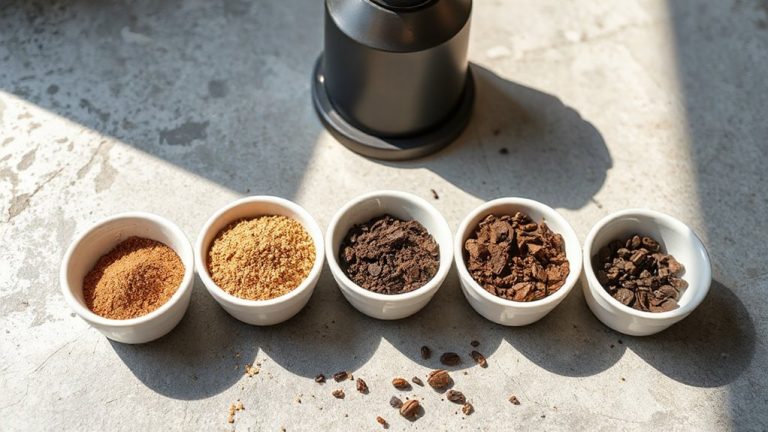
You control flow in pressureless brewers by adjusting grind size-finer means slower, coarser means faster. Aim for a medium-fine to medium grind, like table salt, especially for devices like the Bee House or Hario TCA-3. If water moves too fast (under 1 minute), go finer; if it’s too slow (over 2.5 minutes), go coarser. Fresh beans and a burr grinder improve consistency. Brew time between 1.5 and 2.5 minutes typically hits the sweet spot. Temperature matters too-keep water between 195°F and 205°F. The right balance sharpens flavor, keeps extraction even, and prevents sour or bitter results. Small tweaks make noticeable differences. There’s more to optimizing your setup once you’ve nailed the basics.
Notable Insights
- Use a medium-fine to medium grind to balance flow rate and extraction in pressureless brewers like Bee House or Hario TCA-3.
- Finer grinds slow water flow; if brew time exceeds 2.5 minutes, adjust grind coarser to improve flow.
- Coarser grinds speed up flow; if brew time is under 1 minute, make the grind finer for better extraction.
- Aim for a 1.5 to 2.5 minute brew time to achieve optimal flavor and consistent water flow.
- Use a burr grinder for uniform particles, ensuring even flow and preventing channeling or clogging.
How Grind Size Controls Water Flow in Pressureless Brewing
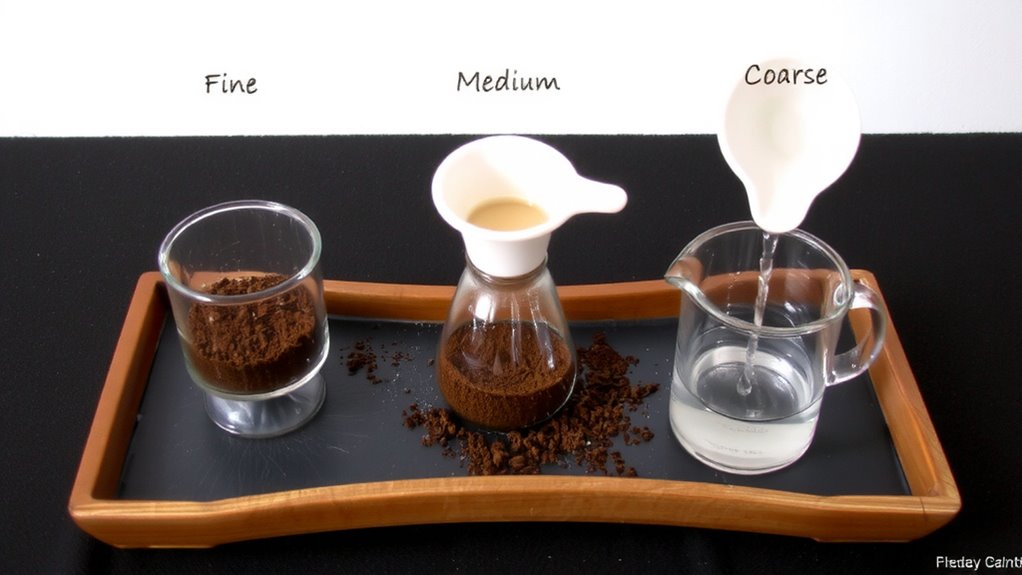
Water resistance in your coffee bed starts with grind size. When you use a pressureless brewer, the grind directly shapes flow dynamics-finer particles slow water, while coarser ones let it move faster. You need balance: too fine and water can’t penetrate, causing clogs; too coarse and it rushes through, under-extracting. Particle density matters because tightly packed fine grinds increase resistance, making water seek weak spots, which leads to uneven extraction. With consistent grind size, you control how evenly water spreads. Devices like the AeroPress or PourBoy rely on this principle-adjusting grind helps match flow rate without mechanical pressure. You’re not forcing water; you’re guiding it. A burr grinder gives you the precision needed. Bladed grinders create inconsistent particle density, disrupting flow. In pressureless systems, your grind isn’t just a setting-it’s the main control for timing and extraction. Get it right, and your cup improves instantly. For optimal results, consider using one of the best coffee grinders recommended for achieving consistent particle size.
Choose the Right Grind for Your Pressureless Brewer
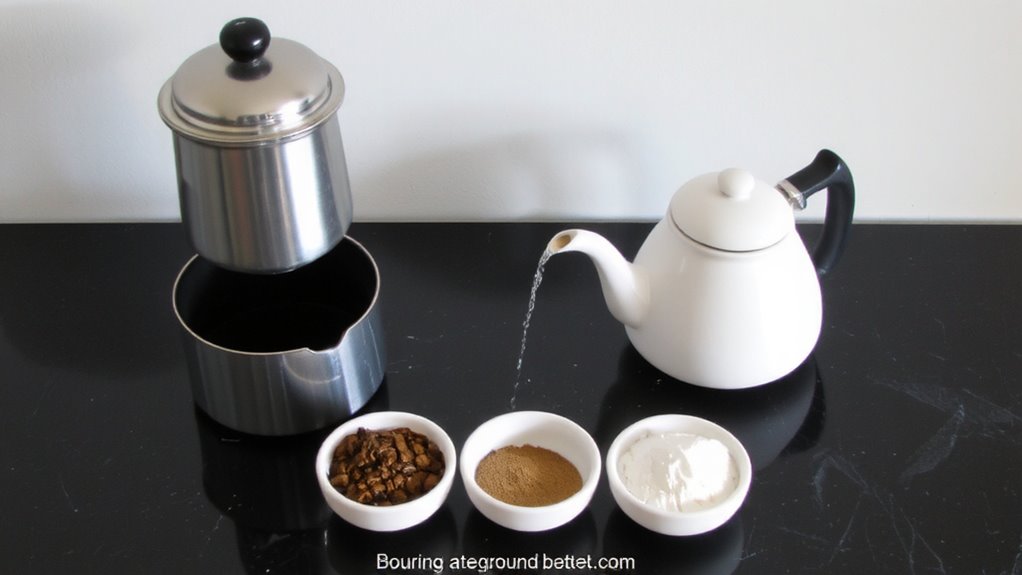
While your brewer doesn’t use pressure, the grind size still makes or breaks the extraction-so choosing wisely matters. For pressureless devices like the Bee House or Hario TCA-3, a medium-fine to medium grind works best-think table salt. Too fine, and water struggles to pass; too coarse, and your coffee tastes weak. Grind consistency is critical: uneven particles cause channeling, where water flows through the path of least resistance, leading to uneven extraction. A burr grinder outperforms blade models here. Bean freshness also plays a key role-use beans roasted within the past two to three weeks and grind just before brewing. Stale beans lose gases and oils, dulling flavor no matter how perfect your grind. Always store beans airtight, away from light and heat. Match your grind to your brewer’s design, not just preference-function guides flavor. For optimal results, consider investing in one of the best grinders for filter coffee.
Adjust Grind for Fast or Slow Water Flow
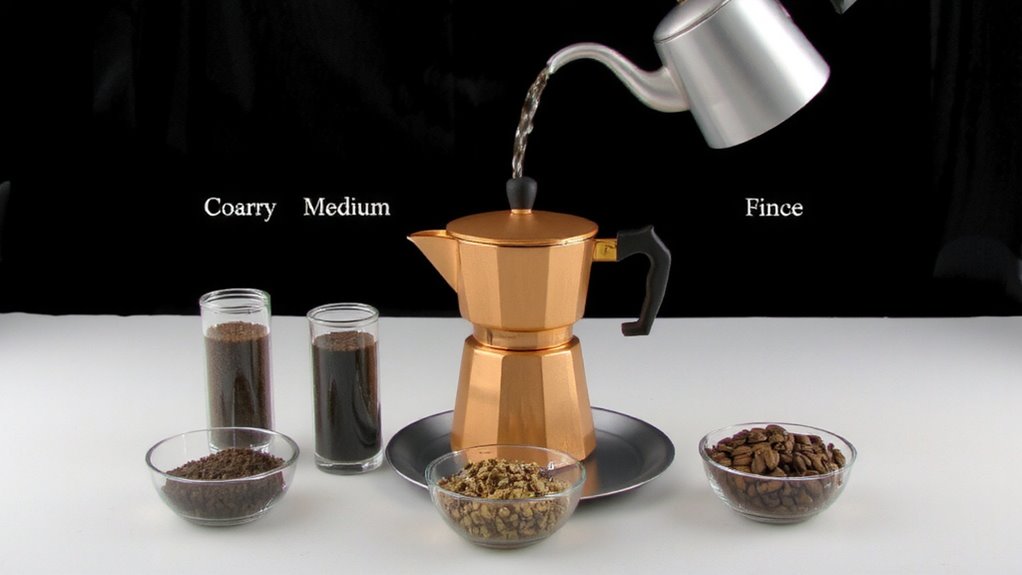
If your water flows too fast or too slow through the coffee bed, your grind size is likely out of sync with your setup. If water zips through in under a minute, your grind is too coarse-adjust finer to slow flow and improve extraction. If it drips slower than 2.5 minutes, go coarser to prevent over-extraction. Consistent grind consistency is key; uneven particles cause channeling, leading to weak or harsh spots. A burr grinder, like the Baratza Encore, gives better uniformity than blade grinders. Water temperature also affects flow: too cool (below 195°F) slows extraction, while too hot (above 205°F) may scorch. Match your grind to your device’s flow rate, keep water in the ideal range, and aim for a steady 1.5 to 2.5-minute brew time for balanced results. For optimal results with both espresso and pour-over, consider a high-quality burr grinder that ensures precise and consistent particle size.
Fix Sour or Bitter Coffee by Tweaking Grind
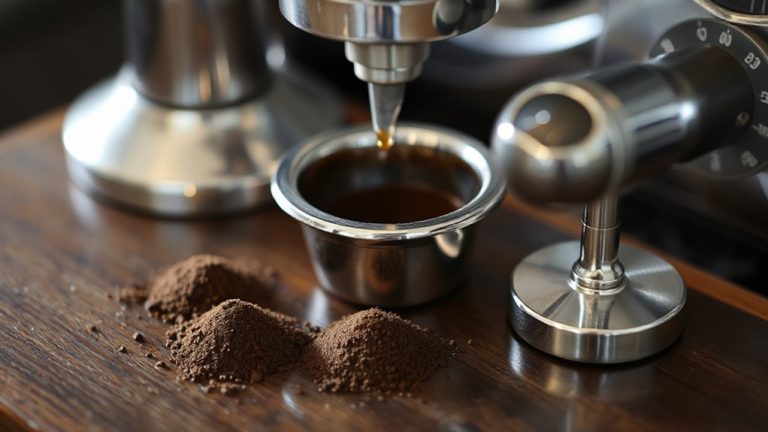
Ever pulled a shot that tastes sharp and sour, like unripe fruit? That’s a sign your grind is too coarse, letting water rush through too fast and extracting underdeveloped flavors. Try going finer-this slows flow and boosts extraction. On the flip side, if your coffee tastes harsh and bitter, your grind’s likely too fine, over-extracting in slow drips. Open it up slightly. Tamping pressure matters here; inconsistent tamp can skew results even with perfect grind. Also, consider bean temperature-cold beans grind unevenly, leading to sour or bitter notes. Warm them slightly before grinding for a more uniform particle size. You don’t need lab gear-just tweak the grind incrementally, keep tamp steady, and guarantee beans are at room temp. These small fixes dial in balance without reinventing your setup.
Dial In Your Perfect Pressureless Brew Step by Step
What if your espresso didn’t rely on a high-pressure pump? You’d need to fine-tune other variables for a clean, balanced shot. Start with your grind consistency-uneven particles cause channeling, so use a burr grinder for uniform grounds. Too coarse, and water flows too fast, yielding weak coffee; too fine, and it over-extracts, turning bitter. Adjust in small increments. Pair grind size with a stable brew temperature-ideally between 195°F and 205°F. If the water’s too cool, extraction suffers; too hot, and you risk scalding the oils. Monitor flow rate: a 25–30 second brew time usually hits the sweet spot. Use filtered water and weigh doses (aim for 1:2 ratio). Tweak one variable at a time. Record changes. This method works reliably in devices like AeroPress or manual espresso makers.
Why Moka Pots Need Finer Grind Than Pourover
Because the moka pot relies on steam pressure to push water through coffee-unlike pourover’s gentle gravity flow-you’ll need a finer grind to restrict the water’s path and build enough resistance. This guarantees proper extraction under higher brew temperature and pressure. Using stale beans or a coarse grind leads to weak, fast brewing and off-flavors. Fresh bean freshness matters more here-oily, aromatic beans respond better to the sudden heat. You’re not making espresso, but you’re close, so aim for a texture like table salt.
| Device | Grind Size | Brew Temperature |
|---|---|---|
| Pourover | Medium-coarse | 195–205°F |
| Moka Pot | Medium-fine | 200–205°F |
| French Press | Coarse | 195–200°F |
| Aeropress | Fine | 175–205°F |
| Espresso | Extra-fine | 190–200°F |
On a final note
You’ve got the tools to match grind size to your pressureless brewer’s flow. A finer grind slows water, boosting extraction; coarser speeds it up, reducing it. Use this to fix sour (try finer) or bitter (try coarser) shots. Dial in slowly, changing one thing at a time. Moka pots need finer grinds than pourovers but coarser than espresso machines. Your perfect cup hinges on this balance-adjust carefully.