Exploring the Complex Acidity of Castillo Coffee Varietals in Colombia
You’re sipping vibrant, wine-like acidity when you brew high-grown Castillo from Nariño or Huila. Bred for rust resistance, it now thrives in Colombia’s volcanic soils, where cool, high-altitude farms slow cherry ripening and boost citrus brightness. Proper fermentation-especially anaerobic or yeast-controlled-sharpens that sparkle. Roasters highlight it with even development and precise profiles. Microclimate and soil differences shape each region’s character. There’s more shaping its rise in specialty cups than you might expect.
Notable Insights
- Castillo’s disease resistance and uniform bean size support consistent roasting, enhancing acidity expression.
- High-altitude cultivation above 1,500 meters intensifies citrus and wine-like acidity in Castillo beans.
- Volcanic soils in Colombia slow nutrient uptake, preserving organic acids that contribute to bright cup profiles.
- Anaerobic fermentation for 36+ hours amplifies the varietal’s inherent tangy, vibrant acidity.
- Regional differences in Nariño, Huila, and Cauca shape acidity with distinct flavor nuances.
How Disease Resistance Hid Castillo’s Bright Side
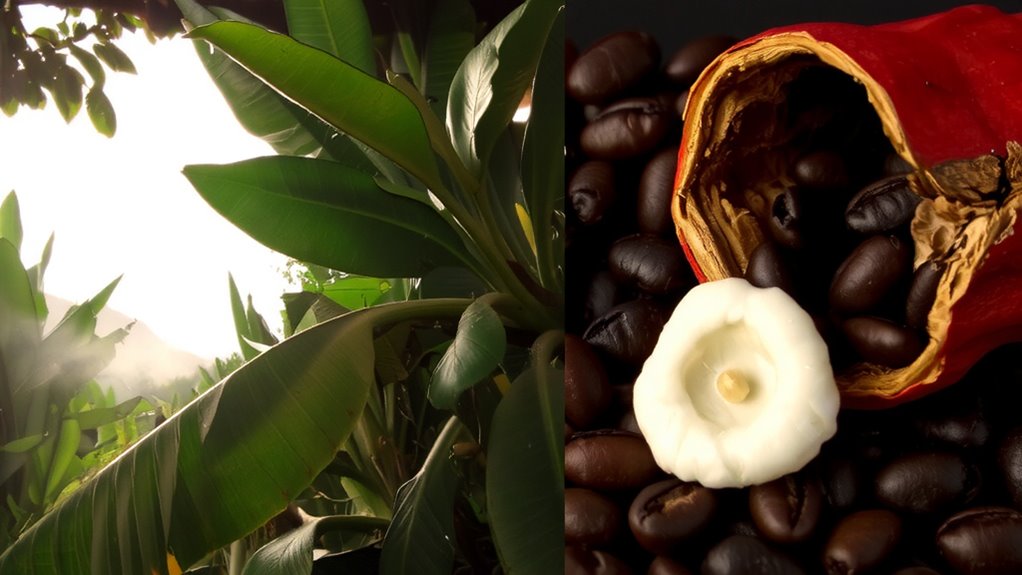
While disease resistance was the main reason farmers in Colombia switched to Castillo coffee, that focus often overshadowed its other qualities you might care about as a roaster or brewer. You probably know Castillo was bred to fight leaf rust, but its strong disease resistance doesn’t come at the cost of flavor preservation like earlier resistant varieties. That’s key when sourcing beans for consistent roast profiles. Compared to older types like Caturra, Castillo holds up better in the field, meaning fewer defective beans and more uniform green coffee. This stability helps you achieve brighter, cleaner cups without compromising on quality. While it’s not inherently more complex, proper post-harvest handling enhances its potential. Don’t dismiss Castillo as just a practical choice-its resilience supports better flavor preservation, giving you a reliable base for balanced, approachable brews ideal for both filter and espresso setups.
Why Altitude Fuels Citrus and Wine Notes in Castillo
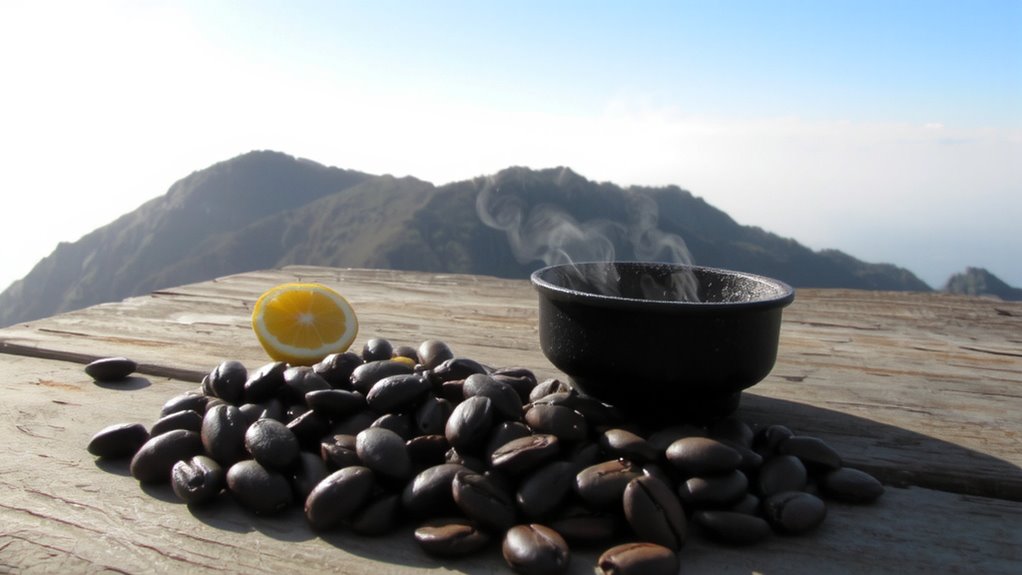
You’ll notice more vibrant citrus and wine-like notes in Castillo coffee when it’s grown at higher altitudes, typically above 1,500 meters. The cooler temperatures slow cherry development, allowing sugars to build gradually and acids to form more complexity. This altitude-driven maturation enhances flavor clarity, bringing out bright lemon, grapefruit, or even red wine characteristics. The microclimate influence-like mist, sunlight hours, and nighttime cooling-further refines these traits. You’re tasting the effect of consistent dew points and breezes that reduce fungal pressure and support steady ripening. Meanwhile, soil composition, rich in volcanic minerals common in the Andes, boosts nutrient uptake that supports nuanced acidity. Don’t assume all high-grown Castillo will taste the same-the exact profile depends on how these factors interact locally. For best results, use a balanced roast profile and a brew method like pour-over that highlights acidity without amplifying bitterness.
Colombian Terroir’s Impact on Castillo Acidity
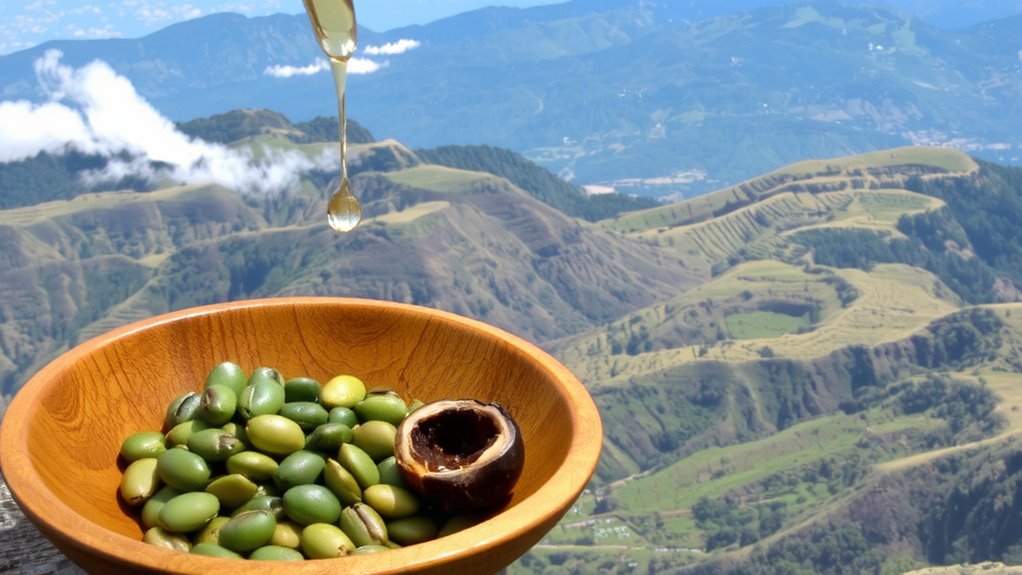
What makes Castillo from Colombia taste so bright and lively? It’s the terroir-specifically the soil composition and microclimate influence unique to coffee-growing regions like Huila or Antioquia. You’re working with volcanic soils rich in minerals, which help regulate nutrient uptake and encourage balanced acidity. These soils drain well but retain enough moisture to support steady plant growth, directly affecting the bean’s development. At the same time, consistent microclimate influence-daily temperature shifts, cloud cover, and humidity-slows cherry ripening. That slow maturation preserves organic acids, boosting the crisp, clean notes you taste. You’ll notice this especially when comparing beans from higher-altitude farms where these conditions are strongest. While soil and climate don’t replace proper processing, they lay the essential foundation. If you’re sourcing beans for acidity, prioritize farms where terroir naturally supports it-your brew will reflect that precision.
Fermentation Techniques That Elevate Castillo’s Brightness
How do you bring out more brightness in Castillo without changing the bean itself? You control fermentation. Yeast selection and anaerobic fermentation are key. Choosing specific yeast strains enhances acidity predictably, boosting clean, bright notes. Anaerobic fermentation-sealing cherries in low-oxygen tanks-builds complex acids slowly, intensifying brightness without harshness. Done right, it lifts Castillo’s fruit-forward side.
| Technique | Effect on Brightness |
|---|---|
| Natural Fermentation | Mild, variable acidity |
| Selected Yeast Strains | Consistent, vibrant notes |
| Anaerobic Short (12h) | Subtle, rounded sparkle |
| Anaerobic Long (36h+) | Pronounced, tangy lift |
Use stainless steel tanks for anaerobic runs to control temperature. Over-fermenting risks off-flavors, so monitor pH. Small producers can replicate this with sealed drums but must track time closely. It’s not magic-it’s method.
How Roasters Highlight Acidity in Castillo Beans
While fermentation shapes the foundation of acidity in Castillo beans, roasting determines how much of that brightness makes it into your cup. You need to account for bean density-Castillo’s compact structure conducts heat differently, so underdeveloped cores are a real risk if you rush the roast. A slow, controlled approach helps preserve those vibrant notes. Roast profiling is key: pulling back on heat during the Maillard phase avoids baking out delicate acids. Light to medium roasts work best, targeting temperature ranges between 385°F and 405°F to highlight citrus or apple-like tones without tipping into sourness. You’ll want a roaster with precise airflow and drum speed control, like the Probatino or Loring S15, to fine-tune each batch. Darker roasts dull acidity fast, so avoid going beyond city+. With the right profile, you amplify what’s already in the bean, not mask it. For even greater precision, consider integrating a temperature controller specifically designed for home coffee roasters.
Nariño vs. Huila vs. Cauca: Regional Differences in Castillo
Castillo’s flavor profile starts with the roast, but where the beans grow matters just as much. In Nariño, high altitudes and volcanic soil composition bring sharp acidity and wine-like complexity to your cup. The region’s cool microclimate influence slows bean development, boosting sugar concentration. Huila, by contrast, offers warmer days and rich clay soils, yielding Castillo beans with balanced acidity, rounded brightness, and notes of stone fruit. You’ll notice a more consistent profile here, ideal for espresso blends. Cauca sits in the middle-its variable elevation and loamy soil composition produce medium acidity with subtle floral hints. The microclimate influence is less predictable, so results can vary between farms. When comparing regions, consider your brewing method: Nariño’s bright notes shine in pour-over, while Huila’s balance works well in drip or French press. Cauca adapts to both.
Can Castillo Break Into Specialty Coffee?
What makes a varietal worthy of the specialty label-flavor, resilience, or consistency? You’re weighing those factors when considering Castillo’s place in specialty coffee. While bred for rust resistance, Castillo also shows real flavor potential when grown at altitude and processed carefully. Critics cite lower genetic diversity as a limitation, yet farmers value its stability across seasons. With precise fermentation and good roasting technique, Castillo can surprise you.
| Trait | Specialty Expectation |
|---|---|
| Flavor Potential | Moderate to High |
| Genetic Diversity | Lower than heirlooms |
| Yield Consistency | High |
You’ll need to adjust your roaster’s charge temp and monitor development time closely. Don’t dismiss Castillo-its balance of practicality and cup quality might just earn its spot in your lineup, especially as processing methods evolve.
On a final note
You now see Castillo isn’t just disease-resistant-it can offer bright, citrusy acidity when grown at high altitudes like in Nariño. Fermentation and roast matter: light to medium roasts preserve its wine-like notes, especially with careful processing. Compared to traditional varieties, it’s more consistent but needs skilled handling. For specialty potential, focus on terroir and post-harvest methods. With the right approach, Castillo can compete.