How to Deep Clean a Grinder’s Chute and Exit Funnel With Brush Tools
Unplug your grinder and remove the bean hopper to access the chute. Use a narrow, tapered bottle brush with soft nylon bristles-like those from Baratza or 1ZPress-to scrub buildup from tight curves and corners. Angle the brush or tilt the grinder for better reach. Clean the funnel below the burrs with short, focused strokes. Dry brushing every few grinds prevents clogs and rancid flavors, especially with oily beans or daily use. Choose the right tool, and you’ll maintain consistent flow and flavor over time-with more smart fixes just around the corner.
Notable Insights
- Unplug the grinder and remove the bean hopper to safely access the chute and funnel.
- Select a narrow, tapered brush with soft nylon bristles to fit tight or curved chute designs.
- Use circular and back-and-forth motions to dislodge coffee fines and oils from the chute walls.
- Clean the exit funnel with short, focused strokes, tilting the grinder if needed for access.
- Perform deep cleaning every few grinds or weekly, depending on usage and bean oiliness.
How to Access the Chute and Funnel
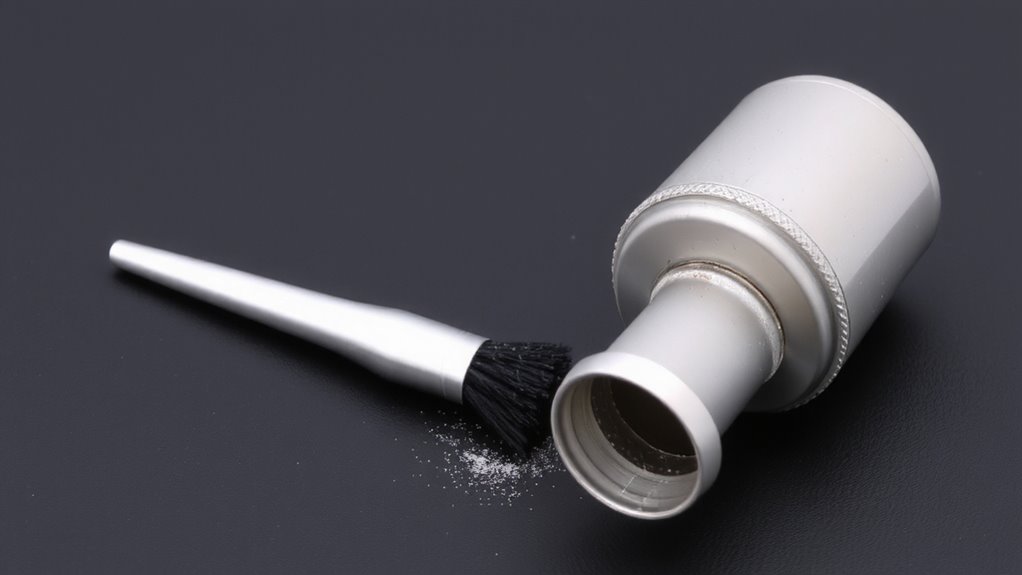
How do you get to the chute and exit funnel on your grinder? First, unplug the grinder and remove the bean hopper. Most grinders have a chute design that allows access once the hopper’s off-some, like the Baratza Encore, use a wide, straight chute that’s easy to reach into. Others, especially doser grinders, might have tighter curves. Next, check the funnel placement. It’s usually just below the burrs and leads straight to the portafilter or grounds bin. On models like the Eureka Mignon, the funnel’s removable, making cleaning simpler. On others, it’s fixed, requiring careful brushing in place. Always verify your model’s layout-chute design and funnel placement vary by brand and type. This step isn’t about cleaning yet-just access. Knowing how your parts fit together guarantees you’ll clean effectively later, without forcing or damaging components. Using the right cleaning brushes can make a significant difference in reaching tight spaces and removing stubborn coffee buildup.
Best Brushes for Tight Grinder Spots
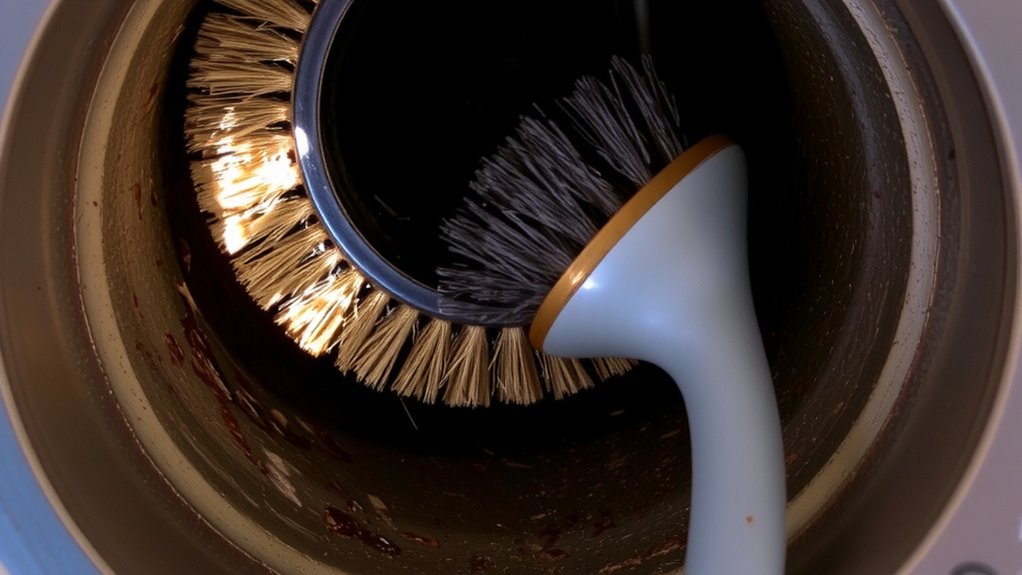
A narrow chute or fixed funnel means you’ll need the right brush to reach stubborn coffee buildup. Not all brush types work in tight spaces-choose ones designed for precision. Small, tapered bottle brushes with nylon bristles fit most chutes and offer control. Look for models with angled heads, since proper cleaning angles make it easier to dislodge stuck grounds without scratching surfaces. Spiral-wound wire brushes clean well but can be too stiff for delicate parts. Soft-bristle options, like those from Baratza or 1ZPress, are safer for frequent use. Some brushes come with curved handles, improving access and cleaning angles in awkward spots. Avoid oversized or flat cleaning tools-they won’t navigate corners effectively. Replace brushes every 3–6 months as bristles wear down. Pick a durable, appropriately sized brush type based on your grinder’s design, and always dry it after use to prevent moisture damage.
Scrub the Chute and Funnel Step by Step
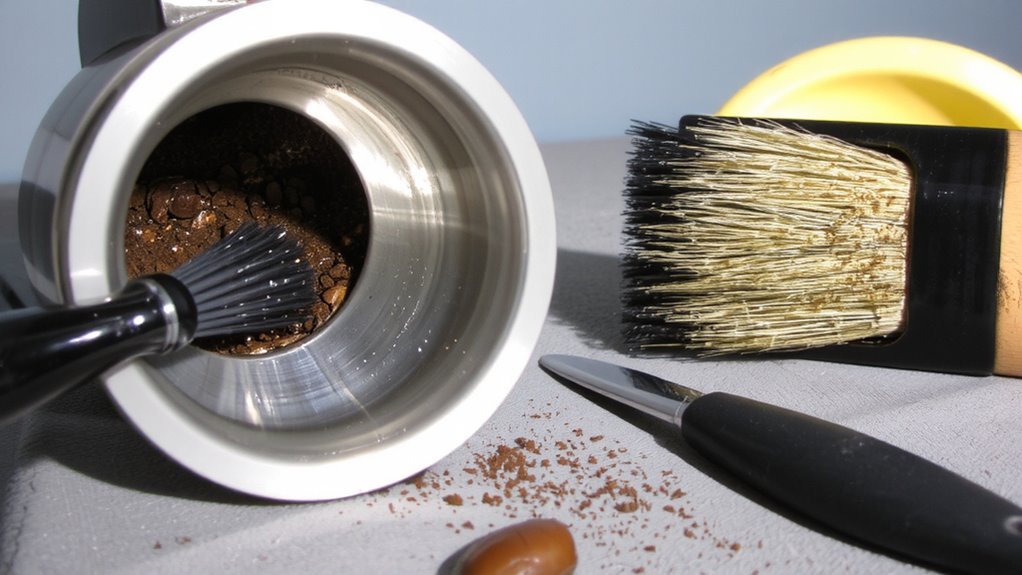
You’ll want to start cleaning your grinder’s chute and funnel right after emptying the bean hopper and removing any visible grounds. Grab a narrow, stiff-bristled brush designed for grinders-like the Grindz Brush or a modified pipe cleaner. Apply gentle pressure and use circular brush techniques inside the chute, working from top to bottom. For tight corners, switch to back-and-forth scrub patterns to dislodge stuck particles. Don’t forget the exit funnel; tilt the grinder if needed and use short, focused strokes to cover all surfaces. Avoid wet cleaning unless specified by the manufacturer, as moisture can damage internal components. Dry brushing with consistent scrub patterns guarantees thorough debris removal without risk. Pay attention to buildup shadows-they show where your brush isn’t reaching. Effective brush techniques take only a few minutes but greatly improve cleanliness. Regular maintenance like this keeps your grinder functioning smoothly day to day.
Why Grind Buildup Affects Flavor and Flow
Over time, residual coffee oils and fine grounds accumulate in hidden areas of your grinder, creating a breeding ground for stale flavors and inconsistent performance. This buildup leads to flavor degradation, as old oils turn rancid and taint your fresh beans with bitter, off-notes. You’ll notice your espresso or drip coffee tasting flat or sour, even with quality beans. The accumulated mass also causes flow restriction, disrupting the even exit of grounds. Clumps form, clogging the chute or funnel, which interrupts dose consistency and increases waste. Uneven flow affects extraction, undermining shot quality and brew time. Even small amounts of retained material alter your grind’s path, skewing results. Brushing these areas regularly prevents these issues, preserving both flavor integrity and operational efficiency. You don’t need solvents-just proper brushing-to maintain peak performance. Clean gear means predictable, clean-tasting coffee every time. For best results, use tools designed for your specific grinder model.
How Often to Clean the Chute and Funnel
Regularly brushing the chute and funnel keeps your grinder running cleanly, but the ideal frequency depends on how often you brew. If you grind daily, clean the chute and funnel every three to four uses to prevent buildup that affects flavor and flow. For lower grind frequency-say, a few times a week-a weekly cleaning is enough. Stick to a consistent maintenance schedule to avoid stale oils and clogs. Baratza recommends a quick brush-out after each use, but a deeper clean with a narrow brush or pipe cleaner every few sessions handles residue better. With high-burrs grinders like the Forté or Preciso, buildup happens faster due to tighter tolerances. If you use oily beans or flavored coffee, clean more often. Ignoring the schedule risks inconsistent dosing and off-tastes. Make it part of your routine-like descaling your brewer. A reliable best espresso grinder under $200 can still deliver excellent results with proper upkeep.
On a final note
You’ve cleared the chute and funnel, so now your grinder runs smoother and your coffee tastes cleaner. Use a stiff-bristled brush weekly to prevent buildup that hurts flavor and flow. For tight spots, a narrow pipe brush works better than a wide one. If you grind daily, deep clean every few weeks. Stainless steel tools last longer than plastic. Skip oily cleaners-they linger and taint taste. Keep tools handy so maintenance stays quick and practical.