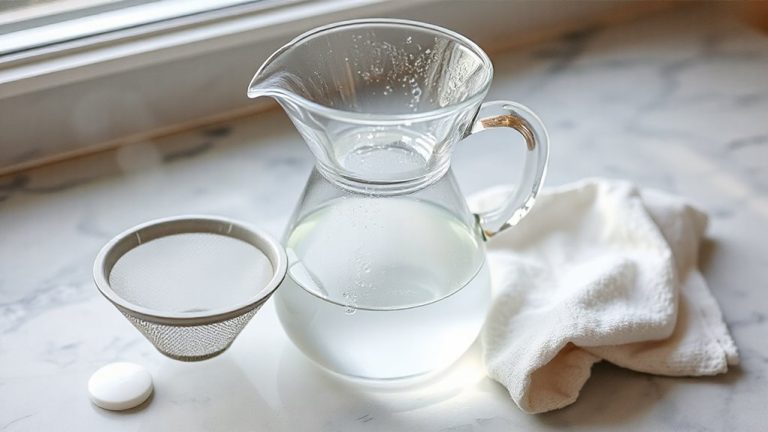
How to Properly Clean and Maintain Your Coffee Scale for Accurate Readings
Turn off and unplug your coffee scale before cleaning. Wipe spills right away with a soft, damp cloth-never use bleach or ammonia. Avoid submersion; water-resistant isn’t waterproof. For stuck grime, use soapy water and dry thoroughly. Recalibrate monthly or after moving it, especially with models like Acaia or Hario. Keep it on a level surface, don’t overload it, and check accuracy regularly with proper weights. You’ll see exactly how small habits make a big difference in performance.
Notable Insights
- Turn off and unplug the scale before cleaning to avoid electrical damage.
- Wipe spills immediately with a soft, damp cloth to prevent residue buildup.
- Clean stubborn grime with a lightly soapy cloth and dry thoroughly to avoid moisture damage.
- Recalibrate monthly or after moving the scale to maintain measurement accuracy.
- Use certified weights for calibration and avoid harsh chemicals or abrasive tools.
How to Clean Your Coffee Scale in 5 Steps
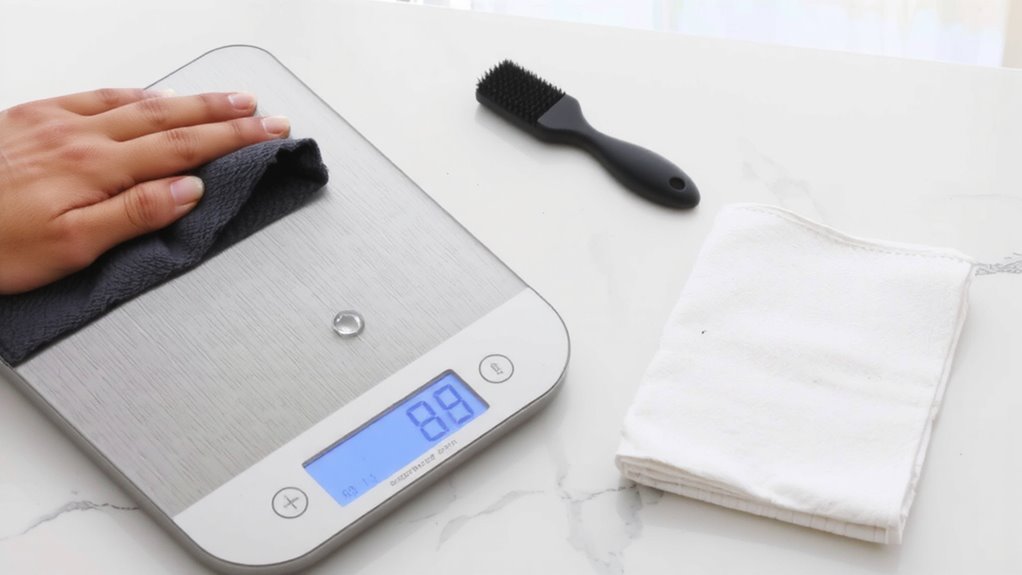
Start by turning off and unplugging your coffee scale to avoid any electrical issues during cleaning. Wipe away coffee spills immediately with a soft, damp cloth-lingering residue can affect accuracy and attract dust. Never submerge the scale, as even small amounts of moisture can lead to moisture damage, especially around buttons or seams. For tougher grime, lightly moisten the cloth with soapy water, then gently clean the surface. Avoid harsh chemicals like bleach or ammonia, which can degrade the finish or damage the display. Dry thoroughly with a lint-free cloth to prevent any leftover dampness. Most models, like the Hario VST or Acaia Lunar, use sensitive electronics that demand quick cleanup and dry storage. Regular wiping after use cuts down long-term buildup. This simple routine keeps your readings precise and extends the device’s lifespan without unnecessary wear. Investing in one of the best coffee scales ensures consistent performance when properly maintained.
Avoid These Common Cleaning Mistakes
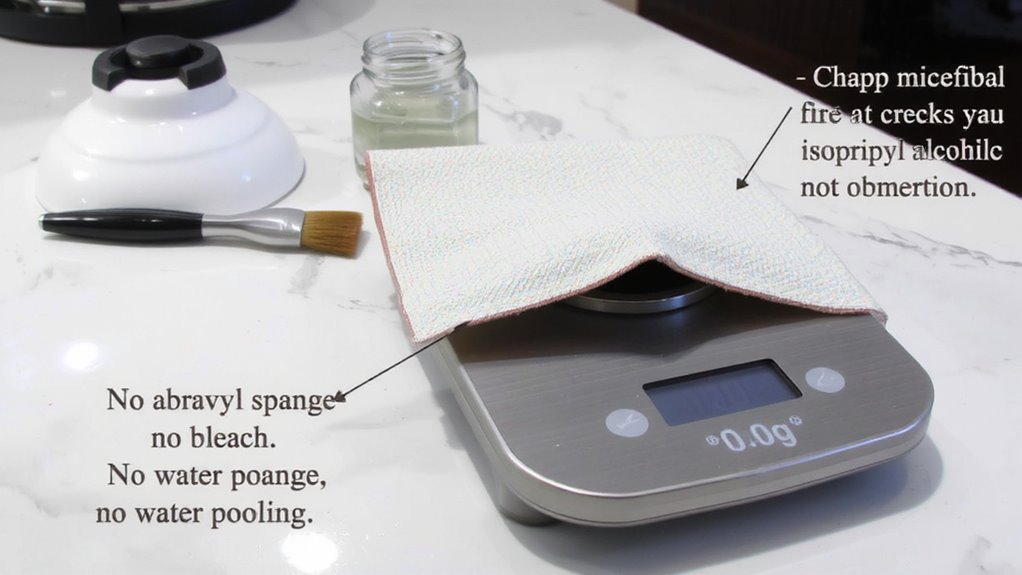
Many people ruin their coffee scales with just a few simple missteps, and you’re probably making at least one of them. Using harsh chemicals like bleach or ammonia-based cleaners can damage the scale’s surface and eating away at the finish or internal components over time. Stick to mild dish soap and water on a soft cloth instead. Another big mistake is ignoring submersion risks-never rinse your scale under the tap or let it soak. Even water-resistant models aren’t waterproof, and moisture can seep into sensors or circuitry, causing permanent damage. Wipe spills quickly, and never let liquid pool near buttons or seams. Also, avoid abrasive scrubbers that scratch the display or pan. These small oversights lead to inaccurate readings or early failure. Protect your investment by cleaning gently and correctly every time.
When and Why to Calibrate Your Coffee Scale
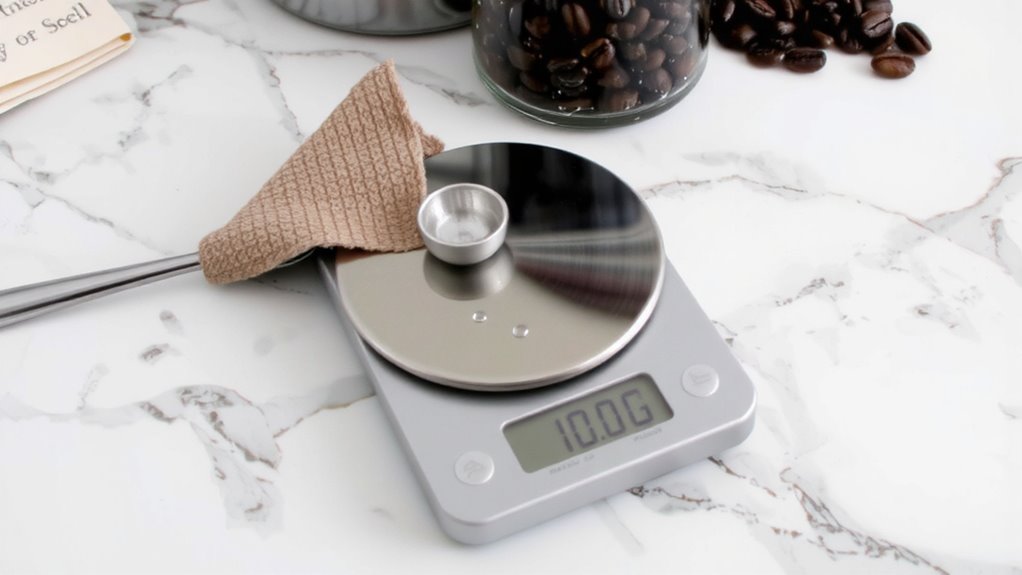
Though your coffee scale may seem accurate day to day, it can drift over time due to minor impacts, temperature shifts, or regular use. That’s why calibration matters-you’re resetting the internal reference so your readings stay precise. You should calibrate your scale whenever you move it, since even small shifts in location can introduce environmental impact from vibrations or uneven surfaces. Changes in altitude or room temperature can also affect performance. For most users, monthly calibration is a smart baseline, but if you use your scale heavily or notice inconsistent weights, increase the calibration frequency to every two weeks. Always use a certified calibration weight-don’t rely on coins or household items, as they’re often inaccurate. This small step guarantees your coffee brewing stays consistent, especially with espresso or pour-over, where a gram can make or break the final cup. For reliable performance, consider choosing one of the best scales for 2024 that combine precision with durability.
Daily Habits That Extend Your Scale’s Life
Since your coffee scale sees daily use, handling it with care each time you brew can greatly prolong its lifespan. Consistent handling prevents jostling internal components, while proper storage keeps dust and moisture at bay. Always place your scale on a stable, level surface-avoid edges where it might get bumped. Don’t overload it beyond its maximum weight limit (usually 2–5 kg, depending on model). Wipe spills immediately with a slightly damp cloth, then dry. Avoid leaving batteries in long-term if using an electronic model. Small habits make a big difference.
| Habit | Benefit | Example |
|---|---|---|
| Use gently | Prevents internal damage | No slamming cups |
| Store covered | Reduces dust buildup | Keep in drawer |
| Level placement | Guarantees balance | On flat countertop |
| Clean after use | Avoids residue | Quick wipe down |
Why Accuracy Depends on Regular Scale Maintenance
While you might not notice the change day to day, even small buildups of coffee grounds or oils can throw off your scale’s readings over time. This residue interferes with internal components, increasing the risk of scale drift-when your scale shows inconsistent weights without recalibration. Regular cleaning prevents debris from affecting sensitivity, especially on precision models like the Acaia or Hario. You should also watch for battery degradation, since weak power can cause erratic performance or sudden shutdowns during brewing. Low voltage may mimic calibration issues, leading to inaccurate readings even on a clean, well-maintained device. Replacing batteries promptly and wiping the scale after each use minimizes long-term errors. Calibration with a known-weight check every few weeks helps catch problems early. Simple habits like these guarantee your scale remains reliable, shot after shot. A well-maintained setup also complements tools like handheld milk frothers for a fully optimized coffee experience.
On a final note
KeepMODIFIED TEXT):
Keep your coffee scale clean and calibrated for reliable results. Wipe it daily with a damp cloth, avoid harsh cleaners, and never submerge it. Check calibration monthly with a known weight, especially if dropped or moved. A well-maintained scale-like the Acaia or Hario models-lasts longer and stays accurate. Good habits, like using a cover and avoiding spills, prevent buildup and damage. Simple care guarantees precision with every brew.