How to Adjust Grind and Dose for a Higher-Body Filter Brew Without Bitterness
Use a finer grind with a burr grinder like the Baratza Encore to boost extraction and body, but avoid blade grinders-they create uneven particles that lead to bitterness. Increase your dose from 15g to 17–18g per 250ml to enhance mouthfeel without sourness. Pair more coffee with a slightly coarser grind to prevent over-extraction. Make one change at a time, and you’ll find the sweet spot where body builds without harshness creeping in.
Notable Insights
- Use a slightly finer grind with a burr grinder to improve extraction and body without causing bitterness.
- Increase coffee dose from 15g to 17–18g per 250ml water to enhance mouthfeel and depth.
- Maintain ideal water quality with 100–150 ppm minerals to support balanced extraction and flavor.
- Slightly coarsen the grind when increasing dose to prevent over-extraction and avoid bitter notes.
- Make incremental adjustments and test one variable at a time for consistent, optimal results.
What’s Making Your Filter Coffee Thin or Bitter?
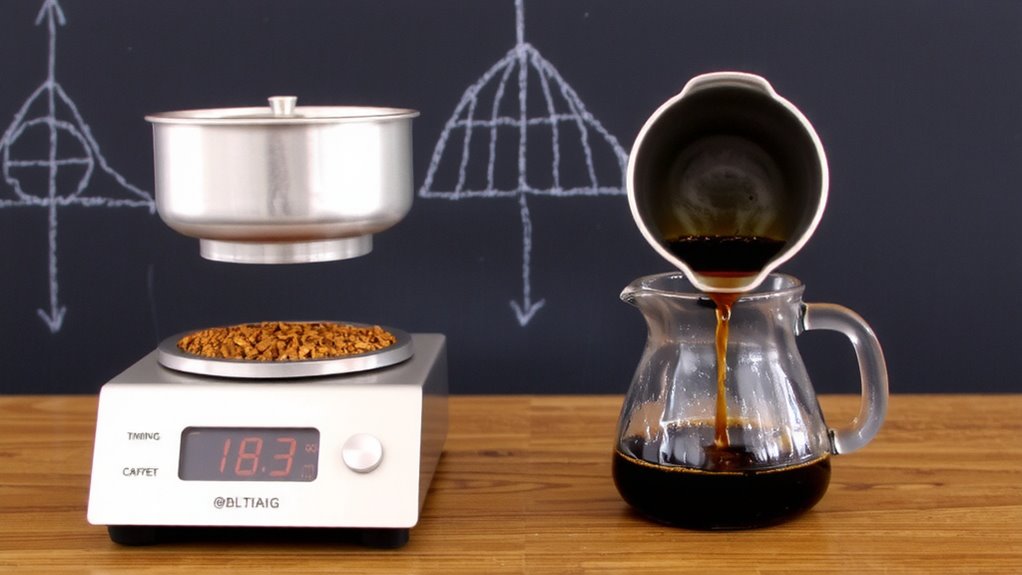
Why does your coffee sometimes taste watery or harsh? Underextraction causes this, pulling too few compounds from your grounds. When water moves too fast through coarse coffee, it misses deeper flavors, leaving sour notes and a thin body. You’ll notice sharpness or a lemony bite-telltale signs the brew didn’t extract enough. This often happens with grinds too coarse for the method, brew time too short, or agitation lacking. A French press set too coarse, for example, may flow too freely, cutting contact time. Conversely, bitterness usually points to overextraction, but sourness signals the opposite: you’re pulling too little. Fixing underextraction starts with adjusting grind size finer to slow water and pull more. More dissolved solids mean fuller body and balanced sweetness. You don’t need new gear-just tweak the dose or grind. For pour-over methods, using the ideal best coffee grinds ensures optimal extraction and body without bitterness.
Start With Your Brew Method and Water Quality
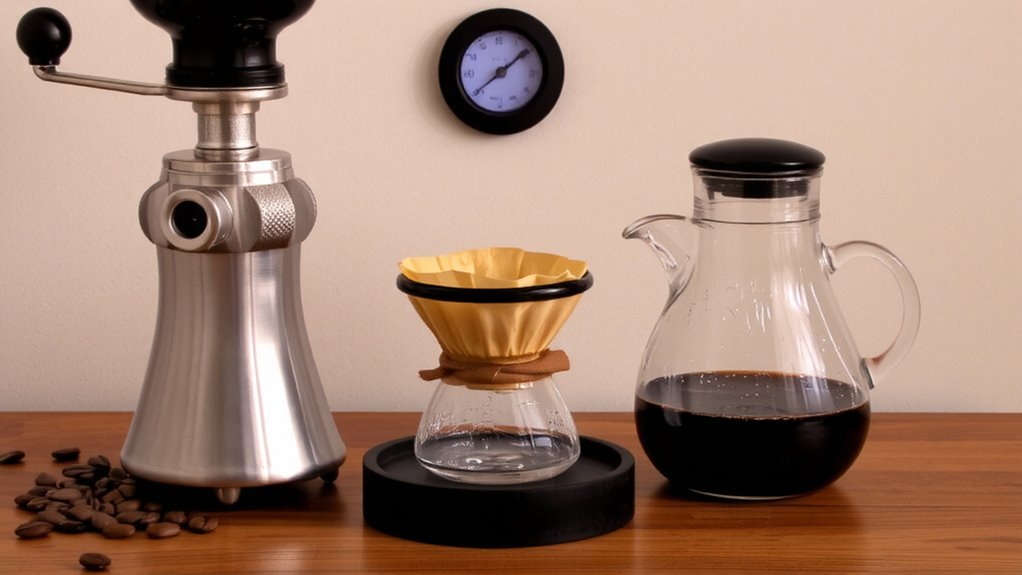
Your grind and dose adjustments can only go so far if your brew method isn’t suited to the results you want or your water’s holding you back. If you’re after a heavier body without bitterness, start by examining your brew method. Immersion brewers like the French press or AeroPress naturally produce fuller-bodied coffee compared to pour-over methods like V60, which favor clarity. Next, check your water source. Tap water varies widely-some are too soft, others too hard. Ideal brewing water needs balanced mineral content: around 100–150 ppm, with calcium and magnesium aiding extraction. Bottled spring water often works better than distilled or softened tap water, which lack essential minerals. Consistently poor results may trace back here. Test your water or switch to a known source to confirm. Water quality isn’t just background-it shapes extraction, body, and flavor from the first pour. For immersion methods like the French press, using a coarse grind size is essential to prevent over-extraction and maintain a clean, rich body.
Go Finer Without Making Coffee Too Bitter
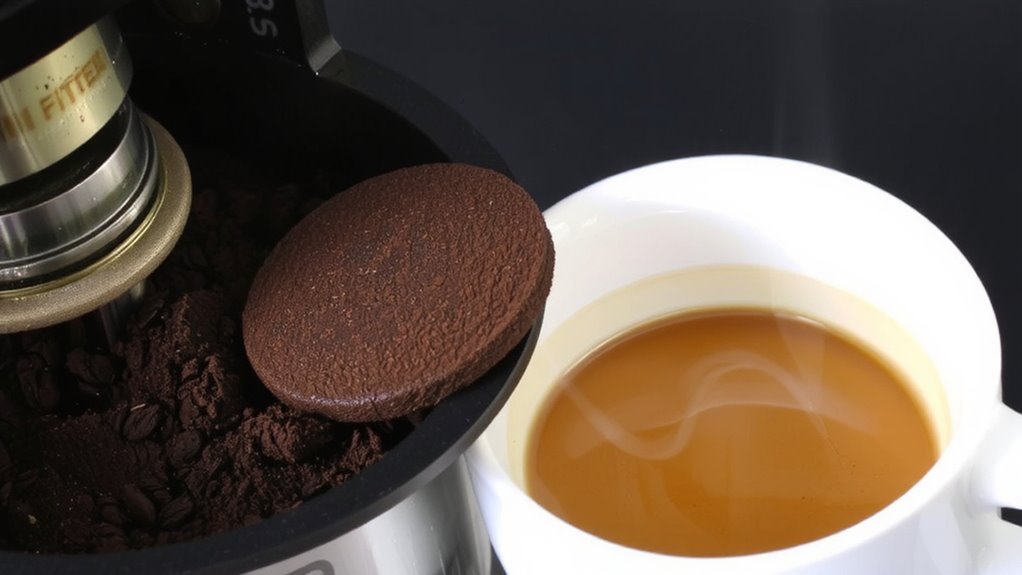
While going finer can boost body by increasing extraction efficiency, you’ll need to tread carefully to avoid tipping into bitterness. The key lies in your grinder’s grind uniformity-consistent particles extract more evenly, reducing the risk of harsh over-extracted notes. Cheap blade grinders create a chaotic particle distribution, leaving both fines and boulders, which leads to unbalanced brews. A good burr grinder, like a Baratza Encore or Mahlkönig Vario, delivers tighter particle distribution, so more of the coffee dissolves at the same rate. That means you can go finer without pulling out extra bitterness. Aim for small, incremental adjustments-don’t jump too far. Test each change with a brew, noting mouthfeel and flavor. If you start tasting sharp, woody notes, you’ve likely gone too fine or your distribution is uneven. Focus on control: finer isn’t always better, but finer with uniformity is. For the best results, consider investing in one of the best grinders for filter coffee that balance precision and consistency.
Use More Coffee for a Richer, Fuller Body
A small increase in coffee dose can make a noticeable difference in body, especially when paired with the right grind setting. Boosting coffee strength this way increases brew concentration, giving your cup a richer, fuller mouthfeel without adding bitterness. You’re not just making it stronger-you’re enhancing texture and depth. Think of it like turning up the bass in a mix: still balanced, but more present.
| Dose (g) | Water (ml) | Brew Concentration (TDS %) |
|---|---|---|
| 15 | 250 | 1.25 |
| 16 | 250 | 1.33 |
| 17 | 250 | 1.41 |
| 18 | 250 | 1.50 |
Using 17–18g improves body noticeably. Just don’t go too far-excess dose without adjustment can mute flavors. Keep water and grind steady, then tweak from there. More coffee means more extraction potential, but balance is key for clean, strong results.
Pair Grind and Dose to Prevent Over-Extraction
If you increase your dose without adjusting the grind, you’re likely to run into over-extraction, especially in methods like pourover or immersion brewing. More coffee means water spends more time in contact with grounds, which can pull out bitter, astringent compounds if the grind stays too fine. To prevent this, coarsen your grind slightly as you increase dose. This keeps extraction balanced while maintaining a heavier body. Grind consistency matters-uneven particles lead to uneven extraction, so use a burr grinder like the Baratza Encore or Timemore C2. Dose precision is just as critical; small changes (±0.5g) can noticeably affect flavor. Pair precise dosing with appropriate grind adjustments, and you’ll avoid harshness while building depth. Always tweak one variable at a time for clear results.
Spot (and Fix) Off-Flavors Fast
What’s that sharp bite or strange aftertaste in your cup? It’s time for quick off flavor identification. Start with basic sensory analysis: sip slowly, note sharpness, sourness, or mustiness. A papery taste? Likely old beans. Overly sour? Under-extracted-try a finer grind. Charred or bitter? Over-extracted or too fine a grind. Adjust grind size first-it’s the fastest fix. If you taste chlorine, check your water; unfiltered tap water skews results. Weak or flat coffee? Increase dose slightly. Always change one variable at a time. Clean your grinder and brewer-residual oils distort flavors. Use a consistent method like pour-over or batch brew for reliable sensory analysis. Spotting off flavors fast means better control. You’ll fix issues before they ruin the cup, keeping body high without tipping into harshness.
Taste-Test Your Way to the Perfect Cup
How do you know when your coffee’s actually improving? You taste it. Small changes in grind, dose, or brew temperature shift the body and balance fast. Use consistent water chemistry and a stable brew temperature (like 195–205°F) to isolate variables. Taste each brew side by side, focusing on clarity, sweetness, and mouthfeel.
| Brew | Grind Setting | Observation |
|---|---|---|
| 1 | Medium | Flat, weak |
| 2 | Medium-fine | Slightly better body |
| 3 | Fine | Bitter, harsh |
| 4 | Coarser | Clean, sweet, fuller |
| 5 | Adjusted dose | Smooth, balanced |
If the cup’s brighter or rounder, you’re on track. Water chemistry affects extraction, so use filtered or third-wave water if possible. Repeat with small tweaks. Trust your palate-it’s the best tool you’ve got.
On a final note
You’ll get a fuller cup by tweaking grind and dose together. Go slightly finer, but not so fine it pulls bitter. Increase coffee dose by 0.5–1 gram to boost body without over-extracting. Match adjustments to your brewer-Chemex needs coarser than V60. Use fresh beans, clean water, and rinse filters. Taste each change: sour? Fine-tune grind. Bitter? Coarsen or reduce brew time. Practical, small steps beat guesswork.