Exploring the Use of Catimor in Vietnamese Specialty Coffee Experiments
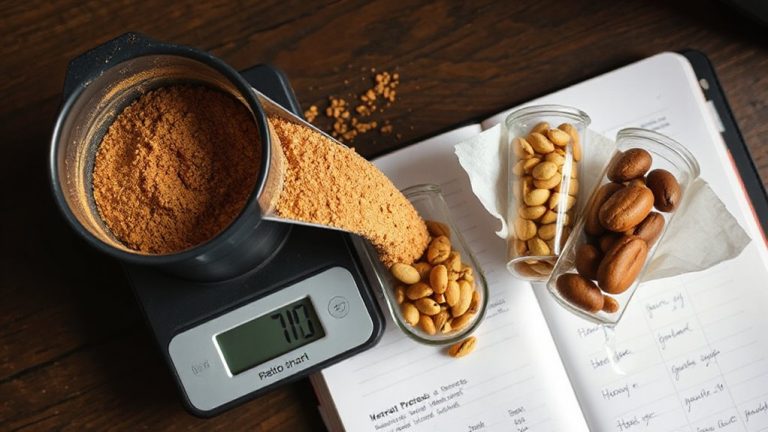
You’re seeing Vietnamese growers rethink Catimor, using selective breeding and highland conditions to boost quality. At elevations over 1,200 meters, cooler temps and volcanic soil help it develop cleaner, more balanced cups. With controlled fermentation and small-batch processing, some lots show surprising brightness and sweetness. Despite its reputation for low nuance, well-grown Catimor can work for filter or espresso-especially when farmers share data and refine methods collectively. There’s more shaping behind the scenes than you might expect.
Notable Insights
- Vietnamese growers are selectively breeding Catimor to improve cup quality and disease resistance.
- Highland conditions above 1,200 meters enhance Catimor’s bean density and flavor clarity.
- Volcanic soils and stable microclimates in Vietnam support cleaner, more balanced Catimor profiles.
- Anaerobic and controlled fermentation methods are used to boost sweetness and complexity.
- Farmer cooperatives and exporters collaborate to standardize quality for specialty market entry.
Why Specialty Coffee Snubs Catimor
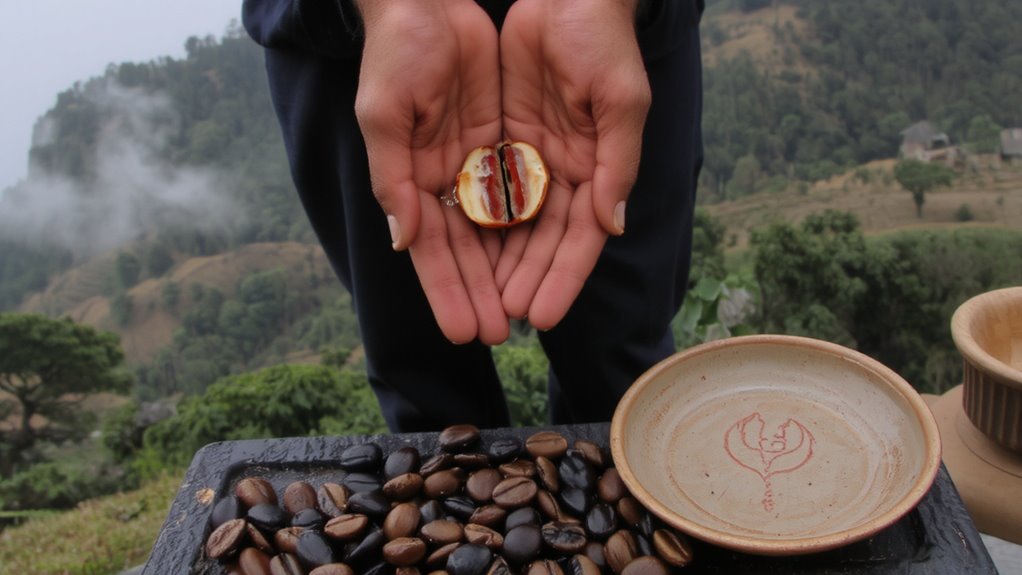
Taste matters most when it comes to specialty coffee, and that’s why you’ll rarely find Catimor in high-end cups. You’re likely after clarity, sweetness, and nuanced acidity-qualities Catimor often lacks due to its genetic uniformity. Bred for resilience and high yield, it prioritizes productivity over flavor complexity. That yield dependence means farmers lean on it in tough climates, but you’ll sacrifice cup quality. Compared to heirloom or bourbon varieties, Catimor delivers consistent volume, not vibrant profiles. Its uniform genetics limit flavor potential and increase vulnerability to disease shifts. If you’re roasting or brewing for specialty standards, you’ll find better results with more diverse, flavorful cultivars. While Catimor has its place in commercial production, it rarely meets the bar for craft-focused coffee. Choose based on your goal: volume and efficiency, or taste and distinction. Know what the bean was bred for-and what it wasn’t.
Vietnamese Growers Rebuilding Catimor’s Reputation
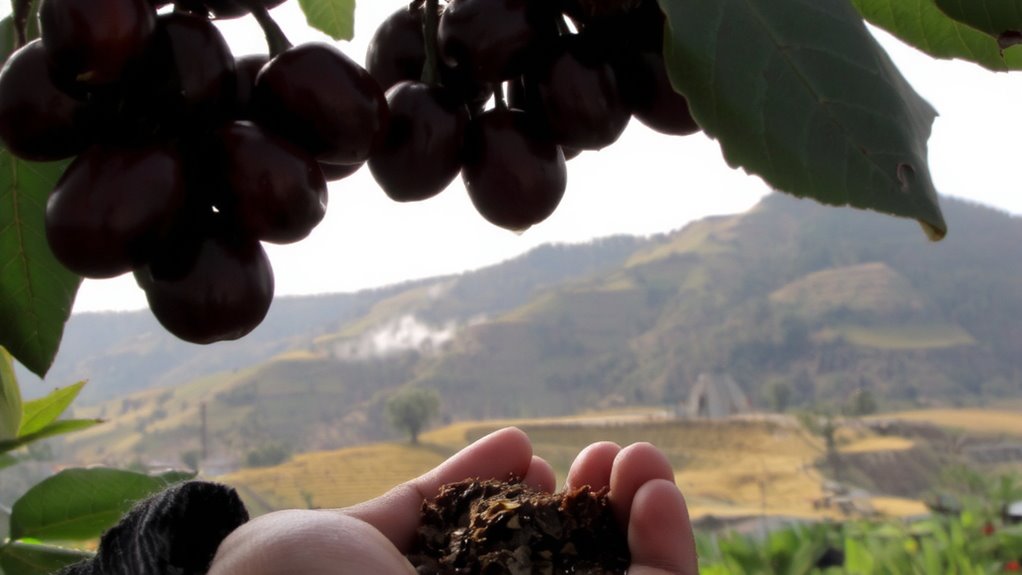
You might not expect to find much love for Catimor in specialty circles, and for good reason-its reputation leans toward quantity over quality. But now, you’re seeing Vietnamese growers reshape that view through focused breeding and better farming. They’re tapping into Catimor’s genetic diversity to isolate plants with better cup scores and disease resistance. By selecting only the best-performing trees, they’re proving that not all Catimor is the same. Farmer collaboration plays a key role-smallholders share data, processing methods, and seedlings to improve consistency. These efforts, supported by cooperatives and export partners, help standardize protocols and reward quality. While it still lacks the finesse of heirloom varieties, well-grown Catimor can deliver clean, balanced profiles suitable for both filter and espresso. The results aren’t revolutionary, but they’re practical-offering resilience and yield without completely sacrificing cup quality, especially in stressed environments.
How Vietnam’s Highlands Elevate Catimor’s Flavor
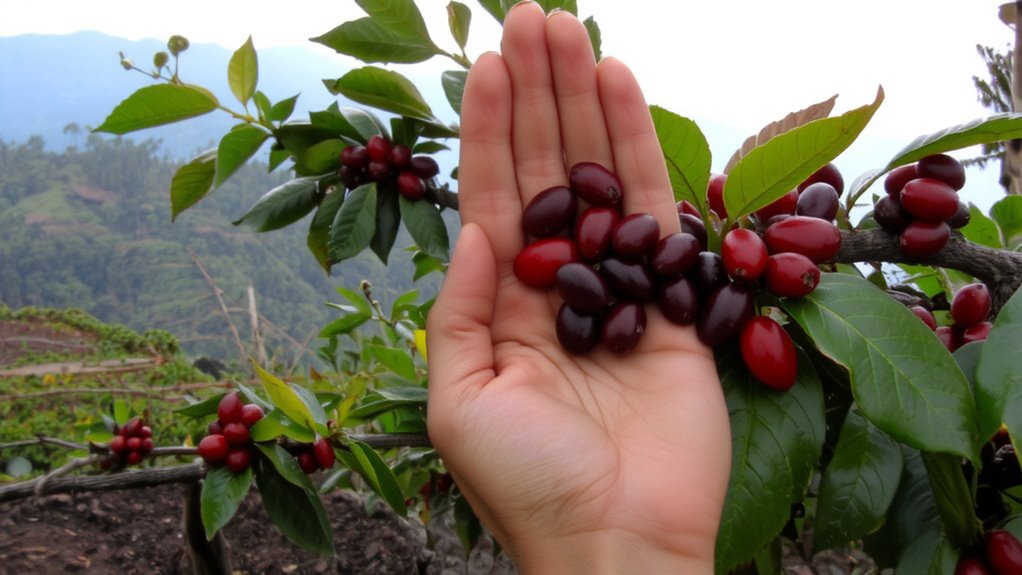
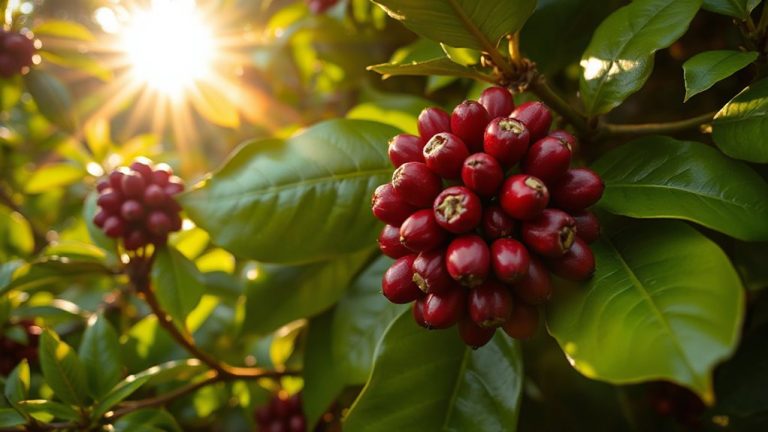
While elevation alone won’t transform Catimor into a gourmet variety, growing it above 1,200 meters in Vietnam’s Central Highlands does bring meaningful improvements in bean density and acidity. You’ll notice the cooler temperatures slow cherry development, which helps build more balanced sugars. The region’s volcanic soil composition supports this by offering good drainage and essential minerals, contributing to cleaner cup profiles. When you factor in microclimate influence-like afternoon cloud cover and consistent rainfall-it creates stable growing conditions that reduce stress on the plant. That stability often translates to more uniform beans, which roast more evenly. Though Catimor still lacks the complexity of heirloom varieties, these highland conditions help it perform better than lowland crops. You’re not chasing perfection here, but practical improvement. For roasters and brewers, that means fewer flaws and a more predictable outcome, making highland Catimor a viable option where consistency matters.
Processing Methods That Reveal Catimor’s Brightness
Growing Catimor at higher elevations sets the stage for better bean development, but how those cherries are processed after harvest makes a noticeable difference in cup quality-especially when trying to highlight its more subtle brightness. You’ll want to explore controlled methods like natural fermentation and anaerobic soaking, which can amplify clarity and lift acidity. Natural fermentation, done in tanks with regular monitoring, helps develop fruity notes while preserving some brightness if fermentation doesn’t exceed 36 hours. Anaerobic soaking-sealing cherries in oxygen-limited tanks for 12 to 48 hours-slows metabolism, increasing complexity and perceived sweetness without dulling acidity when managed precisely. Both methods require temperature control and pH checks to avoid off-flavors. Compared to washed processing, these techniques risk inconsistency but offer a clearer expression of Catimor’s hidden vibrancy when executed well. Small-batch trials are recommended to fine-tune timing and conditions for your specific microclimate.
Surprising Flavors From an Unlikely Bean
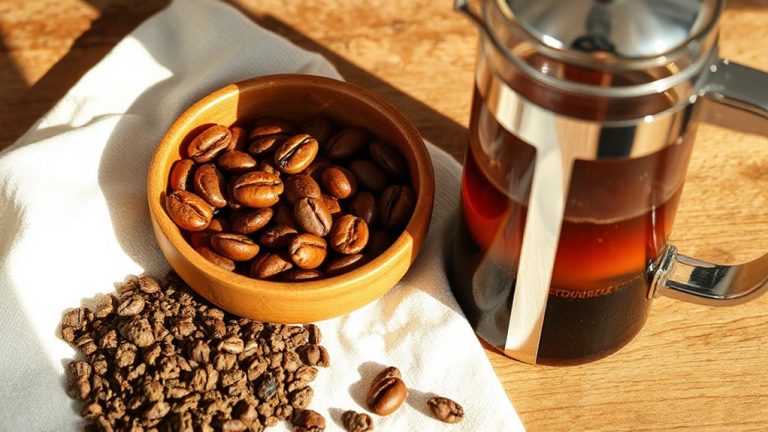
What if a coffee varietal often dismissed for its low acidity could deliver bright, complex flavors? You might not expect it from Catimor, but under specialized processing like anaerobic fermentation or honey methods, it reveals surprising depth. When you taste it carefully, you’ll notice distinct floral notes-think jasmine or bergamot-emerging in the cup, especially when brewed at ideal temperatures (195–205°F). Paired with a clean brewer like the Hario V60 or Kalita Wave, these aromatics come forward clearly. Behind the brightness, there’s structure: mild nutty undertones, like almond or roasted cashew, add balance. While Catimor lacks the high acidity of heirloom beans, its body and sweetness make it versatile. Your grind size should be medium-fine to extract the fullest profile without bitterness. You’re not chasing trendiness here-you’re testing assumptions with real, cup-by-cup evidence.
Barriers to Catimor’s Specialty Breakthrough
You’ve tasted the potential-floral, structured, even bright when processed right-but Catimor still struggles to shake its reputation in specialty circles. The main issues? Genetic limitations cap its cup quality; it simply can’t reach the complexity of heirloom or even Catuai under most conditions. While it resists disease and yields heavily, those gains come at the cost of nuance, making high scores rare. Then there’s market perception: buyers still link Catimor to low-grade bulk coffee, not microlots. Even when roasted with care or fermented to highlight sweetness, it fights an uphill battle for shelf space beside Geisha or SL28. Roasters hesitate, fearing customer pushback. Changing that means consistent proof-not just one standout batch, but repeatable results across farms, processors, and export batches. You’ll need precise fermentation control, ideal picking, and careful roasting to challenge the status quo. Still, bias runs deep.
Can Catimor Be Vietnam’s Coffee Underdog Success?
Could Vietnam’s coffee future rest on a variety long dismissed by purists? You’re already seeing Catimor used widely, and for good reason-it offers strong climate resilience, vital as temperatures and pests challenge traditional crops. While lower in acidity and complexity than Arabica, its hardiness in tough conditions makes it a practical choice for farmers facing unpredictable weather. New processing methods like honey or anaerobic fermentation are helping lift its quality into specialty ranges. Still, limited genetic diversity remains a risk, leaving it vulnerable to disease over time. If breeders invest in enhancing its genetics and farmers pair it with precise fermentation control and better elevation growing, Catimor could outperform expectations. It won’t replace Geisha or Bourbon, but in regions where survival is the first step, Catimor might just be the resilient, overlooked option worth refining.
On a final note
You’ve seen how Catimor’s reputation is shifting in Vietnam’s highlands. With careful farming and processing-like honey or anaerobic methods-it can offer bright, complex flavors. Still, it faces bias in specialty markets. If consistency improves and growers gain recognition, Catimor may earn its place. For now, try beans from Lam Dong or Son La; they’re practical proof this underdog can deliver quality worth your brew.