Why Java Coffee Beans Have a Distinct Earthy-Sweet Profile in Sumatran Blends
You get that earthy-sweet character in Java beans because they’re grown in mineral-rich volcanic soil, which boosts body and balance. The wet-hulling process keeps mucilage on the bean, locking in sweetness, while short fermentation avoids sourness. Aged lots deepen the earthy notes and smooth out acidity. When blended with Sumatran coffees, Java adds sweetness and structure without overpowering. You’ll notice cleaner finishes and more consistent roasting-especially in medium to dark profiles. There’s more to how these methods shape flavor over time.
Notable Insights
- Volcanic soil in Java enriches beans with minerals, enhancing sweetness and body.
- Wet-hulling preserves mucilage, boosting perceived sweetness and fullness in the cup.
- Controlled fermentation (12–24 hours) develops sweet, fruity notes without sourness.
- Aging mellows acidity and deepens earthy, spiced flavors over time.
- Java beans add balanced sweetness and smooth body to Sumatran blends.
Why Does Java Coffee Taste Earthy and Sweet?
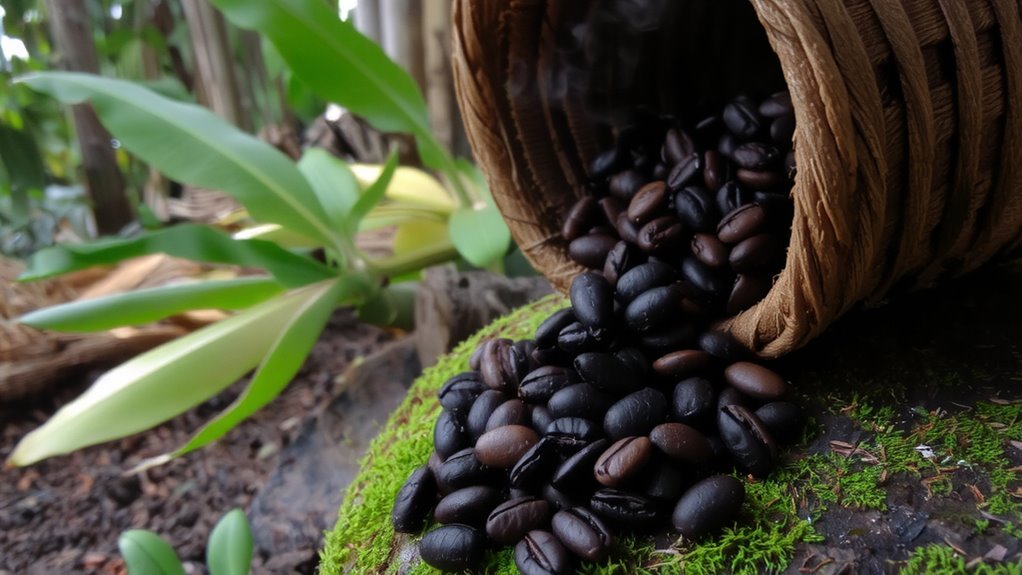
While the flavor of Java coffee might seem mysterious at first, its earthy and sweet notes come down to a mix of soil, climate, and processing methods you can actually see in action on the farm. You’ll notice these traits stem largely from traditional wet-hulling and a controlled fermentation process that shapes the final cup profile. Farmers often let the beans ferment for 12–24 hours, balancing acidity and depth-too long and it risks sourness, too short and you lose sweetness. The dominant Java bean varietals, like Typica and Catimor, are bred for resilience but also contribute nuanced sweetness and body. These varietals respond well to the island’s humid conditions and high altitude. When roasted medium, their natural sugars develop without masking the earthy base. If you’re brewing, use a paper filter in a pour-over to highlight clarity, or a metal filter in a French press to preserve body. This balance makes Java a reliable component in Sumatran blends.
How Does Volcanic Soil Shape Java Coffee?
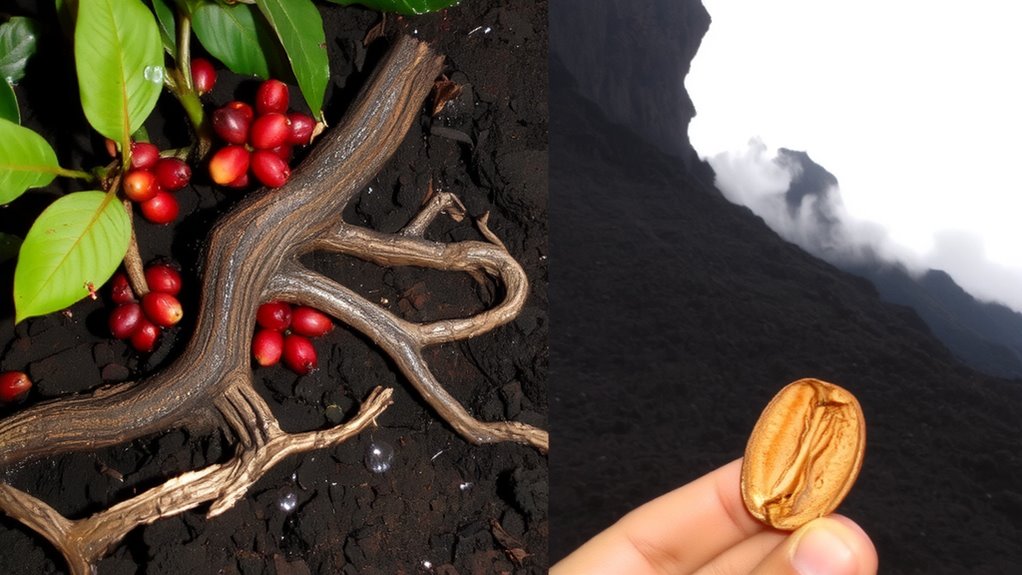
Volcanic soil plays a direct role in shaping the flavor and quality of Java coffee, building on the earthy and sweet characteristics you already notice in the cup. This soil, formed from weathered lava composition, delivers exceptional mineral richness that coffee plants absorb through their roots. These minerals-like potassium, magnesium, and phosphorus-support balanced bean development and influence acidity and sweetness. Regions like Java’s Ijen Plateau benefit from this fertile ground, producing beans with more complexity and depth. The porous nature of volcanic soil also aids drainage, preventing root rot while retaining enough moisture for steady growth. Unlike sandy or clay-heavy soils, it creates ideal conditions for Arabica and Robusta alike. You’ll find that coffees from these areas often have a fuller body and smoother finish, thanks to consistent nutrient availability. The result is a cup shaped not just by climate or method, but by the very earth it’s grown in.
How Does Wet-Hulling Add Sweetness to Java Coffee?
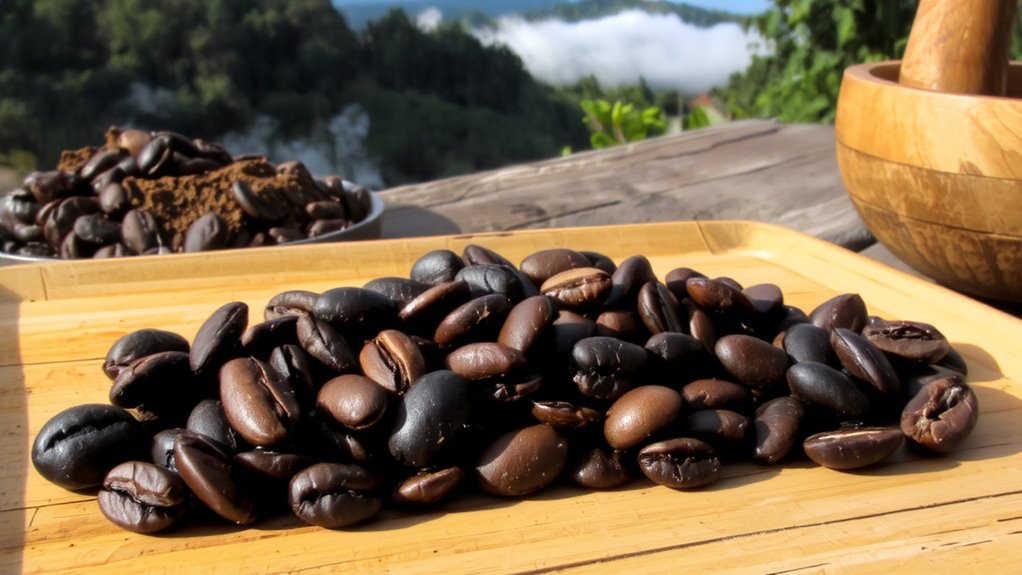
When farmers in Java remove the coffee cherry’s pulp right after harvest and then dry the beans while still coated in a sticky mucilage layer, they’re using a method called wet-hulling-locally known as *giling basah*-that can boost perceived sweetness in the final cup. You’ll notice this because the shortened drying technique limits over-drying, preserving sugars that might otherwise break down. The brief fermentation impact during pulp removal also plays a role, subtly enhancing sweet, fruity notes without adding sourness. Unlike fully washed or natural processes, *giling basah* hails from humid regions where fast drying is hard, making this method practical and effective. The beans are hulled at higher moisture levels-around 30–50%-then dried fully as greens. This unique step softens acidity and lends a fuller body, helping sweetness stand out. For drinkers, that means a smoother, richer cup with balanced, accessible flavor-ideal for blends where Java shines.
What Happens to Java Coffee During Aging?
Java coffee often takes a different path after harvest-especially if it’s destined for aging, a practice more common in Sumatra than in Java but sometimes applied to Indonesian coffees all the same. You’ll store the green beans in controlled warehouses for months, even years, letting them slowly change. While some coffees lose brightness over time, aged Java develops deeper, smoother notes. You might notice less acidity and a heavier body, which works well in certain blends. But don’t expect the same vibrancy-flavor degradation happens, especially in fruity or floral tones. The real shift? Aroma evolution: sharp, fresh scents mellow into woodsy, earthy, or spiced hints. This isn’t spoilage-it’s intentional, if risky. Too much time or poor conditions lead to mustiness. Done right, aged Java adds structure and depth, especially when balance matters more than liveliness.
How Do Java Beans Influence Sumatran Coffee Blends?
Why do some of the best Sumatran blends include Java beans? Because Java beans add balance and depth, complementing Sumatra’s bold, earthy tones with smoother, sweeter notes. You’ll notice they help tame excessive bitterness while boosting body and complexity. The key lies in how each region handles coffee fermentation; Java often uses more controlled, consistent methods, which stabilizes flavor and supports cleaner aftertastes. When you’re blending, this consistency gives you a more predictable base. Java beans also respond well to medium to dark roast profiles, allowing you to highlight chocolate or nutty notes without overshadowing Sumatran characteristics. If you’re roasting at home, stick to a uniform roast profile to guarantee both beans develop evenly. This synergy-between Sumatra’s wild richness and Java’s refined sweetness-makes the blend greater than the sum of its parts, especially in espresso or drip where balance matters most.
On a final note
You’ll find Java coffee’s earthy-sweet taste comes from volcanic soil, wet-hulling, and aging. These steps add depth and mild sweetness, making it a staple in Sumatran blends. When blending, Java beans bring balance and body-ideal for dark roasts or espresso. For best results, grind fresh and use a burr grinder. Compared to washed beans, these earthier profiles stand out but may need bolder pairings to shine.