How to Use the Warren Method to Calibrate Your Grinder Accurately
You start by locking in your dose and yield, then adjust your grinder to hit 25–30 second shots using small, 5-second incremental changes. Use a clean grinder, precise scale, and reliable timer. Begin with a proven setting-like 7 on an EK43 or 36 on a Niche Zero-then fine-tune based on taste. If it’s bitter, go coarser; if sour, go finer. Once stable, you’ll see how small tweaks affect flavor and extraction. The next steps reveal how to maintain that balance when conditions change.
Notable Insights
- Calibrate your grinder using shot timing and flavor balance while keeping dose and yield constant.
- Use precise tools: a clean grinder, digital scale accurate to 0.1g, and a one-second precise timer.
- Start with a proven grind setting based on your grinder model and similar coffee profiles.
- Adjust grind size in small increments, allowing five minutes between changes for stability.
- Refine based on taste and extraction evenness, targeting balanced sweetness, acidity, and body.
How the Warren Method Fixes Espresso Consistency
Why do your espresso shots sometimes taste great and other times fall flat, even when you’re using the same beans and settings? The Warren Method fixes this by targeting grinder calibration with precision. Instead of relying on guesswork, you adjust your grinder based on shot timing and flavor balance. Start by pulling shots at different grind settings while keeping dose and yield constant. You track how each change affects extraction time and taste. Too fast, and your espresso’s sour; too slow, it’s bitter. The goal is a 25–30 second shot that tastes balanced. This method reduces variables, focusing on what the grinder does, not the machine. Unlike dose tweaking, it addresses inconsistency at the source. You’ll get repeatable results, especially with burr wear or humidity shifts. It’s not flashy, but it works-especially on entry to mid-tier grinders where settings drift. For consistent calibration, using a high-quality espresso grinder makes a significant difference in long-term performance.
Gather Your Grinder, Scale, and Timer
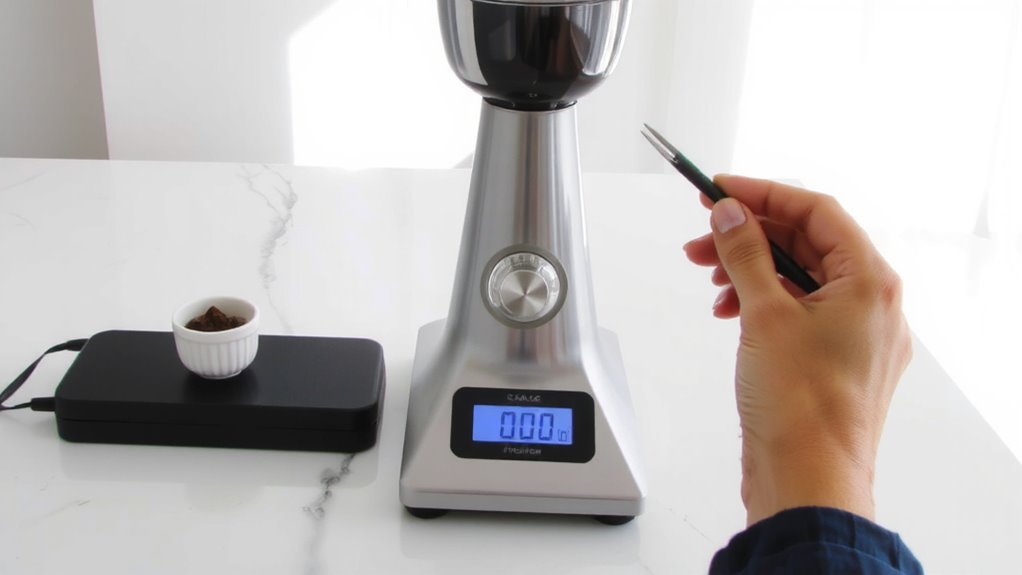
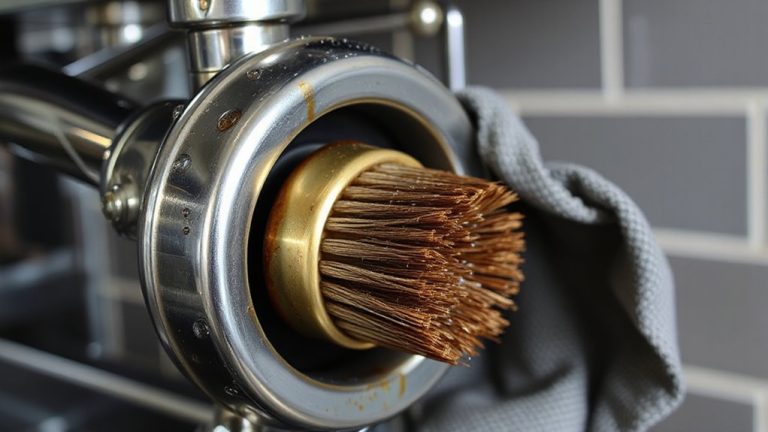
While you’re setting up for the Warren Method, having the right tools on hand makes all the difference. You’ll need your grinder, a digital scale, and a timer-nothing more. Make certain your grinder is clean and well-maintained, as grinder maintenance directly affects dose consistency and shot quality. A buildup of old coffee oils can skew results, so brush the burrs and wipe the chute before starting. Your scale must offer scale accuracy to 0.1 grams; models like the Acaia Lily or Timemore Smart Scale 2 are reliable choices. Even minor inaccuracies can throw off your calibration. Use a timer with at least one-second precision-many phones work fine. Keep all three tools within easy reach and powered up. This setup guarantees each step of the Warren Method relies on measurable, repeatable data, not guesswork. For consistent brewing results, consider investing in one of the best coffee scales recommended for precision and durability.
Find Your Starting Grind Setting
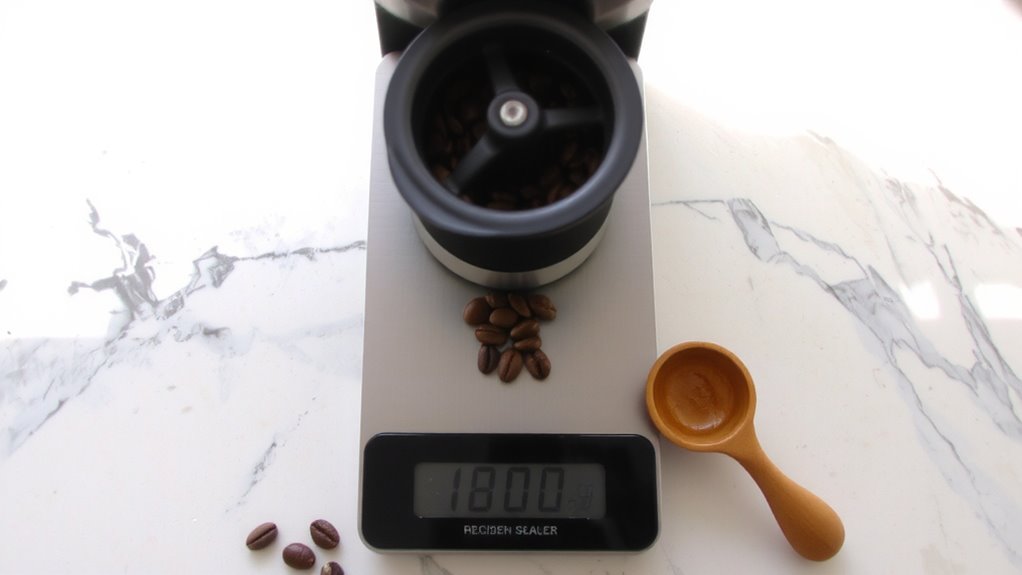
You’ve got your grinder, scale, and timer ready-now it’s time to set a baseline for your grind. Start with a known setting based on your grinder model and coffee dose. Grind size affects extraction, so begin where similar beans have worked before. A consistent grind size and good distribution uniformity are key for even pulls.
| Grinder Model | Starting Setting | Notes |
|---|---|---|
| EK43 | 7 | Fast burrs, aggressive |
| Niche Zero | 36 | High uniformity |
| Baratza Vario | 5B (11) | Adjustable coarse/fine |
Avoid tweaking finer than recommended yet-focus on finding a repeatable starting point. You’ll refine it next. Keep notes on dose, yield, and time. Good distribution uniformity helps reduce channeling, especially with faster grinders. Stick to one variable: your grind size. Once stable, you’ll adjust from here. A reliable starting point can be found by reviewing performance data from the best espresso grinders under $500 to understand grind consistency across different models.
Adjust in 5-Second Steps for 25–30-Second Shots
Start by adjusting your grind setting in small increments-each change should aim to shift your shot time by about 5 seconds. This method helps you quickly zero in on the sweet spot without overshooting. If your shot pulls in 40 seconds, go finer by one notch and expect a drop to 35. Wait at least five minutes between adjustments to guarantee grind stability, especially on low-burrr grinders that retain heat. Repeat until you land in the 25–30-second range. Consistent timing across consecutive shots indicates solid shot repeatability, a sign your grinder is dialed in. Avoid skipping steps-bigger jumps cause overshoot and waste beans. Trust the process: small, deliberate changes yield better control. This step isn’t about flavor yet-just timing. Once you achieve repeatable 25–30-second extractions with the same dose and yield, you’re ready for the next phase.
Taste and Refine Using the Warren Method
Now that your shots are pulling consistently in the 25–30-second range, it’s time to shift focus to taste. Use shot timing as a baseline, but rely on flavor profiling to fine-tune your grind. Brew a few shots, noting how each tastes-aim for balanced sweetness, acidity, and body. If it’s bitter or dry, your grind may be too fine even if timing looks good. If it’s sour or weak, go finer. Adjust your grinder in small increments, then retest. Always let the machine stabilize between adjustments. Don’t chase numbers alone; your palate is the best tool. Warren emphasizes consistency paired with sensory feedback, so log your changes and results. This step isn’t just about dialing in-it’s about learning how shot timing and grind size directly affect flavor. Refine until every shot tastes clean, balanced, and true to the bean.
Fix Common Grind Issues the Warren Way
Why do some shots pull unevenly even after careful dialing? Poor grind distribution and inconsistent particle size are usually to blame. Even if your grinder’s set correctly, bimodal spread or fines clumping can wreck extraction. The Warren Way fixes this by checking your shots for sourness, bitterness, or rapid flow-each points to specific grind flaws. If the shot’s sour and fast, your average particle size is too large. If it’s bitter and slow, it’s too fine. But if parts taste off while others don’t, the grind distribution is uneven. Try adjusting your burrs’ alignment or cleaning them-coffee oils and buildup cause inconsistency. Upgrading to a high-quality grinder like the Niche Zero or Forté improves particle uniformity. Avoid blade grinders entirely-they produce erratic sizes. With the Warren Method, you’re not just adjusting grind size; you’re optimizing distribution for balanced, repeatable shots. That’s how you fix what dialing alone can’t.
On a final note
You now have a repeatable way to dial in your grinder using the Warren Method. By adjusting in small time increments and tracking dose, yield, and taste, you’ll hit consistent shots. It works on most grinders, from入门 models like the Baratza Encore to high-end ones like the Compak K3. If shots run too fast or slow, tweak the grind finer or coarser. This method cuts guesswork, giving you better espresso with less waste. Use it every time you change beans or machines.