Why Grind Retention Affects Calibration Accuracy in Flat Burr Grinders
Grind retention messes with your calibration because old grounds stuck in the grinder mix with fresh ones, throwing off dose and grind consistency. Flat burr grinders trap more coffee due to tight spaces and static, so when you dial in 18 grams, you might get inconsistent output. Leftover fines degrade and extract differently, skewing flavor. That’s why purging or using low-retention models like the Niche Zero helps-you’ll get cleaner, more accurate results every time.
Notable Insights
- Retained coffee grounds mix with fresh grinds, altering the intended dose and grind profile.
- Static buildup in flat burr grinders traps fines, delaying their release and skewing output consistency.
- Poor burr alignment creates uneven gaps where coffee accumulates, affecting grind size accuracy.
- Leftover oxidized particles extract differently, leading to inconsistent flavor and calibration drift.
- Airflow and grinding dynamics change as retained coffee obstructs pathways, impacting dose precision.
What Is Grind Retention and Why It Matters
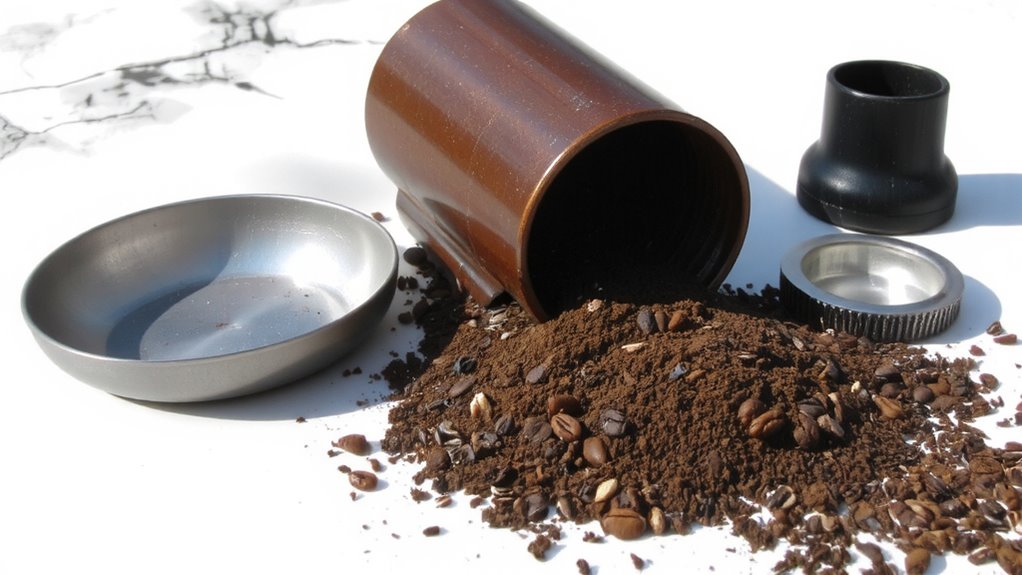
Grind retention-the coffee grounds that get stuck in your grinder after dosing-might not seem like a big deal, but it can add up, especially if you’re brewing single or double shots. You’re losing usable coffee, which throws off your dose accuracy and wastes beans. Worse, those trapped grounds degrade over time, leading to flavor degradation in your next brew. Old, oxidized particles mix with fresh ones, muddying the taste and reducing clarity. You also risk poorer grind consistency since retained fines can clump and clog, disrupting the even particle size you need for balanced extraction. This is especially true with frequent bean changes or multiple daily brews. If you value precision and freshness-like when using a high-end grinder such as the Compak K6-minimizing retention helps maintain both flavor integrity and dosing reliability. It’s a small detail with real impact on your daily espresso.
How Flat Burr Design Traps More Grounds
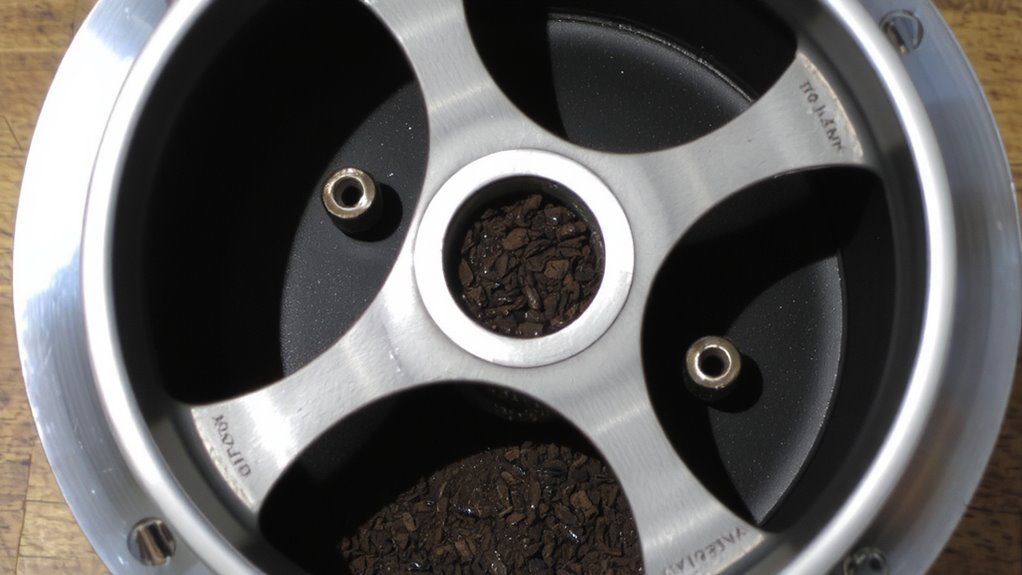
While flat burr grinders are known for their consistent grind size and even particle distribution, they tend to hold onto more coffee grounds than their conical counterparts-especially in the space between the burrs and the surrounding chute. This trapped coffee, often caused by static buildup, sticks to metal surfaces and increases retention. Poor burr alignment worsens the issue, creating uneven gaps where grounds get caught. Even slight misalignment affects how cleanly coffee exits the grinding chamber. A key factor in minimizing retention is selecting one of the best mill grinders designed with anti-static features and precise burr alignment. Below is a comparison of key retention factors:
| Feature | Flat Burr Grinders | Conical Burr Grinders |
|---|---|---|
| Static buildup | More pronounced | Less common |
| Grind retention | Higher due to design | Lower, faster discharge |
| Burr alignment impact | Critical for retention | Less sensitive |
You’ll notice this when changing beans or doses.
How Grind Retention Breaks Calibration Accuracy
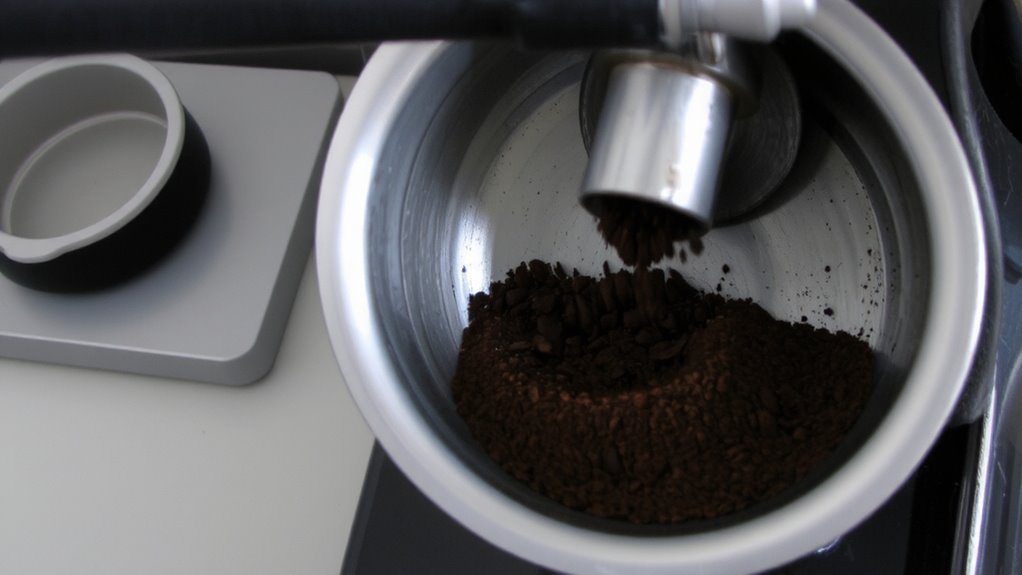
That leftover coffee clinging to the burrs and walls of your grinder? It’s not just waste-it messes with your calibration. Static charge holds fine particles in place, especially in flat burr designs where tight spaces trap more grounds. When you change settings or brew a new batch, those retained particles eventually loosen, mixing with fresh grinds. That means the dose and grind size you dialed in isn’t what actually reaches your portafilter. Airflow dynamics during grinding also shift as retained coffee alters how material moves through the chamber. Over time, this skew leads to inconsistent extraction, even if you think your settings are stable. Brands like Compak or Niche Zero reduce retention with better chamber design and anti-static coatings, but no flat burr grinder eliminates it completely. If you tweak settings often, retention means your calibration’s off until you clear the backlog.
How Retention Changes Dose and Flavor
Even a small amount of retained coffee-just a few grams-can throw off your dose and alter your espresso’s flavor more than you’d think. When grinds stick in the burr chamber or exit path, they mix with your fresh dose, causing dose inconsistency. You might set 18 grams, but if 1.5 grams are leftover from before, you’re actually pulling with less fresh coffee-changing extraction and yield. This leftover material also contributes to flavor drift, especially when switching beans or roast levels. Old, oxidized particles extract differently, adding off-notes or dulling sweetness. Lower-retention grinders like the Niche Zero or DF64 minimize this, while designs with larger burr carriers, like some Mazzer models, trap more. You can’t fully eliminate retention, but recognizing its impact helps you manage expectations. Consistent dosing and stable flavor start with understanding how much coffee your grinder isn’t delivering.
How to Clear Residual Grinds During Dosing
How do you make sure the coffee you’re grinding is fresh and not mixed with old residue? Run a purge grind before dosing. Grind a small amount of coffee-just enough to flush out old particles stuck in the burrs and chute. This helps maintain grind consistency and protects your dosing precision. If you’re changing roast levels or beans, this step’s even more important. Old, stale grounds can skew flavor and throw off your shot. Most flat burr grinders, like the EK43 or Compak K3, benefit from this quick reset. Just don’t overdo it-too many purge grounds waste coffee and heat the burrs. For best results, do it right before pulling a shot or brewing. It’s a simple habit, but it keeps your output reliable, especially when dialing in new settings. Skip it, and you risk uneven extraction and inconsistent dosing.
Best Upgrades to Reduce Grind Retention
Your grinder’s retention issues can be greatly reduced with a few targeted upgrades. First, improve burr alignment-many budget grinders have slight misalignments that trap coffee between the burrs. A precision shim kit or professional calibration guarantees even spacing, helping beans grind evenly and exit cleanly. Next, address static control: plastic grounds bins are prone to static cling, leaving grounds stuck to the sides. Replace it with an anti-static bin, like the Gen 3 NG-7 or the DF54’s metal container. You can also apply aftermarket solutions like the Rhino Sleeve or Lido’s de-static brush. Some users even add a small metal rod to dissipate charge. These upgrades work best together-proper burr alignment reduces trapped grounds, while static control keeps dosed coffee from sticking. They’re affordable, easy to install, and deliver immediate improvements in dose consistency and grinder performance.
Test Grind Retention for Accurate Calibration
Once you’ve installed upgrades like precision shims or an anti-static bin, it’s time to test how much coffee your grinder retains to guarantee accurate dosing. Start by zeroing your scale and grinding a typical dose-say, 18 grams-into the portafilter. Weigh what actually lands in it. If you only get 16 grams, that 2-gram loss is retained in the grinder. Repeat this a few times for consistency. High retention means your calibration’s off, leading to wasted beans and inaccurate shots. This also impacts bean freshness, since unused grounds linger and oxidize. Plus, inconsistent retention messes with grind consistency over time, especially between dose changes. To minimize variance, purge the grinder between tests. Models like the Niche Zero or DF64 excel here, with retention under 0.5 grams. Knowing your grinder’s retention lets you adjust doses precisely, improving shot repeatability and flavor.
On a final note
You can’t calibrate a grinder accurately if old grounds stay trapped in the burrs or chamber. Flat burrs often hold more residue than conicals, skewing dose and flavor. That leftover coffee clumps, absorbs oils, and throws off shot consistency. To fix this, clear the grinder by running a few beans through before dosing. Upgrading to models like the Omnitrend or Niche Zero cuts retention. Test retention regularly-accuracy depends on it.