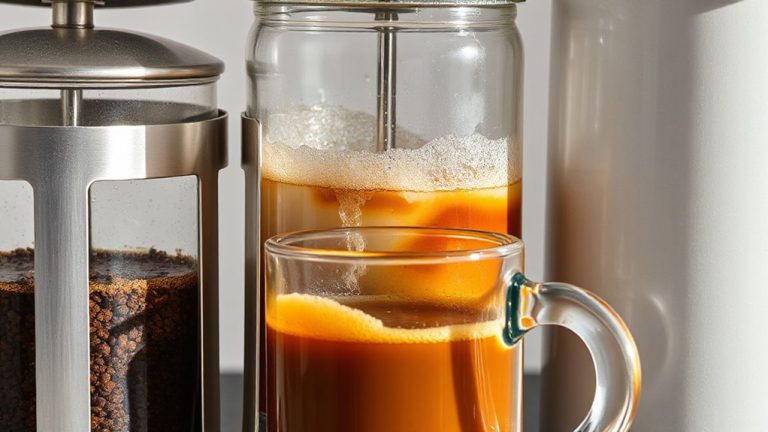
Understanding the Importance of Proper Pre-Wetting Techniques Across Various Brewing Methods
You need to pre-wet coffee grounds to release trapped CO2, which otherwise blocks even water flow and causes sour, weak brews. For pour over, bloom with twice the coffee’s weight in water for 30–45 seconds. In espresso, use 1–3 bars pressure for 5–10 seconds before full extraction. French press needs a coarse grind and 30-second bloom before topping up. Get it right, and you’ll see how small tweaks make a clear difference in flavor.
Notable Insights
- Proper pre-wetting releases trapped CO2, preventing channeling and improving extraction evenness.
- A 30–45 second bloom with twice the coffee’s weight in water ensures full saturation in pour over.
- Pre-infusion in espresso uses low pressure to evenly wet the puck before full pressure extraction.
- French press requires a coarse grind and 30–45 second bloom before full water addition.
- Incorrect grind, temperature, or pouring speed can cause uneven blooming and under-extracted flavors.
How Blooming Coffee Improves Extraction
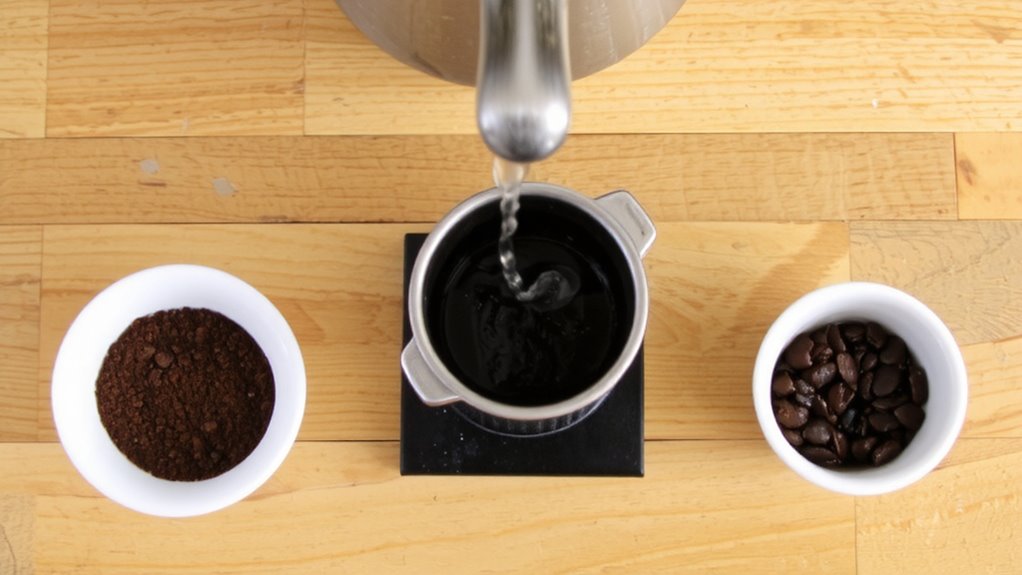
While blooming might seem like an optional step, it’s actually essential if you want even extraction from your coffee. When you pour hot water over freshly ground beans, you trigger CO2 release trapped in the grounds during roasting. That gas escaping creates bubbles, which can block water from fully penetrating the coffee. If you skip blooming, you risk channeling-where water flows unevenly-leading to under-extracted, sour flavors. By letting the coffee sit for 30–45 seconds after initial wetting, you allow that CO2 to dissipate, so water moves evenly through the bed. This boosts flavor development, pulling out balanced notes instead of sharp acids or stale bitterness. For best results, use a gooseneck kettle to saturate grounds evenly. While bloom time isn’t critical in immersion methods like French press, it’s crucial in pour over and drip setups. Don’t rush this step-it’s not wasted time. It’s the foundation of a better brew.
How to Bloom Coffee for Pour Over
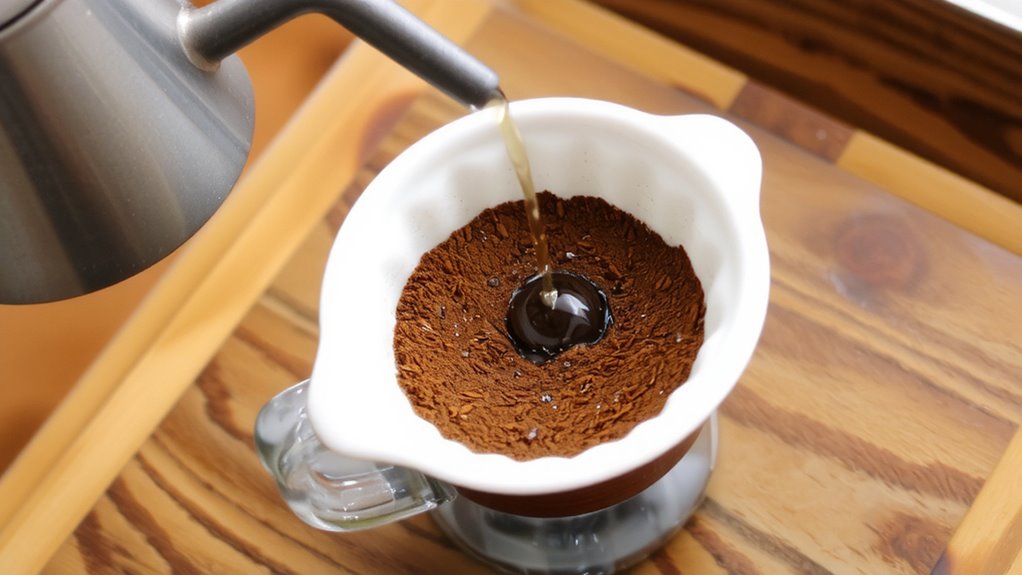
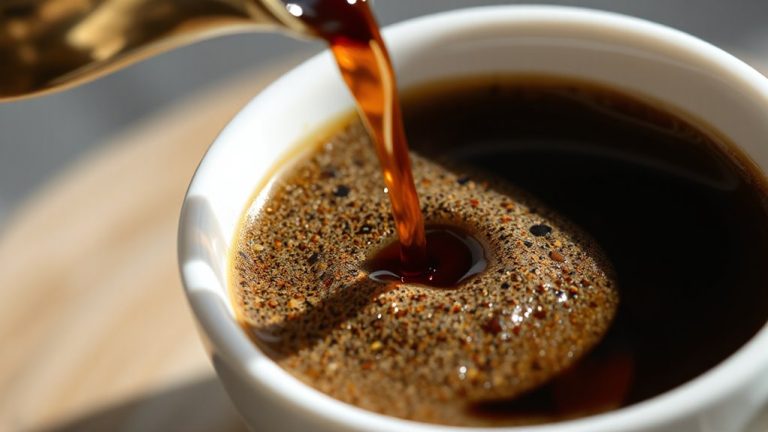
Since pour over relies on precise water flow through the coffee bed, properly blooming your grounds guarantees even saturation and maximum extraction. Start by pouring just enough hot water-about twice the weight of the coffee-to wet all the grounds. Ideal water temperature is between 195°F and 205°F; too hot and you risk scalding, too cool and extraction suffers. Let the coffee bloom for 30 to 45 seconds. You’ll see it expand as trapped CO2 escapes. This step is especially important with fresh beans. For best results, use a consistent grind consistency-medium-fine, like table salt-so water flows evenly. A coarse grind causes under-extraction, while too fine can clog the filter. Use a gooseneck kettle for control. This simple step improves clarity and balance in your cup. A well-executed bloom is key to unlocking the full potential of your best pour-over coffee maker.
How to Use Pre-Infusion in Espresso
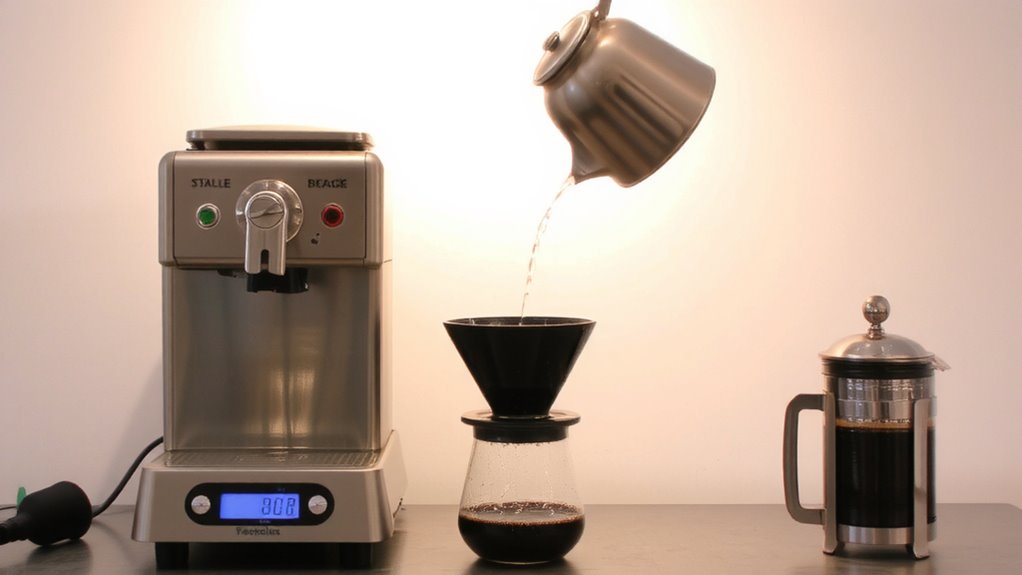
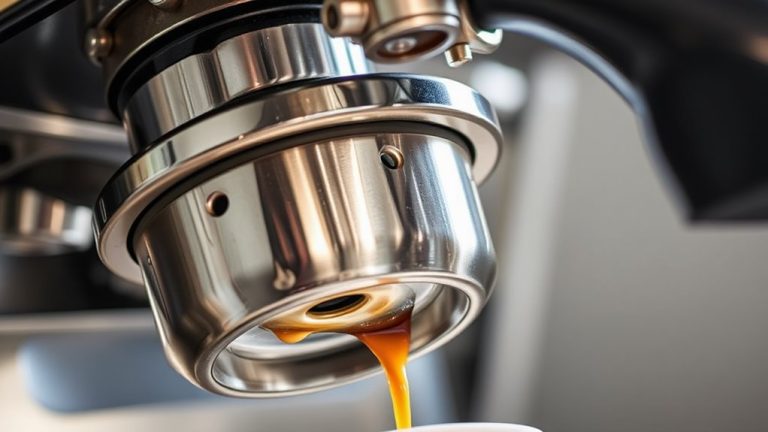
Pre-infusion can make a real difference in your espresso if your machine supports it. It works by gently wetting the coffee puck with low espresso pressure-usually 1 to 3 bars-for several seconds before ramping up to full pressure. This helps guarantee even extraction and reduces channeling. The key is proper pre wetting timing: aim for 5 to 10 seconds, depending on your roast and grind. Lighter roasts often benefit from longer pre-infusion, while dark roasts may need less to avoid over-extraction. Machines like the Rocket R58 or Decent Espresso allow precise control over this phase, but even some mid-range models include basic pre-infusion. If you’re using a lever machine, you control the timing manually-pull slowly at first. Don’t skip this step if your equipment allows it; it enhances clarity and balance. Just guarantee your dose and tamping are consistent, or timing adjustments won’t matter.
How to Bloom Coffee for French Press
That bloom matters-especially in a French press. When you add hot water to the grounds, carbon dioxide escapes, improving extraction. To do it right, use your French press tools: start with coarsely ground coffee and just-off-boil water. Pour enough water to saturate the bed-about twice the weight of the grounds-and let it sit. The blooming timing is vital: aim for 30 to 45 seconds. This short pause lets gases dissipate so the coffee can absorb water evenly. After the bloom, pour the rest of the water, stir gently, place the lid with the plunger up, and wait four minutes. Then press slowly and pour. Skipping the bloom risks under-extraction and flat flavor. Using proper blooming timing guarantees clarity and balance. Not all French press tools include a built-in timer, so use your phone or a kitchen clock for accuracy.
Fix Common Blooming Mistakes
A perfect bloom starts with the right water and grind-skip either and you’ll see flat, uneven extraction. If your coffee tastes sour or weak, you’re likely dealing with uneven saturation. That happens when water doesn’t reach all the grounds evenly, often due to a too-coarse grind or pouring too fast. Use a gooseneck kettle for better control, especially with pour-over methods like V60. Make sure your grind matches your brewer-too fine and you risk clogging, too coarse and trapped gases escape too quickly, cutting bloom short. Stir gently after pouring to help release trapped gases and guarantee full saturation. Fresh beans need about 30–45 seconds to bloom. Skip this step and CO2 pushes water away, leading to poor extraction. Adjust water temperature around 200°F-too cool, and gases won’t release properly. Watch the bloom rise, not just bubble randomly.
On a final note
You’ve seen how proper pre-wetting boosts extraction across methods. Whether blooming in pour over, using pre-infusion on an espresso machine, or stirring French press grounds, even saturation matters. Skipping it risks sour, uneven coffee. A gooseneck kettle helps pour over control, while espresso machines with adjustable pre-infusion give more leverage. With French press, a simple stir at the start fixes most issues. Consistency and attention here pay off in every cup.