How the Washed (Wet) Process Enhances Bright Acidity in Specialty Coffee Beans
You get brighter acidity with the washed process because the fruit pulp is removed right after harvest, stopping excess fermentation that dulls delicate flavors. Controlled fermentation and clean water wash away mucilage evenly, preserving crisp, clean notes like citrus or floral tones. Compared to natural processing, it offers more consistency and clarity. Regions like Ethiopia and Kenya rely on this method for vibrant profiles-keep going to see how water quality and region shape your cup.
Notable Insights
- Early removal of fruit pulp prevents enzymatic browning, preserving delicate organic acids responsible for bright flavors.
- Controlled fermentation limits over-degradation of mucilage, maintaining crisp and clean acidity in the bean.
- Washed processing minimizes prolonged contact with fermenting fruit, reducing unwanted sour or muddled notes.
- Use of high-quality water with balanced minerals enhances acid clarity and flavor precision during washing.
- Consistent drying after fermentation stabilizes acidity without introducing defects or dullness in the cup.
What Is the Washed Coffee Process?
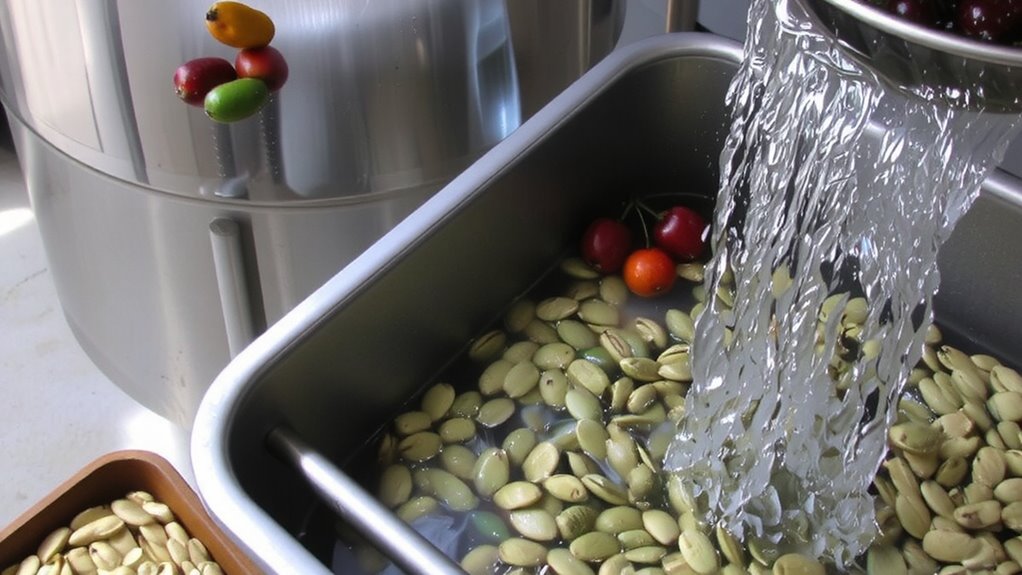
The washed process, also known as the wet process, is one of the most common methods for turning coffee cherries into green beans ready for roasting. You start by removing the fruit pulp right after harvest using a depulper machine. What’s left is a sticky layer of mucilage coating the bean. To remove it, you rely on fermentation control-soaking the beans in water for 12 to 48 hours. You adjust time and temperature to prevent over-fermentation, which can ruin flavor. After washing, proper drying techniques are essential. You can use raised beds, patios, or mechanical dryers, aiming for consistent moisture reduction to about 11%. If done wrong, uneven drying causes defects. This method demands more water and equipment than natural or honey processes but offers cleaner, more consistent results. It’s preferred in regions with reliable water access and well-managed mills.
How Fruit Removal Creates Brighter Coffee
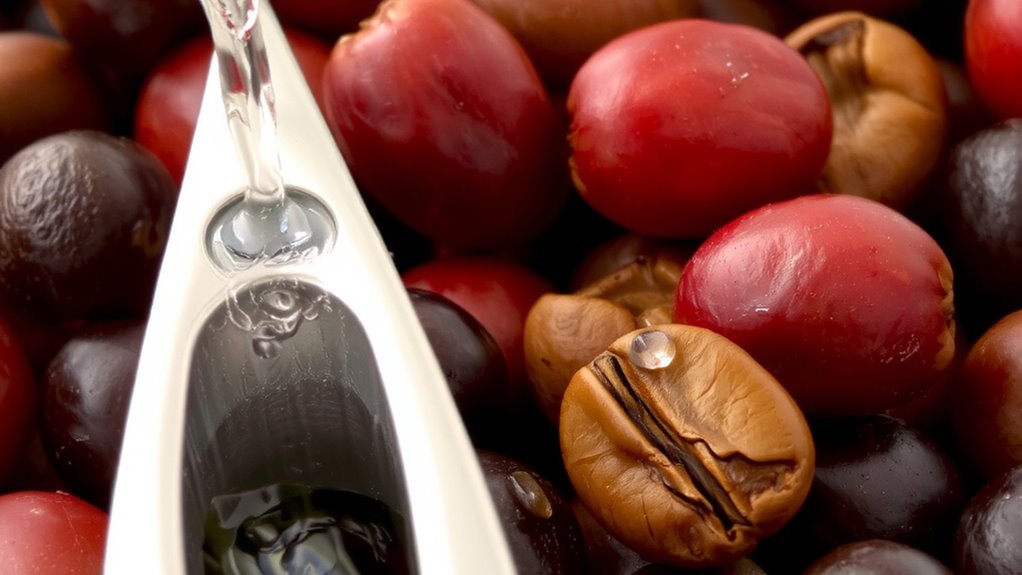
You just saw how the washed process strips fruit pulp early and uses fermentation to clean off mucilage, ending with careful drying to prep beans for roasting. Removing the fruit quickly prevents enzymatic browning, which can dull flavors and create off-notes. By minimizing contact between the bean and degrading fruit, you preserve delicate acids that contribute to brightness. Fermentation control is key-too long or too warm, and you risk sour or fermented off-flavors; too short, and mucilage won’t break down. With precise water use and monitoring, the washed method boosts clarity and sharp acidity.
| Step | Purpose |
|---|---|
| Pulp removal | Stops enzymatic browning |
| Fermentation | Loosens mucilage with controlled microbes |
| Washing | Eliminates residue for clean taste |
| Drying | Stabilizes beans for storage |
| Fermentation control | Guarantees consistent, bright results |
Washed vs. Natural: Which Tastes Cleaner?
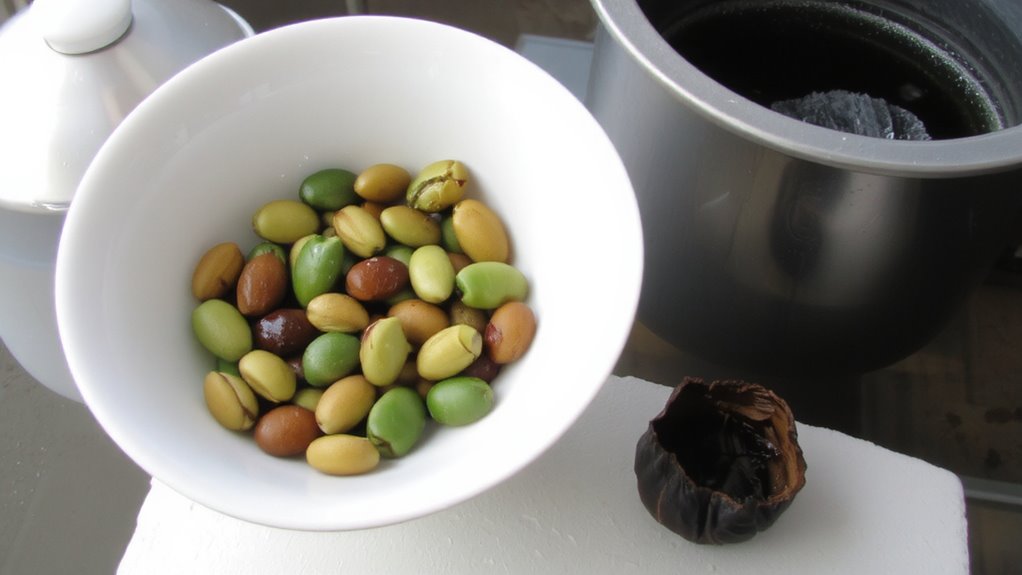
What makes a coffee taste clean-bright acidity or heavy fruitiness? If you’re after clarity and precision in flavor, washed beans likely suit you better. The washed process removes the fruit before drying, giving you more fermentation control and fewer variables that can muddy the taste. Natural processing skips this step, letting the bean absorb sugars and compounds during drying, which can add complexity-but also unpredictability. With washed coffees, consistent drying techniques like raised beds or mechanical dryers help maintain uniform moisture levels, reducing defects. Naturals need careful monitoring; uneven drying can cause off-flavors. You’ll often find washed beans highlight origin characteristics-like citrus in Ethiopian Yirgacheffe-without interference. They tend to taste cleaner, meaning you taste the coffee, not the process. For a transparent, crisp cup, washed is usually the safer bet.
Why Water Quality Shapes Washed Coffee Flavor
Even though the washed process removes fruit and mucilage to emphasize clarity, the quality of water used in both farming and brewing still plays a decisive role in shaping the final cup. You’re not just washing beans-you’re soaking them in water that carries mineral content and pH balance directly tied to flavor. If the water’s mineral content is too low, it can under-extract, leaving coffee flat. Too high, and bitterness or harshness creeps in. Ideally, water should have balanced minerals-around 100–150 ppm-to support even extraction. The pH balance matters too; neutral to slightly acidic water (pH 6.5–7.5) preserves the bright acidity washed coffees are known for. Using filtered or specially formulated water like Third Wave Water helps maintain consistency. Your brewing gear, whether a pour-over or espresso machine, performs better with stable water chemistry. Skip the tap if it’s too hard or soft-adjusting water quality is one of the most direct ways to improve your cup. For brewing, choosing the right best coffee brewing water can make a significant difference in flavor clarity and balance.
Top Regions for Washed Coffee (And What They Taste Like)
While origin doesn’t guarantee quality, certain regions have built reputations for producing washed coffees with distinct, high-quality flavor profiles thanks to ideal altitude, climate, and processing standards. In Ethiopia, washed beans often show floral, citrusy Ethiopian notes, with clean brightness and a delicate body-think Yirgacheffe or Sidamo. Kenya’s washed coffees deliver structured acidity, often with blackcurrant and berry tones, backed by full sweetness. When you move to Central America, countries like Colombia and Costa Rica offer balanced Central profiles-crisp apple or grapefruit acidity, medium body, and hints of chocolate or nuts. These regions use consistent water channels and fermentation control, essential for preserving clarity. If you’re after brightness without earthiness, washed beans from these areas are reliable starting points. Grind fresh and use a pour-over or espresso machine to highlight their clean, vibrant character.
On a final note
You get brighter, cleaner flavors in specialty coffee because the washed process removes fruit before drying, cutting fermentation effects. It highlights acidity-think citrus or apple notes-especially with good water quality. Compared to natural processing, it’s more consistent but needs more water. For clarity and precision in taste, choose washed beans from places like Ethiopia or Colombia, and pair with a pour-over or drip brewer.