Troubleshooting Weak Crema Due to Improper Grinder Settings
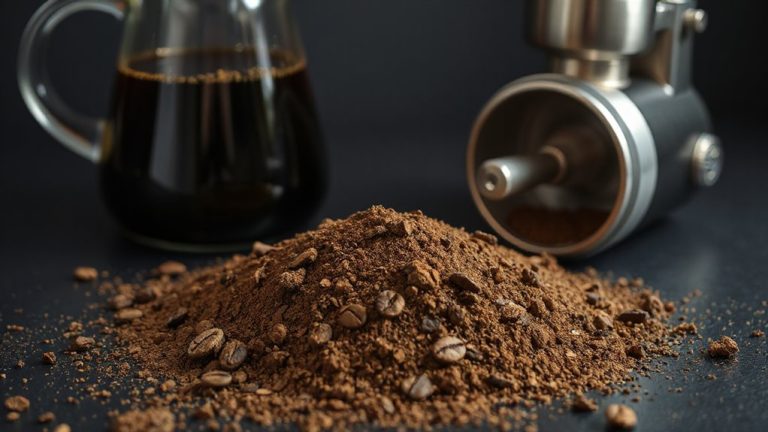
If your crema’s thin, your grind’s likely too coarse-water’s flowing too fast for proper extraction. Start with a finer setting, aiming for table salt texture, and adjust in small steps. Use a burr grinder like a Baratza or Mahlkönig for consistent particles; blade grinders cause uneven extraction. Check that your burrs are clean and sharp, and prefer doserless models to avoid stale grounds mixing in. Tamping pressure matters less than getting the grind right first-nail that, and you’re already closer to better espresso.
Notable Insights
- Too coarse a grind size causes fast water flow, leading to under-extraction and weak, thin crema.
- Adjust grind size incrementally finer to slow extraction and improve crema richness and volume.
- Ensure grind consistency using a burr grinder to prevent channeling and uneven extraction.
- Denser beans may require a finer grind setting to achieve optimal crema and extraction balance.
- Clean and maintain grinder regularly to avoid clogging, dull burrs, and inconsistent particle size.
Thin Crema? Your Grind Might Be the Problem
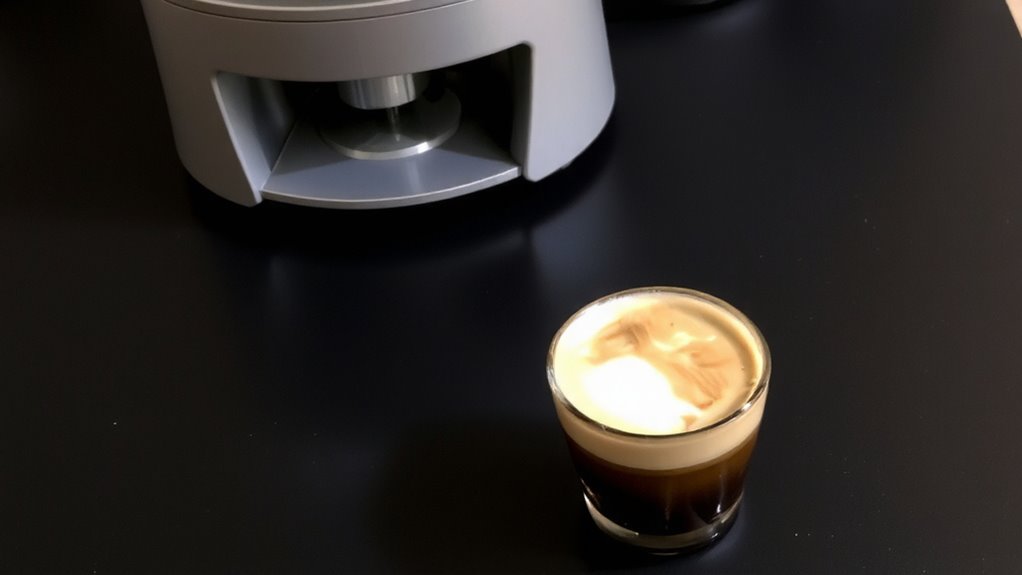
If your crema is coming out thin or patchy, the grind size might be the culprit. Too coarse, and water zips through too fast, giving weak extraction and flat crema. Too fine, and you risk over-extraction or clogging, especially if your tamping pressure isn’t consistent. Aim for a grind that balances flow and resistance-think table salt texture for most machines. Inconsistent grinds often come from blade grinders; burr grinders (like the Baratza Encore or TIMEMORE C2) deliver more uniform particles, which helps. Also, check your water temperature-most machines should run between 195°F and 205°F. If it’s too low, you won’t extract enough oils for rich crema. Don’t assume tamping pressure alone fixes grind issues-it can’t compensate for the wrong setting. Adjust the grinder first, then fine-tune tamping and temperature.
How Grind Size Changes Espresso Extraction
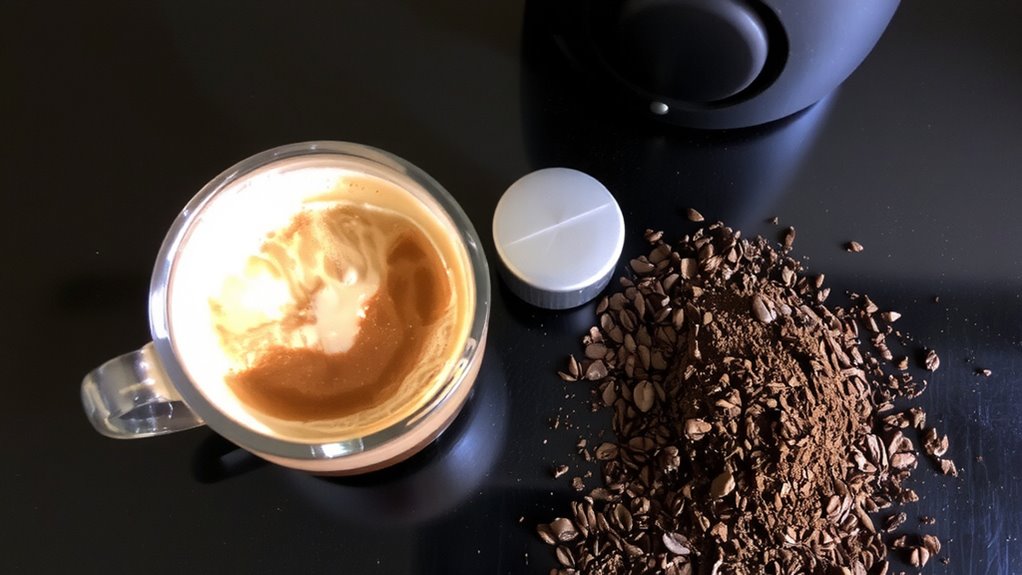
A single shot of espresso can vary wildly in taste and quality depending on your grind size-it’s that critical. Too fine, and water struggles under full brew pressure, leading to over-extraction; too coarse, and it zips through, causing weak, sour shots. Your bean density plays a big role-denser beans like Ethiopians often need a finer grind to reach proper resistance. Here’s how grind size shifts extraction:
| Grind Size | Resulting Extraction |
|---|---|
| Too Fine | Bitter, slow drip, clogged |
| Slightly Fine | Rich, balanced, full crema |
| Slightly Coarse | Faster flow, thinner crema |
| Too Coarse | Sour, watery, quick pull |
Adjusting grind tweaks flow rate and contact time, directly impacting flavor. Always consider your machine’s brew pressure and the bean density when dialing in. Small changes make big differences. Choosing the right best coffee grinder can make dialing in significantly more consistent and precise.
Find the Ideal Grind Setting for Rich Crema
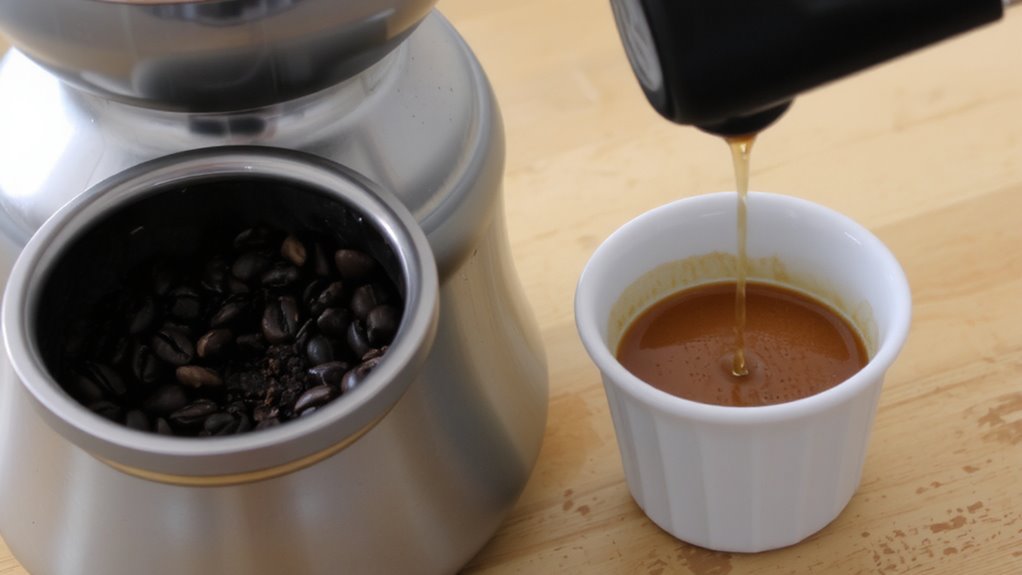
Your grinder is the most important tool for pulling shots with rich, golden crema. To find the ideal grind setting, start with a fine setting and adjust in small increments. If your shot runs too fast and crema is thin, go finer; if it’s slow and bitter, go coarser. Keep your tamping pressure consistent-around 30 pounds-to avoid uneven extraction that masks grind issues. Your machine’s water temperature also plays a role; too high can scorch grounds, too low under-extracts, both harming crema. Aim for 195–205°F. Test shots with a 1:2 brew ratio and 25–30 second extraction. Brands like Mahlkönig and Baratza offer reliable grinders with stepless adjustments for precision. Remember, small tweaks matter more than big changes. Track each adjustment and its result. With steady testing, you’ll dial in the sweet spot where flavor and crema peak. For more tailored options, check expert reviews on the best espresso grinders.
Grind Consistency: Why Uniform Particles Matter
Fine-tuning your grind setting gets you partway to great crema, but even the right grind size won’t help if the particles aren’t uniform. Inconsistent particle shape leads to uneven extraction-fine dusts clog while coarse bits let water race through, weakening crema. A quality burr grinder improves consistency by producing more uniform fragments, which boosts extraction balance. Flat burrs often deliver better particle shape than conical ones, though top models of both exist. Static control matters too; clumping from static electricity causes uneven distribution in the portafilter, worsening inconsistency. Some grinders include anti-static coatings or adjustable grounds forks to reduce this. If your grinder chokes with static or produces boulders and fines, upgrading to one with strong consistency and built-in static control-like the EG-1 or Virtuoso+-makes a measurable difference. Uniformity isn’t just about size-it’s about reliable, repeatable results shot after shot. Investing in one of the best prosumer espresso grinders can significantly enhance grind consistency and overall shot quality.
Fix Grinder Calibration to Prevent Channeling
Channeling-the sneaky culprit behind weak, patchy crema-often traces back to a poorly calibrated grinder. When your grinder’s burrs aren’t aligned properly, uneven extraction happens fast. Poor grinder alignment forces water through the easiest path, washing out flavor and ruining crema. You’ll see sour, hollow shots even with fresh beans. Check your burr alignment regularly, especially after cleaning or moving the grinder. Misaligned burrs create inconsistent particle sizes, worsening channeling. Also, consider burr sharpness-dull burrs tear coffee instead of slicing it cleanly, increasing fines and clogging. If your grind feels inconsistent or shots pull too fast, it’s time to inspect. Most mid-range and high-end grinders let you adjust or replace burrs. Baratza and Lelit models, for example, offer user-calibratable settings. Fixing alignment and maintaining burr sharpness isn’t fussy-it’s essential for even extraction and rich, lasting crema.
Doser or Doserless? Which Grinds Better for Crema?
A doserless grinder often gives you fresher, more consistent grinds-key for building solid crema-because it sends beans straight from hopper to portafilter without sitting in a holding chamber. Doser retention in traditional grinders can leave old grounds behind, mixing with fresh ones and leading to uneven extraction. That inconsistency dulls crema. Doserless models, like the Baratza Sette or Eureka Mignon, reduce waste and improve shot quality. They also tend to offer better static control, so less grind sticks to the burrs or chute-fewer clumps mean smoother pours and richer crema. Yes, doser grinders allow easier dosing with a lever twist, useful in busy cafes, but at home, precision usually beats speed. If crema’s your goal, the fresher, cleaner path from bean to basket matters. For most home baristas, a doserless grinder delivers clearer flavor and stronger, longer-lasting crema-just remember to grind directly into the portafilter.
Keep Your Grind Fresh Every Day
You’ll get the best crema when your coffee is ground fresh just before brewing, and keeping that freshness consistent starts with a few daily habits. Daily maintenance like brushing out coffee oils and residue from your grinder prevents clogging and stale buildup that can dull flavor. Oily beans, especially dark roasts, leave behind residue that affects grind consistency. Wipe exterior parts, clean the portafilter funnel, and purge old grounds each morning. Burr alignment is critical-misaligned or worn burrs create uneven particles, leading to poor extraction and flat crema. Check alignment monthly by running a finger over the burr edges; they should feel smooth and even. If grinding seems inconsistent despite fresh beans, realign or replace the burrs. Brands like Eureka and Compak offer easy access for adjustments. A stable grind means even extraction and rich, lasting crema-don’t skip the small daily steps that keep your machine performing.
On a final note
If your crema’s thin, adjust your grinder first. A finer grind often improves extraction, but only if the particles are consistent. Uneven grinds cause channeling, hurting crema. Calibrate your grinder regularly-Mazzer or Baratza, they all drift. Doserless grinders usually offer fresher, more uniform grinds than doser models. Clean and maintain your machine, but remember: even great beans won’t save a bad grind. Fix the grind, and you’ll fix the crema.