How to Adjust Pour Over Flow Rate by Modifying Grind Size and Pour Technique
Adjust your pour over flow rate by tweaking grind size and pour technique. Use a finer grind to slow flow and avoid sour, weak coffee, or go coarser to speed it up if brew time exceeds 4 minutes. Pair this with controlled pulse pours using a gooseneck kettle, saturating grounds evenly without disrupting the bed. A consistent medium-fine grind from a burr grinder like the Baratza Encore makes a clear difference. You’ll soon see how small changes improve results.
Notable Insights
- Adjust grind size to control flow rate: finer slows it down, coarser speeds it up.
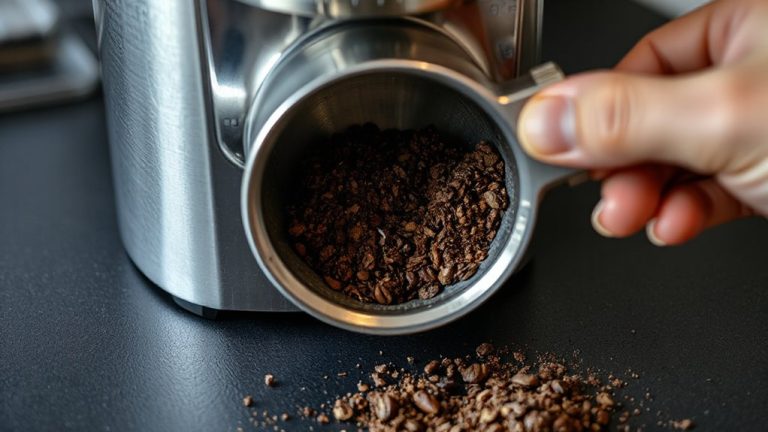
- Aim for a medium-fine grind, similar to table salt, for balanced extraction and flow.
- Use a burr grinder to ensure uniform particles and consistent flow through the bed.
- Employ pulse pouring in spiral motions to maintain bed stability and prevent channeling.
- Pause between pours to let water drain, helping regulate flow rate and extraction evenness.
How Grind Size Affects Pour Over Flow Rate
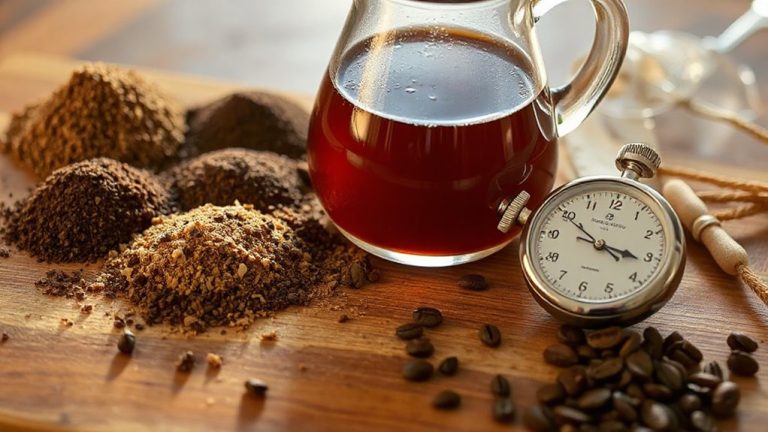
Grind size plays a make-or-break role in your pour over brew. If your grind is too fine, water struggles to pass through, slowing flow and risking over-extraction. Too coarse, and water rushes through, leading to weak, under-extracted coffee. You need a balance-typically a medium-fine grind, like table salt, for most pour over setups. Grind consistency matters just as much as size. Blades create uneven particle distribution, causing some grounds to over-extract while others under-extract. A burr grinder gives you uniform particles, improving extraction and flavor clarity. Inconsistent grinds disrupt flow rate and extraction evenness. For reliable results, invest in a quality burr grinder like the Baratza Encore or 1ZPresso Q2. Your flow rate-and final cup-depend on both particle distribution and grind consistency. Get those right, and you’re set for better control. For espresso-level precision that benefits pour over, consider a best espresso grinder under $500.
The Right Pour Technique for Even Extraction
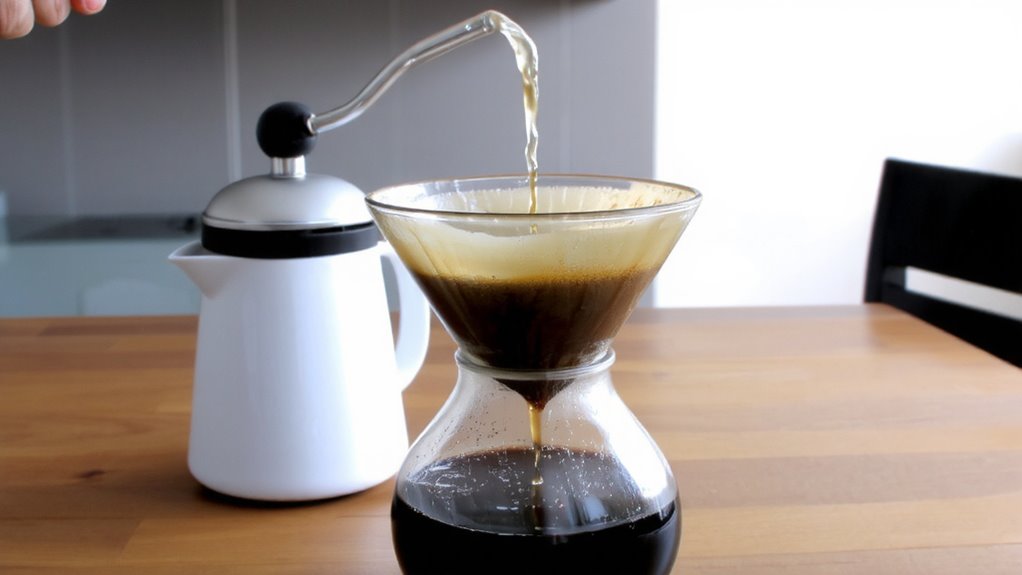
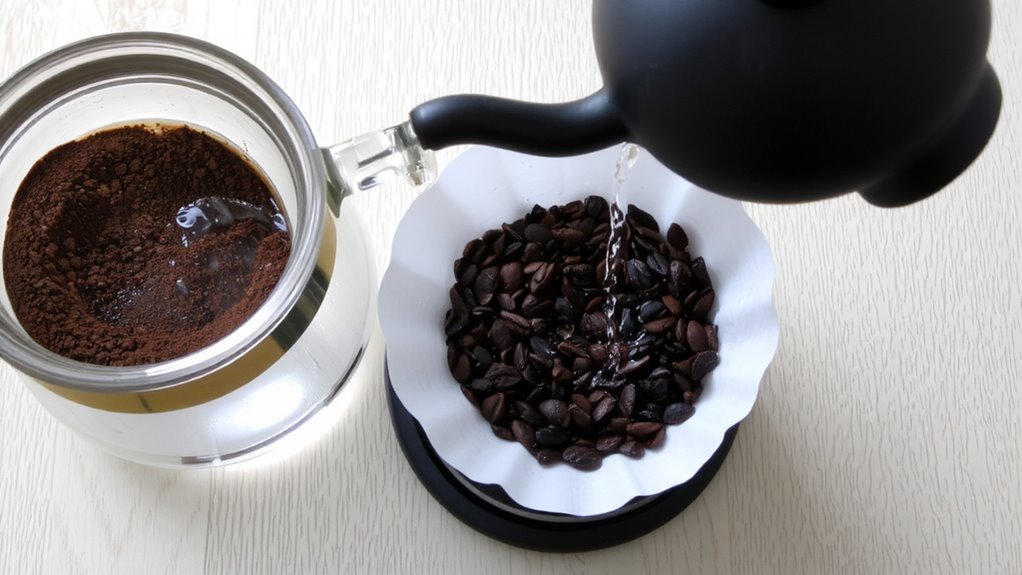
How do you make sure every drop of water extracts flavor evenly as it moves through your coffee bed? Start with a proper wet bloom-pour just enough hot water to saturate the grounds, letting them expand and release trapped gases for about 30 seconds. This step preps the coffee for even extraction. After the bloom, switch to a pulse pour: add water in small, controlled increments rather than one continuous stream. This keeps the bed level and prevents channeling, where water cuts paths and skips grounds. Use a gooseneck kettle for precision-it gives you control over flow and placement. Aim for slow, spiral motions from the center outward. Each pause in the pulse pour lets water drain slightly, maintaining balance. A consistent pour technique improves contact time and reduces weak or over-extracted flavors, especially with medium to fine grinds. For optimal results, consider using one of the best gooseneck kettles known for their precision pouring capabilities.
Why Pour Over Flow Rate Changes Taste
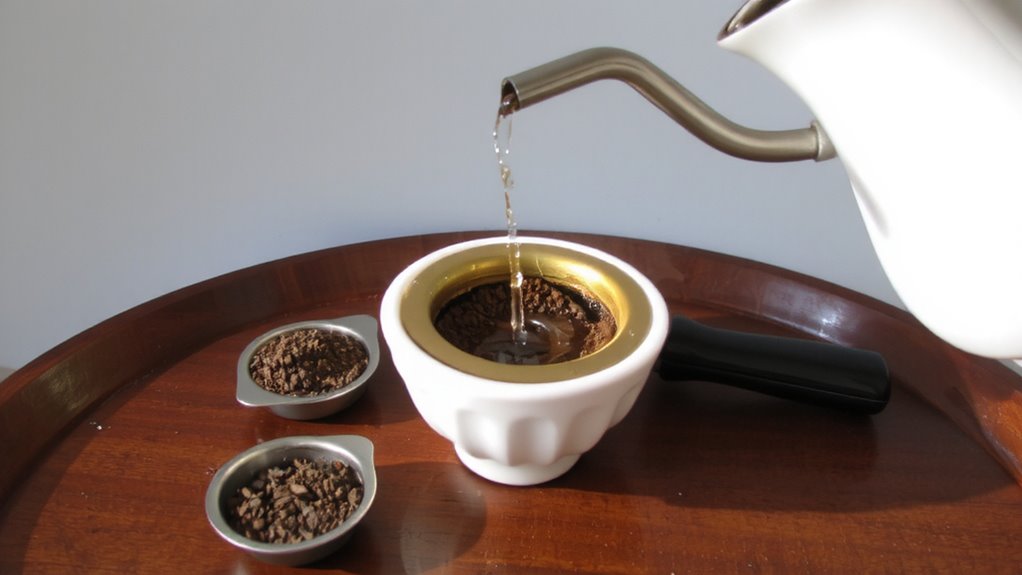
You’ve got your pour technique down-consistent spirals, a solid bloom, and pulse pours keeping the bed stable-but even with perfect form, the speed at which water moves through the grounds still shapes your cup. A slower flow gives water more contact time, extracting more flavor compounds, especially if your bean freshness is high and grounds release oils easily. But if it’s too slow, over-extraction can bring out bitter, woody notes. A faster flow risks under-extraction, yielding sour, thin coffee, particularly if water temperature is too low or beans aren’t fresh. Fresh beans outgas more, which can disrupt flow and agitation, affecting taste even with ideal timing. Water temperature around 195–205°F helps maintain consistent extraction during longer flows. The flow rate doesn’t change flavor by itself-it interacts with bean freshness, grind, and heat to decide what dissolves and when.
Fix a Pour Over That’s Too Fast or Too Slow
While your pour technique and water temperature play important roles, the grind size is usually the main factor when your pour over runs too fast or too slow. If your brew time is too short-under 2:30-you’re likely under-extracting; try a finer grind to slow flow and improve flavor. If it’s too long-over 4:00-you may be over-extracting; go coarser to speed things up. Water temperature should stay between 195°F and 205°F; outside that range, extraction suffers. Don’t adjust grind too aggressively-small changes make big differences. A burr grinder gives consistent results; blade grinders create uneven particles that disrupt flow. If adjusting grind doesn’t fix the issue, check your water temperature and pour consistency, but remember, those come after grind when troubleshooting. Focus on one variable at a time to isolate what’s affecting your brew time. For best results, use a medium-fine grind that resembles the best coffee grinds for pour-over brewing.
Balance Grind and Pour for Perfect Flow
Once you’ve dialed in the right grind size, your pour technique becomes the next lever to fine-tune flow and extraction. You control how water moves through the coffee, which affects flavor clarity and strength. Keep your water temperature steady-around 195°F to 205°F-so extraction stays consistent. Too hot, and you risk bitterness; too cool, and your brew may taste flat. Your bloom duration should last about 30 to 45 seconds, letting gases escape for even saturation. After blooming, pour slowly in concentric circles, avoiding the filter edges. A steady, controlled pour sustains ideal flow without flooding the bed. If the water pools for too long, your grind might still be too fine or your pour too aggressive. Balance matters: adjust one variable at a time, not both. This way, you isolate what’s working-and what’s not.
On a final note
You’ve seen how grind size and pour technique directly control flow rate. A finer grind slows water, while a consistent, slow pour prevents channeling. If your brew runs too fast, go finer or pour more carefully; if too slow, adjust coarser or speed up slightly. Balance matters-use a burr grinder like the Baratza Encore for consistency, and a gooseneck kettle for precision. Small tweaks make a real difference in taste and extraction.