Why Your Grinder Is Retaining Too Much Coffee After Dosing
Your grinder holds onto coffee because static from dry beans makes grounds stick to plastic parts, especially in light roasts. Uneven grinds from dull or misaligned burrs create fines and boulders that clog gaps and bounce into dead zones. Poor chamber design traps residue in flat corners, while infrequent cleaning lets oils build up. Even entry-level grinders suffer more retention. Fixing this starts with better cleaning and adjustments-your next steps matter.
Notable Insights
- Inconsistent grind size from low-quality burrs creates boulders and fines that trap coffee in the chamber.
- Static electricity builds up during grinding, especially with dry, light-roast beans, causing grounds to stick.
- Poor grinder design with flat surfaces or narrow chutes creates dead zones that trap leftover coffee.
- Infrequent cleaning leads to oil and fine buildup, clogging exit paths and increasing retention.
- Misaligned or dirty burrs produce uneven grinds and reduce clearance, leaving more coffee behind.
Why Does Your Grinder Hold Onto Coffee?
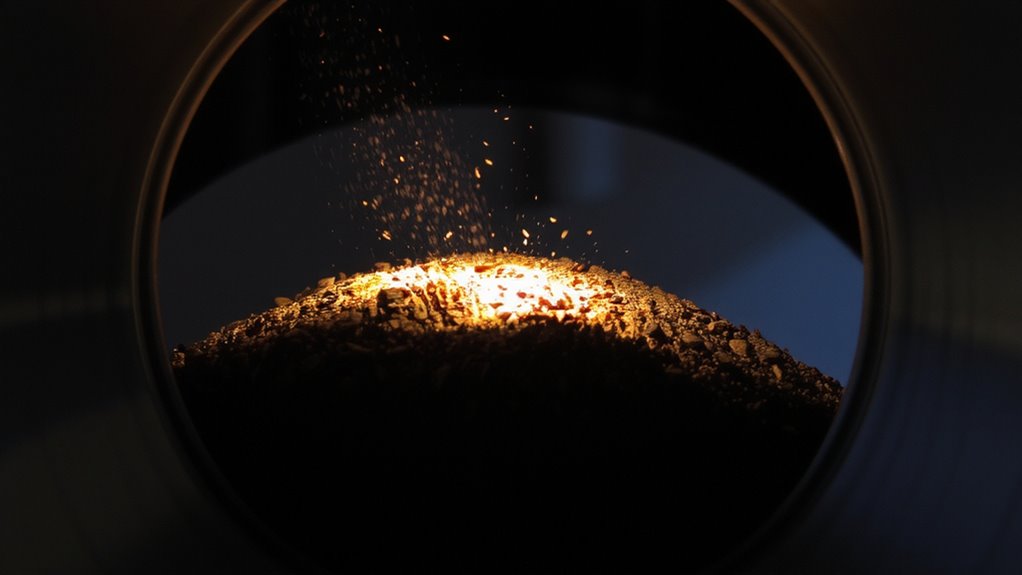
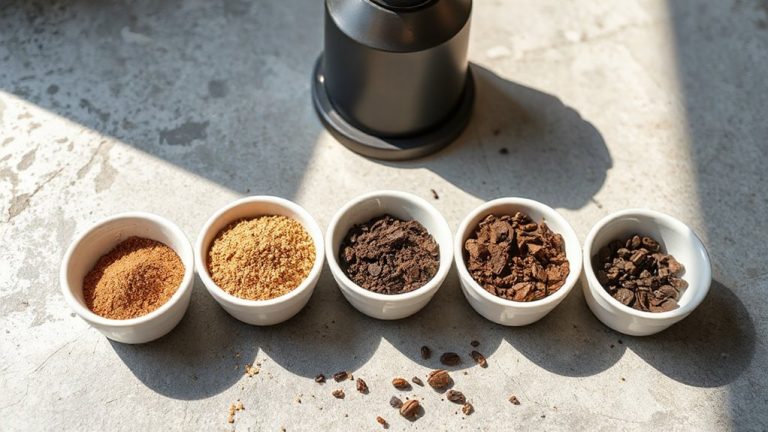
How much coffee are you actually losing to your grinder? A fair amount, especially if you’re using a blade model or an older burr grinder. Coffee density varies between beans, affecting how they move through the burrs. Denser beans might resist grinding evenly, leading to retained grounds stuck in the chamber. Poor grind consistency also plays a role-when particles are uneven, finer bits get wedged in cracks while larger ones bounce around, increasing retention. Entry-level grinders often struggle here, producing a mix of boulders and fines. This inconsistency means more coffee gets trapped instead of making it to your portafilter. Higher-end grinders, like the Baratza Encore or 1ZPresso models, reduce this with tighter burr alignment and better chamber design. You’ll waste less, improve shot quality, and clean up faster-all by focusing on grind consistency and matching your grinder to your coffee’s density. Upgrading to one of the best mill grinders can significantly reduce coffee retention and improve overall grind uniformity.
How Static Traps Grounds in Your Grinder
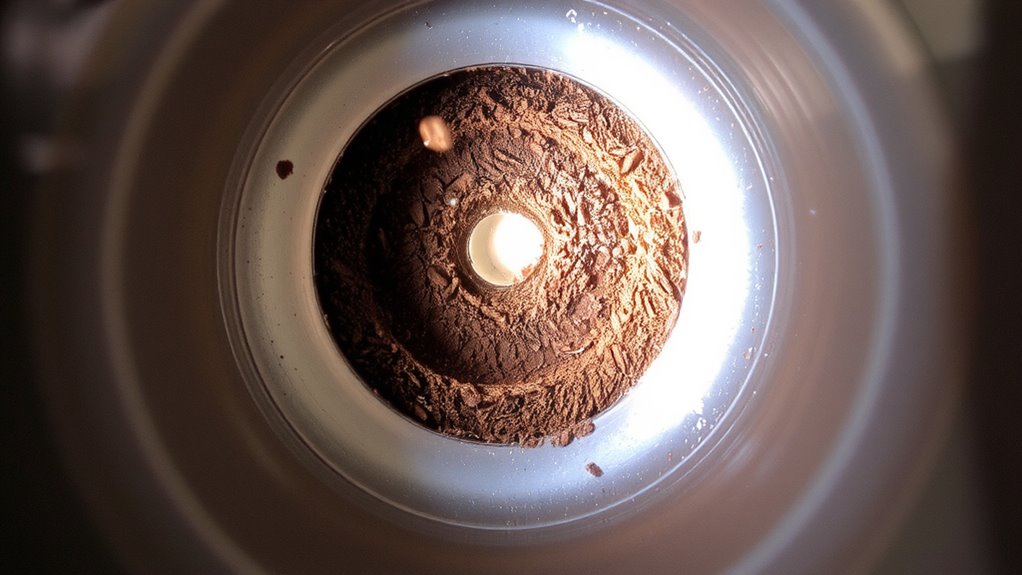
You’re already dealing with coffee retention from inconsistent grind size and bean density, but there’s another sneaky culprit at play: static. When you grind, friction causes static buildup, making grounds cling to your grinder’s burrs, chute, and walls. The drier the beans-low moisture content-the worse it gets. Light roasts, which are drier than dark, often create more static, increasing retention. Humid environments can reduce this effect slightly, but most home grinders operate in conditions that favor charge accumulation. Plastic chambers hold more static than metal ones, so grinders like the Baratza Encore may retain more than all-metal models. To minimize this, grind in a humidified space if possible, adjust your beans’ moisture content carefully, or use anti-static tools. While you can’t eliminate static buildup entirely, recognizing its role helps you choose better gear and tweak setup for cleaner dosing. For those seeking optimal performance, investing in one of the best coffee and espresso grinders can significantly reduce static-related retention due to superior build quality and materials. best coffee and espresso grinders
Design Flaws That Keep Coffee Stuck
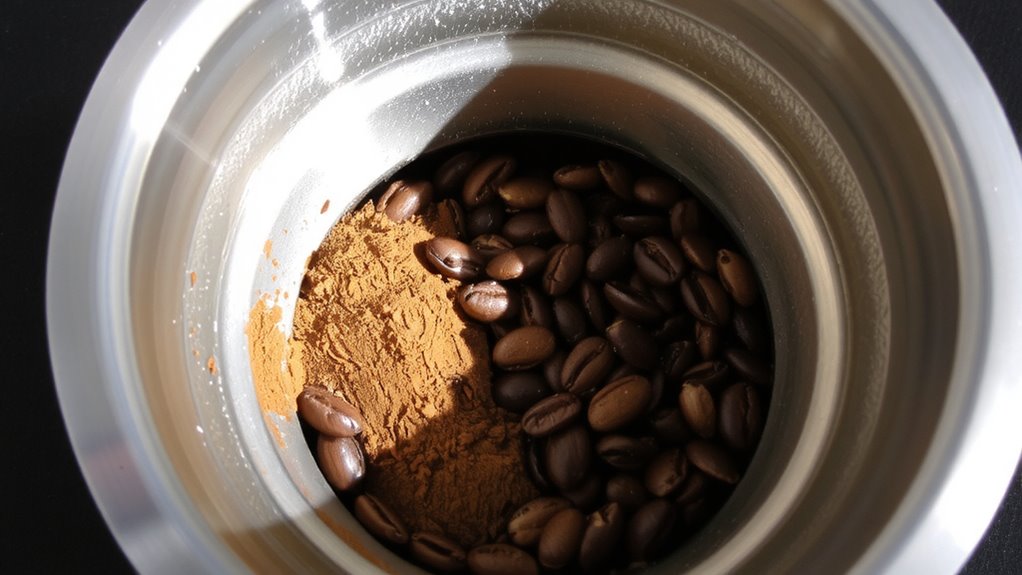
Coffee trapped in cracks, corners, and crevices isn’t just messy-it’s wasted flavor. Poor chamber geometry creates dead zones where grounds collect, especially in flat or angled areas below the burrs. If blade alignment is off, even slightly, grounds get wedged instead of flowing freely. These design flaws are common in budget grinders but can appear in higher-end models too. A well-designed chamber funnels coffee smoothly to the exit, while misaligned blades disrupt the flow and increase retention. Choosing models highlighted in expert roundups can help ensure you’re getting a grinder with best coffee grinders performance and low retention.
| Feature | Problem | Solution |
|---|---|---|
| Chamber geometry | Corners trap grounds | Rounded, steep walls |
| Blade alignment | Gaps hold coffee | Precision-calibrated burrs |
| Exit chute size | Narrow paths cause clogs | Wider, direct routing |
Fixing these flaws starts with choosing grinders that prioritize clean internal design and consistent engineering.
How Cleaning Habits Make Retention Worse
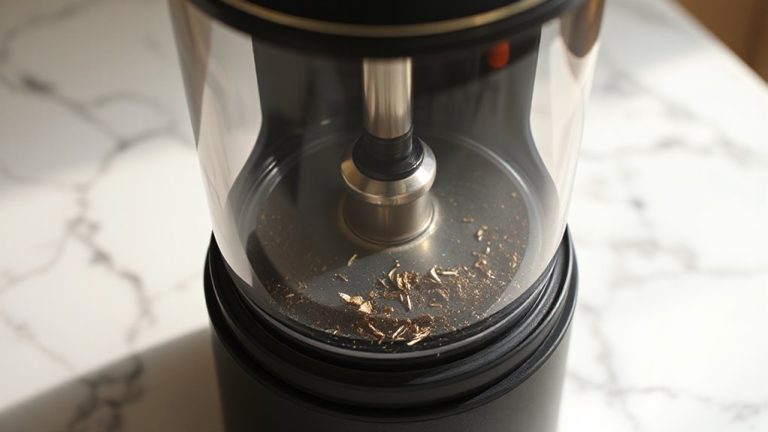
While skipping regular cleaning might seem like a time-saver, it actually worsens retention by letting old oils and fine grounds build up in hidden spots. Those stuck particles clog exit paths and cling to burrs, increasing the amount of coffee left behind. Over time, this residue causes uneven grinding because the burrs don’t cut beans cleanly anymore. You might not notice it right away, but your shots start suffering from improper timing in the brew cycle. Residual buildup alters grind consistency, meaning some particles are too fine, others too coarse. This imbalance hurts extraction and increases retention further. Wiping the hopper or brushing the burrs once a week isn’t enough-deep cleaning monthly removes the gunk that sneaks into seals and crevices. If you wait too long between cleans, you’re not just losing coffee-you’re degrading performance. Good habits prevent long-term issues and keep your grinder working like it should.
How to Fix Coffee Grinder Retention
If your grinder’s leaving too much coffee behind, fixing retention starts with evaluating both design and maintenance. Some grinders, like the Baratza Encore, have known retention issues due to their burr chamber design, while others, such as the Timemore C2, minimize it with tighter tolerances. Check for buildup-residual oils trap grounds, worsening retention-so clean regularly with a brush or rice method. Adjusting grinder calibration can also help; a finer setting may reduce space where coffee hides, but too fine might jam the burrs. Consider bean density: denser beans like Kenyan AA shed more static, increasing cling in plastic chambers. Harder, oily beans may leave more residue. Metal or anti-static grinders reduce this. If retention stays high despite tweaks, consider upgrading to a low-retention model designed for dosing efficiency. Small changes in calibration and awareness of bean density make a measurable difference.
On a final note
Your grinder holds coffee due to static, design gaps, and buildup from poor cleaning. Older grinders like the Baratza Encore often trap more grounds than newer models with anti-static tech. Metal burrs reduce retention versus ceramic. Clean weekly with brushes and Grindz to prevent stale buildup. For less waste, choose grinders with short exit paths and anti-static features-like the DF64 or Mythos One. Adjust dose slightly if retention is consistent, but cleaning and design matter most.