The Art of the Centered Pour in Pour Over Brewing for Even Saturation
You pour down the center to spread water evenly and keep the coffee bed stable. This cuts down on channeling, where water carves paths and leaves dry spots, especially in symmetric brewers like the V60 or Kalita Wave. Use a gooseneck kettle for control, starting in the middle before gently spiraling out. Keep your pour steady and avoid the edges early on. Light roasts may need a finer grind, darker ones a coarser setting. Grind consistency from a burr grinder matters more than most realize-uneven particles lead to unbalanced extraction. Bitter brew? Your grind’s likely too fine. Sour or weak? Try going coarser. Temperature between 195°F and 205°F keeps extraction sharp. With the right technique, you’ll get cleaner, more even cups every time-you’ll find small adjustments make a noticeable difference in the final result.
Notable Insights
- Pouring water directly into the center ensures even saturation and prevents dry spots in the coffee bed.
- A centered pour minimizes channeling by reducing edge turbulence and maintaining a stable, symmetrical water flow.
- Start in the middle and use a slow, controlled spiral to promote uniform extraction across the coffee bed.
- Avoid early edge pouring to prevent filter deformation and uneven pressure that disrupts brew consistency.
- Use a gooseneck kettle to maintain precise control over pour rate and placement for optimal saturation.
How a Centered Pour Improves Pour Over Coffee
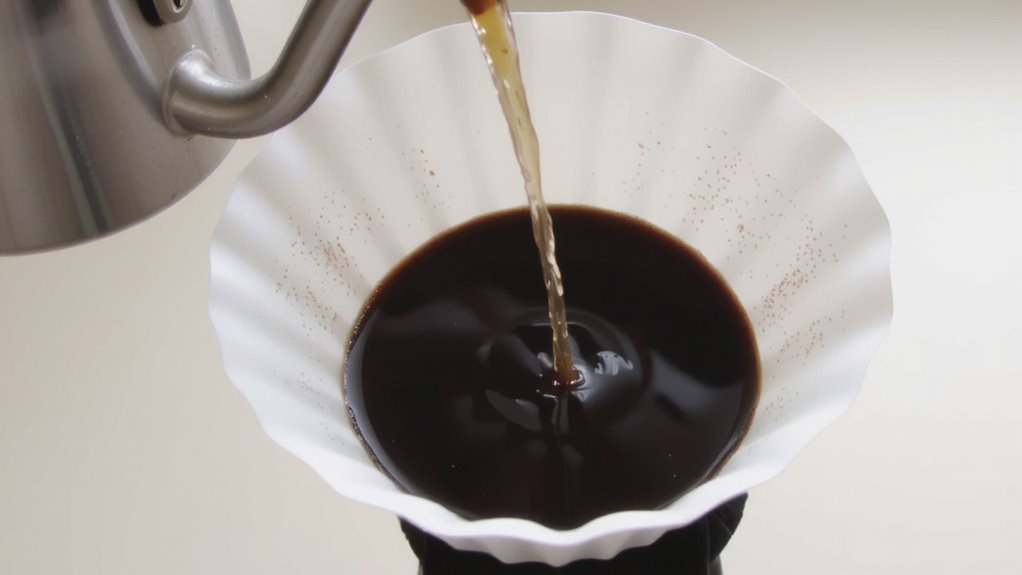
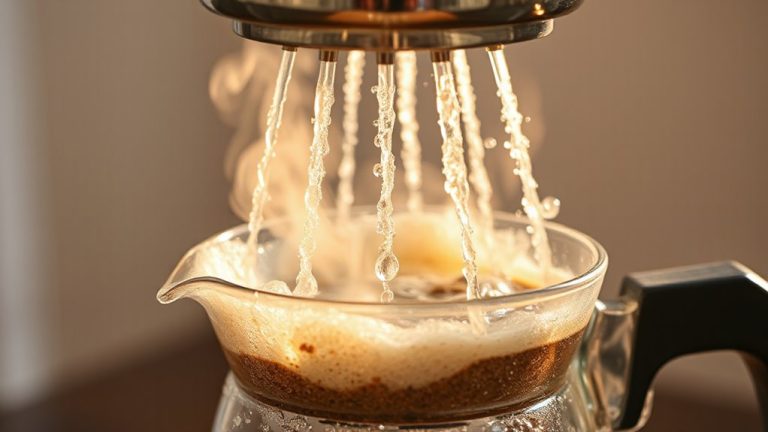
When you pour straight down the middle of the coffee bed instead of spiraling from the edges, you’re more likely to get even saturation and avoid channeling-where water carves paths through the grounds and leaves some dry. A centered pour promotes better brew symmetry by distributing water evenly across the bed, reducing the risk of uneven extraction. You’ll also minimize excessive water turbulence, which can disturb the grounds unevenly and lead to inconsistent results. This method works especially well with symmetric brewers like the Hario V60 or Kalita Wave, where balance matters. While spiral pours have their place, they require more precision and can disrupt bed stability if done too aggressively. With a steady center stream, you maintain control and promote uniform wetting from the start. It’s a simple tweak that boosts consistency-especially useful with medium to fine grinds. Just aim for a controlled, laminar flow to keep agitation predictable and extraction even. For best results, use the best coffee grinds for pour-over as recommended for optimal flavor clarity and extraction balance.
Stop Channeling With a Centered Pour
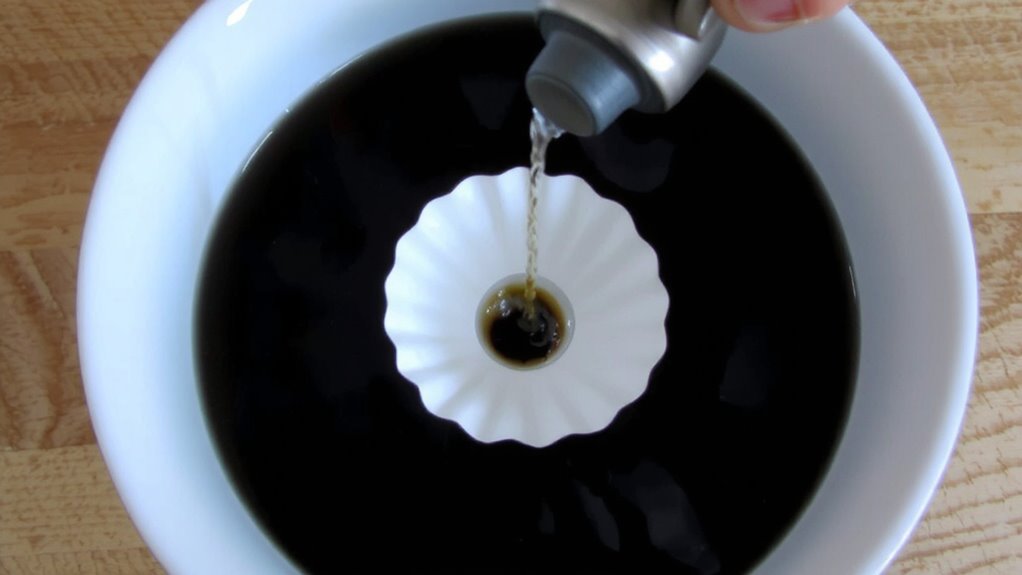
Channeling-the sneaky culprit behind uneven extraction and off flavors-thrives when water finds shortcuts through your coffee bed. You’ll often see this happen when your pour lands off-center, directing water toward the filter wall. That misdirected flow increases water turbulence near the edge, encouraging water to race down the sides instead of moving evenly through the grounds. Over time, this creates weak, sour spots in your brew. A centered pour reduces this risk by keeping water flow symmetrical and minimizing filter deformation, which occurs when uneven pressure pushes the paper against the dripper wall. V60 and Kalita Wave users especially should watch this-uneven contact reduces consistency. By aiming for the center, you maintain even saturation and keep the coffee bed stable. You’re not just pouring water-you’re controlling flow paths. It’s a small adjustment that stops channeling before it starts. Using a well-designed pour-over stand can further stabilize your brewer and support consistent, centered pouring.
How to Nail the Centered Pour
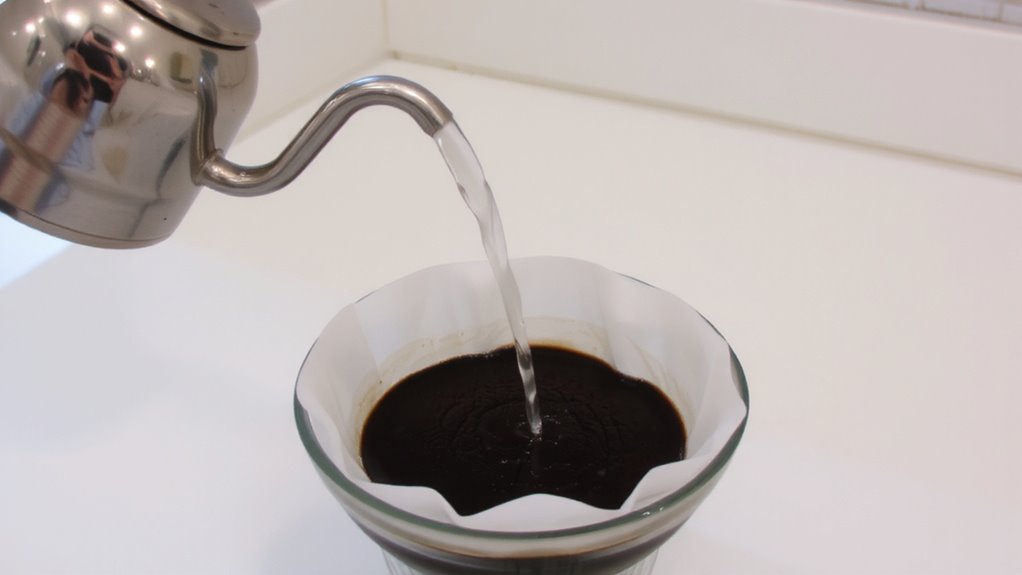
Even if you’re using a gooseneck kettle, staying centered depends more on control than gear. To nail the centered pour, keep your hand steady and your pour technique consistent-start directly over the center of the bed and let the water rise uniformly. A controlled, slow spiral or gentle circle from the middle outward improves water distribution without disrupting the grounds. Avoid dumping water to the edges too soon, as this causes uneven extraction. Focus on maintaining a single stream that feeds the entire bed evenly. Whether you’re using a V60 or Kalita Wave, centering the pour guarantees saturation begins in the middle, where most drainage happens. Trim your pour speed to match the brew stage: slower during bloom, steady during main pours. Good water distribution starts with precision, not fancy tools. You’ve got this-with practice, you’ll pour like clockwork-every time. For those seeking optimal control, choosing one of the best gooseneck kettles can enhance your ability to maintain a steady, precise stream.
Fix Common Centered Pour Mistakes
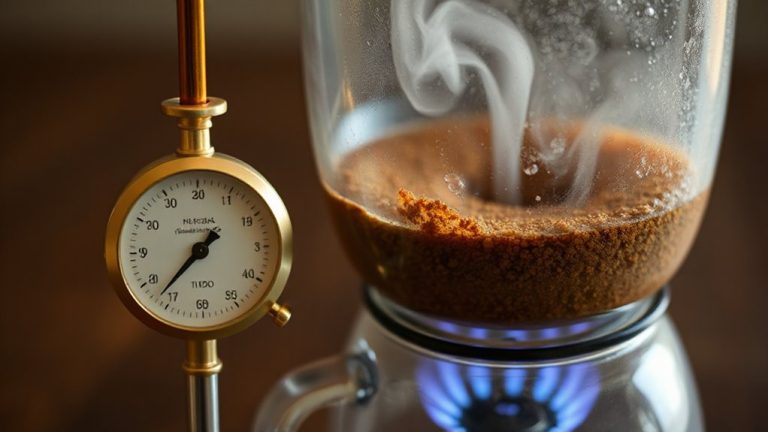
If you’re noticing sour or uneven flavors in your brew, chances are your centered pour needs adjusting-common mistakes like pouring too fast, straying off-center, or starting the spiral too early can throw off extraction. High pour pressure disrupts the coffee bed, leading to channeling, while low pressure helps maintain stability and even saturation. Keep your kettle steady and pour in smooth, controlled pulses. Stay directly over the center; even slight deviations can cause one side to over-extract and another to under-extract. Your water temperature should stay between 195°F and 205°F-too cool and you’ll under-extract, too hot and you risk bitterness. Use a gooseneck kettle for precision, as it gives you better control over flow rate and placement. Adjusting these factors improves contact time and extraction balance, giving you a cleaner, more consistent cup every time.
When to Adjust for Beans and Grind
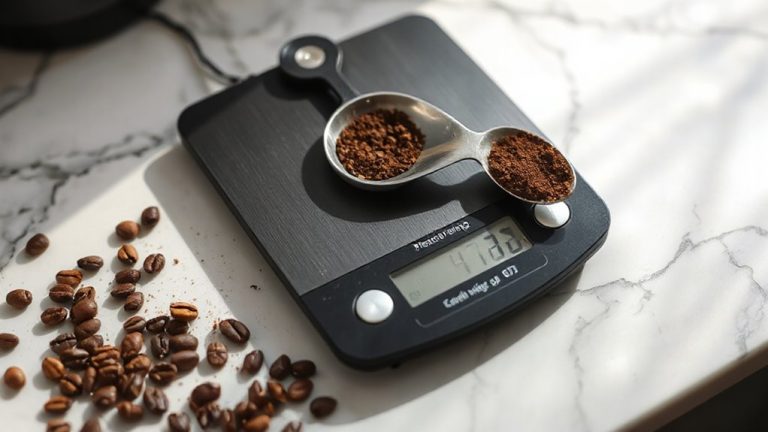
Why does one grind size work for your Ethiopian beans but not your dark roast Colombian? Because bean selection matters. Lighter roasts like Ethiopians are denser, needing a finer grind for proper extraction, while darker roasts like Colombians are more porous and extract faster-requiring a slightly coarser setting. You’ve got to adjust based on roast profile and origin. Grind consistency is just as critical: uneven particles lead to over- and under-extraction, muddying your cup. A quality burr grinder guarantees uniformity, unlike blade grinders that create boulders and dust. If your coffee tastes bitter, try a coarser grind. If it’s weak or sour, go finer. Monitor results with each new bean. Dialing in takes practice, but it’s essential. Your pour-over rewards precision-adjusting grind and respecting bean selection makes all the difference.
On a final note
A centered pour helps saturate grounds evenly, reducing channeling and improving extraction. Keep your kettle directly over the center, pouring in slow, steady spirals from the middle outward. This method works best with medium-fine grinds and fresh beans. If coffee tastes uneven or sour, tweak grind size before adjusting your pour. Gooseneck kettles like the Fellow Stagg EKG make control easier. Practice consistency-it sharpens results more than gear ever will.