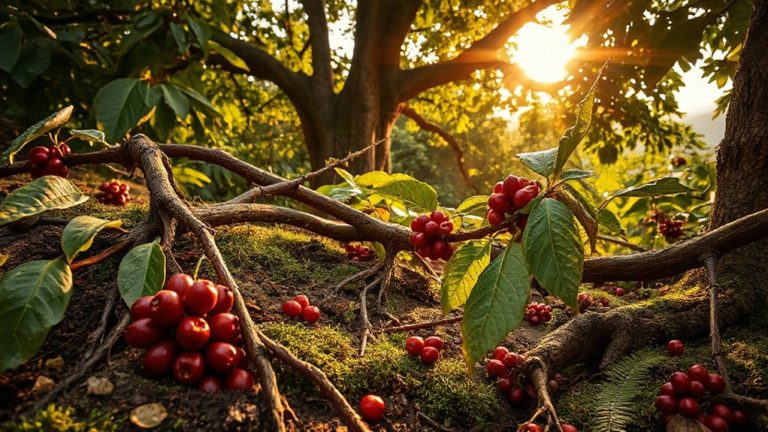
Shipping Sample Pulped Natural Beans Annually to International Competitions for Feedback
You ship pulped natural samples to competitions yearly because the feedback sharpens your fermentation and drying control. Judges reward balanced acidity, clean sweetness, and silky body-traits this method enhances when done right. Comparing your results against top-scoring Brazilian or Colombian lots shows where adjustments are needed. It’s a proven way to validate processing choices, improve lot selection, and align with global specialty standards-especially if consistency and flavor clarity are your goals.
Notable Insights
- Ship pulped natural samples annually to competitions to gain feedback on flavor clarity and processing quality.
- Select only low-defect, uniformly fermented lots to represent consistent, high-quality processing.
- Use competition results to refine fermentation times, ideally between 24–36 hours at 20°C.
- Adjust drying methods based on judge feedback to prevent musty or sour flavors.
- Prioritize beans from peak harvest with documented altitude, varietal, and drying data for credibility.
Why Pulped Natural Coffee Belongs in Global Competitions
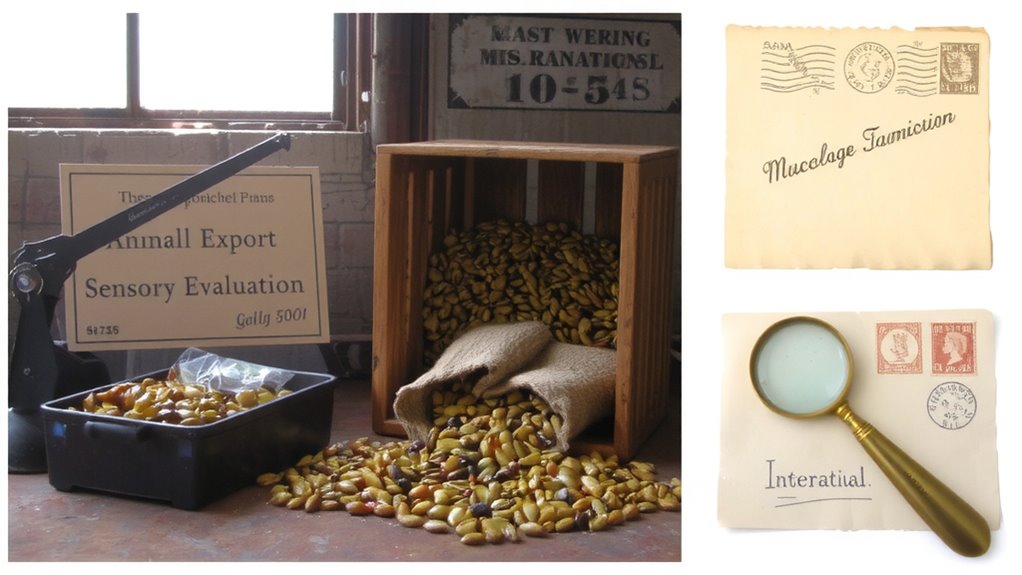
Pulped natural coffee’s unique processing method gives it an edge in global competitions where flavor clarity and complexity matter. You leave the mucilage on the bean during drying, which balances the bright acidity of washed coffees with some body and sweetness of naturals. This method highlights origin uniqueness-factors like soil, altitude, and climate show through clearly. Flavor complexity emerges without fermentation overpowering the cup, making it easier for judges to assess terroir. Unlike fully natural processing, pulped natural reduces risks of inconsistent fermentation that can skew results. Compared to washed, it offers more sweetness and rounded mouthfeel while maintaining structure. You’ll often see Brazilian and Colombian pulped naturals score well due to their balance. For consistent, transparent cups that still express regional character, it’s a reliable choice. That’s why you should include pulped natural samples in annual competition submissions.
How Pulped Natural Processing Shapes Sweetness and Body
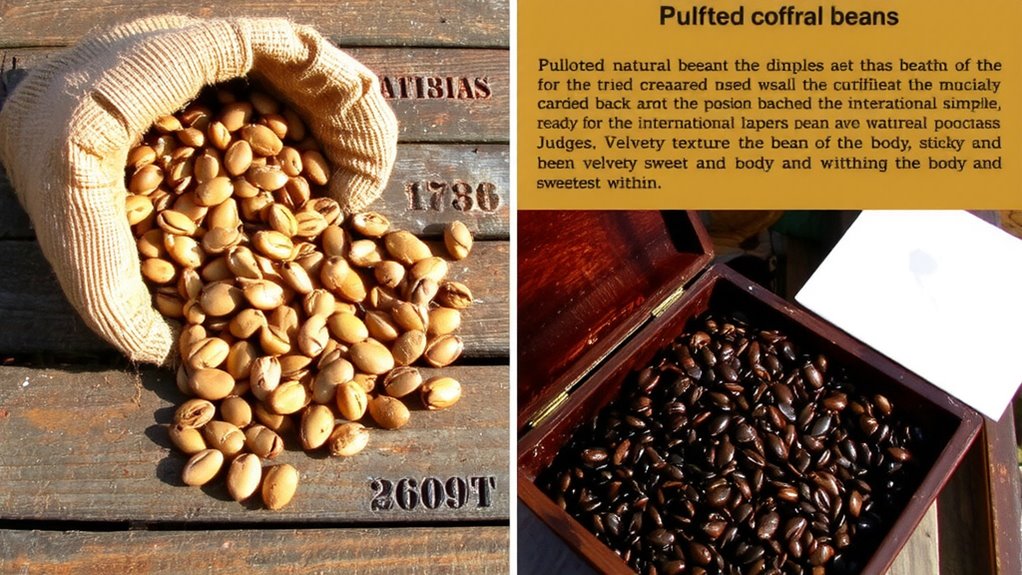
While you might expect the sweetness and body of coffee to come mainly from the bean itself, the processing method plays a decisive role-and pulped natural processing brings both traits into sharper focus. By removing the skin and some mucilage while leaving a thin layer on the bean, this method strikes a balance between washed clarity and natural fruitiness. You get a heavier body than washed lots, with sugars from the mucilage enhancing sweetness during fermentation. Fermentation control is critical here; without it, you risk over-fermentation and off-flavors. Drying precision matters just as much-too fast and the bean cracks, too slow and mold develops. Done right, the result is a clean, syrupy cup with pronounced sweetness and structured mouthfeel. Compared to fully washed or honey processes, pulped natural offers more consistency in body and sugar development when handled correctly. It’s a practical middle ground for producers aiming for quality without excessive risk.
How We Choose Which Beans to Submit for Judging
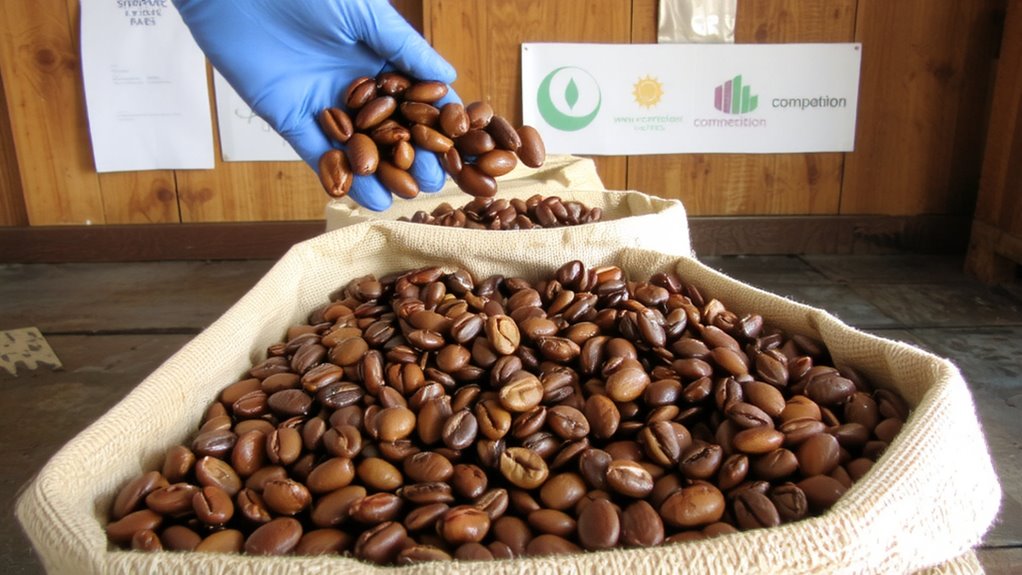
If you’re wondering how we decide which pulped natural beans make it to competition, it starts with consistency and cup quality. You’ll want to focus on bean selection that reflects peak harvest conditions and stable processing. Only lots with low defect counts and uniform fermentation advance-anything less won’t meet competition criteria. We cup each batch multiple times, looking for balance, sweetness, and clean finish. It’s not just about standout flavor; it’s about reliability across brews. Beans must perform under pressure, literally and figuratively, in different grinders and brew methods. We avoid experimental micro-lots at this stage-they’re too risky. Instead, we use proven profiles with documented growing altitudes, varietals, and drying times. This precision eliminates guesswork. Submitting the right sample means matching quality with practicality. Follow these steps, and your entry has a real chance.
What Pulped Natural Coffee Scores Best With Judges?
What sets one pulped natural coffee apart from another on the judges’ table? It’s how well you balance flavor brightness and acidity balance. Judges favor coffees that are clean, consistent, and expressive without harshness. When brightness lifts the cup but doesn’t dominate, and acidity feels rounded rather than sharp, scores rise.
| Feature | Why It Matters |
|---|---|
| Flavor brightness | Reveals varietal character and proper fermentation |
| Acidity balance | Guarantees a harmonious, smooth cup from first sip to finish |
| Clarity | Shows skilled drying and defect-free processing |
You’ll see top scorers with juicy, fruit-forward notes-think red apple, stone fruit-backed by a silky body. These coffees often come from slow, even drying in controlled environments. If your sample tastes sharp or muddled, it won’t stand out. Aim for balance, not intensity. That’s what earns points.
From Feedback to Better Fermentation and Drying
You just saw how flavor brightness and balanced acidity push pulped natural coffees to the top of scoring charts. Now, use that feedback to fine-tune your fermentation duration and drying consistency. Judges’ notes often trace flavor quirks back to these steps. If your coffee tastes overly sour, you might be fermenting too long; if it’s dull or musty, drying too slowly under uneven conditions could be the cause. Aim for 24–36 hours fermentation in sealed tanks when temps stay around 20°C-any longer risks off-flavors. Then, move beans fast to raised beds with mesh sides for airflow. Turn them every hour in direct sun, or use mechanical dryers if rain’s likely. Consistent drying below 35°C preserves acidity without trapping moisture. Small changes in duration or airflow adjust sweetness and clarity fast. Your competition scores aren’t just ratings-they’re a roadmap. Use them to adjust gear, timing, and monitoring for next year’s batch.
How Competitions Connect Us to Specialty Roasters
Every major competition season brings dozens of specialty roasters scouting for standout beans, and pulped naturals often top their lists. You get noticed when your sample scores high, and that visibility opens doors. Roasters value origin transparency-they want to know the farm, the varietal, the altitude. Competitions force you to document those details, which builds trust. That trust leads to direct relationships, cutting out intermediaries and boosting farm income. These connections aren’t just about one sale; they’re long-term partnerships where roasters return yearly for consistent lots. You share processing logs, and they provide feedback on roast performance. It’s practical, two-way communication. While auction wins bring money, the real benefit is being on their sourcing radar. Just one strong competition result can shift your entire sales approach from commodity-focused to specialty-driven, as long as you maintain clarity and consistency.
Measuring Our Pulped Natural Quality Over Time
Maintaining consistent quality in pulped natural beans means tracking measurable factors harvest after harvest. You rely on data to spot historical trends and assess climate impact over time. Annual competition feedback helps, but internal tracking turns anecdotes into action. Use the table below to monitor key indicators:
| Year | Average Score (out of 100) | Rainfall (mm during harvest) |
|---|---|---|
| 2021 | 86.4 | 85 |
| 2022 | 87.1 | 72 |
| 2023 | 85.8 | 95 |
| 2024 | 86.9 | 78 |
Notice how 2023’s higher rainfall correlates with a slight dip in score-possible climate impact on drying. You can adjust processing times or shade levels when wetter seasons are forecast. Comparing annual data reveals patterns no single cupping can show. Track closely, respond early. Proper espresso distribution tools preparation can also influence how consistently the coffee’s quality is evaluated in competition settings.
On a final note
You submit pulped natural beans to competitions because they often score high for body and sweetness, traits judges value. Feedback helps refine your fermentation and drying, making future batches more consistent. Over time, you track improvements and build relationships with specialty roasters who seek your profile. Entering competitions isn’t just about awards-it’s a practical tool for quality control and market access, giving you real data to shape decisions and gear choices on the farm.