Cold Brew With Medium-Dark Roast: Balancing Chocolate Notes and Smoothness
Use a medium-dark roast for cold brew to get smooth chocolate and nutty flavors without sourness or bitterness. Beans from Brazil or Guatemala work well and keep the taste rich but balanced. Grind them coarse, like sea salt, and steep 12–16 hours in cold, filtered water. A 1:8 ratio makes a strong concentrate-dilute to taste. This method avoids harshness and gives consistent, drinkable results every time, especially with a burr grinder and scale. There’s more to fine-tuning your batch just ahead.
Notable Insights
- Use a medium-dark roast to highlight chocolate and nutty notes while avoiding burnt flavors.
- Choose beans from Brazil or Guatemala for natural sweetness and full body in cold brew.
- Grind coffee coarsely to prevent over-extraction and ensure a smooth, clean concentrate.
- Steep for 12–16 hours in cold, filtered water to balance richness and smoothness.
- Use a 1:8 coffee-to-water ratio by weight for a strong concentrate that dilutes smoothly.
Why Medium-Dark Roast Makes Better Cold Brew
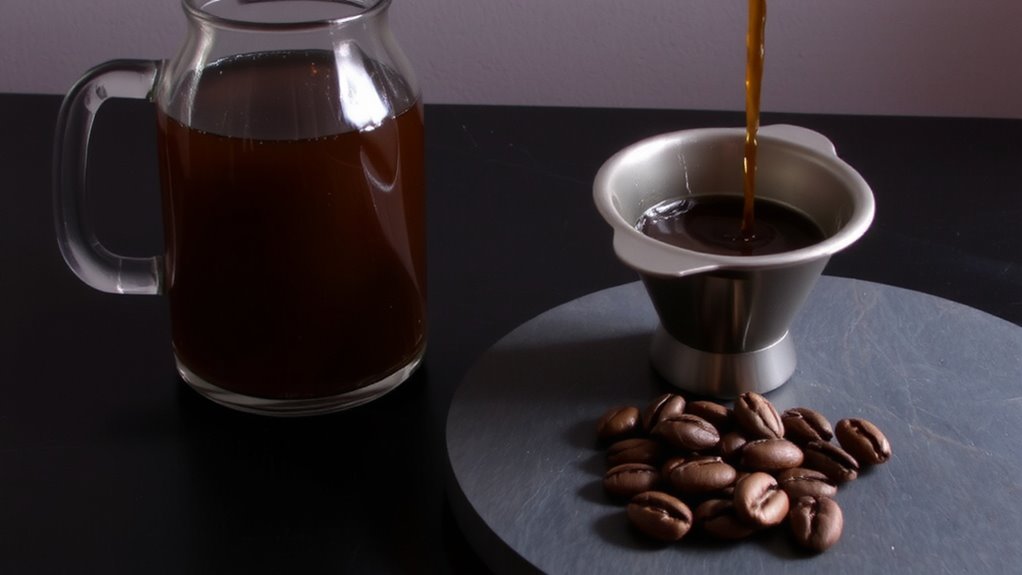
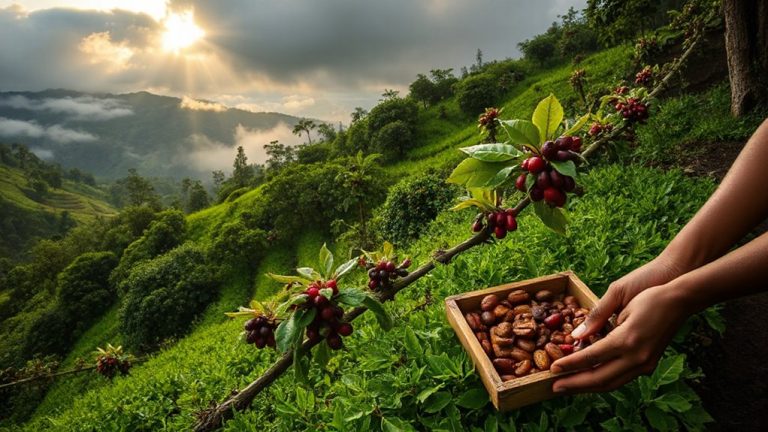
A balanced cup starts with the right roast, and when it comes to cold brew, medium-dark roast often hits the sweet spot. You get deep chocolate and nutty notes without the harshness of a full dark roast. The key lies in origin selection-beans from Brazil or Guatemala tend to offer the sugars and body that shine in slow-steeped brews. These beans respond well to longer extraction, pulling out smooth, rounded flavors. Roast consistency matters just as much; uneven roasting creates off-notes or muddled profiles. Look for roasters who batch-track and use drum roasters for even heat. Pre-ground might save time, but whole beans ground just before steeping preserve clarity. Use a burr grinder on a coarse setting to avoid silt. With the right balance of origin selection and roast consistency, your cold brew stays rich, clean, and repeatable every time. For those seeking optimal results, choosing the best coffee for cold brew can make a significant difference in flavor and overall quality.
How Roast Level Reduces Bitterness and Acid
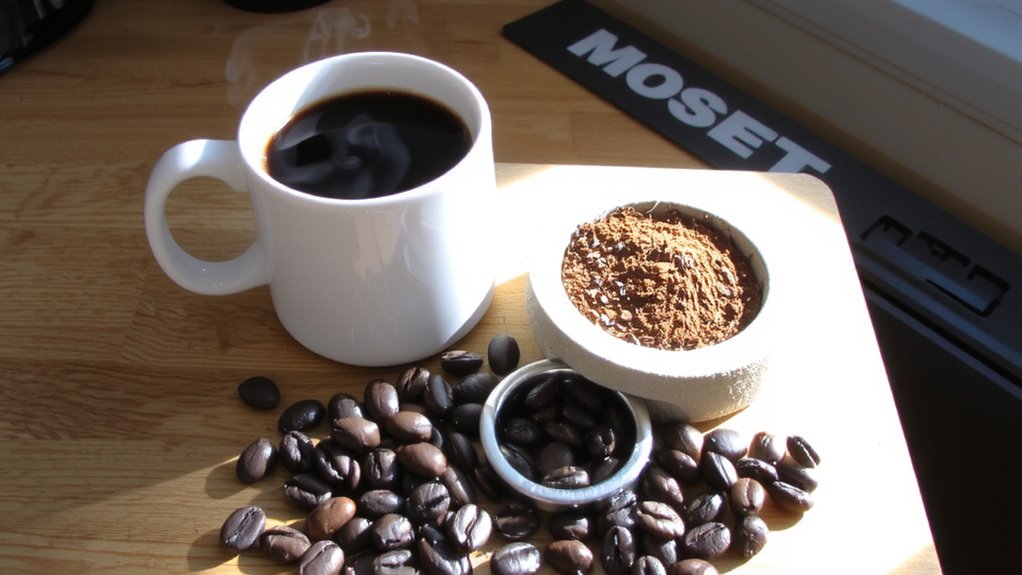
While light roasts tend to highlight bright, fruity acids that can turn sharp in cold brew, medium-dark roasts reduce those harsh notes by breaking down more of the bean’s natural acids during roasting. You’ll notice less sourness and a smoother cup, which works well for long steeping times. The longer roasting also tempers bitterness by caramelizing sugars, so you get balanced flavor without added sweetness. Your choice of bean origin still matters-beans from Brazil or Colombia often respond well to this roast profile, offering nutty or chocolate-leaning notes without acidity overpowering the brew. Even with a consistent roast profile, results can shift slightly depending on grind size and brew time. A coarse grind and 12–16 hour steep help preserve smoothness. Don’t assume darker is better-over-roasted beans can bring burnt flavors. Stick to reputable roasters who align bean origin with an intentional roast profile for cold brew. For ease and consistency, consider using one of the best at-home cold brew makers.
Pick Beans With Chocolate and Caramel Flavor
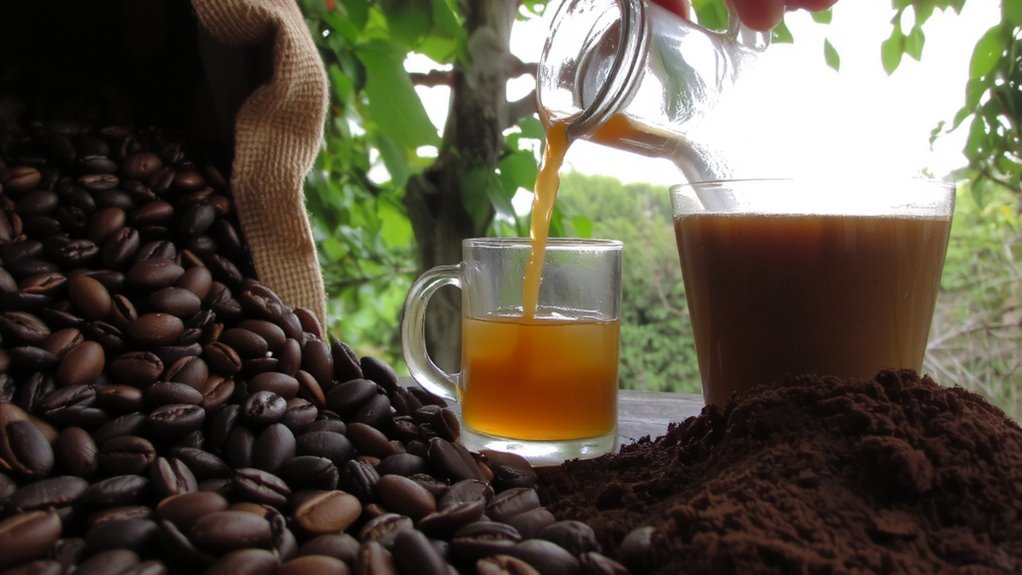
Chocolate and caramel notes in your cold brew aren’t just pleasant surprises-they’re the result of smart bean selection. You’ll want to focus on bean origin, as regions like Brazil, Guatemala, and Sumatra often produce beans with natural sweetness and deep cocoa or toffee-like qualities. Beans from these areas are typically processed in a way that enhances body and favors chocolate and caramel flavor profiles. When shopping, check the flavor profiling listed on the packaging-look for terms like “dark chocolate,” “brown sugar,” or “molasses.” Avoid beans labeled with bright, fruity, or floral notes if you’re aiming for richness. Arabica beans with a medium-dark roast work best, preserving complexity without overshadowing the base flavors. Always opt for freshly roasted whole beans and buy from roasters who provide origin details and tasting notes. This way, you’re not guessing-you’re choosing. For trusted sources, explore recommendations from a best coffee beans guide to identify top-rated options by region.
Get the Grind and Water Ratio Right
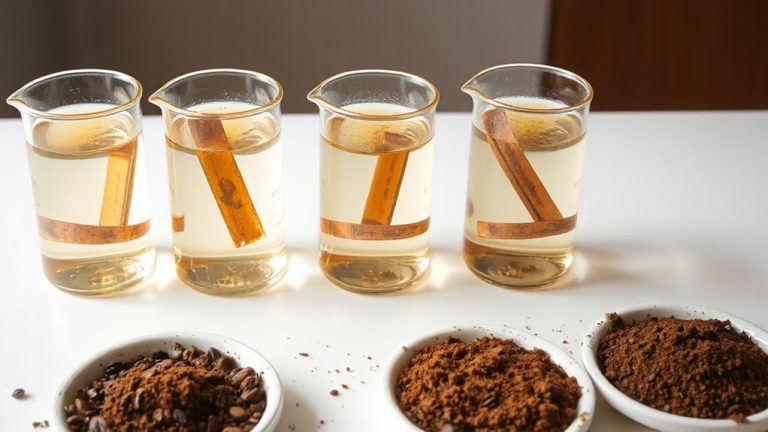
Getting your grind size and water ratio right is one of the most critical steps in making smooth, balanced cold brew. Use a coarse grind to prevent over-extraction and sludge-think the size of rough sand. A burr grinder guarantees even grind consistency, which is key; blade grinders often create uneven particles that can make your brew bitter or weak. Stick to a 1:8 coffee-to-water ratio by weight for a concentrate, or adjust to 1:10 for a smoother, ready-to-drink version. Cold brew doesn’t rely on water temperature-use cold, filtered water to avoid pulling harsh flavors. Room-temperature water works too, but it can extract slightly faster. Precision matters: measure with a digital scale, not scoops. This method gives control, repeatability, and better flavor balance-especially with medium-dark roasts rich in chocolate and caramel.
Steep for 12–16 Hours for Smooth Extraction
A 12- to 16-hour steep is your sweet spot for extracting the rich, low-acid flavors that define a quality cold brew-any less and you’ll miss the depth, any more and you risk bitterness, especially with medium-dark roasts. You control this through steep duration and water temperature. Use room-temperature or cold filtered water; both work, but colder water slows extraction slightly, helping avoid over-steeping. Room temp may extract faster, so stick to 12 hours as a baseline. A fridge-safe container like a mason jar or a dedicated cold brew maker works well. Don’t let it sit longer than 16 hours-this can pull out harsh compounds, even if it’s chilled. Consistent steep duration matters more than minor temperature shifts, so set a timer. Avoid warm environments, as higher water temperature unintentionally speeds extraction. Stick to the 12–16 hour window, and you’ll get smooth, balanced results every time.
Taste the Roast: What Good Cold Brew Should Be
Now that you’ve nailed the steep time, it’s time to evaluate what ends up in your cup. Good cold brew from a medium-dark roast should be smooth, with low acidity and subtle chocolate or nutty notes. Your brewing temperature matters-cold brew relies on time, not heat, so keeping the water cold (around 35–40°F) prevents over-extraction and bitterness. This slow, cool process highlights the origin profile, letting terroir and bean quality come through without harshness. Beans from Latin America often bring cocoa and caramel tones, while African origins can add gentle fruitiness. A decent grind size-consistent and coarse-ensures even extraction. Avoid fine grinds; they increase grit and bitterness. Your brew should taste balanced: rich but not sharp, deep but not ashy. If it’s thin or sour, check grind size and soak time. If it’s muddy, your filter setup might need upgrading.
Fix Bitter or Weak Medium-Dark Roast Cold Brew
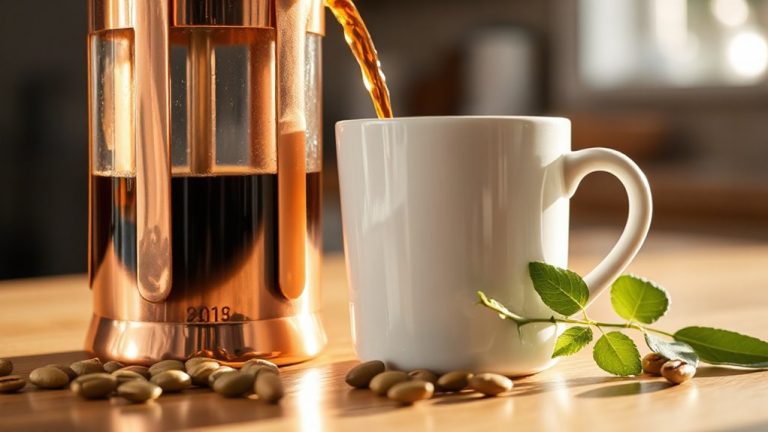
If your cold brew tastes bitter, it’s usually because the coffee was over-extracted, and that often points to a grind that’s too fine or a steep time that went too long. Try coarsening your grind and limiting steep time to 12–16 hours. For weak cold brew, under-extraction is likely the issue-your grind may be too coarse or the coffee-to-water ratio too low. Adjust to 1:4 or 1:5 (coffee to cold, filtered water) for better strength. Water temperature matters: always use cold or room-temperature water. Warm water speeds extraction and increases bitterness, especially with a medium-dark roast. Your brewing method also affects flavor. A French press can stir grounds too much, while a slow-drip tower controls water flow better. A sealed mason jar or specialized cold brew maker reduces oxygen exposure, preserving smoothness. Small tweaks to grind, time, and setup make a big difference.
On a final note
You’ll get smooth, balanced cold brew by choosing a medium-dark roast with chocolate or caramel notes. Use coarsely ground beans, stick to a 1:4 coffee-to-water ratio, and steep for 12–16 hours. This reduces bitterness and acid while pulling out rich flavor. If it’s too weak, adjust grind size or steep time; if too bitter, shorten the steep. A French press or mason jar works fine-no special gear needed.