The Origins of Coffee Cultivation in Ethiopia’s Kaffa Region
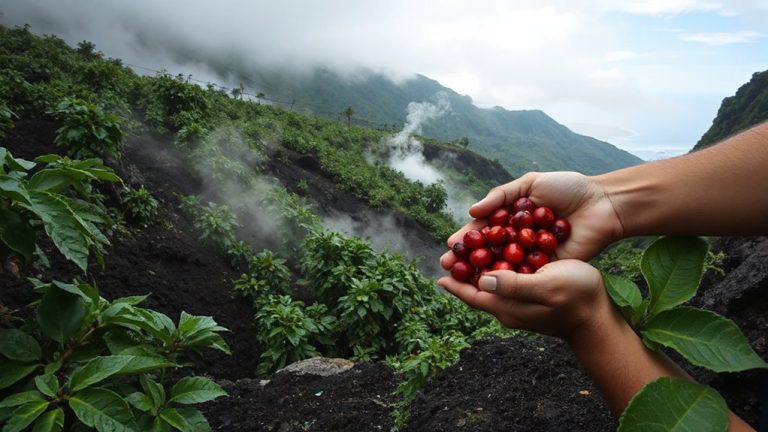
You’ll find coffee’s origins in Ethiopia’s Kaffa region, where wild Arabica grows under forest canopies at 1,500–2,200 meters. The highland climate, volcanic soil, and shade promote dense, flavorful beans. Local farmers hand-harvest cherries sustainably, preserving biodiversity. This region’s natural conditions and genetic diversity make it essential for coffee resilience. Legends like Kaldi highlight early human experimentation. You’ll discover how tradition and environment shape every cup.
Notable Insights
- Coffee cultivation originated in Ethiopia’s Kaffa region, where wild Arabica grows naturally in forested highlands.
- The tropical highland climate and volcanic soils in Kaffa create ideal conditions for high-quality coffee growth.
- According to legend, a goat herder named Kaldi discovered coffee after observing energized goats in Kaffa.
- Wild coffee forests in Kaffa are genetically diverse and serve as a key source for Arabica coffee.
- Traditional hand-harvesting and forest-based cultivation preserve biodiversity and flavor in Kaffa’s coffee heritage.
Why Kaffa’s Climate Grows the World’s Best Coffee
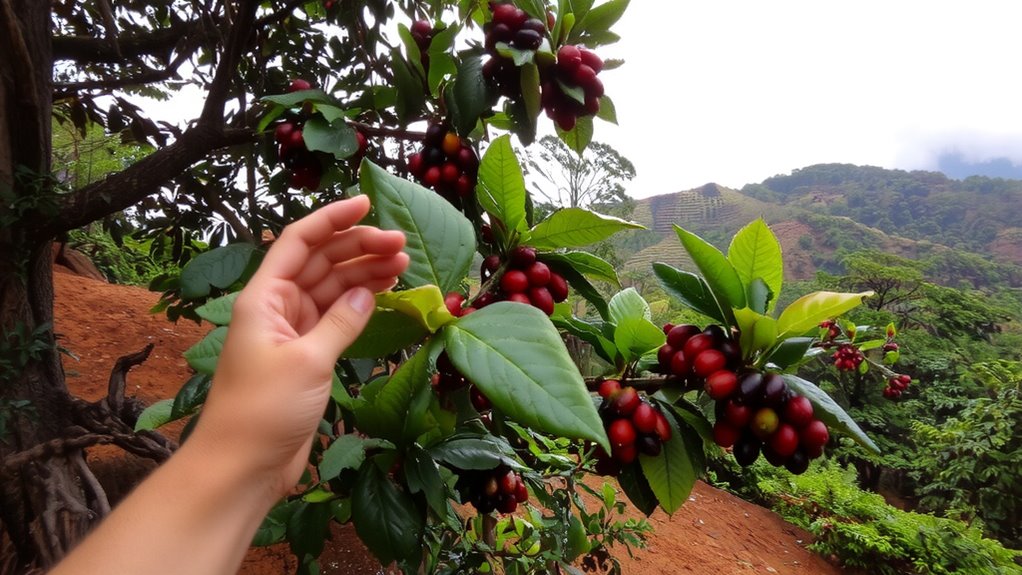
While higher altitudes and steady rainfall play key roles, it’s the combination of Kaffa’s tropical highland climate and rich, well-drained soils that gives Ethiopian coffee its standout quality. You’ll find the soil composition here is packed with volcanic minerals and organic matter, promoting strong root systems and balanced nutrient uptake. These well-drained loamy soils prevent waterlogging, which can harm yield and bean integrity. The elevation benefits are just as critical-growing between 1,500 and 2,200 meters slows bean development, increasing density and complexity. Denser beans often produce brighter acidity and cleaner cup profiles when roasted correctly. If you’re sourcing beans, look for those labeled with specific elevation ranges and soil types. They’ll likely deliver more consistent flavor, especially in light to medium roasts. For brewing, use a cone-shaped pour-over like a V60 to highlight clarity.
Wild Arabica in Ethiopia’s Forests
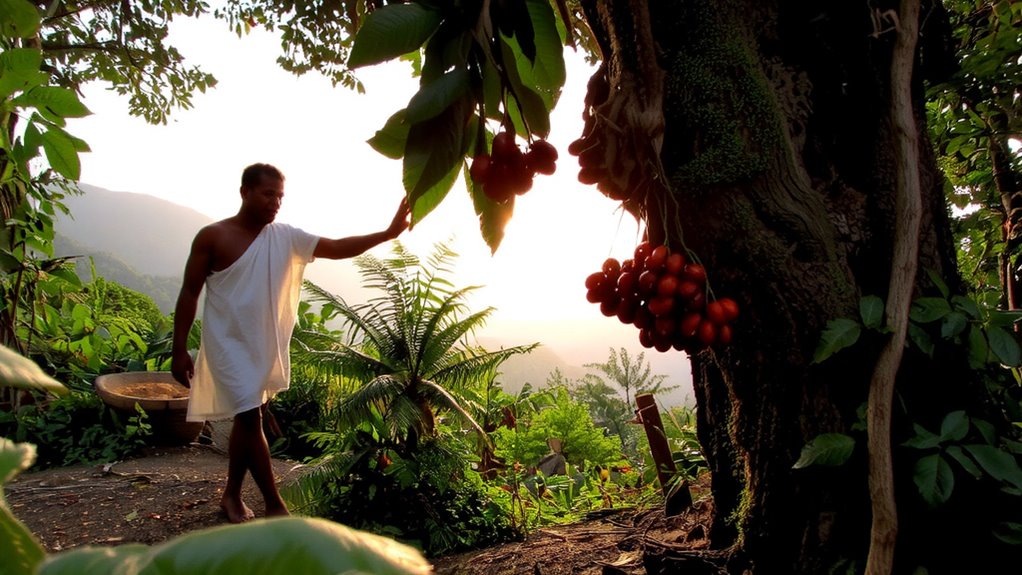
How did the coffee on your morning tray get its start? It began in Ethiopia’s forests, where wild Arabica grows naturally under the canopy. You’re sipping on centuries of forest biodiversity and indigenous knowledge. Farmers don’t plant every tree-many grow wild, sustained by natural cycles. This isn’t your typical farm setup; it’s an agroforest where coffee thrives alongside native plants. That diversity helps resist pests and supports bean quality. Local communities manage these forests using practices passed down for generations, blending observation, timing, and terrain use. Their indigenous knowledge guarantees sustainable harvests without chemical inputs. Below are key traits of wild Arabica ecosystems:
| Feature | Wild Forest Coffee | Cultivated Farm |
|---|---|---|
| Biodiversity | High | Low to moderate |
| Shade Cover | Full (natural) | Partial |
| Harvest Method | Hand-picked | Mixed |
| Yield Stability | Variable | Consistent |
| Flavor Complexity | High | Moderate |
Kaldi’s Legend: Birth of Coffee Culture in Kaffa
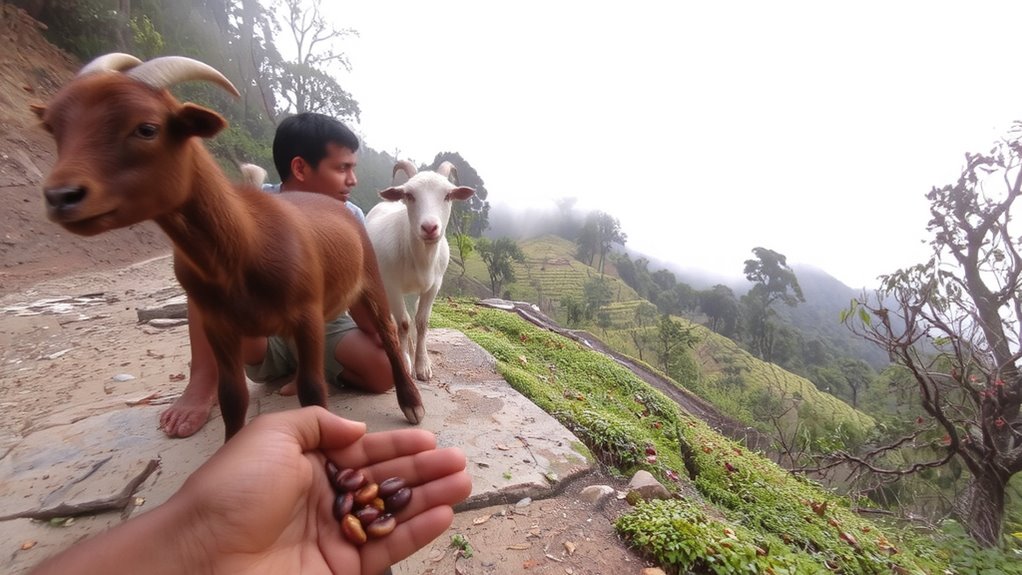
You’ve seen how wild Arabica thrives in Ethiopia’s forests, shaped by biodiversity and traditional stewardship. Now picture a goat herder named Kaldi, tending his flock in Kaffa’s highlands around the 9th century. He notices his goats unusually energetic after eating red berries from a certain bush-your classic mystical discovery moment. Curious, Kaldi tries the berries himself and feels a similar alertness. He takes some to a local monk, who at first dismisses them but later roasts and brews them, finding the aroma and effect beneficial for long prayer sessions. This legend marks the symbolic birth of coffee culture, not just as a plant, but as a consumed beverage. While unverified, the story underscores how observation and experimentation led to coffee’s use. From Kaldi’s hills to your mug, the journey began with simple trial and practical benefits, not ritual or commerce.
How Kaffa Farmers Harvest Wild Coffee
What does it take to harvest coffee from the wild forests of Kaffa? You’ll need patience, local knowledge, and a knack for forest foraging. Farmers walk for miles through dense woodland, scanning for ripe red cherries tucked among the foliage. They rely on traditional tools-handheld wooden rakes and woven baskets-carefully plucking beans by hand to avoid damaging the plants. No machinery’s used; it’s all done gently to preserve the ecosystem. Harvesting’s selective: only the ripest cherries are taken, which improves quality but takes more time. You’ll see families working together, moving from tree to tree, filling their sacks slowly. It’s labor-intensive, but these methods protect plant health and bean integrity. Forest foraging keeps biodiversity intact while yielding heirloom varieties prized for their flavor complexity. You won’t find uniformity here-just pure, wild-grown coffee rooted in centuries of practice.
Protecting Coffee’s Genetic Heart in Kaffa
While the wild coffee forests of Kaffa have thrived for centuries without intervention, they now face real threats from deforestation, climate shifts, and farming expansion-so protecting this genetic heartland isn’t just symbolic, it’s essential. You rely on this region’s genetic diversity every time you brew a cup, as it holds traits critical for disease resistance and climate adaptability. Conservation efforts like the Kaffa Biosphere Reserve help, but they need sustained support and local involvement to work. You can back these efforts by choosing brands that source transparently from Ethiopian forests or contribute to agroforestry programs. It’s not just about preserving tradition-it’s about securing future coffee resilience. Without action, you risk losing irreplaceable plant varieties that could adapt to changing growing conditions worldwide. Protecting Kaffa isn’t optional; it’s a practical step to guarantee coffee survives.
From Ethiopian Ceremony to Global Ritual
Coffee didn’t become a global staple just because of its bold flavor or kick-it traveled from forest to cup through ritual. You experience this every time you brew a pot, though you might not realize it. The Ethiopian coffee ceremony, with its roasted beans, boiling jebena, and incense, laid the foundation for how people engage with coffee today. This tradition didn’t stay in Kaffa. Through the coffee trade, it spread to Yemen, then across continents, adapting as it went. Each region added practical changes-French presses for full body, pour-overs for clarity, espresso machines for speed-based on local needs. What you’re partaking in now is a form of cultural exchange, linking you to centuries of social practice. Whether using a traditional jebena or a modern drip brewer, you’re continuing a ritual shaped by history, not just habit. The tools change, but the ritual endures.
On a final note
You’re holding a cup that started in Ethiopia’s Kaffa forests, where wild Arabica grows naturally. Its rich genetics help shape the flavors you taste. To brew it well, use fresh beans, clean water, and a reliable grinder-like a Hario V60 or French press for clarity or body. Store beans airtight, away from light. This simple care honors coffee’s origin while ensuring better flavor in every brew.