Vietnamese Egg Coffee: the Sweet, Rich Drink Born From French Colonial Influence
You’re sipping a creamy, sweet coffee born in 1940s Hanoi when milk was scarce. French colonial tastes met local ingenuity, creating a drink using whipped egg yolk and sweetened condensed milk layered over strong Vietnamese coffee brewed through a phin filter. The foam’s richness comes from egg’s natural emulsifiers, stabilized by sugar’s preservative effect. It’s safe with fresh, pasteurized eggs and best served warm. Try the original at Café Giảng-your next step reveals how to make it right.
Notable Insights
- Vietnamese egg coffee originated in 1940s Hanoi during milk shortages, blending French colonial influence with local ingenuity.
- It combines whipped egg yolk and sweetened condensed milk to create a rich, creamy foam over strong dark coffee.
- The drink’s safety relies on fresh eggs and the bacteria-inhibiting properties of high sugar content in condensed milk.
- Traditionally brewed with a metal phin filter, it’s hand-whisked and served warm at iconic cafés like Café Giảng.
- Modern versions include cold brew, vegan substitutes, and flavored foams, but the original remains a warm, sweet, velvety delight.
What Is Vietnamese Egg Coffee: And Why It’s Unique
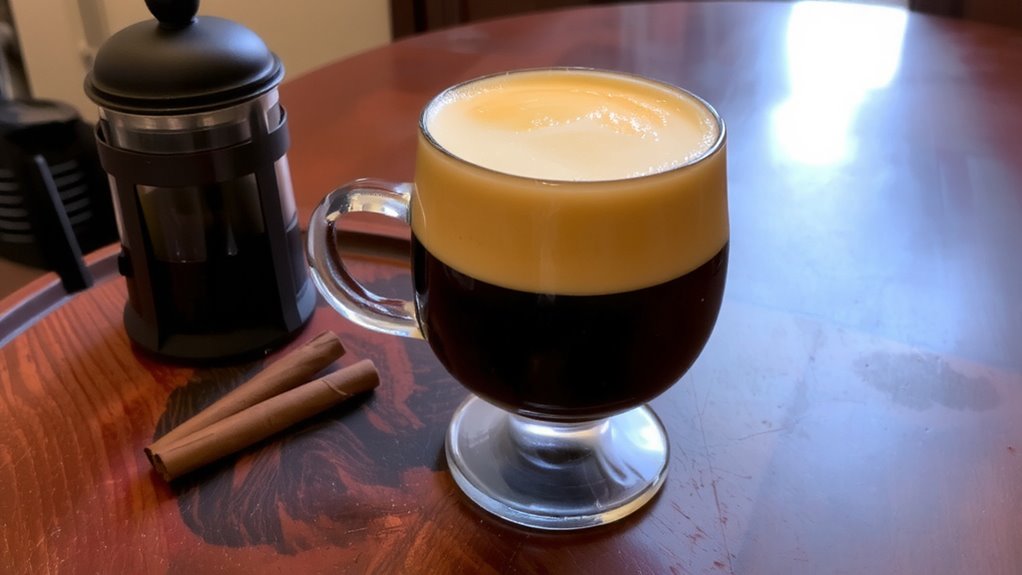
Think of it as a creamy, rich twist on coffee that swaps milk and sugar for something unexpected: egg. You whip the yolk with sweetened condensed milk until fluffy, then layer it over strong Vietnamese coffee-often brewed with a phin filter for full, controlled extraction. The result? A silky, custard-like topping that blends smoothly with the bold brew. It’s a striking example of cultural fusion, merging French café traditions with local ingredients. This drink also reflects Vietnam’s colonial legacy, where limited access to fresh milk led to creative substitutes. While modern versions stay true to the original, some cafes experiment with condensed milk alternatives or add cream for extra richness. If you’re trying it at home, use fresh eggs and a fine grind. A phin filter is ideal, but a drip brewer works in a pinch-just expect less control over strength and saturation.
Why Vietnamese Egg Coffee Was Invented in the 1940s
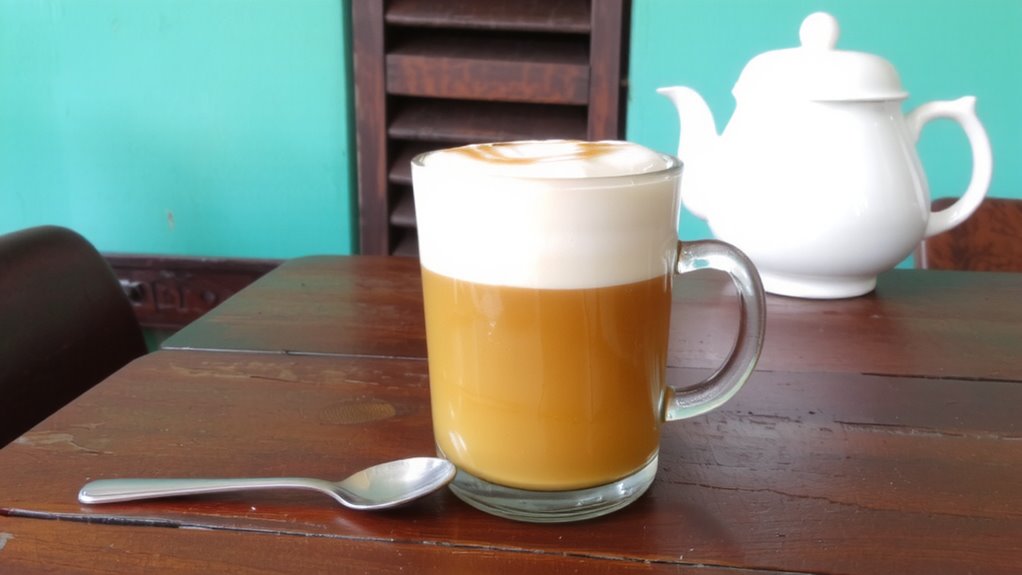
A shortage of fresh milk during the 1940s in Vietnam led to the creation of egg coffee as a practical alternative. You couldn’t rely on dairy due to the milk shortage brought on by wartime conditions, so locals found a workaround using ingredients they had-eggs and sugar. Beaten with sweetened condensed milk, egg yolks created a rich, creamy foam that mimicked dairy’s texture when layered over strong coffee. This was wartime creativity in action: resourceful, efficient, and built for scarcity. The drink didn’t require special gear-just a whisk, a cup, and hot coffee, typically brewed using a metal phin filter. Though born from necessity, it became a staple for its unique texture and flavor. You can still see how constraints shaped innovation-this solution was low-cost, shelf-stable (thanks to condensed milk), and easy to scale. It’s a lesson in practical substitution when traditional ingredients aren’t available.
Why the Egg Foam Is So Creamy (And Safe to Eat)
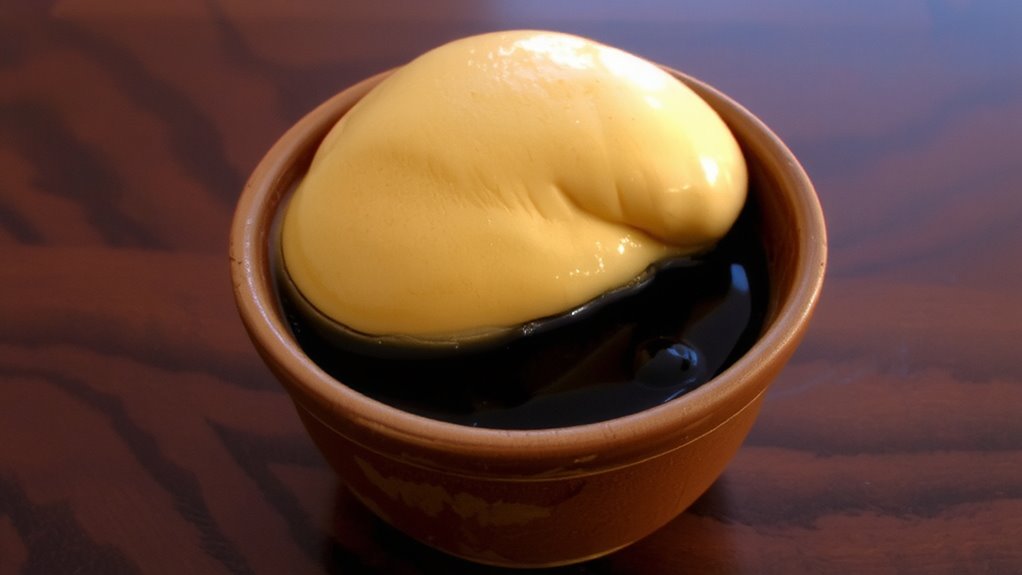
The creamy texture of the egg foam in Vietnamese egg coffee comes from the emulsifying power of egg yolks, which blend with sweetened condensed milk to create a rich, stable layer. When you whisk the mixture vigorously, air incorporates into it, expanding volume and enhancing the egg yolk texture, giving it a velvety, custard-like feel without cooking. The sugar in the condensed milk isn’t just for sweetness-it helps stabilize the foam. You might have raw safety concerns, but the low moisture and high sugar content of the condensed milk inhibit bacterial growth, making it safe to consume immediately. While pasteurized eggs are a safer option if you’re immunocompromised, most traditional recipes rely on fresh, high-quality eggs. For best results, use Grade A eggs stored properly and whisk until thick and pale. This foam won’t cook, but it’s safe and luxurious when prepared correctly.
Where to Try the Best Egg Coffee in Hanoi
While you’re in Hanoi, you’ll want to visit the places that helped define egg coffee rather than settle for modern imitations. Start at Café Giảng, the birthplace of this drink, where traditional Café phin filters slowly drip strong coffee into creamy, hand-beaten egg yolks. The original method uses no machines-just skill and timing in egg blending. You’ll notice the foam is richer and less sweet than versions at newer cafes. Competitors like Dinh Café offer consistency and shorter lines, but some skip authentic techniques, using whipped cream or blenders. For the truest taste, stick to spots that pour hot coffee directly into the foam, preserving texture and temperature. Each sip should balance bitterness from the phin brew with the custard-like layer on top. These small, local joints may lack seating, but they deliver accuracy in form. Bring cash and arrive early-authenticity rarely queues.
How to Make Vietnamese Egg Coffee at Home
You can make Vietnamese egg coffee at home with just a few basic tools and ingredients, though getting the texture right takes practice. Start by whipping one egg yolk with 2 tablespoons of sweetened condensed milk until thick and frothy-this step relies on basic kitchen tools like a hand mixer or whisk and a heatproof bowl. In a separate cup, pour 1/2 cup of strong hot coffee, preferably dark roast. Gently spoon the yolk mixture on top to form a creamy layer. Some prefer to warm the yolk mixture over a bain-marie while mixing, which helps stabilize it. Experiment with homemade variations, like adding a splash of vanilla or reducing sugar. Your choice of kitchen tools affects results: a whisk takes longer but works, while a hand mixer saves time. The drink is best served warm and consumed immediately. Practice improves consistency.
Modern Takes on Vietnamese Egg Coffee
If you’re looking to upgrade your egg coffee game, modern twists have made this classic drink more versatile without losing its rich essence. Flavor variations now include matcha, chocolate, and even salted caramel, letting you customize the sweetness and depth to your taste. Some baristas use coconut milk instead of sweetened condensed milk-this creates a dairy-free option while keeping the creaminess. Ingredient substitutions like aquafaba or plant-based yolks cater to vegans, though the mouthfeel differs slightly from the original. For best results, a hand mixer or small whisk guarantees the foam stays light and stable. Cold brew versions blend the egg foam over chilled coffee, ideal for warmer days. These updates work well in standard mugs or heatproof glasses, with no special gear needed. While traditionalists may prefer the original, these adaptations offer flexibility without sacrificing the drink’s signature richness.
Why You Should Try It in Your Coffee Routine
Though not a morning staple for everyone yet, adding Vietnamese egg coffee to your routine could be a simple way to upgrade your caffeine experience without needing expensive equipment or rare ingredients. All you need is strong coffee, egg yolk, sugar, and a whisk. The drink offers flavor innovation through its rich, custard-like top layer that balances the bitterness of dark coffee below. It’s a form of texture exploration-you get a creamy, velvety mouthfeel unlike anything in standard lattes or cold brews. You can make it at home with a hand mixer or even a jar for shaking. While it’s higher in calories than black coffee, the satisfaction per sip means you might drink less. If you enjoy DIY drinks and want variety beyond syrup pumps or milk steaming, this is a practical, low-barrier option worth testing.
On a final note
You can make Vietnamese egg coffee at home with egg yolk, sweetened condensed milk, and strong coffee. A hand mixer gives the foam the right texture faster than whipping by hand. Use a fine mesh strainer if your coffee is coarse. Drink it warm for best texture and flavor. While traditional, it’s rich-try it occasionally. Pre-mixes exist but fresh ingredients taste better. It’s safe if using fresh eggs. Try it when you want something bold and sweet.