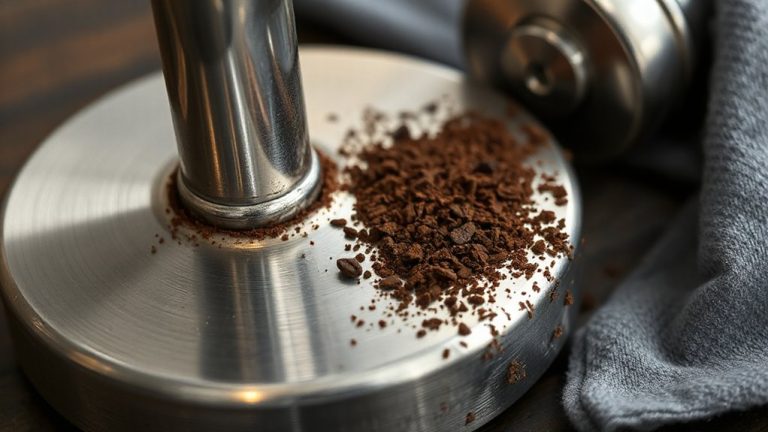
Espresso Tampers: Choosing Flat, Convex, or Calibrated for Your Portafilter
Your portafilter basket size-usually 58mm-determines which tamper fits. A flat tamper gives even pressure and works well for most, especially beginners. Convex tampers compress the edges more, helping prevent channeling, but need steady hands. Calibrated tampers, like Pullman or Espro models, guarantee consistent depth and shine in high-use setups. Pick based on your skill, how often you brew, and basket condition-your choice directly affects shot quality. The right match makes every espresso more reliable.
Notable Insights
- Match tamper diameter to portafilter basket size, typically 58mm, for proper fit and even tamping.
- Choose a flat tamper for consistent, level compression, especially with flat-bottom baskets and beginner workflows.
- Use a convex tamper to compress edges more firmly, reducing channeling in tapered or 58mm baskets.
- Opt for a calibrated tamper for precision and repeatability, ideal for daily use and advanced espresso setups.
- Select tamper material and base finish to ensure smooth release and long-term durability under repeated use.
What Your Portafilter Reveals About Choosing a Tamper
Your portafilter’s basket diameter isn’t just a number-it’s the key to picking the right tamper. If you’re using a 58mm basket, your tamper must match closely, usually 57.9mm or 58.0mm, to guarantee proper tamper alignment. Too wide, and it won’t fit; too narrow, and coffee grounds shift unevenly during tamping. Check the base finish of your chosen tamper-smooth, matte, or textured-affects how easily it releases from the puck. A polished base reduces friction, helping avoid disturbing the coffee bed. Some tampers use a laser-etched logo or slight groove, but deep engravings can trap grounds and hinder alignment. For best results, measure your basket’s inner diameter with calipers. Brands like Pullman or Eureka offer precise size guides. Matching diameter, guaranteeing flush base contact, and checking base finish boosts consistency before you even pull a shot. For reliable options, consider checking the best coffee tamper picks based on performance and build quality.
Flat Tampers: Even Pressure for Consistent Espresso
A flat tamper delivers even pressure across the coffee bed, which starts with making sure the base matches your portafilter basket size from the previous step. You need precise tamper symmetry so pressure distributes uniformly-any warp or misalignment leads to uneven tamping and poor extraction. Most quality flat tampers have a base thickness between 4–6mm, offering durability without adding excessive height. Too thin, and the base may flex; too thick, and it might not fit under group heads. Stainless steel and hardened materials hold up best. Since flat tampers press grounds straight down, they work well for level, even baskets-especially in commercial settings where consistency matters. Just keep the surface clean and flat over time. A well-fitted flat tamper simplifies your routine, reducing variables. You’ll notice better shot times and flavor stability when used correctly. It’s a reliable choice for daily use.
Convex Tampers: Directing Grounds to Prevent Channeling
Because the edges of your coffee bed are more prone to channeling, a convex tamper-with its slightly domed base-helps compress the grounds more densely at the perimeter while leaving the center slightly looser. This design encourages water to flow more evenly through the puck, improving espresso distribution. Your tamp technique matters more here: you’ll need consistent, level pressure to avoid tilting the tamper, which could unevenly compact the bed. Convex tampers work best with wider baskets, like those in 58mm portafilters, where edge sealing is critical. While they don’t guarantee perfect results, they can reduce channeling when paired with good grind prep and distribution. Unlike flat tampers, they require a bit more practice to master but offer a practical edge for those struggling with edge gaps. Not all tampers fit all baskets, so check compatibility before buying. Consider pairing your convex tamper with a tamping station for better stability and consistency during the tamping process.
Calibrated Tampers: Hit the Same Depth Every Time
Many baristas swear by calibrated tampers because they remove guesswork and lock in consistent tamp depth across sessions. These tampers use precision engineering to include adjustable bases or threaded stems that let you set an exact tamp depth. You’ll get depth consistency shot after shot, which matters most with high-end machines or competitive brewing. Brands like Pullman and Reg Barber make models where you dial in your setting once, then reuse it without recalibrating daily. While bulkier than flat or convex tampers, they take more time to adjust but deliver repeatable results. They’re ideal if your grinder and workflow are already stable, but overkill for casual use. You don’t need one unless consistency is breaking your shot quality. Still, if you’re chasing tiny improvements, a calibrated tamper gives measurable control other types can’t match. It’s about repeatability, not style.
Which Tamper Fits Your Brew Frequency and Skill Level?
Usually, your brewing habits and skill level decide which tamper makes the most sense for your setup. If you pull shots daily and want consistency, a calibrated tamper improves your brew technique by ensuring the same tamp depth each time-great for refining routine. Flat tampers work well for beginners and casual users, offering simplicity and solid contact with most baskets. They’re forgiving and keep user experience straightforward without extra complexity. Convex tampers suit baristas with experience, especially when using older or pressurized baskets that taper inward-though they’re less common now. For low-frequency brewers, a basic flat tamper is often enough. High-frequency users benefit more from calibrated models, like the Espro Calibrating or Pullman Big Foot, which reduce variability. Match the tamper to how often you brew and your control level-better tools enhance technique, but only if your user experience supports consistent habits.
Is Your Tamper Causing Bad Shots?
A tamper that doesn’t match your basket or technique can quietly wreck your shots, even if everything else seems right. If your tamper is even slightly too small, coffee grounds channel, causing weak, sour espresso. Too large, and it won’t fit, creating gaps and pressure inconsistency. Over time, tamper wear-like dents or warping-also disrupts flat contact, leading to uneven extraction. This is especially common with cheaper aluminum tampers. Stainless steel or hardened polymer bases resist wear longer. You might not notice at first, but off-center tamping or wobbling adds variability. For consistent results, match your tamper’s diameter precisely to your basket size-don’t guess. A 58.5mm basket needs a 58.5mm tamper. Calibrated tampers help, but only if they’re maintained. Check yours regularly; replacing a worn tamper often fixes issues you blamed on grind or dose.
On a final note
You’ll want a flat tamper if you’re after even, consistent pressure-most portafilters are flat, so it’s a safe bet. Convex tampers suit bottomless portafilters, helping steer grounds away from edges to reduce channeling. Calibrated tampers guarantee depth control, ideal for pros or daily use. If you pull shots daily, a calibrated or flat tamper likely makes sense. For beginners, a flat stainless steel tamper like the Pullman Evergreen offers reliability without fuss.