The Effect of Water Hardness on Machine Performance and Coffee Taste
Hard water clogs your machine’s pipes and heating elements with scale, making it work harder and wear out faster, especially in espresso or super-automatic models. It also makes coffee taste bitter and harsh by pulling too much from the grounds. Too soft, and your brew turns flat or sour. Aim for 50–150 ppm hardness with balanced minerals-using filtered tap or re-mineralized water-for better flavor and longer machine life. The right balance keeps your coffee clean and your gear running strong.
Notable Insights
- Hard water causes scale buildup in coffee machines, reducing efficiency and potentially leading to premature failure.
- Calcium and magnesium in hard water enhance extraction but can create bitterness if levels exceed 150 ppm.
- Balanced water hardness between 50–125 ppm optimizes both machine performance and coffee flavor.
- Soft or distilled water results in sour, flat coffee due to insufficient mineral content for proper extraction.
- Regular water testing and filtration help maintain ideal hardness, protecting equipment and improving taste consistency.
What Water Hardness Means for Coffee
Hard water, defined by its high mineral content-especially calcium and magnesium-can dramatically shape your coffee’s final taste. You need some minerals for proper flavor extraction, but too much throws off the mineral balance, leading to over-extraction and bitterness. Calcium boosts clarity and body, while magnesium enhances acidity, pulling out brighter notes from light roasts. But when levels exceed 150 ppm, extraction becomes uneven and harsh. Using hard water in pour-over or espresso means you’re likely getting muted sweetness and a chalky aftertaste. For better results, many baristas use filtered water with balanced mineral content-like Third Wave Water or DIY blends-to maintain control. Distilled water isn’t the answer either; it lacks minerals, leading to flat, sour coffee. You want a middle ground: around 75–125 ppm with equal parts calcium and magnesium. That’s the sweet spot for consistent, flavorful cups.
How Hard Water Damages Your Coffee Machine
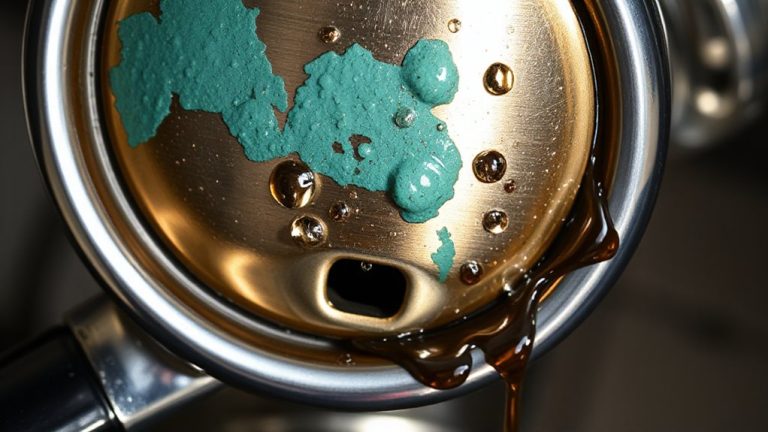
Your coffee machine’s longevity depends on the water you use, and hard water’s high mineral levels can quietly wreck its inner workings over time. As hard water heats, it leaves behind scale buildup-chalky deposits made of calcium and magnesium-that clog pipes, coat heating elements, and restrict water flow. This forces your machine to work harder, increasing wear and energy use. Over time, scale buildup can lead to costly repairs or even premature failure. Worse, it can trigger mineral corrosion, especially in machines with metal components like stainless steel or brass. This corrosion weakens parts and contaminates internal systems. Machines like espresso makers or super-automatics are especially vulnerable due to their complex plumbing and high operating temperatures. Using filtered or softened water reduces these risks and maintains performance. Regular descaling with a proper solution helps, but prevention is more effective and cheaper than fixing damage later.
How Water Hardness Changes Coffee Flavor
Minerals in your water don’t just affect the machine-they shape the taste in your cup. Your coffee’s flavor extraction depends heavily on mineral balance. Too many minerals, like in hard water, can over-extract bitter compounds. Too few, as in soft water, lead to flat, sour coffee. The right balance pulls out sweetness and complexity without harshness.
| Water Type | Your Coffee’s Taste |
|---|---|
| Too Hard | Bitter, sharp, unpleasant |
| Balanced | Rich, balanced, flavorful |
| Too Soft | Sour, thin, lifeless |
You need just enough calcium and magnesium to aid flavor extraction, but not so much that they clog machines or distort taste. Using filtered water with controlled mineral content gives you consistent results and protects your gear. It’s a small step that makes a real difference in every shot.
The Best Water Hardness for Great Coffee
While you might think any clean water will do, the hardness level actually plays a key role in brewing great coffee. You need a balanced mineral content-too soft, and your coffee tastes flat; too hard, and it becomes bitter or dull. The best water for coffee has moderate hardness, around 50–100 ppm, with a stable mineral balance. This range supports proper extraction and protects your machine from scale. Water purity matters, but not at the cost of stripping out all minerals-distilled or fully deionized water won’t extract flavors well. Instead, use filtered tap water or specialty coffee water blends like Third Wave Water’s mineral packets. These give you control over mineral content without clogging your espresso machine. Aim for consistency: stable water quality means repeatable shots. Your brew temperature and grind size matter, but none of it works right if your water’s off. Get the balance right, and your coffee will taste cleaner, brighter, and more flavorful.
How to Test Your Water Hardness at Home
If you’re serious about brewing better coffee, checking your water hardness doesn’t have to be complicated. You can quickly test your water using affordable testing kits, available online or at hardware stores. These kits usually include strips that change color based on mineral content-just dip one in your water, wait a few seconds, and compare it to the included chart. It’s a simple way to check common water sources like tap, bottled, or filtered water. Some kits measure general hardness (GH), while others also test for alkalinity, both of which affect coffee extraction. Digital testers offer more precision but cost more. For most home brewers, strips give enough detail. Testing regularly helps you understand your water’s consistency, especially if your supply changes seasonally. Knowing your numbers puts you in control-no guesswork, just better, more predictable flavor.
How to Fix Your Water for Better Coffee
What if your tap water is making your coffee taste flat or bitter? You’re not stuck with it. Start by improving your water filtration-basic pitcher filters help but often remove too many minerals. For better results, try third-party systems like Peak Water or BWT filters, which target scale prevention while maintaining mineral balance. If you want precise control, mix distilled water with mineral concentrate (such as Third Wave Water) to hit ideal levels: 50–150 ppm total hardness and 40–70 ppm bicarbonates. This balance protects your machine and improves extraction. Avoid softeners that swap calcium for sodium-it ruins taste. For frequent brewing, consider a dedicated reverse osmosis unit paired with re-mineralization. Proper filtration isn’t just about cleaner water; it’s about crafting the right mineral balance for consistent, flavorful coffee every time.
On a final note
You now know hard water can harm your machine and alter coffee taste. Too much mineral buildup clogs parts, shortening machine life. Soft water may make coffee taste flat, while very hard water causes scale and bitterness. Aim for balanced water-around 3–5 grains per gallon (50–85 ppm). Test with a simple home kit. Use filtered or bottled water if needed. A Brita pitcher helps, but for best results, consider a reverse osmosis system with re-mineralization.