Exploring How Different Roast Levels Respond to Various Grinding Techniques
Light roasts are dense, so you’ll need a finer grind to extract bright, fruity notes-try a burr grinder like the Baratza Encore for consistency. Medium roasts work well with a balanced, salt-sized grind across most brewers. Dark roasts are softer and oily, requiring a coarser grind to avoid bitterness, especially in French press. Blade grinders struggle with even results, especially on hard light roasts. The right match of roast and grind changes how flavors come through.
Notable Insights
- Dark roast beans are less dense and oily, requiring a coarser grind to prevent over-extraction and clogging.
- Light roasts are denser and harder, needing finer grinds to achieve proper extraction and highlight bright flavors.
- Medium roasts perform best with a medium grind, balancing acidity and sweetness across multiple brewing methods.
- Burr grinders provide consistent particle size, essential for handling the density and oil variations across roast levels.
- Blade grinders create uneven particles, leading to under- and over-extraction, especially problematic with dense light roasts.
How Roast Level Affects Grind Size
You’ve probably noticed that light and dark roast beans behave differently when ground, and that’s no accident. Roast density plays a big role-darker roasts are less dense because heat breaks down their structure over time. That means they grind more easily and can become uneven or over-extracted if your grinder isn’t consistent. Light roasts, on the other hand, keep higher bean hardness due to shorter roasting. They’re denser and tougher, requiring more force and finer adjustments on your grinder. If you use a blade grinder, you’ll struggle with both, but especially with light roasts. A burr grinder gives better control. For dark roasts, watch for fines buildup-those tiny particles can muddy your cup. Adjust grind size slightly coarser to compensate. Knowing how roast density and bean hardness affect grinding helps you tweak settings for cleaner, more balanced results-no guesswork needed.
Light Roasts: Finer Grind for Bright, Fruity Notes
When aiming to highlight the bright, fruity characteristics of light roast coffee, a finer grind size is essential to achieve proper extraction. Light roasts are denser and less porous than darker ones, so a zesty grind helps increase surface area for better water contact during brewing. You’ll get more clarity and acidity, especially with funky beans like Ethiopian Yirgacheffe or Kenyan AA. These beans thrive when brewed as pour-over or Aeropress, where the finer particles allow quicker, even extraction without over-squeezing bitter notes. Go too coarse, and your coffee tastes weak or sour. But don’t grind too fine-espresso territory-unless you’re pulling short shots, as it can lead to clogging or over-extraction. A burr grinder gives you consistent results, and adjusting it just a few clicks finer than medium can make a real difference. For precise control over particle size, consider using a burr grinder with stepless adjustment.
Medium Roasts: Balanced Grind for Even Extraction
Medium roast coffees strike a balance between the bright acidity of light roasts and the deeper, caramelized flavors of dark roasts, making them one of the most versatile choices for everyday brewing. You’ll want a medium grind-think the texture of table salt-for ideal extraction uniformity. This size works well across most brewers, from drip machines to pour-overs like the Hario V60 or Chemex. A consistent grind helps achieve flavor balance, pulling the best from both ends of the roast spectrum without highlighting flaws. Blade grinders can’t deliver the uniformity you need, so go for a burr grinder like the Baratza Encore or Fellow Ode. If your coffee tastes flat or sour, try a slightly finer setting; if it’s harsh or astringent, go a tad coarser. Your grind size directly affects brew time and clarity, so treat it as a key control point, not an afterthought. According to Wirecutter, the best coffee grinders deliver the consistency needed for optimal flavor in medium roasts.
Dark Roasts: Coarser Grind to Avoid Bitterness
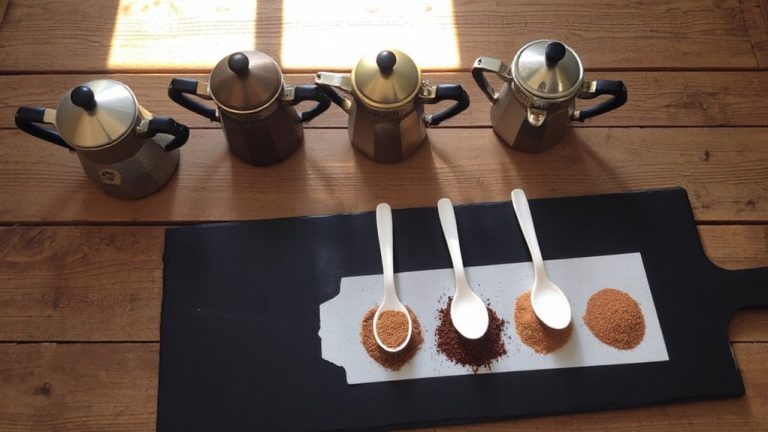
While dark roasts bring rich, bold flavors and a smooth mouthfeel thanks to extended roasting, grinding them too fine can easily lead to over-extraction and harsh bitterness. You want a coarser grind to slow water flow and protect flavor balance. Dark beans migrate more surface oil due to longer roasting-this oil affects extraction and can clog finer grinds. That’s why a burr grinder set coarser works best: it handles the slick beans evenly without clumping. Think of French press or coarse drip settings as starting points. Too fine, and you’ll pull out harsh notes no matter your brew method. A coarser setting lets the natural sweetness come through without overwhelming bitterness. Adjust slightly based on your coffee-to-water ratio and brew time, but always start coarse. It’s the most reliable way to respect the roast and manage oil migration while keeping your cup clean and balanced. For Moka pot users, choosing the right best coffee grinder can make a significant difference in achieving this optimal coarse grind and maintaining consistency.
Burr Vs. Blade Grinders By Roast Type
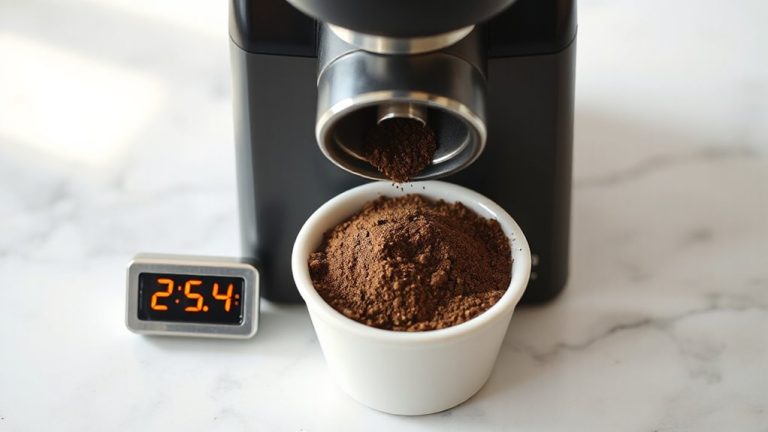
If you’re serious about matching your grinder to the roast, you’ll want to stick with a burr grinder-especially for darker roasts where consistency matters. Blade grinders crush beans unevenly, creating fines and boulders that lead to over- and under-extraction. Burr grinders provide uniform particles, essential for balanced flavor across roast types. Light roasts benefit from precision grinding to handle their dense structure, while medium to dark roasts need even particle size to manage solubility. A good burr grinder also offers better static control, reducing mess and clumping, especially in dry climates. Plus, regular grinder maintenance-like cleaning burrs and adjusting calibration-keeps performance reliable. Entry-level options like the Baratza Encore deliver solid results, while blade grinders, such as the Hamilton Beach, lack consistency and long-term control. For roast-specific grinding, burr models are the practical, evidence-backed choice.
Hand Vs. Electric Mills: Grind Consistency By Roast
A hand mill and an electric burr grinder each deliver consistent grinds, but they differ in speed, precision, and effort-factors that matter depending on your roast preference and brewing method. Hand mills take more time and elbow grease, especially with dense, dark-roasted beans, but many offer excellent grind durability thanks to sturdy burrs and careful mill calibration. Models like the 1Zpresso J-Max maintain consistency across light and dark roasts when adjusted properly. Electric grinders, such as the Baratza Encore, provide faster, more uniform results with less effort, ideal when consistency and speed are priorities. Their motor stability helps maintain grind durability over repeated use. While hand mills require more frequent calibration checks, electric mills often include preset settings that improve repeatability. For frequent brewing or variable roast types, electric models save time. But if portability and control matter most, a well-calibrated hand mill is a reliable, long-term choice.
Match Roast And Grind To Your Brew Method
Since your brew method shapes how flavor, body, and acidity come through, matching the roast level and grind size to your setup makes a real difference in the final cup. For espresso, use a dark roast and fine grind-short brew time and high water temperature extract rich, bold flavors quickly. A French press needs a coarse grind and medium to dark roast; longer brew time and lower water temperature prevent over-extraction and bitterness. Pour-over methods like Chemex work best with medium roasts and medium-fine grind, balancing brew time and clarity. Light roasts highlight acidity and floral notes but need precise water temperature (around 200°F) and consistent grind for even extraction. Using a burr grinder helps. Mismatched grind and roast lead to sour or flat coffee. Adjusting both to your method guarantees better control and more flavorful results every time.
On a final note
You’ll get the best results by pairing roast level with the right grind size and grinder type. Light roasts need a finer grind to extract bright, fruity notes without underdoing it. Medium roasts work well with a balanced setting, while dark roasts do better coarser to prevent bitterness. Burr grinders give you far more control than blade models, especially for espresso or pour-over. Electric mills save time, but hand grinders can be precise and portable. Match your grind to your brew method-French press needs coarse, espresso needs fine. Consistency matters most, so choose gear that delivers even particles. Your roast’s oils and density change how it grinds, so adjust as needed.