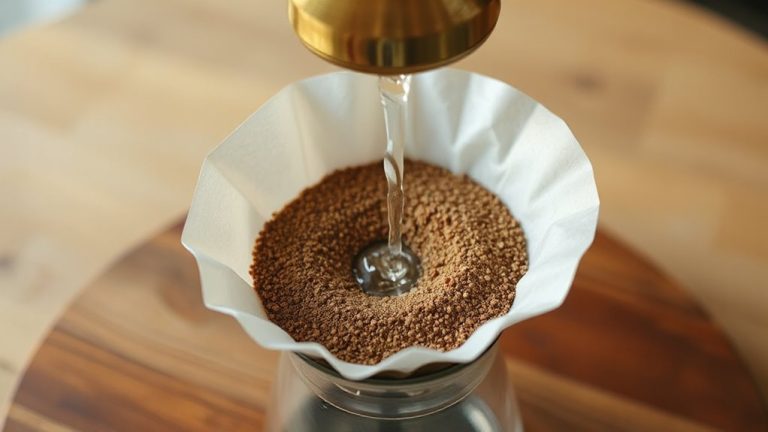
Exploring the Citrus-Forward Notes of Grenada’s Spice Island Coffee
You’ll taste bright tangerine and zesty grapefruit in every cup, thanks to heirloom Arabica beans grown in Grenada’s volcanic highlands. Humid, sun-dappled slopes and mineral-rich soil boost acidity and flavor clarity. Cherries are hand-picked when ripe to guarantee even processing, then naturally fermented in wooden tanks and washed to preserve brightness. Light roasting in electric drum roasters locks in citrus notes, while a medium-fine grind and 200°F water pull out clean, vibrant tones-ideal for highlighting what makes this Caribbean coffee unique.
Notable Insights
- Heirloom Arabica varieties in Grenada’s highlands naturally produce citrus flavors, enhanced by sun-dappled, humid growing conditions.
- Volcanic soil rich in minerals like potassium and magnesium supports complex acid development, intensifying grapefruit and tangerine notes in beans.
- Controlled fermentation in wooden tanks for 18–24 hours preserves and amplifies bright citrus characteristics in Spice Island Coffee.
- Hand-picking ensures only fully ripe cherries are processed, maintaining flavor integrity and uniform bean quality.
- Light roasting and washed processing preserve acidity, with pour-over brewing at 195°F–205°F optimizing citrus expression in the cup.
How Grenada’s Coffee Gets Its Citrus Punch
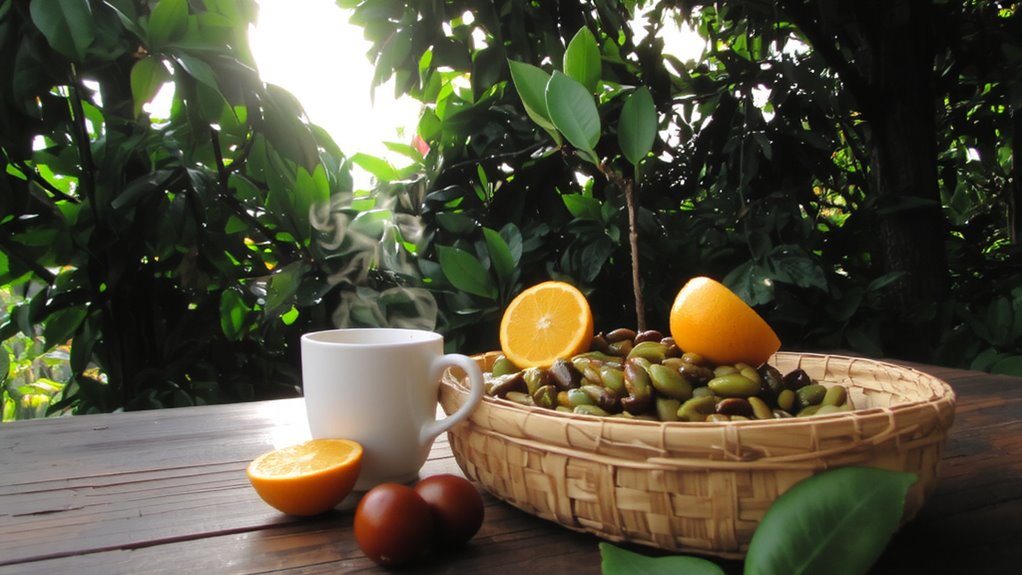
The citrusy kick in Grenada’s coffee comes from a mix of natural growing conditions and careful processing you’d find hard to replicate elsewhere. You’re tasting citrus genetics expressed in heirloom Arabica varieties that thrive in the island’s humid, sun-dappled highlands. These beans carry natural bright notes, but it’s the fermentation techniques that sharpen them. Farmers use controlled, temperature-stable fermentation-often in wooden tanks for 18–24 hours-to enhance acidity and citrus clarity without overdevelopment. You’ll notice the difference when brewing: a crisp, tangerine-like lift, especially with lighter roast profiles. Washed processing is common, preserving cleanliness and acidity. If you’re roasting at home, avoid going beyond medium-scorching mutes those delicate traits. Compared to natural fermentation, this method offers more consistency, though it demands precise timing and hygiene.
Why Volcanic Soil Creates Bright, Juicy Beans
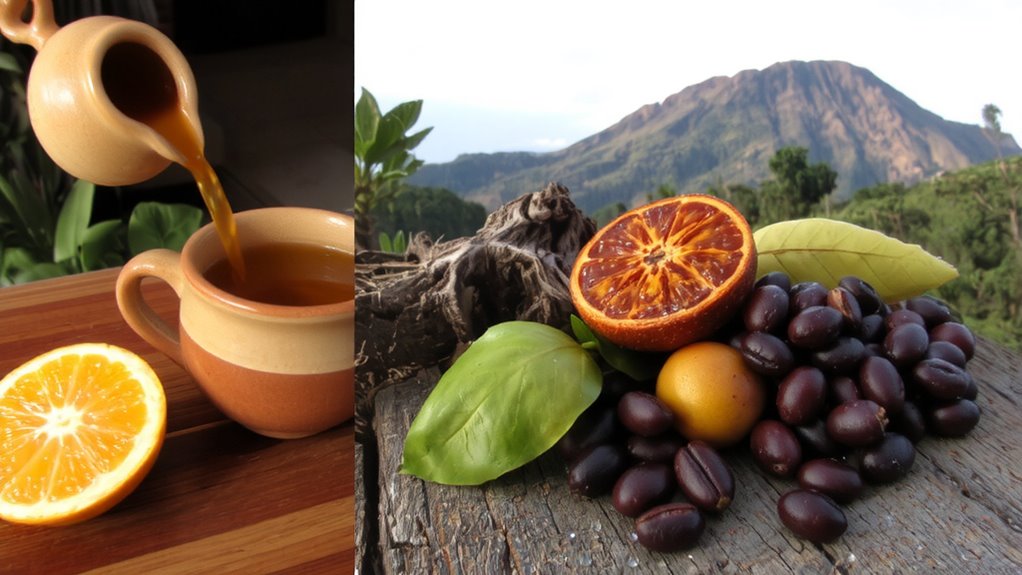
While you might not think soil plays a starring role in your morning cup, it’s volcanic earth that gives Grenada’s coffee its bright, juicy edge. The island’s volcanic soil delivers high mineral richness, feeding coffee plants with essential nutrients like magnesium and potassium that support balanced bean development. These minerals help build complex acids in the beans, contributing to a lively, crisp taste. Volcanic soil also tends to have slightly higher soil acidity, which matches well with Arabica coffee’s preference for acidic conditions. This environment encourages plants to absorb nutrients efficiently while resisting erosion. Unlike sandy or clay-heavy soils, volcanic loam drains well but retains enough moisture for steady growth. You’ll find these conditions especially in Grenada’s mountainous interior, where elevation and soil work together. The result? Beans with a citrus zing and a clean, vibrant profile. It’s not magic-it’s geology.
How Rainfall Fuels Grapefruit and Tangerine Notes
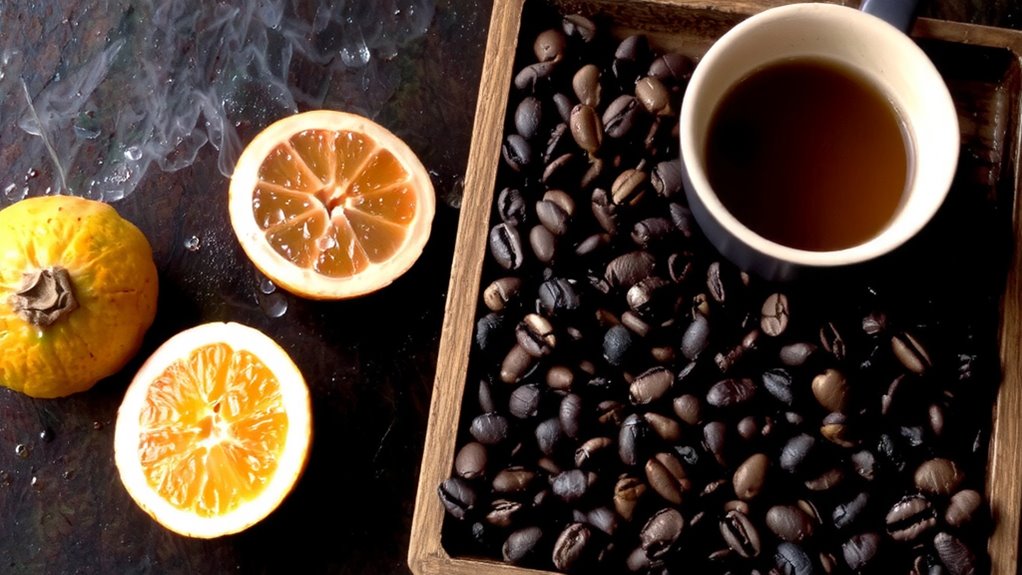
Rainfall isn’t just about keeping plants hydrated-it’s shaping the very flavor in your cup. When Grenada’s coffee trees get consistent, well-distributed rain, it sets the stage for citrus development in the beans. Too little water stresses the plant, while too much dilutes flavor concentration-so timing matters. The island’s wet season, followed by drier periods, slows cherry ripening just enough to intensify grapefruit and tangerine notes. This balance supports gradual sugar accumulation, which interacts with acids to highlight bright citrus tones. You’ll notice these flavors more in washed-process coffees, where clarity matters. If you’re brewing, use filtered water and a reliable pour-over like a V60 to preserve these delicate profiles. No shortcuts-precise water temperature (around 200°F) guarantees peak extraction without bitterness. Rainfall’s role isn’t just background support; it’s central to why your morning brew tastes like sunshine and zest.
Why Hand-Picking Preserves Citrus Flavor
Since only fully ripe cherries deliver the vibrant citrus notes you taste in Grenada’s best coffees, hand-picking guarantees each bean meets the mark-machine harvesting can’t make that claim. You rely on skilled workers who selectively harvest just the red, mature cherries, leaving behind underripe or overripe ones that would muddy the bright grapefruit and tangerine tones. This careful selection maintains bean integrity, ensuring uniform density and moisture levels critical for even drying and roasting. Machines, in contrast, strip entire branches, mixing immature and damaged beans that compromise flavor preservation. When bean integrity is broken early, you lose acidity and clarity in the cup. For citrus complexity to survive processing and roasting, the starting point matters. Hand-picking isn’t faster or cheaper, but if you’re after true-to-terroir brightness, it’s the only method that consistently delivers.
The Craft Behind Spice Island Coffee’s Quality
When you’re after a cup that truly reflects Grenada’s volcanic soil and tropical climate, the process behind Spice Island Coffee matters just as much as the beans themselves. After hand-picking, farmers control bean fermentation carefully-too long and it turns sour, too short and you lose brightness. Most producers use a 12- to 24-hour wet fermentation, allowing citrus notes to develop without risk of off-flavors. Once dried, the beans move to roast profiling, where precision matters. Light to medium roasts preserve acidity and fruitiness, while darker profiles risk masking the delicate citrus edge. Roasters often use electric drum machines for consistent heat control, adjusting time and temperature to highlight terroir. You’ll get the cleanest expression when the roast doesn’t overpower the bean’s natural character. It’s not just tradition-it’s repeatable, science-backed craftwork aimed at delivering a transparent, vibrant cup every time.
How Grenada’s Coffee Stands Out in the Caribbean
Grenada’s volcanic terroir gives its coffee a distinct edge in the Caribbean, where fertile soil and high elevations nurture beans with balanced acidity and subtle citrus brightness. You’ll notice these clean, bright notes stand out compared to other regional coffees, which often lean heavier or smokier. Unlike mass-produced blends from larger islands, Grenada’s small-batch farms prioritize quality, letting you taste the island’s unique microclimates. Coffee tourism here isn’t about flashy tours-it’s hands-on, showing you how tradition and terrain shape each harvest. You can visit family-run estates like Belmont Estate to see processing methods rooted in cultural heritage. These practices, passed through generations, emphasize sustainability and flavor integrity. While Jamaican Blue Mountain gets more hype, Grenada’s coffee offers you a rarer, more authentic experience-especially if you value traceability and terroir-driven profiles. It’s not just a drink; it’s a glimpse into an island’s legacy.
Brewing Tips to Highlight Citrus in Every Cup
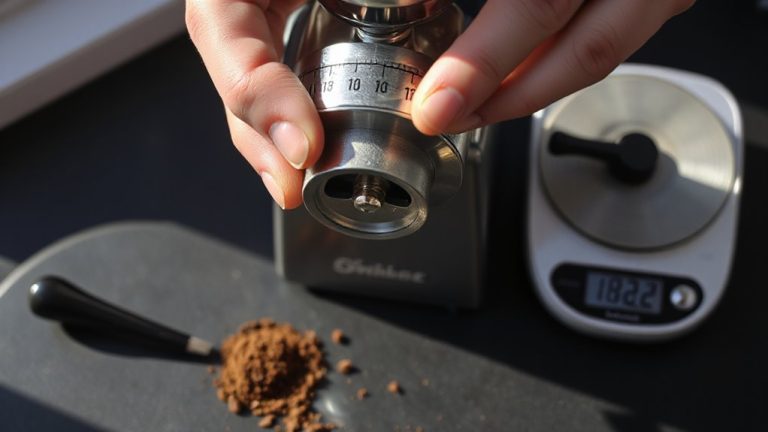
What if you could bring out the bright citrus notes in your morning cup more consistently? You can-by adjusting two key factors: water temperature and grind size. For Grenada’s citrus-forward coffee, aim for a water temperature between 195°F and 205°F. Too hot, and you risk scorching the delicate acids; too cool, and the flavors fall flat. Use a gooseneck kettle for better control, especially with pour-over methods like the Hario V60. Grind size matters just as much. A medium-fine grind works best-similar to sea salt-allowing balanced extraction without overemphasizing bitterness. If the coffee tastes sour, your grind might be too coarse or water too cool. If it’s harsh, the grind’s likely too fine. Adjust incrementally. These tweaks help highlight the bright, nuanced citrus tones naturally present in Spice Island beans. Consistency starts with precision. For optimal results, consider using one of the top-rated coffee drippers known for enhancing flavor clarity.
On a final note
You’ll get the best citrus notes from Spice Island Coffee by using a pour-over or Aeropress with water just under boiling. Grind fresh, medium-fine, and aim for a 1:16 coffee-to-water ratio. Short brew times highlight brightness; longer ones mute it. If your water’s hard, use filtered-minerals can overshadow delicate grapefruit and tangerine tones. Store beans in an airtight container away from light.