Impact of Cherry Ripeness on Final Cup Profile in Washed Process Coffees
You get cleaner, sweeter cups with balanced acidity when only ripe cherries go into washed coffee. Underripe cherries add sour, flat notes you can’t roast away. Overripe ones ferment too fast, bringing boozy or off flavors. Selective picking-like in top farms in Colombia or Kenya-ensures uniform ripeness, leading to even fermentation and better density. This means fewer defects and more consistent extraction. For high-scoring washed coffees, ripeness isn’t just important-it’s essential. You’ll see how small harvest choices shape your final brew.
Notable Insights
- Fully ripe cherries produce cleaner, sweeter washed coffees with balanced acidity and even extraction.
- Underripe cherries introduce sour, flat notes that persist through roasting and impair cup quality.
- Overripe cherries cause fermented, boozy, or medicinal off-flavors due to pre-harvest fermentation.
- Uniform ripeness ensures consistent bean density, supporting even fermentation and roasting in washed processing.
- Selective picking and post-harvest sorting are critical to exclude unripe or overripe cherries for high-quality washed coffees.
Why Ripe Cherries Make Better Washed Coffee
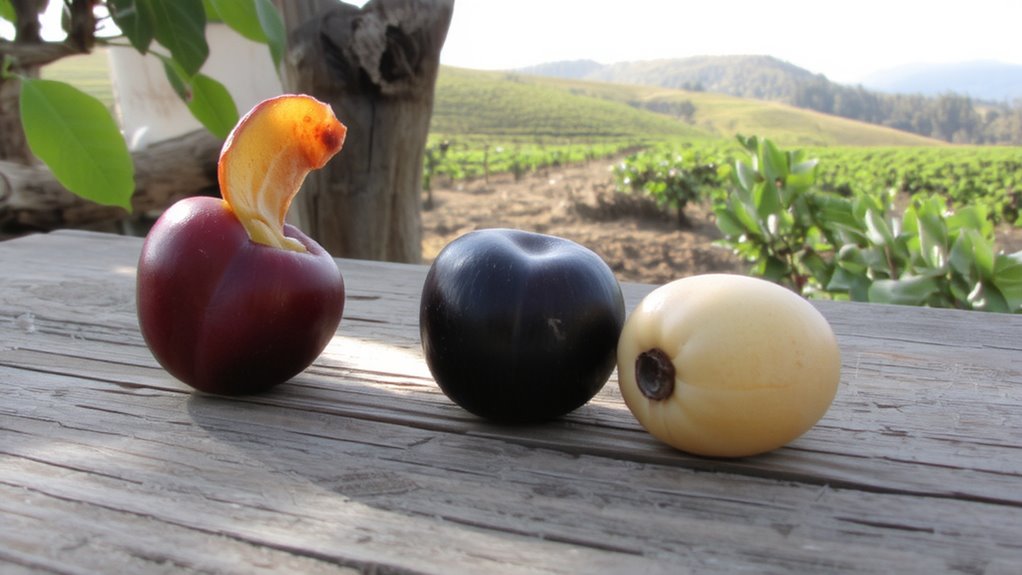
While underripe or overripe cherries can throw off the balance of your final cup, using fully ripe ones gives you a cleaner, more consistent result-especially with washed processing. You’ll notice better bean density in ripe cherries, which helps them withstand processing with less damage. This higher density also supports more even roasting later on. Ripe cherries absorb water more uniformly during fermentation and washing, leading to predictable water absorption and reducing the risk of uneven extraction. If the beans soak up water too quickly or unevenly-common with flawed fruit-the internal structure can degrade, dulling the cup. You’re better off sorting cherries meticulously before pulping. Tools like float tanks help separate dense, ripe beans from less desirable ones. When you prioritize ripeness, you set the stage for clarity, sweetness, and acidity that define high-quality washed coffees. It’s a small step that makes a real difference downstream.
Underripe Cherries and Flat, Sour Notes
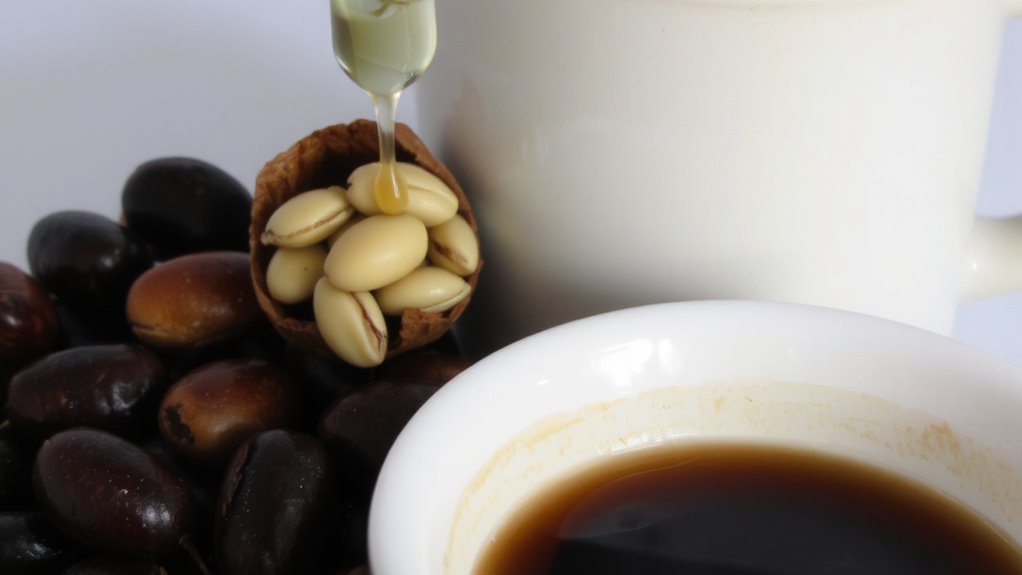
You’ve seen how ripe cherries lead to cleaner, more consistent washed coffees, but underripe ones bring a different set of problems. They lack sugar and acidity balance, often resulting in flat, sour notes that no roast can fix. Sour masking won’t save your cup-these harsh profiles cut through even in darker roasts. Proper underripe sorting at the mill is essential to avoid weak, astringent brews. Hand-sorting or density tables help, but they add cost and labor.
| Stage | Issue | Solution |
|---|---|---|
| Harvest | Mixed ripeness | Train pickers for selective harvest |
| Mill | Underdense floaters | Use water channels or destoners |
| Post-processing | Sour notes persisting | Improve underripe sorting pre-hull |
Invest in sorting: it’s cheaper than losing batch consistency.
Overripe Cherries and Unwanted Fermentation
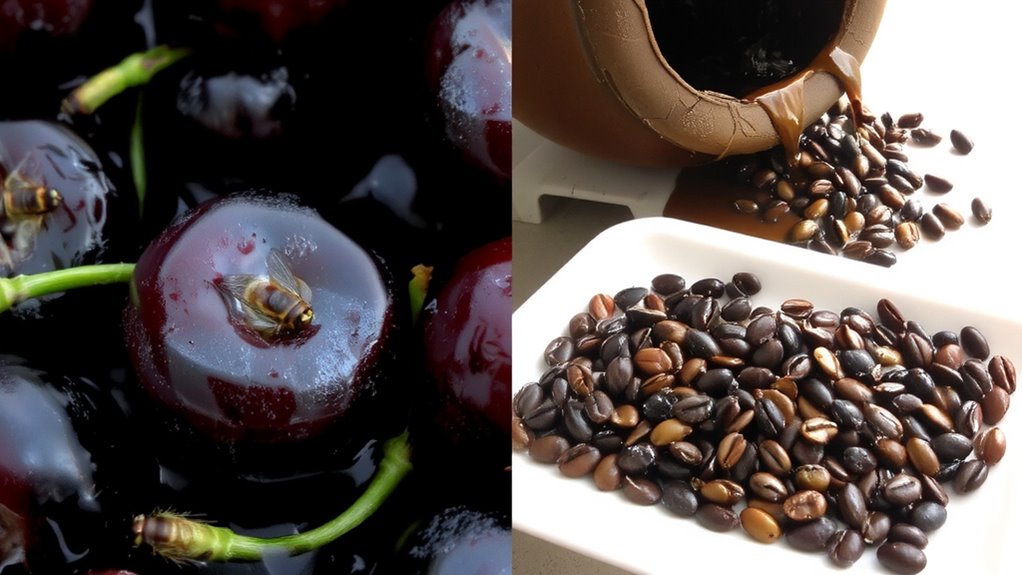
What happens when cherries stay on the branch too long? They become overripe, and that’s where problems start. You’re not just dealing with sugar overload-yeasts begin fermenting the fruit on the tree, leading to ethanol overexposure in the bean. This shows up in the cup as boozy, rotten, or medicinal notes, especially in washed coffees where clean profiles are expected. Worse, overripe cherries attract insects and create entry points for mold contamination, like Aspergillus, which can produce mycotoxins. Even careful washing won’t always save these beans. In processing, they may ferment too quickly, slipping past ideal stages into off-flavor territory. Using them risks tainting an entire batch. If you’re aiming for consistency and clarity in your final cup, sorting out overripe cherries before processing isn’t optional-it’s essential for quality control and flavor integrity.
Harvesting Only Ripe Cherries: Selective Picking
When done right, selective picking guarantees only fully ripe cherries make it into your final lot, and that precision pays off in the cup. Selective harvesting means you pass through the same tree multiple times, plucking just the red, mature fruit while leaving greener ones to ripen. This method demands more labor but drastically improves batch consistency. Unlike strip picking, which grabs everything at once, selective harvesting reduces underripe and overripe contamination. Manual sorting afterward adds another layer of control, letting you remove any stragglers that don’t meet ripeness standards. Though slower and costlier, farms using this system-like many specialty producers in Colombia or Kenya-consistently score higher in cup quality. Equipment won’t fix poor harvest choices, so investing time in careful picking and manual sorting is one of the most effective ways to guarantee clean, balanced washed coffees. Quality starts in the field, not the mill.
How Ripeness Shapes Washed Coffee Flavor
A cherry’s ripeness at harvest directly influences the sweetness, acidity, and clarity of flavor in washed coffee. When you pick only ripe cherries, you get more consistent cherry density, which leads to even fermentation and washing. This uniformity helps preserve clean, distinct flavors. Underripe cherries often have lower density and thinner skin thickness, making them prone to over-fermentation or damage during depulping. Overripe ones, while sometimes denser, can ferment too far, creating off-notes. Ripe cherries strike the balance-thicker skin protects the seed during processing, and ideal density supports a stable, predictable wash. If you skip selective picking, your batch ends up with mixed flavors, muddled acidity, and less sweetness. For washed coffees, where clarity matters, controlling ripeness isn’t just helpful-it’s essential. You’ll get cleaner cups, fewer defects, and better performance across depulpers and fermentation tanks, especially at high elevations where ripening slows.
The Sweet Spot: Brighter Acidity, Sweeter Cups
Why do some coffees spark with citrusy brightness while others taste flat or sour? It’s all about ripeness. When you pick cherries at peak ripeness, you hit the sweet spot: balanced acidity and sugars. Underripe beans bring harsh, sour notes. Overripe ones dull the cup. But just-right cherries-fully mature, firm, and deep red-give you lively, clean brightness. They also produce clearer fruity undertones, like orange or red berry, and delicate floral hints, such as jasmine. These traits survive the washed process better when fruit maturity is consistent. For best results, sort cherries by hand or use floatation tanks to remove unripe or damaged ones. This step is non-negotiable for specialty grades. Your brewing gear won’t fix poor selection, but precise sorting paired with a quality grinder and gooseneck kettle will highlight the clarity you’re after.
On a final note
You’ll get the best washed coffee by using only ripe cherries. They give brighter acidity and sweeter flavors, which shine in the cup. Underripe cherries add sour, flat notes, while overripe ones can cause off-fermentations. Selective picking takes more time than strip harvesting, but it’s worth it for quality. If you’re aiming for clean, balanced coffee, ripeness isn’t just helpful-it’s essential.