Understanding How Various Containers Affect the Extraction Process in Pour Over Techniques
Your carafe’s material affects brew temperature and extraction-glass cools fast, while double-walled stainless steel, like Fellow’s, keeps coffee hot longer. Ceramic offers middle-ground heat retention. Shape matters too: tapered cones like the V60 speed flow, while flat-bottoms like Kalita Wave slow it for even extraction. A gooseneck kettle gives precise control. For best results, match your brewer and carafe to your setup-heat stability and pour control make a real difference in your cup. There’s more to reflect on about how each choice shapes flavor.
Notable Insights
- Carafe material impacts brew temperature stability, with vacuum-insulated steel preserving heat better than glass or ceramic.
- High thermal mass brewers like stoneware absorb more heat, risking under-extraction if not preheated.
- Tapered cone brewers channel water toward the center, increasing flow rate and affecting extraction time.
- Metal brewers conduct heat quickly but may cool fast without preheating, influencing extraction consistency.
- Glass and ceramic offer flavor neutrality, while uncoated metal may impart metallic notes, altering taste.
How Carafe Material Affects Brew Temperature
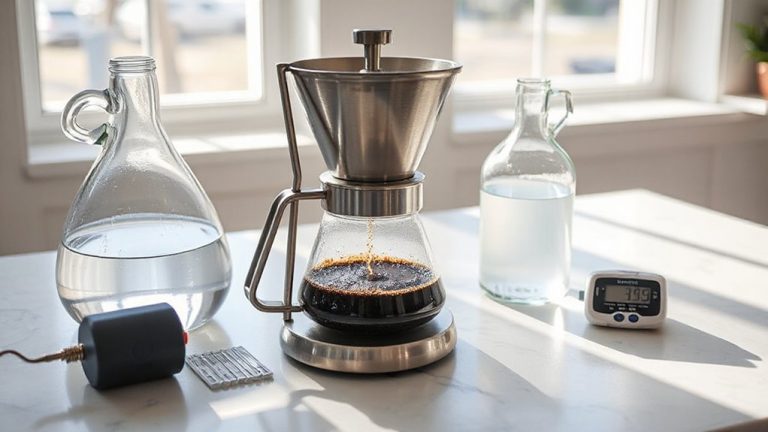
While you might not think twice about what your carafe is made of, the material plays a key role in how well your coffee stays hot after brewing. Glass carafes, like those on many drip machines, have low heat retention and cool quickly due to high material conductivity. That means your coffee loses heat fast, especially if you’re not drinking it right away. Stainless steel carafes, especially double-walled vacuum-insulated ones, retain heat much better. They limit heat transfer thanks to trapped air between walls, drastically reducing conductivity. If you want your pour over to stay hot for over 30 minutes, go with a vacuum carafe like the ones from Fellow or Ember. Ceramic options offer moderate heat retention-better than glass but not as good as insulated steel. For everyday use, insulation beats raw material alone. Choose based on how long you need your coffee hot. A highly recommended option for temperature stability is the best coffee carafes from brands featured in expert roundups.
Why Thermal Mass Matters in Pour Over Extraction
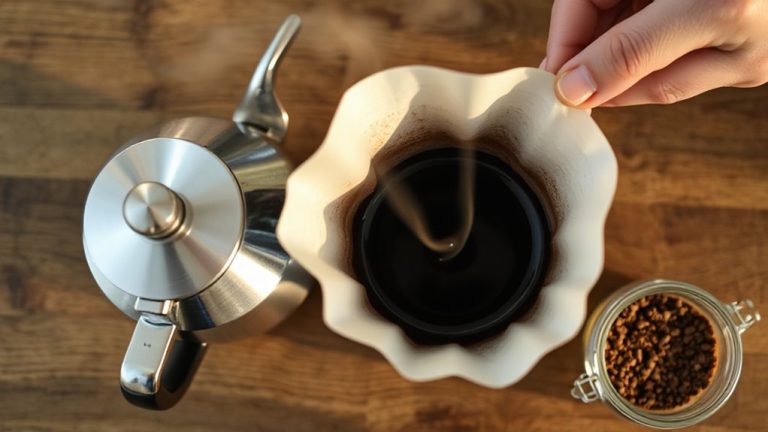
You’ve seen how carafe material affects how long your coffee stays hot, but the same principles apply earlier in the process-right during brewing. Thermal mass matters because it influences heat retention and how consistently water extracts flavor. A brewer with high thermal mass, like stoneware or thick ceramic, absorbs more heat but releases it slowly, stabilizing temperature. Materials with high conductivity, like metal, transfer heat quickly but may cool too fast unless preheated well. Glass sits in the middle-moderate conductivity, decent retention if insulated. If your brewer pulls too much heat from the water, extraction slows and tastes sour. Preheating helps, but the material’s inherent properties still shape results. For even extraction, match your brewer’s thermal behavior with your pour speed and water temp. A gooseneck kettle and pre-rinsed filter compensate, but starting with a stable vessel gives better control. Some of the most effective brewers for managing thermal dynamics are metal pour-over brewers, which combine rapid heat transfer with reusability and no need for paper filters.
How Shape and Spout Design Control Water Flow
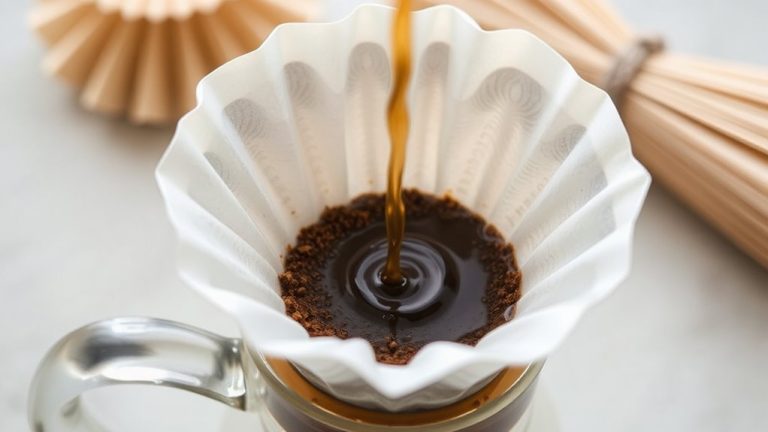
The shape of your pour over cone and the design of its spout play a direct role in how water moves through the coffee bed, affecting both flow rate and extraction evenness. A tapered cone, like the Hario V60, encourages spiral pouring and speeds up flow rate by directing water toward the center. In contrast, a straight-walled design, such as the Kalita Wave, slows the flow rate and promotes even saturation. The spout angle also matters-angled spouts give you more control over where the water lands, helping you avoid channeling. A narrow spout angle allows for finer, more precise pours, which is ideal for maintaining consistency. Wider spouts may feel faster but often sacrifice accuracy. You’ll want a gooseneck kettle to match, since it works with the spout design to regulate timing and flow. Choosing the right shape and spout angle helps you fine-tune extraction without changing grind or dose.
Glass vs. Ceramic vs. Metal: Taste and Heat Compared
Now that you’ve seen how cone shape and spout design influence water flow, it’s time to think about what the brewer itself is made of-because material matters. Glass, like your basic Hario V60 server, offers flavor neutrality but poor thermal conductivity, meaning it cools quickly and can hurt extraction. Ceramic retains heat better, giving you more stable brewing temps-great for longer pours-and also provides good flavor neutrality. Metal, like a stainless steel Kalita Wave brewer, has high thermal conductivity, keeping water hot and speeding up brewing, but may subtly affect taste if not well-coated. If you’re chasing clean profiles, go ceramic or glass. For speed and heat retention in a busy kitchen, metal works-but watch for metallic notes. Each material changes your brew’s behavior, so match it to your water temp, grind, and rhythm. Your choice directly impacts both temperature stability and flavor clarity.
Choose the Best Carafe for Your Pour Over Setup
A good carafe isn’t just a vessel-it’s part of your brew process. You need one that retains heat well and pours cleanly. Glass carafes, like those from Chemex, offer clarity and clean taste, but they cool fast unless double-walled. Stainless steel, such as the Fellow Stagg, keeps coffee hot longer and resists breakage, but you can’t see the brew level. Ceramic carafes balance heat retention and style, though they’re heavier. Consider carafe aesthetics if presentation matters-some brands design for the table, not just function. Brand reputation counts, too: makers like Hario, OXO, and Bonavita consistently deliver reliable performance and durable builds. Pick based on your routine-home use, guests, travel-as each demands different priorities. A good fit improves pour control, keeps temperature stable, and supports consistent extraction. Choose wisely-it affects both flavor and daily ease.
On a final note
Your carafe choice impacts temperature, flow, and taste. Glass heats quickly but cools fast; ceramic holds heat better but is heavy; metal retains heat well but may alter flavor. A gooseneck spout gives precision, while wide shapes speed cooling. For consistent pour overs, use a thermal carafe with a narrow spout. Match material and shape to your brewing style-heat retention and pour control matter most. Pick wisely for better extraction.