The Role of Altitude in Specialty Coffee Quality: How Elevation Affects Bean Development and Final Product Taste
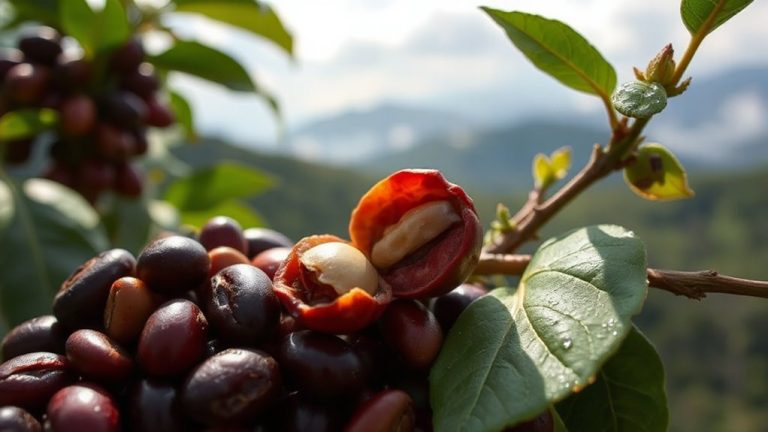
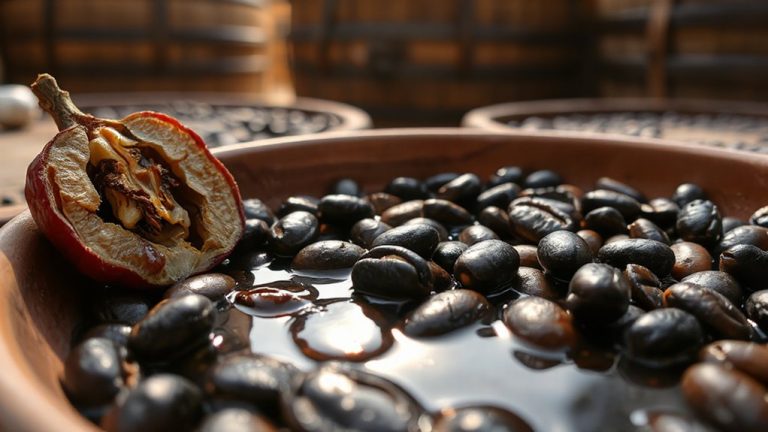
You’ll find higher elevations slow cherry maturation, letting sugars build for more complex flavors. Cooler temps and big day-night swings create denser beans that roast evenly and highlight bright, clean acidity-think citrus in Ethiopian Yirgacheffe or florals in Colombian Huila. Low-elevation coffees tend toward nutty, chocolatey notes with heavier body, while high-grown beans shine in light roasts with vibrant profiles. You get what you grow, and altitude shapes it all-what comes next changes how you brew.
Notable Insights
- Higher altitudes produce denser coffee beans due to slower maturation in cooler temperatures.
- Extended growing periods at elevation increase sugar and acid development, enhancing cup complexity.
- High-altitude coffees exhibit brighter acidity, with malic and citric acids prominent in the flavor profile.
- Elevation influences distinct taste notes, such as citrus in Ethiopian or chocolate in Guatemalan beans.
- Dense beans from high elevations roast more evenly, improving flavor clarity and reducing scorching risk.
Why Altitude Shapes Coffee Quality
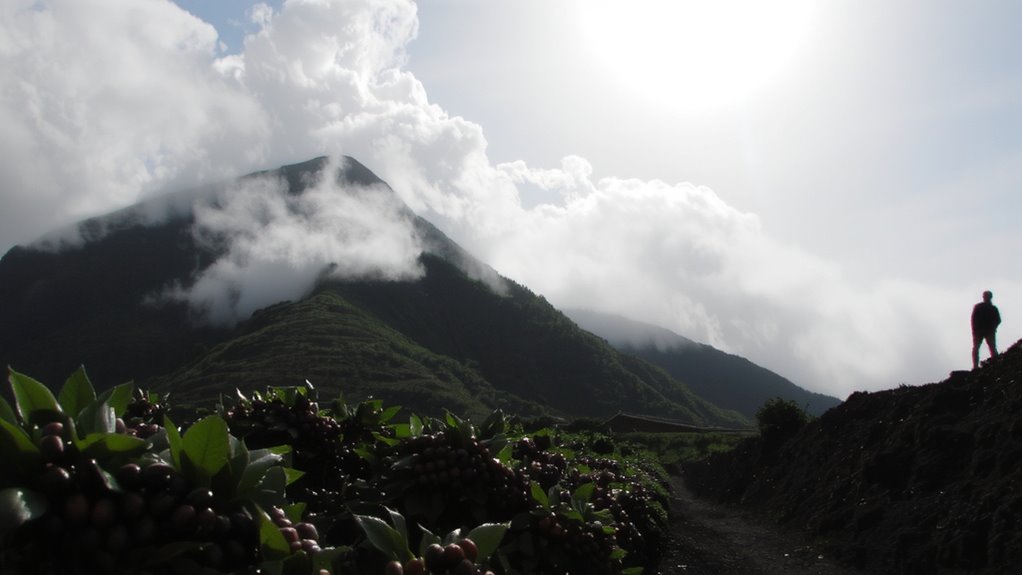
Most specialty coffees come from high-altitude farms, and for good reason-growing coffee at higher elevations often leads to denser beans with more desirable flavor characteristics. You’ll find that altitude directly affects soil composition, with higher regions typically offering better drainage and mineral richness, which support balanced plant growth. Microclimate variation at these elevations creates subtle shifts in temperature and humidity, even within small areas, allowing distinct flavor profiles to develop-like bright citrus in Ethiopian highlands or chocolate notes in Guatemalan volcanics. These conditions aren’t uniform, so consistency depends on precise farming practices. While lower farms may produce more yield, you’re trading complexity and acidity. If you’re sourcing beans, look for altitude-stamped bags-it’s a reliable indicator. But remember, altitude alone isn’t a guarantee; it works best when paired with quality processing and roasting.
How Elevation Slows Coffee Bean Development
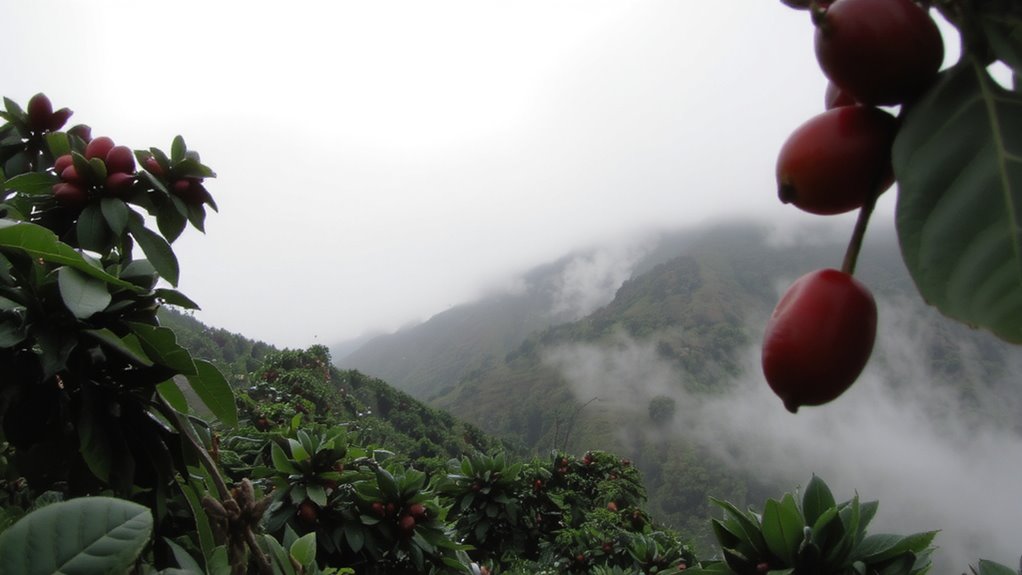
A slower bean means a denser bean, and that’s where elevation starts to matter. At higher altitudes, cooler temperatures and wider temperature variance between day and night slow the maturation of coffee cherries. You’ll notice this in how the beans develop over months, not weeks. This extended growth period lets sugars build gradually, boosting complexity in the cup. The cooler air doesn’t speed things up-it stretches them out. Soil composition at these elevations often includes more volcanic minerals, which support healthy plants but don’t rush bean development. Instead, they provide steady nutrition. You’re not just growing coffee higher up-you’re syncing with natural cycles that favor quality over quantity. This slower pace isn’t a flaw; it’s a feature. If you roast or brew high-grown beans, you’re working with denser material that responds differently to heat and grinding. Know that elevation shapes the clock, and you have to adjust your methods accordingly.
Why High Altitude Creates Denser Beans
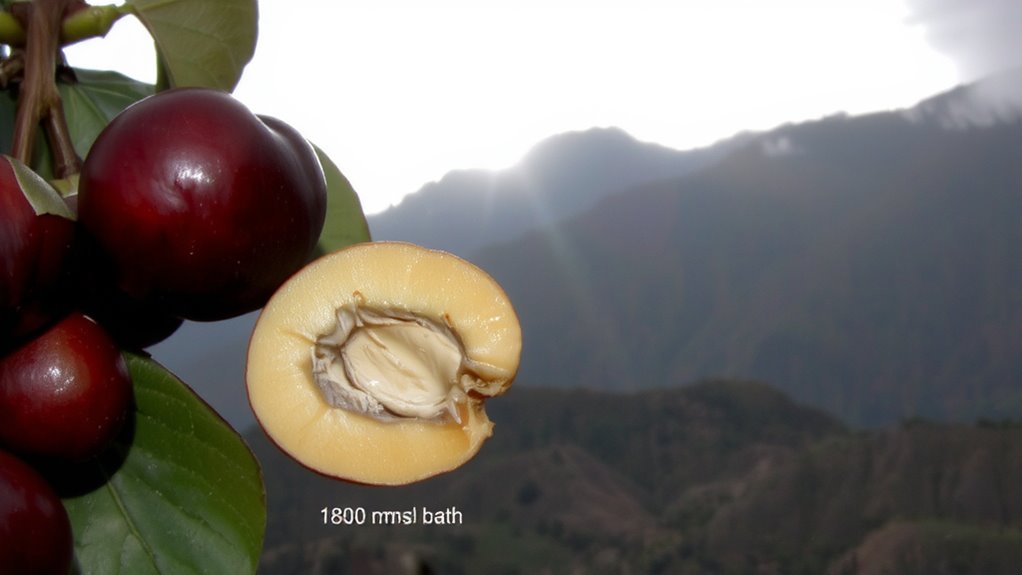
One key reason high altitude produces denser coffee beans lies in how temperature shifts affect plant physiology. At higher elevations, cooler temperatures slow the maturation of coffee cherries, giving beans more time to develop. This extended growing period increases bean density, as the seeds pack more tightly with sugars and complex compounds. The slower growth also creates greater growth pressure within the fruit, further compressing the bean. Denser beans tend to respond better to roasting-especially in drum roasters-because they absorb heat more evenly and resist scorching. You’ll often see this in beans from regions like Ethiopia’s Yirgacheffe or Colombia’s Huila, where altitudes exceed 1,500 meters. High bean density correlates with improved grind consistency and extraction during brewing, which matters if you’re using precision gear like a Baratza grinder or a pour-over setup. Not all equipment handles dense beans the same, so adjust your grind settings accordingly for ideal results.
How Altitude Enhances Acidity and Clarity
While cooler temps at higher elevations slow cherry development, they also boost the acids that give coffees their bright, clean flavors-so you’re not just chasing density when you source beans from 1,500 meters up. The extended maturation allows acids like malic and citric to build steadily, giving you a cup with livelier acidity and crisper clarity. This isn’t just about elevation alone-microclimate influence matters, as daily temperature swings and sun exposure fine-tune acid development. Also, high-altitude soils often have stronger mineral content due to volcanic activity and slower decomposition, a factor known as soil mineralization. Those minerals get taken up by coffee plants and contribute to flavor precision. So when you brew these beans, especially with pour-over or Precision brewer, you’ll notice distinct notes-think green apple, lemon, or red grape-with less muddiness. It’s acidity with direction, not just punch.
Tasting the Difference: Low, Mid, and High-Elevation Coffees
You’ve seen how altitude shapes acidity and clarity, but now let’s put that into practice by comparing how elevation actually tastes in your cup. Low-elevation coffees, grown below 3,000 feet, often have lower acidity and heavier bodies, with flavor notes like chocolate or nuts and muted aroma profiles-good for dark roasts or espresso blends. Mid-elevation beans, from 3,000–4,500 feet, balance sweetness and acidity, offering cleaner cups with flavor notes of stone fruit or caramel and more defined aroma profiles-ideal for pour-over or French press. High-elevation coffees, above 4,500 feet, deliver bright acidity, complex flavor notes such as citrus, berries, or tea-like florals, and vibrant aroma profiles. These shine in light to medium roasts and work best with precise brewing methods like V60 or Aeropress.
How High-Altitude Farming Impacts Coffee Quality
When coffee is grown at high altitudes-typically above 4,500 feet-cooler temperatures and thinner air slow the maturation of the beans, leading to denser seeds with more concentrated sugars and acids, which translates into brighter acidity, greater complexity, and cleaner flavor profiles in your cup. The microclimate effects at these elevations, like temperature swings between day and night, further refine bean development. Soil composition also plays a key role-volcanic soils common in high-altitude regions offer rich minerals that support healthy coffee plants and influence taste. While high-elevation farms often produce higher-quality beans, they come with challenges: unpredictable weather, steeper terrain, and lower yields. You’ll find top-tier beans from places like Ethiopia’s Yirgacheffe or Colombia’s Huila, where elevation, soil composition, and microclimate effects align to create ideal growing conditions. For roasters and brewers, these beans often respond well to light to medium roasts and precise pour-over methods.
On a final note
You’ll find high-altitude coffees, like Ethiopian Yirgacheffe or Colombian Supremo, often taste brighter and more complex due to slower bean development and denser structure. Lower elevations yield heavier, simpler profiles-think Brazilian Santos. If you prefer clarity and acidity, go high. For body and sweetness, mid- to low-grown may suit better. Match your brew method and roast choice to elevation traits for best results.