Understanding Roast Levels: From Light to Dark, Uncovering the Flavor Profiles of Various Roasts
You’ll taste bright, fruity notes with light roasts, especially from beans like Ethiopian or Kenyan, best brewed pour-over or Chemex. Medium roasts offer balanced sweetness and body, great for drip or French press, with flavors like chocolate or nut. Dark roasts bring bold, smoky intensity, ideal for espresso or milk drinks, but avoid over-extraction. Each level changes how you grind and brew. Your preference shapes the right roast-there’s more to how each one transforms the cup.
Notable Insights
- Light roasts preserve origin flavors and showcase bright, floral, and fruity notes from beans grown in regions like Ethiopia and Kenya.
- Medium roasts balance acidity and body, revealing caramel, chocolate, and nutty flavors while retaining subtle origin characteristics.
- Dark roasts develop bold, smoky, and charred flavors through extended roasting, overshadowing the bean’s original profile.
- Roast level affects brewing: light roasts suit pour-over methods, while dark roasts work well for espresso and milk-based drinks.
- Grind size and water temperature must match roast level to optimize extraction and avoid under- or over-extraction.
How Roast Level Shapes Coffee Flavor
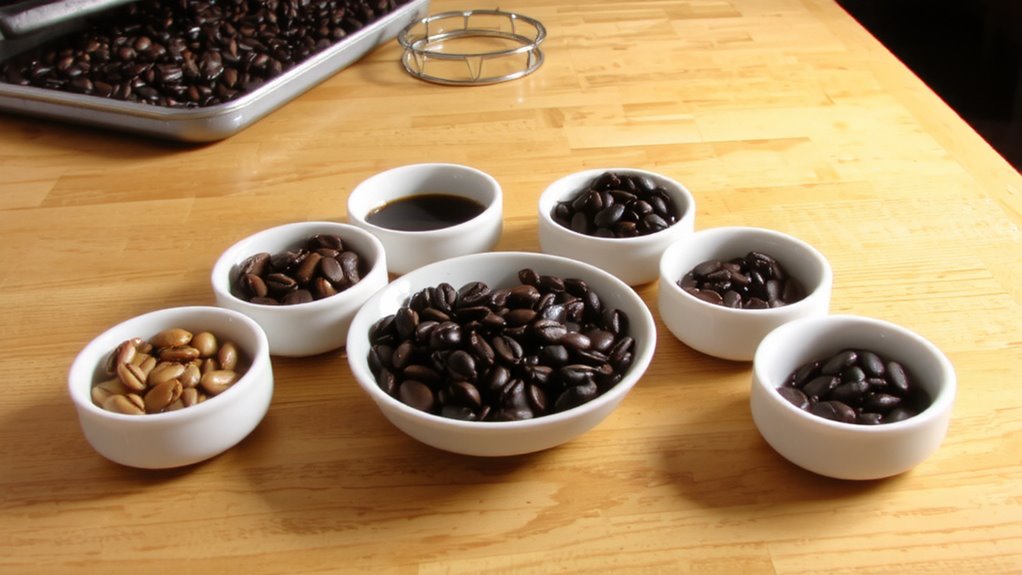
While lighter roasts tend to preserve the original characteristics of the coffee bean, darker roasts bring out more of the flavor created during the roasting process itself. You’ll notice how origin influence becomes less pronounced as roast levels deepen-Ethiopian or Colombian traits fade past medium-dark. Processing methods like washed, natural, or honey still matter, but their effects are overshadowed by caramelization and browning reactions in darker profiles. If you’re after roast-driven flavors-think chocolate, spice, or smokiness-go with a dark roast using beans from consistent sources. For clarity of origin influence and processing methods, stick to lighter or medium roasts. Dark roasting simplifies flavor complexity but adds body and consistency, ideal for espresso blends or milk-based drinks. Know your goal: highlighting terroir or embracing roast character. Your brewing method and equipment should match that intent. For those seeking bold, balanced dark roasts, consider trying one of the top-rated best whole bean dark roast options available.
Light Roast: Fruity, Bright, and Vibrant
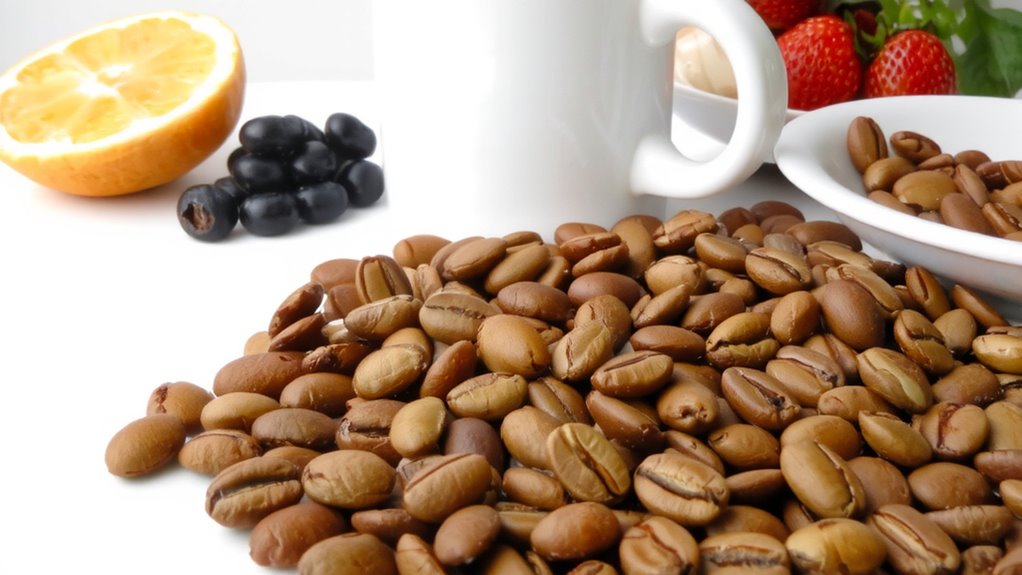
You’ll want a light roast if you’re after coffee that highlights the bean’s native traits-think bright citrus, floral notes, or stone fruit-especially from high-elevation farms in Ethiopia, Kenya, or Guatemala. These beans are roasted just past the first crack, preserving acidity and complexity. You’ll taste distinct citrus notes and a delicate floral aroma, traits often lost in darker roasts. Light roasts work best with pour-over, Chemex, or Aeropress, where clarity matters. They’re less oily, so they won’t clog grinders as much, but they do demand precision-a quality burr grinder and boiled-to-205°F water help extract the best flavors. Avoid boiling water straight off, as it can scald the grounds and increase bitterness. If you prefer nuanced, tea-like coffee over bold richness, light roast is practical and revealing. It’s ideal for single-origin exploration and best enjoyed fresh, within 2–3 weeks of roast date.
Medium Roast: Balanced and Smooth
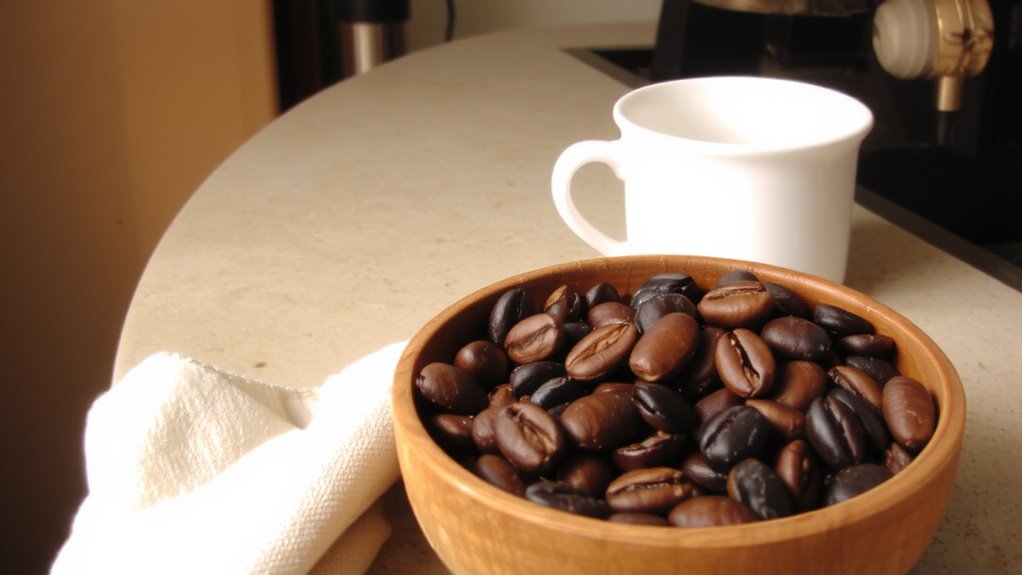
If you’re looking for a middle ground that keeps some origin character while adding a bit more body and sweetness, medium roast is where to start. You’ll notice balanced acidity-not as sharp as light roasts, but still present. This roast level develops caramel notes and nutty undertones, bringing warmth without overpowering the bean’s natural profile. Most popular drip coffees use medium roasts because they work well with standard brewers and pour-over setups. Brands like Colombia and Ethiopian beans roasted this way highlight chocolate and toasted almond flavors. They’re versatile, so you don’t need specialty gear-just a decent grinder and fresh beans. Avoid overheating during brewing; aim for 195–205°F. Medium roasts often offer the clearest expression of balance, making them ideal if you want flavor clarity with added depth. They pair well with milk, too, if you take your coffee creamier.
Dark Roast: Bold, Smoky, and Bitter-Sweet
Dark roast delivers bold flavor, marked by deep color and oil-rich beans that glisten in the light. You’ll notice less acidity and a fuller body, thanks to longer roasting times that break down sugars and cellulose. These beans often carry distinct charred notes-think of the subtle smokiness from well-controlled roasting, not burnt bitterness. Under roasters like the Loring SmartRoast, consistency in achieving this balance improves. You’ll also taste caramel undertones, developed during the Maillard reaction, adding sweetness that offsets the bitterness. Espresso machines handle dark roasts well, extracting richness without excessive sourness. But avoid over-extraction-use a coarser grind to prevent harshness. While they shine in milk-based drinks like lattes, their intensity can overwhelm delicate tasting notes. Choose dark roasts when you want robust flavor and simplicity in brew setup. Just remember: freshness matters less here than with lighter roasts, but stored poorly, oils turn rancid fast. For those seeking standout options, the best dark roast coffee picks for 2025 offer exceptional boldness and balance.
Match Your Taste to the Best Roast Level
How do you decide which roast level suits your taste? Start by matching your preferred flavor profile to the roast. If you enjoy bright, fruity notes, go light-ideal for pour-over or Chemex brewing methods that highlight complexity. Medium roasts offer balanced flavor with hints of sweetness, making them versatile for drip coffee makers or French press, and they pair well with breakfast foods or dessert in a flavor pairing. Choose dark roast if you want bold, smoky intensity, especially with espresso machines or AeroPress, where richness is key. Consider your brewing methods first-light roasts need precision, while dark roasts are more forgiving. Your taste matters most, so experiment across levels. Each roast brings different strengths, and your ideal cup depends on both equipment and preference. Match them right, and you’ll get the most from every brew. For the best results, always adjust your coffee grind size to match both your roast and brewing method.
On a final note
You now know how roast levels affect flavor, from light’s bright acidity to dark’s bold smokiness. Choose light for fruity notes, medium for balance, or dark for intensity. Match your brew method-pour over, French press, or espresso-and taste preference. Remember, origin matters too. Use fresh beans, grind just before brewing, and store properly. The right roast makes a real difference.