Exploring the Dry-Processed Wonders of Limu Coffee in Southwest Ethiopia
You’re sipping dry-processed Limu from southwest Ethiopia, where cherries dry in the sun for 10–14 days at 1,950 meters, boosting density and fruitiness. This method gives bold blueberry and citrusy bergamot notes, especially with pour-over brewing at 200°F. Workers turn beans every two hours to prevent mold and guarantee even drying. While riskier than washed processing, it offers a fuller body and complex sugars. Shade cloths and raised beds help manage heat and airflow-the right conditions make all the difference, and there’s more to how they’re managed that shapes your cup.
Notable Insights
- Dry-processed Limu coffee from southwest Ethiopia features unique blueberry and bergamot flavor notes.
- High altitudes of 1,800–2,200 meters increase bean density and enhance flavor complexity.
- Sun-drying cherries for 10–14 days allows slow fermentation, boosting fruitiness and sugar absorption.
- Workers turn cherries every two hours to prevent mold and ensure even drying.
- Volcanic soil and a stable microclimate contribute to consistent, balanced, and aromatic coffee profiles.
What Is Dry-Processed Limu Coffee?
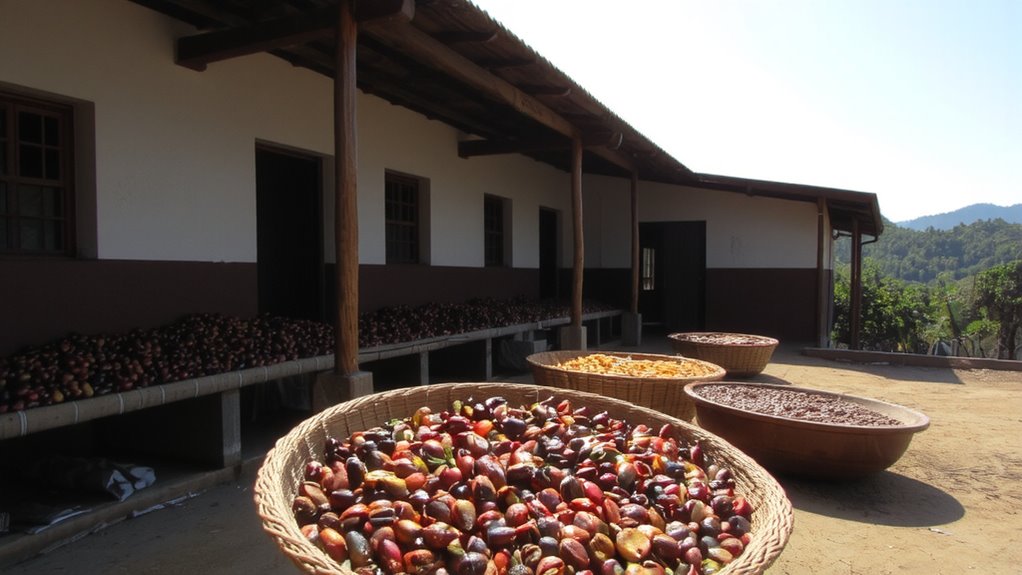
A dry-processed coffee starts with the whole cherry harvested and then laid out in the sun to dry-skin, pulp, and all-before the bean is hulled free. You’ll find this method commonly used in Limu, southwest Ethiopia, where high altitudes and steady sunlight create ideal drying conditions. Since you’re not removing the fruit early, fermentation happens within the cherry, so fermentation control is harder than in washed coffees. Workers turn cherries frequently to prevent mold and guarantee even drying, but uneven batches still occur. The beans absorb more fruit sugars, often increasing bean density, which can improve roast consistency. However, high density also demands precision in roasting equipment. While simpler in tools-requiring only drying beds or patios-dry processing risks over-fermentation if humidity spikes. For you, this means batch traceability matters. If you’re sourcing dry-processed Limu, check moisture levels and cup for uniformity. It’s lower tech, but not lower skill.
How Sun-Drying Creates Fruity, Wine-Like Flavors
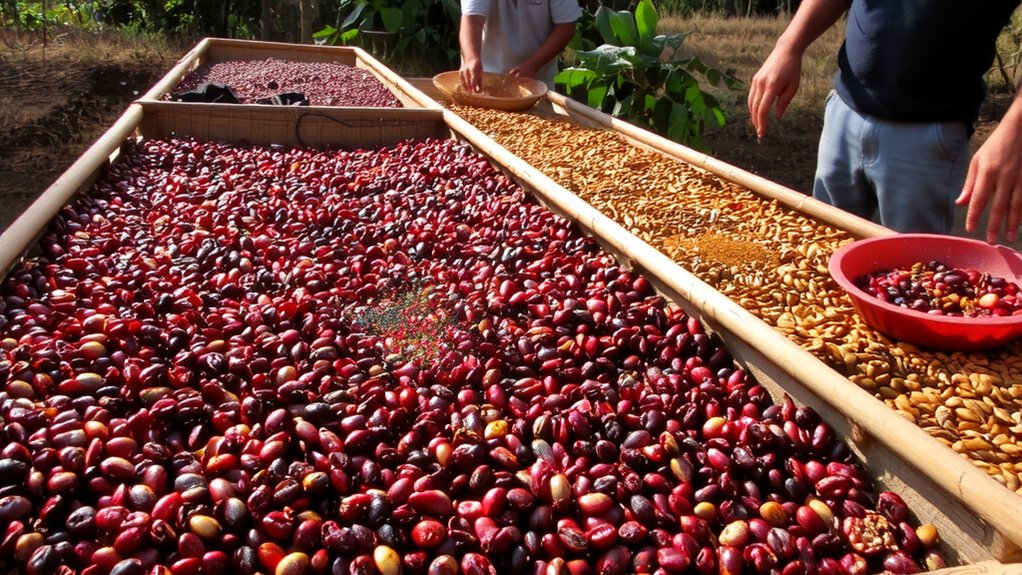
When sunlight slowly pulls moisture from coffee cherries during dry processing, the extended contact between bean and fruit layer allows natural sugars and acids to ferment, shaping the fruity, wine-like flavors Limu coffees are known for. You can influence fermentation control by monitoring drying duration closely-too fast and flavors stay flat, too slow and risks of over-fermentation rise. Elevation and airflow play key roles, especially in Ethiopia’s highland climate.
| Factor | Effect on Flavor | Practical Tip |
|---|---|---|
| Long drying duration | Enhances fruitiness | Turn cherries regularly |
| High ambient heat | Risks sourness | Use shade cloths if needed |
| Poor airflow | Promotes mold | Increase spacing on drying beds |
| Inconsistent turning | Uneven fermentation | Rotate every 2 hours |
| Humidity spikes | Extends drying duration | Cover during rain, uncover after |
Sun-Drying Tradition: From Cherry to Green Bean
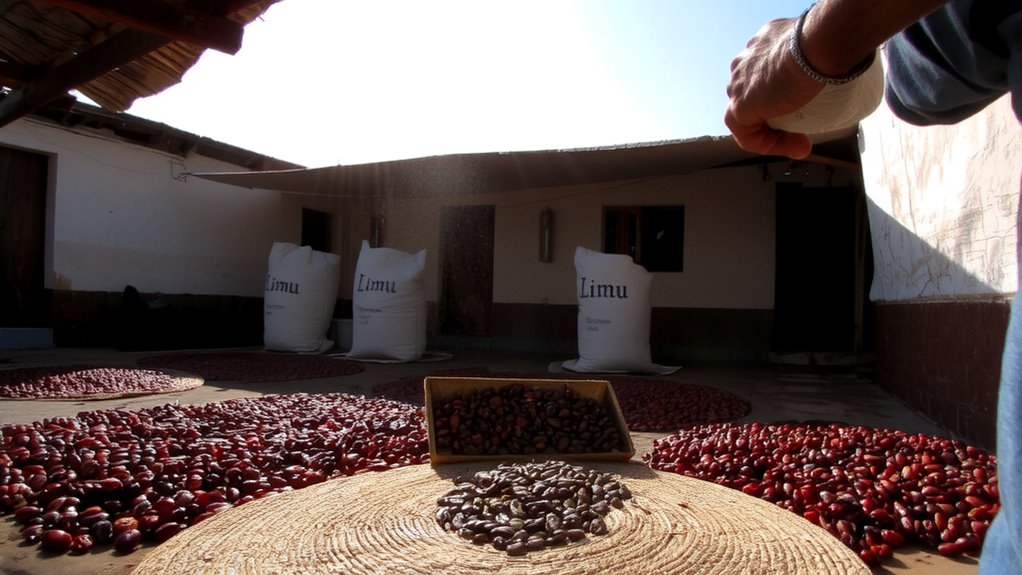
You can’t talk about Limu’s distinctive fruit-forward profile without acknowledging how long, steady sun exposure transforms the cherry from harvest to final dried bean. Farmers spread freshly harvested cherries on raised beds or mats, turning them regularly with wooden rakes-traditional tools passed down through generations. This method traces back to the historical origins of dry processing in Ethiopia’s highlands, where sunlight and low humidity create ideal drying conditions. You’ll see families using simple, effective tools: woven baskets for sorting, cloth covers to shield beans from rain. The beans dry over 10–14 days, losing moisture slowly, which stabilizes sugars and enhances flavor. While mechanical dryers exist, many stick with sun-drying because it’s low-cost and proven. It demands patience and attention, but done right, it preserves the bean’s integrity, laying the foundation for a bright, clean cup.
Why Altitude and Terroir Define Limu’s Character
Though you might not realize it at first sip, Limu’s bright acidity and floral notes are deeply shaped by the region’s high elevation and unique soil composition. Grown between 1,800 and 2,200 meters, the cool temperatures slow bean development, boosting density and complexity. These altitude-driven changes work with microclimate effects-like afternoon cloud cover and consistent rainfall-to stabilize growth and reduce stress on the plants.
| Factor | Effect on Coffee | Example in Limu |
|---|---|---|
| High Altitude | Increased acidity, denser beans | 1,950 m average |
| Volcanic Soil Composition | Enhanced mineral uptake | Rich in potassium |
| Microclimate Effects | Stable maturation, flavor consistency | Daily mist patterns |
These conditions combine to create clean, balanced profiles. Proper roasting preserves these traits, making gear that offers precise temperature control-like the Loring S15-ideal for highlighting Limu’s inherent quality.
Blueberry, Bergamot: Tasting the Dry-Process Difference
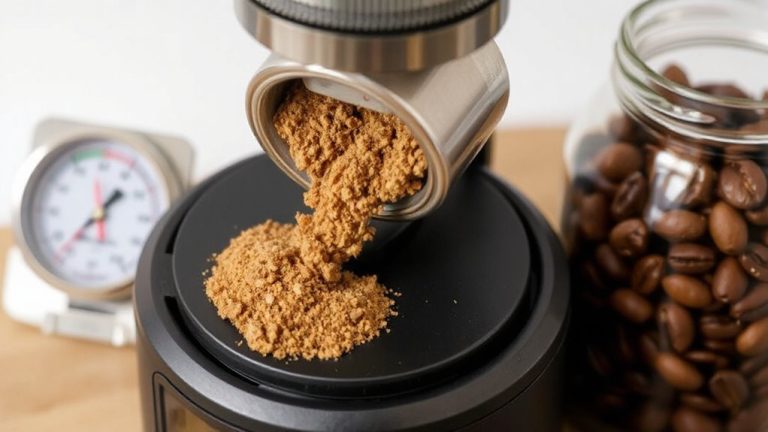
A dry-processed Limu coffee often delivers standout notes of blueberry and bergamot, flavors that emerge directly from the method’s extended fruit contact during drying. You’ll taste the blueberry notes most clearly when brewed with a pour-over, like a Hario V60, which highlights clarity and acidity. These fruity tones develop as the coffee dries inside the intact cherry, absorbing sugars and aromatic compounds. The bergamot aroma, bright and citrus-like, comes through especially in the grind and early stages of brewing. Compared to washed coffees from the same region, dry-processed versions are fuller in body but risk fermentation flaws if not monitored. For best results, grind fresh and use water just off boil-around 200°F. You’ll notice the difference isn’t subtle; it’s a direct result of processing choice, not terroir alone. This method rewards careful handling but demands precision to avoid overwhelming the cup.
Where to Buy Authentic Dry-Processed Limu Coffee
Where can you find genuinely dry-processed Limu coffee that delivers on its promise of blueberry and bergamot notes? Your best bet is specialty coffee shops that source single-origin beans directly from Ethiopian farms. These shops often list processing methods clearly, so look for “natural” or “dry-processed” on the label. Many also carry fair trade certification, ensuring farmers are paid fairly and environmental practices are sustainable. Online retailers like Sweet Maria’s or Counter Culture offer detailed profiles, including altitude, varietal, and processing date-useful for consistency. Avoid mass-market brands, which often blend beans and mask Limu’s delicate flavors. If buying in person, ask staff about roast dates and suggested brew methods; a pour-over or Aeropress best highlights its bright acidity. Always store beans in an airtight container away from light to preserve freshness. For those seeking top-tier quality and transparency, consider choosing from the best online coffee roasters that specialize in fresh, small-batch roasting.
On a final note
You’ll get the best results from dry-processed Limu coffee by using a burr grinder and brewing method like pour-over or French press. This highlights its fruity, wine-like notes and smooth body. Store beans in an airtight container away from light. For freshness, buy whole bean, not pre-ground. Look for reputable roasters who source directly from Ethiopia to guarantee authenticity and quality.