How to Choose the Right Water Kettle for Different Brewing Methods
Your brewing method decides the right kettle. For pour-over, pick a gooseneck like the Fellow Stagg for precision pouring and adjustable temperature control. French press or cold brew? A regular spout kettle works fine. Electric models heat faster and often include helpful features like temp settings. Match capacity to your usual brew size-1 liter for small batches, 1.7 liters for larger. Choose based on your routine, and you’ll get better, more consistent results every time.
Notable Insights
- Match the kettle spout type to your brewing method: use gooseneck for pour-over precision and regular spout for French press or general use.
- Choose a kettle with adjustable temperature control to stay within the ideal 195°F–205°F range for optimal flavor extraction.
- Select a 1-liter kettle for single-serve pour-over or a 1.5–1.7-liter model for larger French press or multi-cup brewing.
- Opt for an electric kettle with fast boil times, auto-shutoff, and gooseneck design for convenience and precision in daily brewing.
- Avoid oversized kettles for small brews to maintain heating efficiency and reduce energy use and wait times.
What Brewing Method Determines Your Kettle Choice?
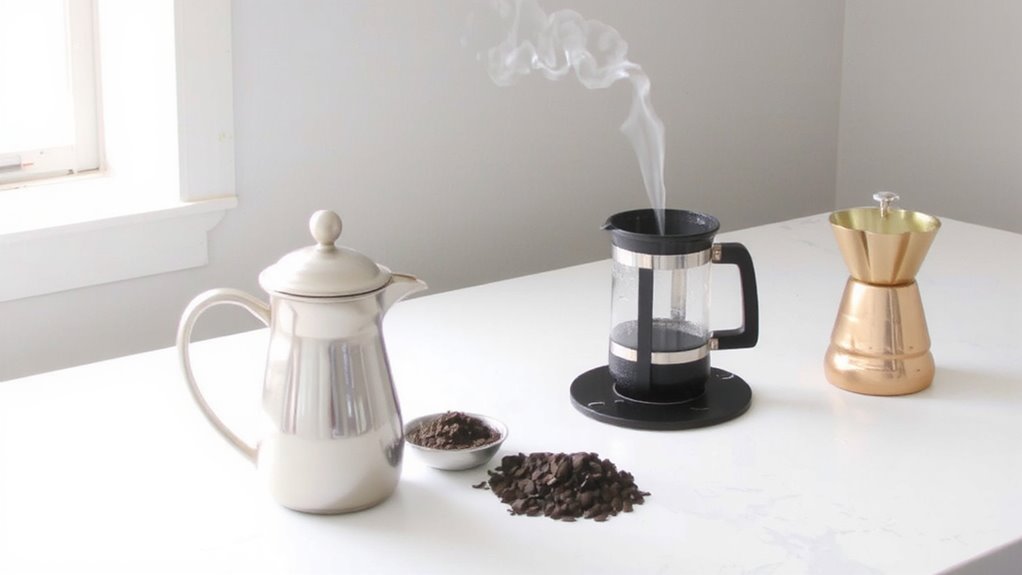
Why pick one kettle over another? Because your brewing method shapes everything from brew time to flavor profile. If you’re using a pour-over like the Hario V60, you need precise temperature control and a gooseneck spout for steady, controlled pouring-this helps extract a cleaner, more balanced cup. But for a French press, accuracy matters less; a regular spout and basic electric kettle work fine. Cold brew? You don’t need a special kettle at all. Drip brewers automate the process, reducing the need for manual kettles. Each method changes how you use your kettle. Fast heat-up times save minutes daily, while adjustable temperature settings let you fine-tune results. Match your kettle to how you brew-don’t buy features you won’t use. Make sense? Smart choices start with your routine, not marketing. For pour-over enthusiasts, investing in the best gooseneck kettles ensures optimal control and consistency in every brew.
Gooseneck vs. Regular Spout: Which Kettle Gives You Control?
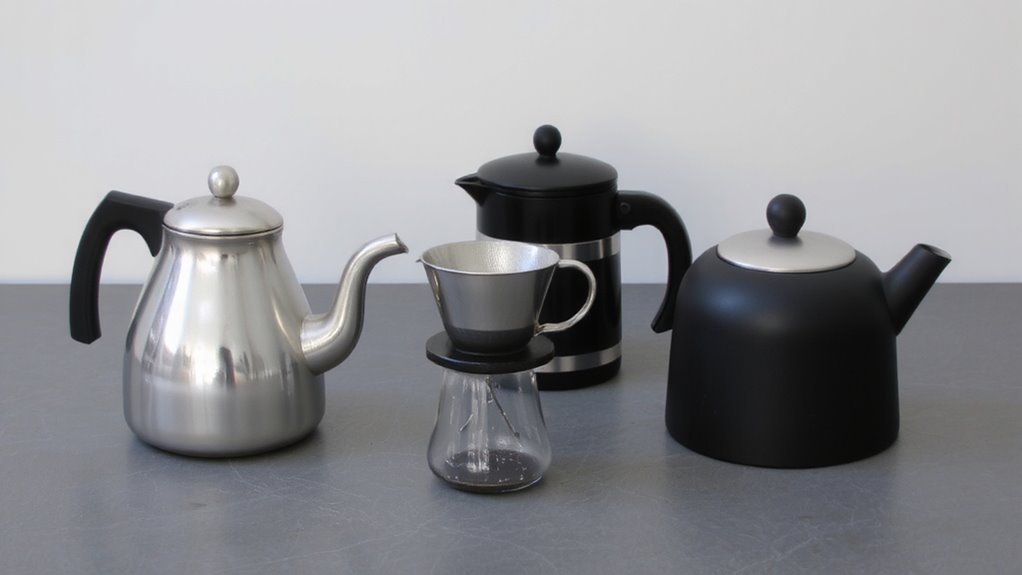
How much control do you really need when pouring water over coffee? If you’re using a pour-over like a Chemex or V60, a gooseneck kettle gives you precision. Its thin, swan-like spout lets you pour slowly and evenly, which is key for proper extraction. A regular spout is faster and better for tasks like filling a French press, but you’ll have less control over the flow. Look for a gooseneck with an ergonomic handle-it reduces hand strain during slow pours. A balanced weight makes the kettle easier to maneuver, especially when full. Models like the Fellow Stagg EKG combine both features well. For quick, casual brewing, a regular kettle works fine. But if you want consistency and accuracy with manual pour-over methods, the gooseneck’s design is worth it.
Why Kettle Temperature Control Makes or Breaks Your Brew?
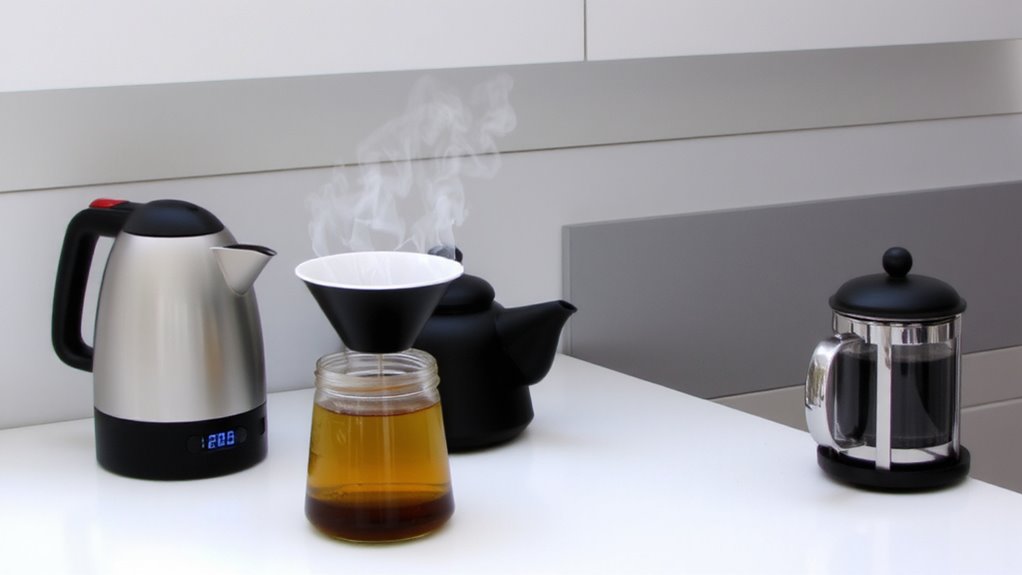
You’ve got the spout type figured out-whether it’s the slow, steady pour of a gooseneck or the faster stream of a regular kettle-but what really determines how your coffee tastes is the temperature of the water hitting the grounds. Too hot, and you risk scald吃得 the coffee, pulling out bitter compounds; too cool, and the extraction’s weak, leaving flavors underdeveloped. Most experts recommend brewing between 195°F and 205°F for balanced results. Consistent temperature control helps you manage extraction, especially when you’re adjusting for grind consistency or tweaking your water chemistry. Entry-level kettles often lack precision, boiling to a fixed 212°F, while gooseneck models with adjustable settings-like the Fellow Stagg or Bonavita-let you set exact temps. If your grinder or water setup is already dialed in, skipping a temperature-controlled kettle might be the the one thing keeping your brew from improving. For those seeking both precision and style, top-rated brewing kettles combine gooseneck design with variable temperature control to elevate every pour-over session.
How Much Water Do You Need? Finding Your Ideal Kettle Size
A 1-liter kettle works well for most single-serve or two-cup brewing setups, especially if you’re using a pour-over like a Hario V60 or Chemex 3-cup. This size offers enough water capacity without wasting space or energy. If you regularly brew for more people or use larger brewers like a 6-cup French press, consider a 1.5- to 1.7-liter kettle. Larger kettles give you more flexibility but reduce heating efficiency when you only need a small amount of water. Overfilling leads to longer wait times and higher energy use. Matching your kettle’s water capacity to your typical brew size helps maintain consistency and saves time. For frequent single servings, stick to 1 liter. For family use or bigger batches, go larger. The right size balances convenience, heating efficiency, and practical water capacity based on your routine.
Electric or Stovetop Kettle: What’s Faster and Easier?
| Type | Avg. Boil Time | Convenience Factor |
|---|---|---|
| Electric | 3–5 min | High (auto-shutoff, fast) |
| Stovetop | 7–10 min | Medium (stove-dependent) |
Every Brewer’s Must-Have Kettle Features (Pour-Over, French Press)
Now that you’ve compared speed and convenience between electric and stovetop kettles, it’s time to focus on the design details that actually affect your brew. For pour-over and French press, you need precision and control. A gooseneck spout gives you steady, narrow pours-key for even extraction in pour-over. If you’re using a French press, a wide spout works fine, but control still matters. Look for kettles with strong material durability, like stainless steel or reinforced glass, so they last through daily use. An ergonomic handle makes tipping easier and safer, especially when the kettle’s full and hot. You don’t want to struggle mid-pour. Some models, like the Bonavita or Fellow Stagg EKG, combine these features well. Electric kettles often include temperature control, which helps with different brew methods. Prioritize function: a durable build and comfortable grip make every brew smoother.
On a final note
Choose a gooseneck kettle if you’re using pour-over methods like V60-it gives precise control. For French press or large batches, a regular spout or larger electric kettle works faster. Match the size to your usual brew volume to avoid waste or extra boils. Electric kettles with temperature settings offer accuracy, especially for delicate light roasts. Stovetop kettles are simple but lack precision. Prioritize features like variable heat and gooseneck spouts based on your method.