How to Choose the Right Coffee Refractometer for Extraction Analysis
Pick a refractometer that guarantees accuracy with temperature stability and coffee-specific calibration-models like the VST Lab III or ATAGO N-40 deliver reliable results. Choose digital for speed and data tracking, especially in high-volume settings, or manual if you’re on a budget and use it occasionally. Always calibrate before use and keep the prism clean. Make sure sample size is consistent. You’ll get more insights by focusing on these key factors.
Notable Insights
- Choose a refractometer with temperature stability and compensation for accurate extraction readings.
- Opt for coffee-specific calibration to ensure measurements reflect true soluble concentrations.
- Prioritize digital models with automatic temperature compensation for speed and consistency.
- Ensure regular calibration with distilled water before each use to maintain precision.
- Select models with high-quality optics and consistent LED lighting for reliable, repeatable results.
Why Extraction Accuracy Starts With the Right Refractometer
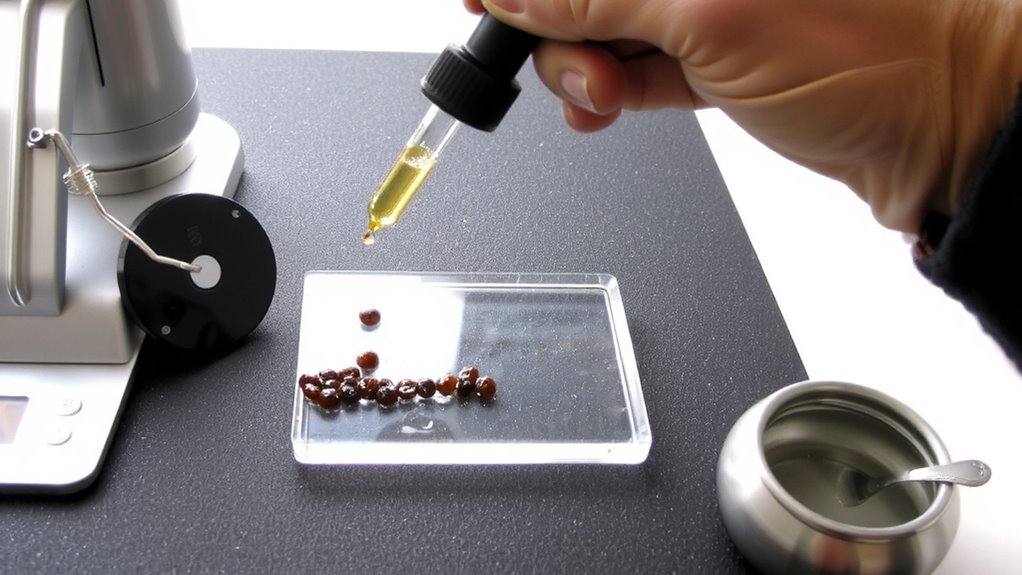
While you might think any refractometer gives a clear picture of your coffee’s extraction, the truth is that not all devices deliver the accuracy needed for consistent results. Poor temperature stability can skew readings, especially if your brew cools quickly before testing. Models like the VST Lab II maintain better thermal control, helping you get reliable numbers even during busy service. You also need clear optics and proper calibration to assess brew clarity accurately-cloudy samples or dirty lenses distort results. Entry-level units may save money upfront but often lack the precision for real extraction analysis. If you’re serious about dialing in shots or batches, investing in a refractometer with strong temperature stability and high optical clarity makes a real difference. It’s not just about the number-it’s about trusting that the number reflects what’s actually in your cup.
Digital vs. Manual: Which Refractometer Fits Your Brew Workflow?
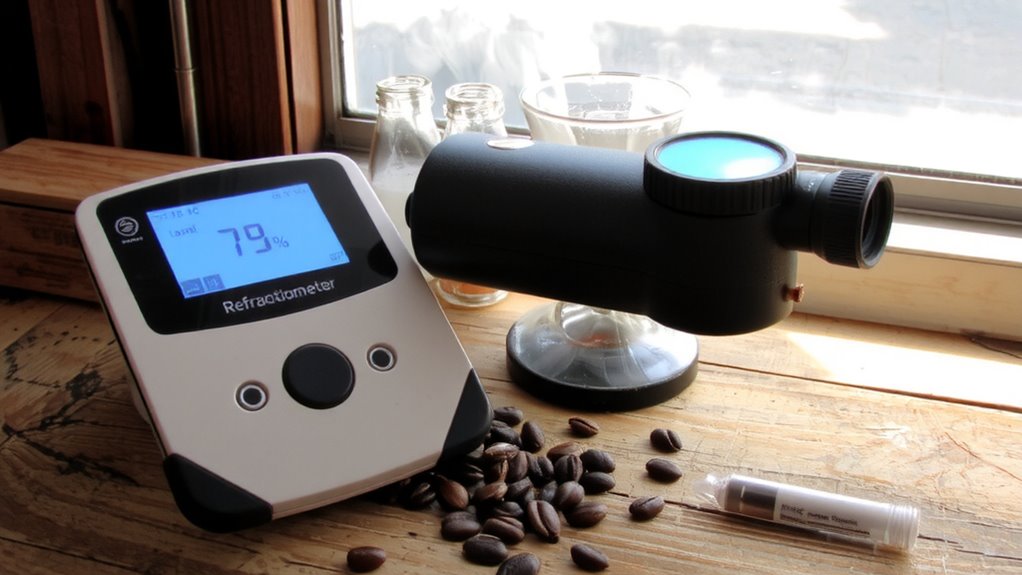
You’ve seen how temperature stability and optical clarity shape the accuracy of your extraction readings, but now it’s time to decide how you want to get those readings-through a digital or manual refractometer. If you value speed and consistency, go digital. Devices like the VST LAB Coffee Refractometer offer a clear user interface, automatic temperature compensation, and built-in data logging, so you can track brews over time without extra notes. They’re pricier but save time in busy labs or roasteries. Manual refractometers, like traditional pocket models, require you to read the scale yourself. They have no data logging and rely on your eyesight, which can introduce error. But they’re affordable and don’t need batteries. For tight budgets or occasional use, they work. For routine testing and detailed records, digital fits better. Choose based on your workflow, not just cost.
Must-Have Features for Precise Coffee Extraction Readings
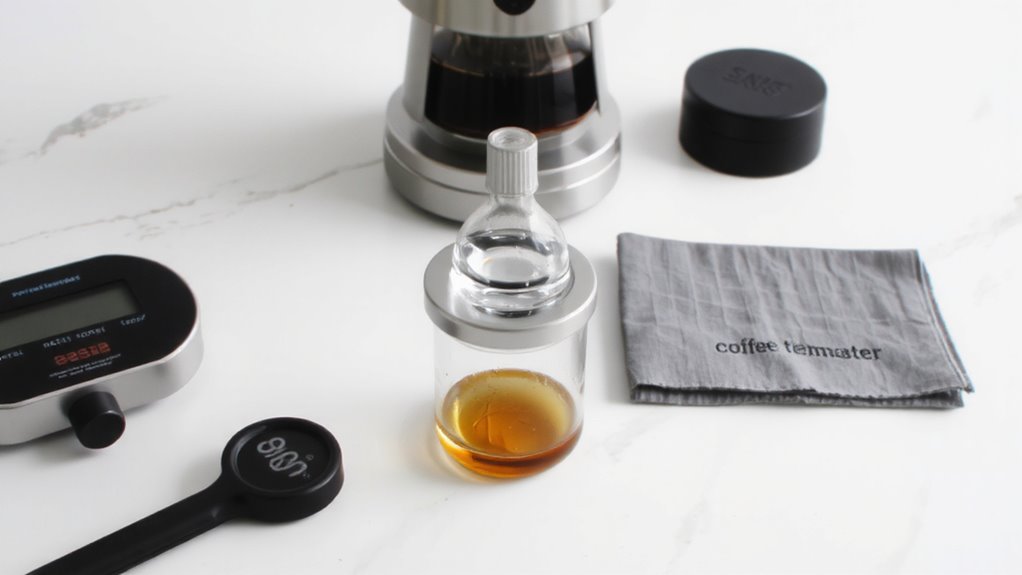
Accuracy starts with the right tools, and a good coffee refractometer needs a few key features to deliver reliable extraction readings. You need solid temperature stability because brew temperature affects refractive index-models like the VST Lab II include built-in temp compensation to correct for small shifts. Without it, your readings drift, especially if your sample cools fast. Light source quality matters just as much; poor or uneven lighting skews results. Refractometers with consistent, bright LED sources (like the Atago PAL-COFFEE) give clearer, more repeatable measurements than dim or aging bulbs. Look for devices designed specifically for coffee, not generic units repurposed for extraction work. They’re calibrated for coffee’s solubles and handle the typical Brix range better. These features aren’t luxuries-they’re essentials if you want data you can trust when fine-tuning brews.
How Sample Size and Calibration Impact Your Results
Since even tiny variations can throw off your extraction numbers, using the right sample size and keeping your refractometer properly calibrated makes a real difference in the reliability of your readings. Sample volume matters-too little, and evaporation skews results; too much, and you risk overflow or inconsistent temperature. Most models need 2–3 drops on the prism, so use consistent dropper sizes for accuracy. Calibration frequency is just as critical. You should calibrate before each use with distilled water to guarantee a zero reading at your current temperature. Skipping this step, or doing it only once a week, leads to drift-especially in high-use or humid environments. Handheld units like the VST or Atago are sensitive to handling, so recalibrating often prevents errors. Clean the prism after every test to avoid residue buildup. Your data is only as good as your routine.
Top Refractometer Picks for Home and Lab Use
Now that you’re consistently calibrating and using proper sample sizes, it’s time to look at which refractometers deliver reliable results without overcomplicating things. For home use, the VST Lab III offers solid accuracy with a straightforward interface-its portable design makes it easy to store and transport, though it’s pricier. If you’re on a budget, the Hanna HI96804 delivers consistent readings and benefits from strong brand reputation, even if it lacks some advanced features. For lab settings, the ATAGO N-40 is a go-to, known for its precision and durable build. It has a reliable portable design and is widely trusted across labs and roasteries. All three require regular cleaning and calibration, but their track records speak for themselves. Choose based on your frequency of use, accuracy needs, and workspace-each balances brand reputation and functionality in different ways.
On a final note
You need a refractometer that matches your workflow and accuracy needs. Digital models like the VST Lab II give precise, repeatable results but cost more. Manual ones, such as the Atago PAL-3, are affordable but require careful handling. Make sure it reads Brix or TDS clearly, calibrates easily with water, and needs just a few drops. For serious tuning, go digital. For occasional checks, a good manual model works.